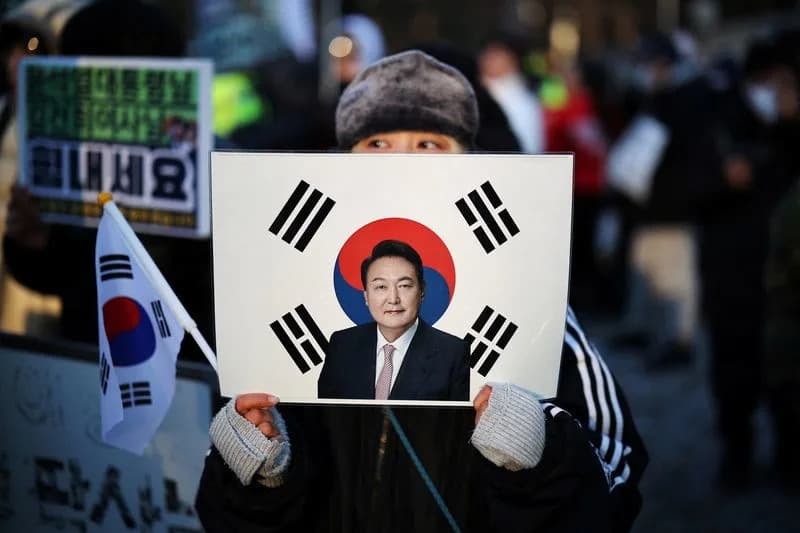
The Supreme Court heard arguments in two cases from Idaho and West Virginia challenging bans on transgender athletes, with rulings expected by July. Justices appeared inclined toward the states that enacted the bans, but repeatedly probed whether future rulings could limit states that currently allow transgender women and girls to compete. Key legal tensions focus on whether challenges proceed under the Constitution’s Equal Protection Clause or under Title IX, the federal sex-discrimination law. Several justices pressed for clarity about the potential nationwide effects, while advocates urged restraint on broad definitions.
Supreme Court Hearings Raise Stakes: Can States Allow Transgender Women In Girls’ Sports?

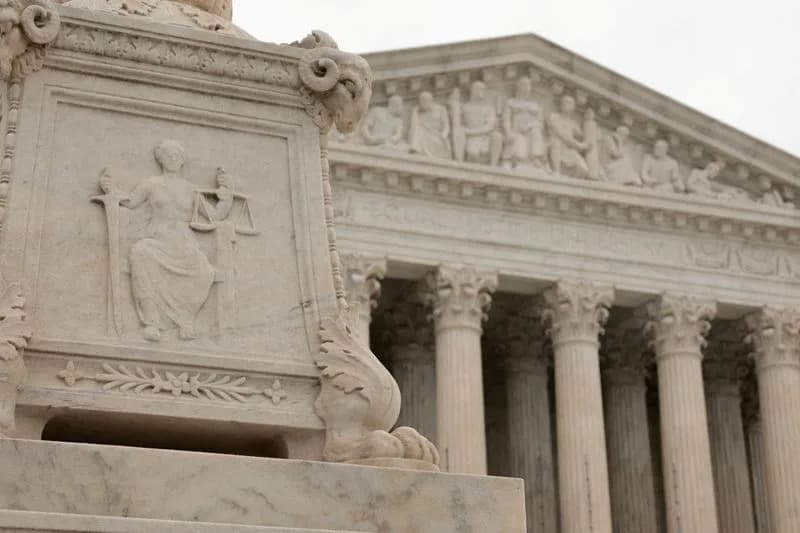
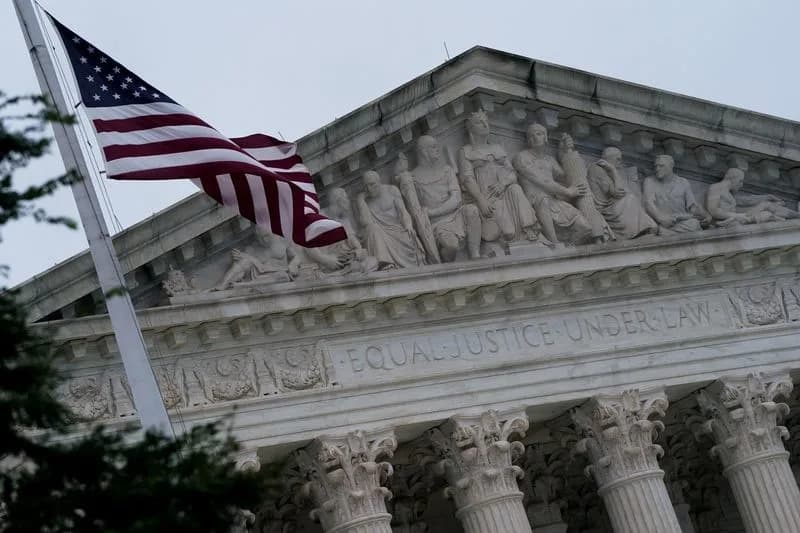
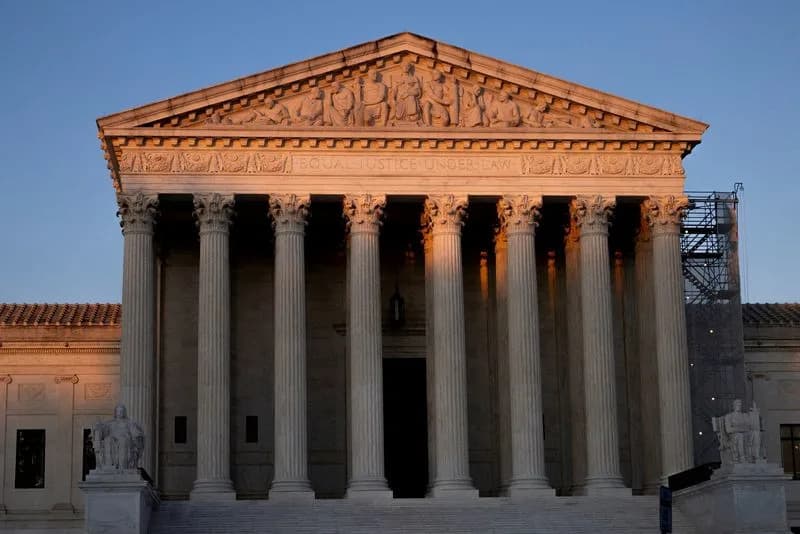
The Supreme Court heard arguments Tuesday in two high-profile cases challenging state laws that bar transgender athletes from participating in women’s and girls’ sports. The cases — Little v. Hecox (Idaho) and a West Virginia challenge involving Becky Pepper-Jackson — could shape the legality of similar bans in roughly 25 other states. The court’s decisions are expected by July and could define how federal law and the Constitution apply to transgender sports participation.
How the Justices Framed the Issue
At oral argument, several justices signaled sympathy for the states that enacted the bans, though the ultimate scope of any ruling remained unclear. Beyond the immediate question of whether the Idaho and West Virginia bans are lawful, the justices repeatedly pressed a broader, forward-looking question: if a state currently allows transgender women and girls to compete on teams consistent with their gender, would a future ruling permit other states or the federal government to overturn that choice?
Equal Protection vs. Title IX
Several exchanges made clear that two legal tracks are at play: the Constitution’s Equal Protection Clause and Title IX, the federal statute that bars sex discrimination in federally funded education programs. At the Idaho argument, Justice Brett Kavanaugh asked Idaho attorney Alan Hurst whether states that permit transgender women and girls to play on women’s teams are violating Equal Protection or whether each state must be free to set its own rules. Hurst said he had not “yet been persuaded by a constitutional theory that would let us use the Equal Protection Clause to impose our policy on other states in this matter.”
A lawyer for the U.S. Department of Justice, Hashim Mooppan, emphasized that the federal government has been “actively litigating” against states that allow transgender participation — but notably under Title IX rather than the Equal Protection Clause. That distinction could matter greatly for how broadly any ruling applies.
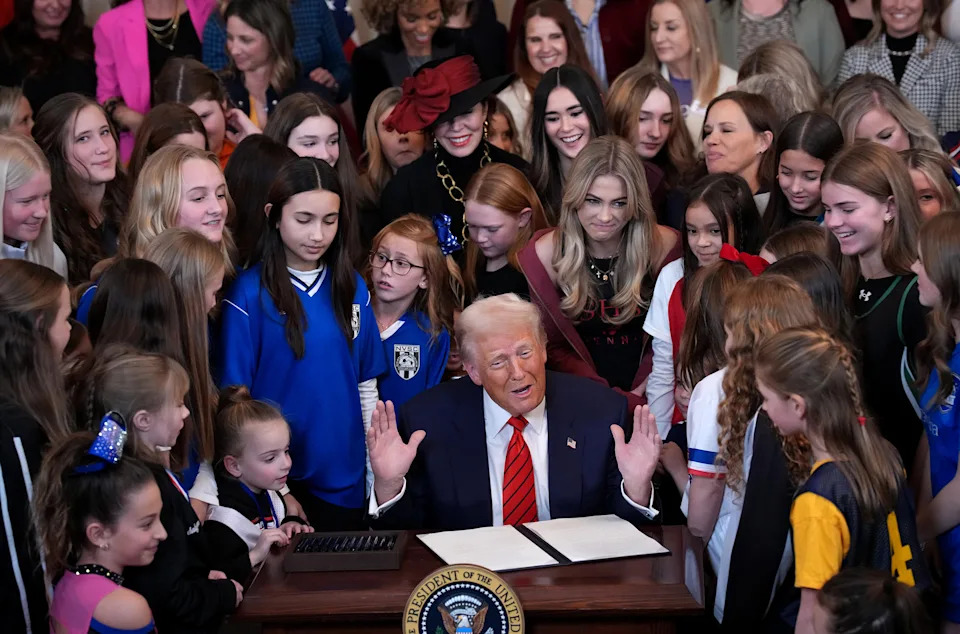
President Donald Trump joined by female athletes signs the “No Men in Women’s Sports” executive order in the East Room Feb. 5, 2025, at the White House.(Andrew Harnik / Getty Images)
West Virginia Hearing And Follow-Up Litigation
At the West Virginia argument, which turns principally on Title IX, Justice Kavanaugh again asked whether permissive states like California would be able to defend their policies in later litigation. West Virginia attorney Michael Williams acknowledged that under Equal Protection there may be room for different state determinations, but he said the Title IX question is closer and need not be resolved in the current case.
Mooppan was pressed by Justices Sonia Sotomayor and Elena Kagan about the practical effect of his positions on states that currently allow transgender athletes. He sketched possible defenses such states might raise, adding, “Whether that argument is right or wrong is for another case, but I don’t think if you adopt the argument I’m making here today, their hands are going to be tied.”
Advocates’ Arguments
When American Civil Liberties Union attorney Joshua Block represented Becky Pepper-Jackson, Kavanaugh called the permissive-states question “real important.” Justice Kagan asked what the court should or should not say in an opinion if it wished to avoid foreclosing future state choices. Block responded that the court did not need to adopt a new definition of “sex” to resolve these particular cases.
“Title IX forbids discrimination on the basis of sex and therefore ‘it must mean something,’” Justice Samuel Alito observed, foreshadowing a likely future dispute about the statute’s reach.
What Comes Next
The court is expected to issue opinions by July. Those rulings could either uphold state bans, strike them down, or adopt narrower holdings that leave many open questions for later litigation. Whatever the outcome, lawyers and policymakers anticipate follow-up suits — especially from states and institutions that currently permit transgender athletes — to clarify whether Equal Protection or Title IX constrains their policies.
Note: This article synthesizes courtroom exchanges and does not predict a final outcome. The original reporting appeared on MS NOW.
Help us improve.