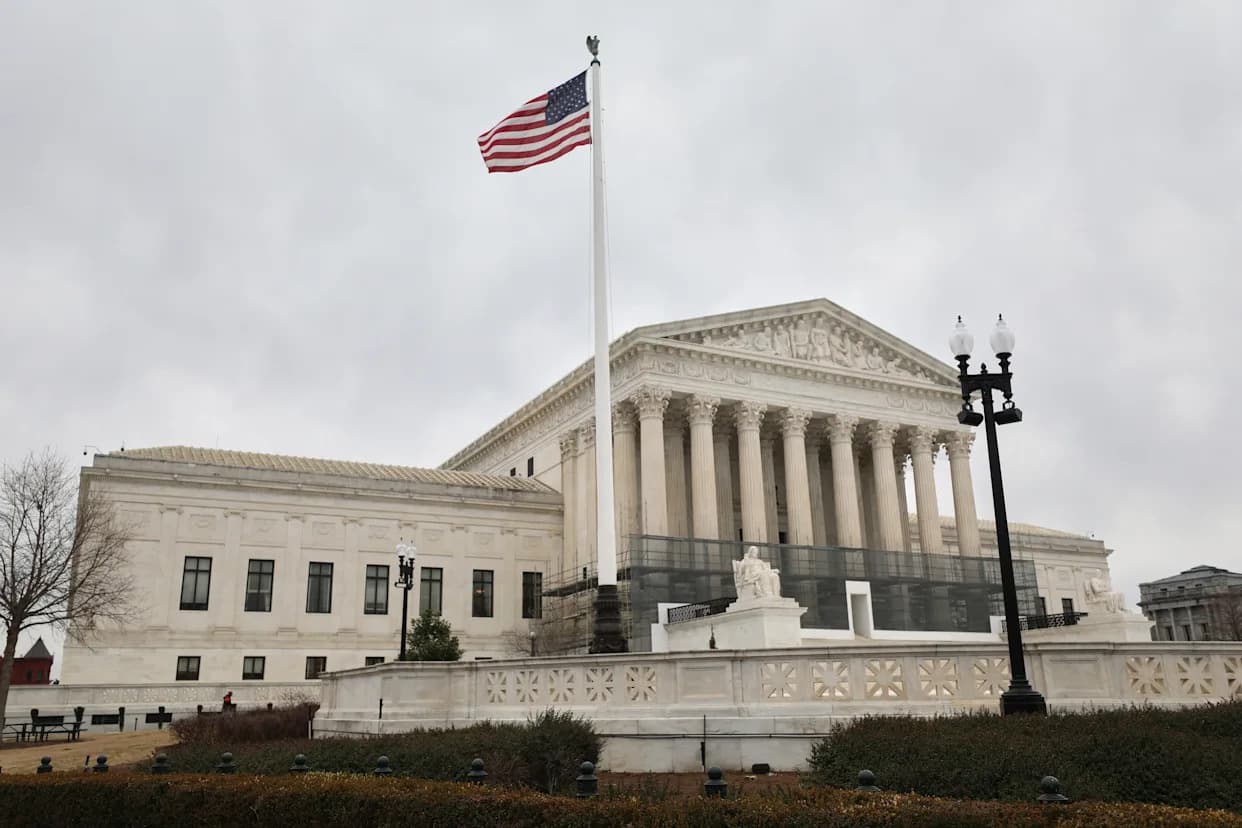
Dianne Hensley, a Waco justice of the peace, filed a federal lawsuit seeking protections that could limit her obligation to officiate same-sex marriages and could lay groundwork to challenge Obergefell v. Hodges. Represented by Jonathan Mitchell, the filing highlights changes in the Supreme Court and cites the Dobbs decision as evidence the Court's approach to fundamental rights has shifted. While personnel changes increase theoretical risk to Obergefell, recent denials like Kim Davis's petition suggest the justices have not signaled a readiness to revisit the 2015 decision. The lawsuit is a strategic attempt to test legal arguments, but it faces significant procedural and substantive hurdles.
Texas Justice Of The Peace Sues To Challenge Obergefell, Citing A Changed Supreme Court

A new federal lawsuit filed on behalf of Dianne Hensley, a justice of the peace in Waco, Texas, seeks a legal path that could eventually challenge the Supreme Court's 2015 ruling in Obergefell v. Hodges, which guaranteed the constitutional right to same-sex marriage.
What The Complaint Says
Hensley, who says her Christian faith prevents her from officiating same-sex weddings, filed the complaint in the U.S. District Court for the Western District of Texas. Her suit asks courts to recognize exemptions for officials who object to performing same-sex marriages on religious grounds and casts Obergefell as vulnerable because the composition of the Supreme Court has changed since 2015.
Who Represents Her
Hensley is represented by Jonathan Mitchell, a conservative lawyer known for crafting Texas' near-total abortion ban and for representing former President Donald Trump in litigation over ballot access for the 2024 election. Mitchell's filing explicitly notes personnel changes on the high court as part of its argument.
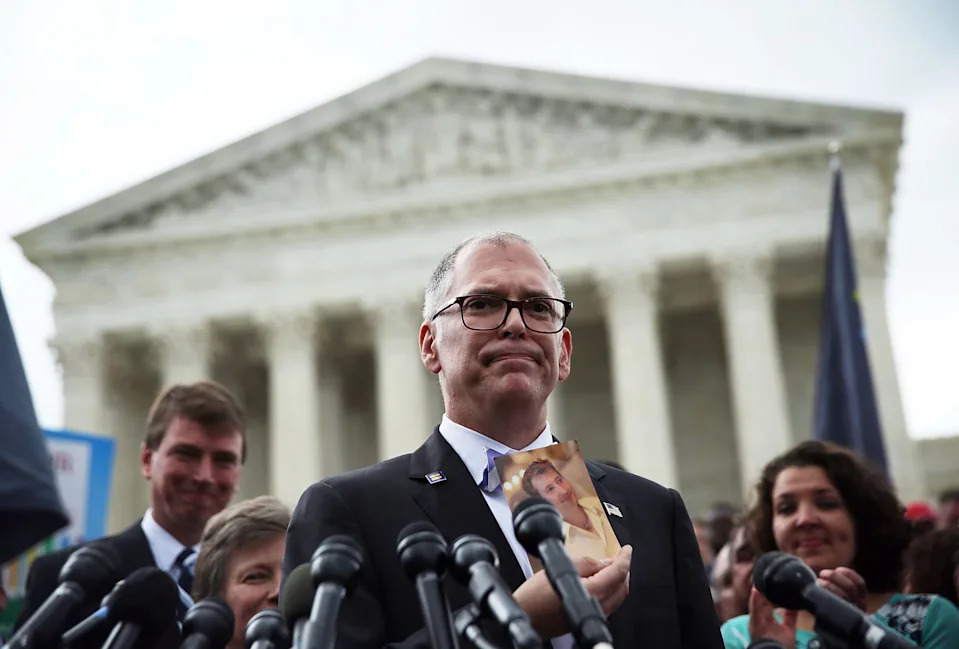
WASHINGTON, DC - JUNE 26: Plaintiff Jim Obergefell holds a photo of his late husband John Arthur as he speaks to members of the media after the U.S. Supreme Court handed down a ruling regarding same-sex marriage June 26, 2015 outside the Supreme Court in Washington, DC. The high court ruled that same-sex couples have the right to marry in all 50 states. (Photo by Alex Wong/Getty Images)(Alex Wong / Getty Images)
"Justice Kennedy, the author of Obergefell, has been replaced by Justice Kavanaugh, and Justice Ruth Bader Ginsburg, who joined the majority in Obergefell, has been replaced by Justice Amy Coney Barrett," the complaint states. It adds that the Court's 2022 Dobbs decision "repudiated Obergefell's 'reasoned judgment' test for identifying 'fundamental rights.'"
Legal Context And Likely Path Forward
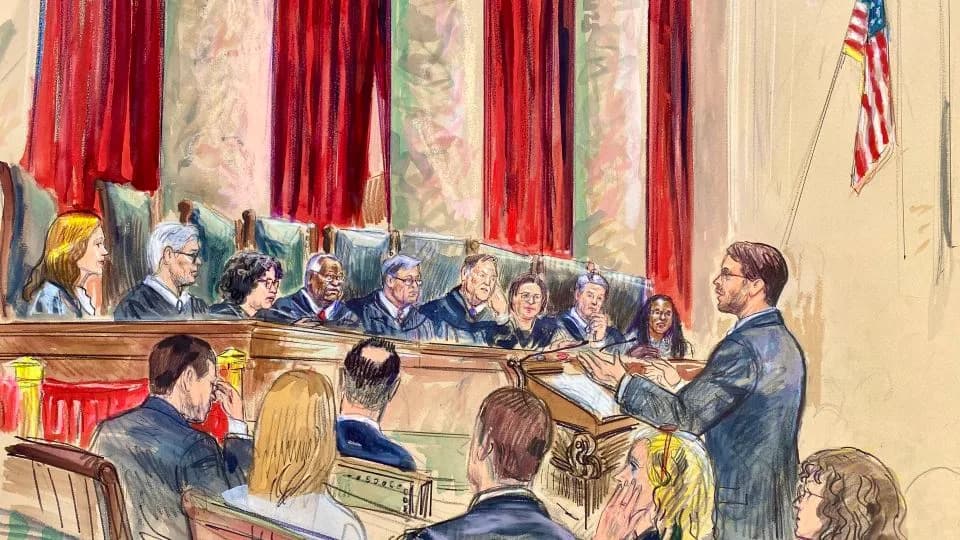
It is true that several current justices likely disagreed with Obergefell in 2015: Chief Justice John Roberts and Justices Clarence Thomas and Samuel Alito dissented then, and personnel changes since—replacing Justices Kennedy and Ginsburg—have altered the Court's makeup. Still, a shift in personnel does not guarantee the Court will overturn precedent or accept an appeal seeking to do so.
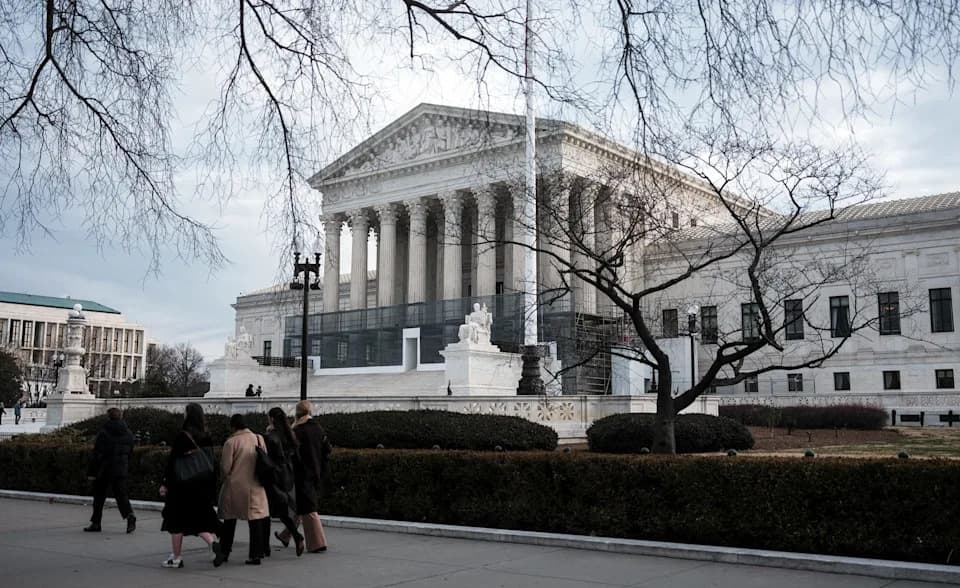
Last month the Supreme Court denied review of a petition from Kim Davis, the former Kentucky clerk who long opposed Obergefell, and no justice filed a dissent or a statement indicating readiness to revisit the decision. Hensley's case could meet a similar fate if it reaches the high court—dismissal on procedural grounds or denial without comment remains possible.
Why This Matters
Even if Hensley’s suit faces uphill procedural obstacles, it highlights an ongoing strategy by some conservative lawyers to test arguments and find a case that might prompt the Supreme Court to reconsider established rights. The filing underscores how changes in the Court’s membership and recent decisions like Dobbs have energized new legal efforts to challenge precedents.
Bottom line: Hensley’s lawsuit keeps the challenge to Obergefell alive but does not by itself guarantee that the high court will take up or overturn the 2015 ruling.
Help us improve.