The U.S. Supreme Court will hear challenges to Idaho and West Virginia laws that ban transgender girls from female public-school sports teams. The cases raise constitutional questions under the 14th Amendment and Title IX and come before a 6-3 conservative Court. Legal experts warn a ruling upholding the laws could have consequences beyond athletics — affecting restrooms, identity documents, healthcare and other public-life policies. Federal appeals courts have reached different outcomes in the two states.
Supreme Court To Hear Transgender Athletes Case That Could Reshape Rights Beyond Sports
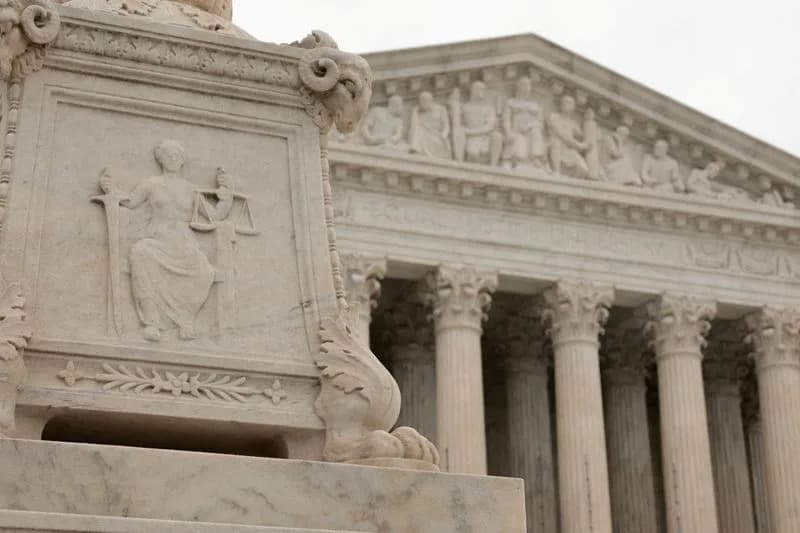
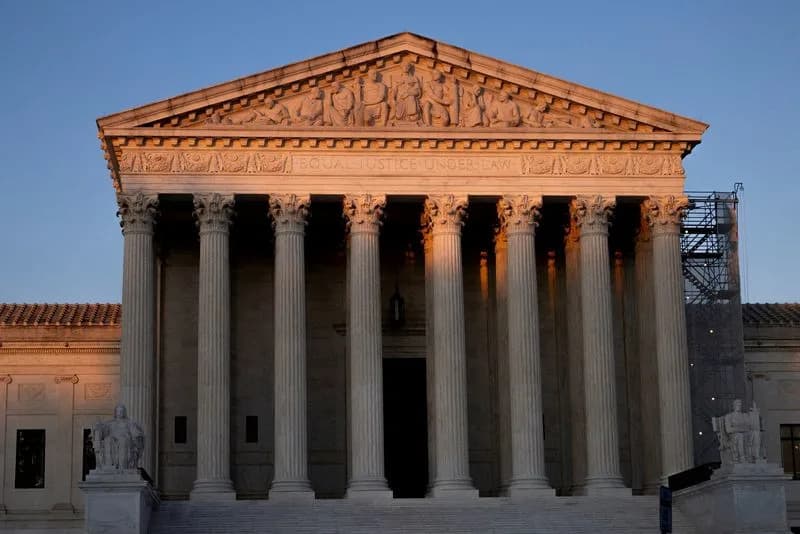
FILE PHOTO: A general view of the U.S. Supreme Court building in Washington, D.C., U.S., January 9, 2026. REUTERS/Jonathan Ernst/File Photo
The U.S. Supreme Court will hear arguments this week in two cases challenging state laws that bar transgender girls from competing on female sports teams at public schools — a fight that legal experts say could reach far beyond athletics.
At issue are statutes from Idaho and West Virginia that define school teams by "biological sex" and prohibit "students of the male sex" from playing on girls' teams. The lawsuits argue the laws violate the Equal Protection Clause of the 14th Amendment and Title IX, the federal law that forbids discrimination "on the basis of sex" in education programs that receive federal funds.
Why the Case Matters
The Supreme Court — now with a 6-3 conservative majority — recently upheld state limits on gender-affirming care for minors, and observers say a ruling in favor of Idaho and West Virginia could give states broader authority to enforce restrictions affecting transgender people in other areas of public life.
"Although these two cases only raise questions about the participation of transgender athletes in sex-segregated sports, they could have ramifications for transgender rights across a broad array of issues involving the inclusion of transgender people in public life," said Jessica Clarke, a law professor at the University of Southern California.
If the court upholds the laws, legal scholars warn the decision could limit avenues for challenging policies on restroom access, identity documents, classroom protections, military service and healthcare. The Court may also decide whether its 2020 Title VII ruling protecting transgender workers from workplace discrimination applies under Title IX in the education context.
Cases, Plaintiffs And Lower-Court Rulings
The Idaho challenge was brought by Lindsay Hecox, a transgender Boise State University student who previously participated in campus soccer and running clubs. Hecox recently asked to dismiss her case, citing concerns about harassment and increased public intolerance; the Supreme Court said it will hear arguments before deciding whether her challenge is moot.
The West Virginia suit was filed by Becky Pepper-Jackson and her mother after Pepper-Jackson was barred from joining girls' middle school cross-country and track teams. Pepper-Jackson, now a high school sophomore, has been allowed to compete in some events by lower courts.
Federal courts have split on the laws. In Idaho a federal judge enjoined the ban and the 9th U.S. Circuit Court of Appeals upheld that preliminary injunction. In West Virginia a lower court initially sided with the state, but the 4th U.S. Circuit Court of Appeals reversed, finding the exclusion amounted to "worse treatment based on sex" in violation of Title IX.
Arguments From Both Sides
Supporters of the bans, including West Virginia Attorney General J.B. McCuskey, argue the statutes protect fairness and safety for female athletes. "Are we going to create a system where biological women have a safe and fair place to play athletics going forward?" he told reporters.
Opponents say the laws discriminate against transgender people as a class and that factors such as use of puberty blockers or gender-affirming hormones should be relevant to evaluating any competitive advantage. The states counter that physiological differences can remain despite treatment.
What The Court May Decide
The justices may need to determine whether the statutes classify people by sex or by transgender status — and if so, what level of judicial scrutiny should apply. They may also clarify whether protections recognized under Title VII extend to Title IX cases. How the Court handles individual circumstances versus broad rules could shape the future of equal protection law and civil-rights challenges nationwide.
Reporting: Based on Reuters reporting by Andrew Chung; edited for clarity.
Help us improve.