The world has gone eight years, four months and 11 days without a nuclear detonation — the longest lull since 1945, the Union of Concerned Scientists says. North Korea carried out the last test in September 2017, but recent public moves by U.S. and Russian leaders to prepare for possible testing have raised concerns. Experts argue modern sub-critical tests and simulations make full detonations unnecessary, while the possible lapse of New START could enable rapid redeployments that increase the risk of accidents and miscalculation.
World Breaks Record for Longest Pause in Nuclear Tests — But the Truce Is Fragile
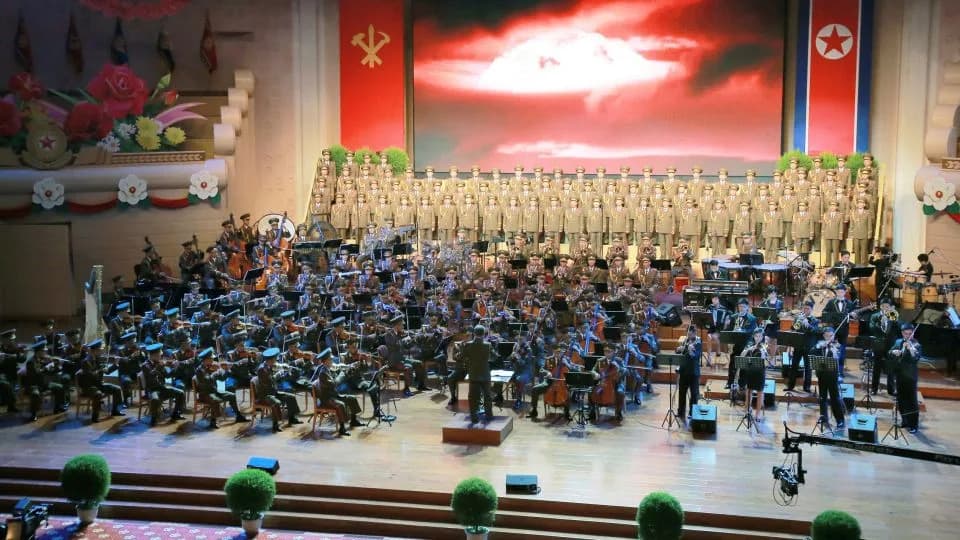
People perform for North Korean leader Kim Jong Un during a celebration for nuclear scientists and engineers who contributed to a hydrogen bomb test, in this undated photo released by North Korea's Korean Central News Agency in Pyongyang, on September 10, 2017. - KCNA/Reuters
The world has now gone eight years, four months and 11 days without a nuclear detonation — the longest uninterrupted pause since the atomic age began in 1945, the Union of Concerned Scientists (UCS) reports. Each additional day without a test extends that record, but experts warn the streak is precarious amid recent public talk from major powers about resuming testing and limits on deployed warheads.
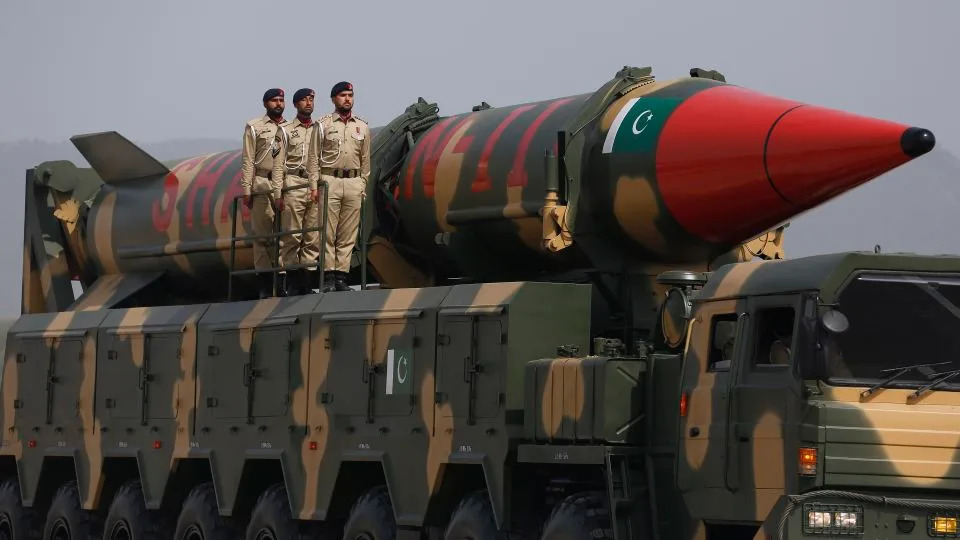
A Pakistani-made Shaheen-III missile, capable of carrying nuclear warheads, displayed during a military parade to mark Pakistan National Day in Islamabad, Pakistan, on March 23, 2022. - Anjum Naveed/AP
Historic context
The first nuclear explosion, the U.S. "Trinity" test on July 16, 1945, inaugurated the nuclear era. Since then, eight nations have conducted 2,055 tests in locations ranging from Pacific atolls to deserts and the Russian Arctic. The United States accounts for the most tests (1,030), followed by Russia/the Soviet Union (715), France (210), China (45), the United Kingdom (45), North Korea (6), India (3) and Pakistan (2), according to the Arms Control Association.
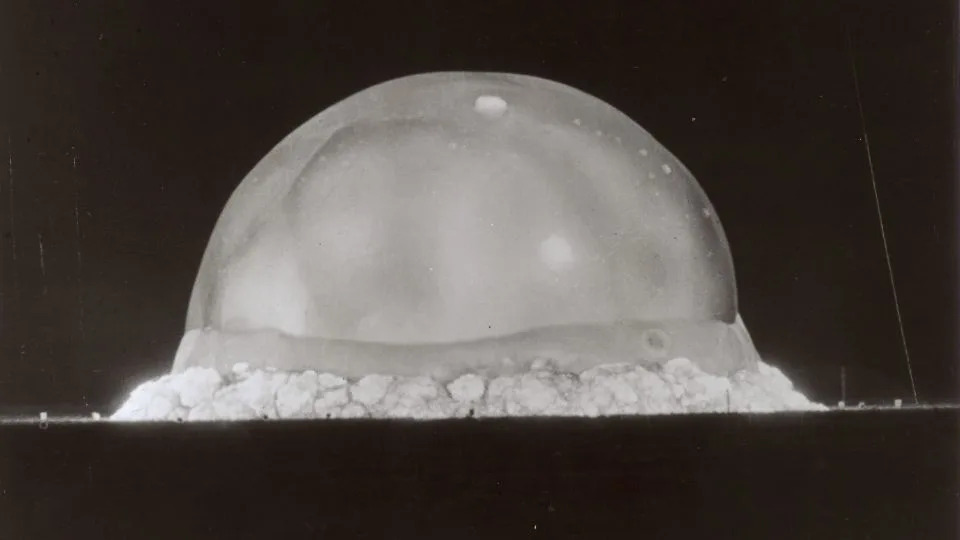
The first nuclear test, codenamed 'Trinity', conducted by Los Alamos National Laboratory at Alamogordo, New Mexico, circa 1945. - Fotosearch/Archive Photos/Getty Images
Where we stand now
North Korea carried out the last known nuclear test on September 3, 2017. Since the late 1990s, large-scale nuclear testing has largely subsided after the Comprehensive Nuclear-Test-Ban Treaty (CTBT) was opened for signature. Although the CTBT has not entered into force, most states have observed its prohibitions; North Korea is a notable exception.
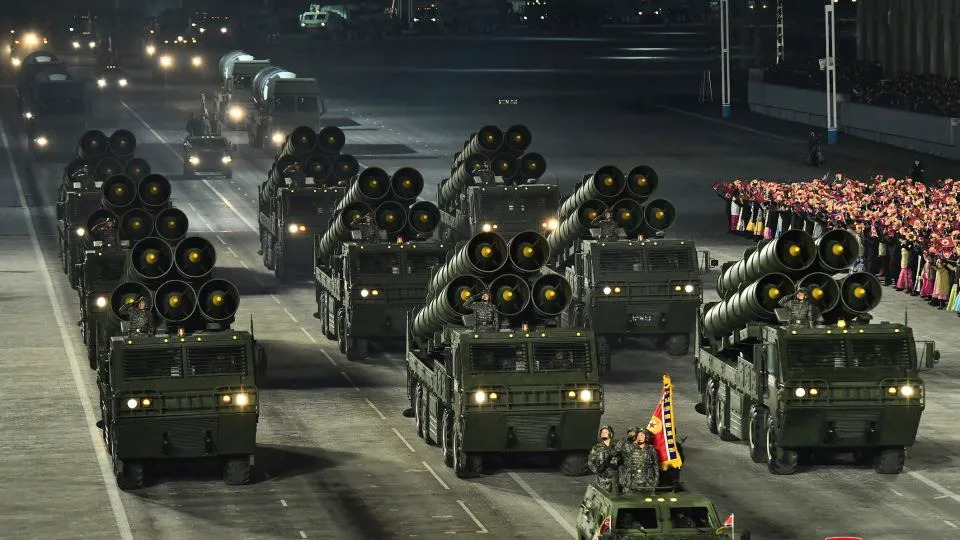
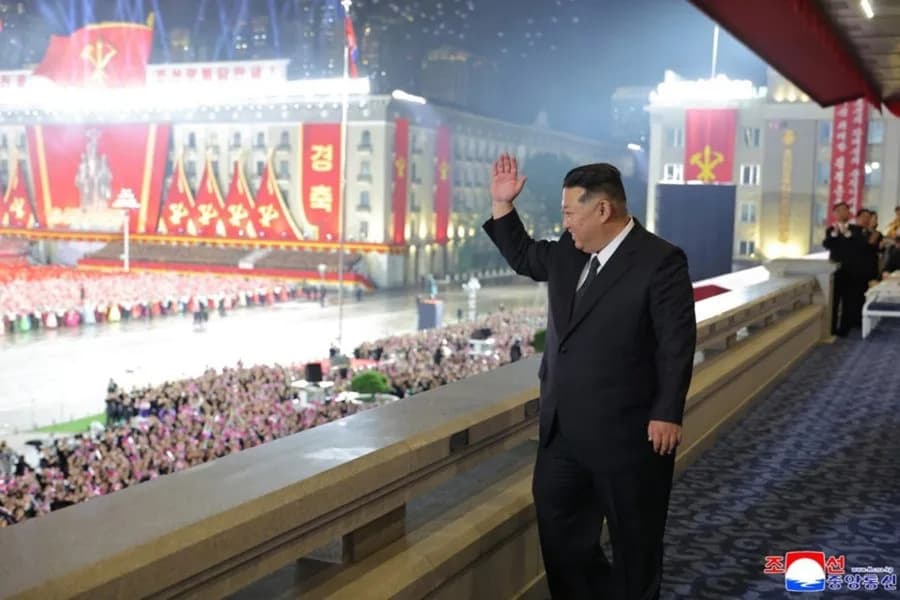
This photo provided by the North Korean government shows a military parade marking the ruling party congress, at Kim Il Sung Square in Pyongyang, North Korea, on January 14, 2021. - undefinedAP
Why scientists say testing isn’t needed
Modern nuclear laboratories can perform sub-critical experiments and sophisticated simulations that probe weapon behavior without producing a nuclear yield. As Dylan Spaulding, a senior scientist at the UCS, notes, reopening full-scale testing “is both unnecessary and unwise,” because explosive tests tend to spur competition, instability and dangerous uncertainty.
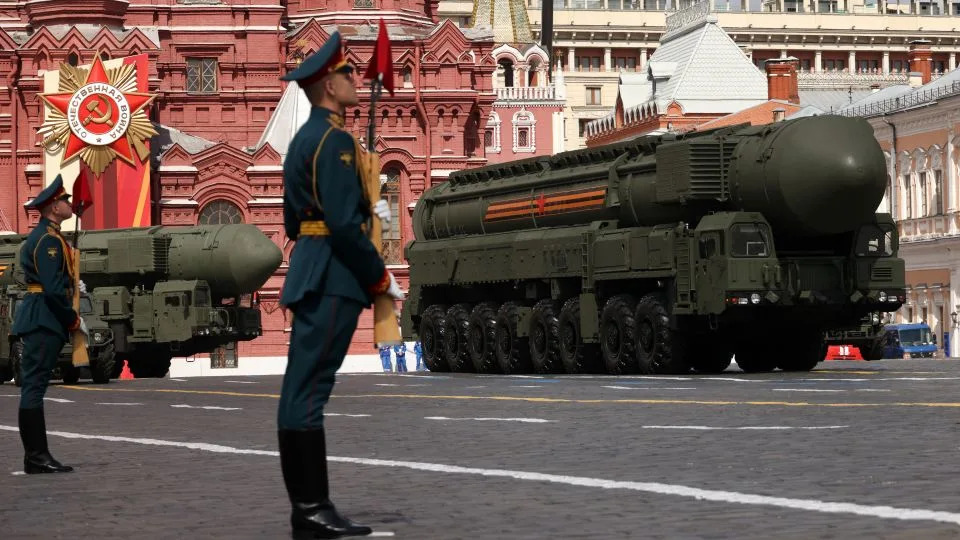
Russian RS-24 Yars intercontinential nuclear launchers during the Red Square Military Parade's rehearsal in Moscow, Russia, on May 7, 2025. - Getty Images
"Reopening this Pandora's box is both unnecessary and unwise," — Dylan Spaulding, Union of Concerned Scientists.
Strategic risks: New START and deployment
Another source of fragility is the potential lapse of New START, the 2011 U.S.–Russia treaty that limits deployed strategic warheads to 1,550 on each side. Russia currently possesses the largest stockpile (more than 4,300 warheads) and the United States about 3,700, together holding roughly 90% of the world's nuclear arsenal, per the Stockholm International Peace Research Institute (SIPRI).
A recent UCS analysis warns that, if New START lapses, the United States could quickly increase operational forces: within weeks it might place roughly 480 additional weapons at bomber bases, within months load nearly 1,000 additional warheads onto submarines, and within years add about 400 more to land-based missiles. Russia could take similar steps, dramatically raising the risks of accidents, escalation or catastrophic miscalculation.
Political signals and preparation
Public statements and directives from leaders in Washington and Moscow have heightened concerns. Announcements about preparing for tests or urging military readiness can erode norms that have helped keep detonations off the table for years. Observers warn that even signals of doubt about stockpile reliability can undermine deterrence and fuel an arms spiral.
Human and environmental costs
Nuclear testing has inflicted long-term harm on people and ecosystems at test sites worldwide, from Pacific islands to inland deserts and Arctic regions. The pause in detonations has spared further immediate harm, but renewed testing or large-scale redeployments would revive old dangers and create new uncertainties.
Conclusion
Breaking the record for the longest period without a nuclear test is cause for cautious relief, not celebration. Experts urge political restraint, continued use of non-explosive testing and diplomatic efforts to preserve arms-control measures so that the global pause does not become a brief interlude before renewed competition.
Help us improve.