Summary: A series of mid‑20th‑century Supreme Court decisions, reached amid wide use of denationalization statutes, repeatedly treated being born in the United States as sufficient to establish U.S. citizenship—regardless of parents' immigration status. Between roughly 1945 and 1967 more than 120,000 people were stripped of nationality before the Court’s decision in Afroyim v. Rusk halted the practice. Those unanimous and repeated findings are likely to play a decisive role as the Court reviews President Trump’s Jan. 20, 2025 Executive Order 14,160 seeking to limit automatic birthright citizenship.
How Forgotten Mid‑Century Supreme Court Rulings Could Decide Birthright Citizenship
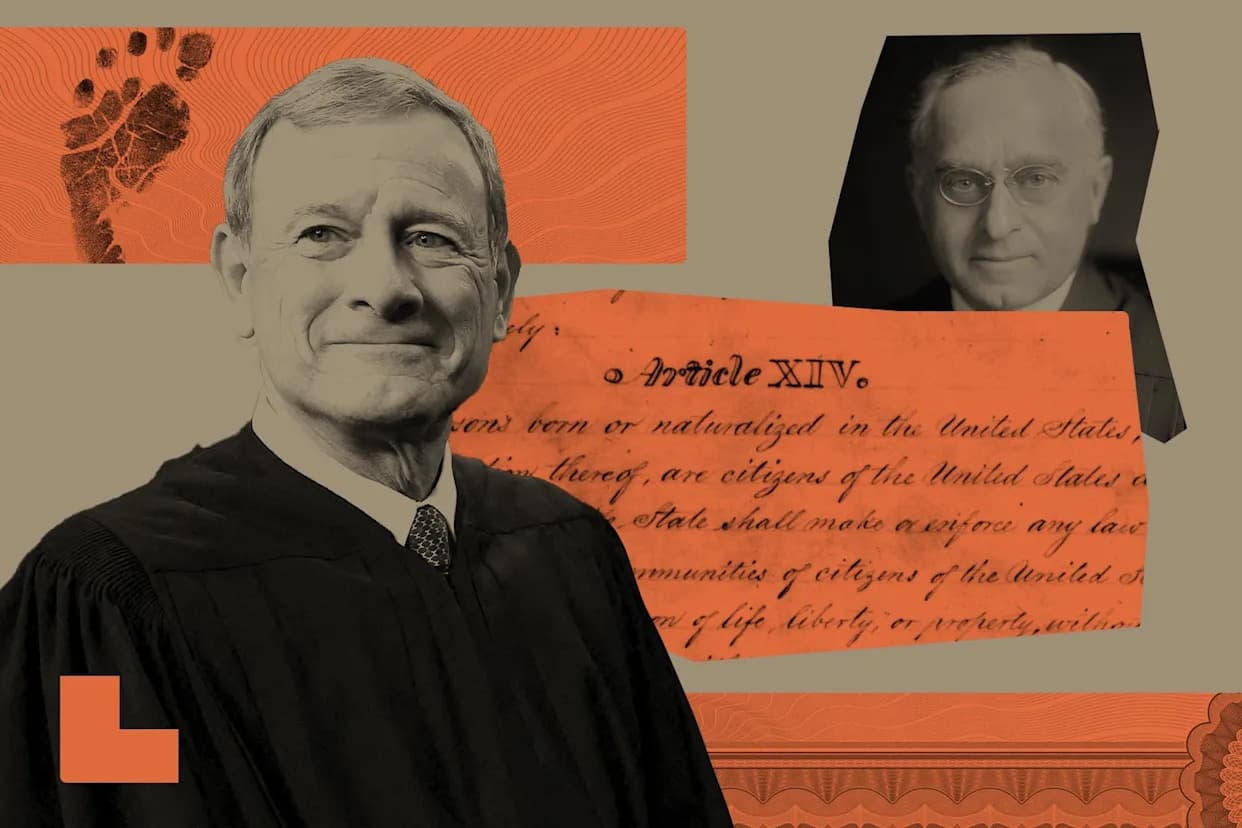
As the Supreme Court prepares to weigh the legality of President Donald Trump’s effort to narrow birthright citizenship, a cluster of mid‑20th‑century rulings—long overshadowed by the famous 1868 Wong Kim Ark decision—may prove decisive. While Wong Kim Ark established a broad rule for children born in the United States, a later, often‑forgotten wave of cases from the 1950s and 1960s clarified and reinforced that rule in practical, unanimous terms.
Background: Denationalization After World War II
Immediately after World War II, the federal government invoked provisions of the Nationality Act of 1940 to strip thousands of individuals of U.S. nationality for actions such as serving in a foreign military, voting in foreign elections, avoiding the draft, or remaining abroad for extended periods. From roughly 1945 until the Supreme Court’s 1967 decision in Afroyim v. Rusk—which declared many of those statutory expatriation provisions unconstitutional—the government denationalized an estimated 1,000–8,000 people per year, totaling more than 120,000 people.
The Mid‑Century Cases And A Unanimous Core Finding
A group of nine denationalization cases reached the Supreme Court between 1955 and 1967. These decisions were often hotly contested and frequently decided by narrow 5–4 votes, with majority coalitions shifting from case to case. Yet, despite deep divisions on other legal questions, the Court was unanimous on a critical point in these matters: individuals born on U.S. soil were, for the purposes of these cases, native‑born Americans—regardless of their parents’ immigration status.
Notable decisions and moments include the March 31, 1958 rulings in Trop, Nishikawa, and Perez, and earlier and later decisions such as Gonzales (1955), Martinez v. Mendoza (1962), and ultimately Afroyim v. Rusk (1967). In the opinions and oral arguments from this period, the Court repeatedly began by acknowledging the petitioners as citizens by virtue of birth in the United States—making parental nationality irrelevant to that threshold determination.
Justice William O. Douglas described the moment in 1958 as among the "most important constitutional pronouncements of this century," capturing the sense of gravity in the courtroom that day.
Why These Rulings Matter Now
The current dispute centers on Section 1 of the 14th Amendment: "All persons born or naturalized in the United States, and subject to the jurisdiction thereof, are citizens of the United States..." The Trump administration’s Executive Order 14,160 (signed Jan. 20, 2025) seeks to limit automatic citizenship to children with at least one parent who is a U.S. citizen or lawful permanent resident. The administration emphasizes language in Wong Kim Ark about a parent's "permanent domicile and residence" to argue for a narrower interpretation of "subject to the jurisdiction thereof."
But the mid‑20th‑century decisions present a strong counterweight: across multiple cases and justices, the Court treated birth on U.S. soil as sufficient to establish the citizenship necessary for later determinations about expatriation. To adopt the administration’s narrower reading now would require the Court to reconcile—or potentially overturn—decades of unanimous or long‑standing precedent.
What To Watch In The Upcoming Decision
Key questions include how the Court interprets "subject to the jurisdiction thereof," whether it relies on Wong Kim Ark alone, and how it treats the mid‑century precedents that repeatedly affirmed birthright citizenship in practice. The upcoming opinion will have profound legal and practical ramifications for children born on U.S. soil and for the scope of congressional and executive authority over citizenship.
Conclusion
While Wong Kim Ark remains a foundational 19th‑century precedent, the mid‑20th‑century rulings created a practical and unanimous framework—after a period of intense denationalization—that treated birth in the United States as conferring citizenship regardless of parental status. Those long‑forgotten cases are likely to be central to the Supreme Court’s deliberations this spring.
Help us improve.