Cassowaries are large, powerful birds capable of inflicting serious injury, and two recorded human deaths contributed to their fearsome reputation. Experts stress that most dangerous encounters stem from human actions—especially feeding—and that cassowaries are not naturally aggressive. They are culturally important to Indigenous peoples, act as keystone seed dispersers in rainforests, and provide living insights into dinosaur biology. Southern cassowaries are endangered, and conservation efforts focus on habitat protection, road safety, and public education.
Are Cassowaries Really the World’s Most Dangerous Bird? Separating Fact from Fear
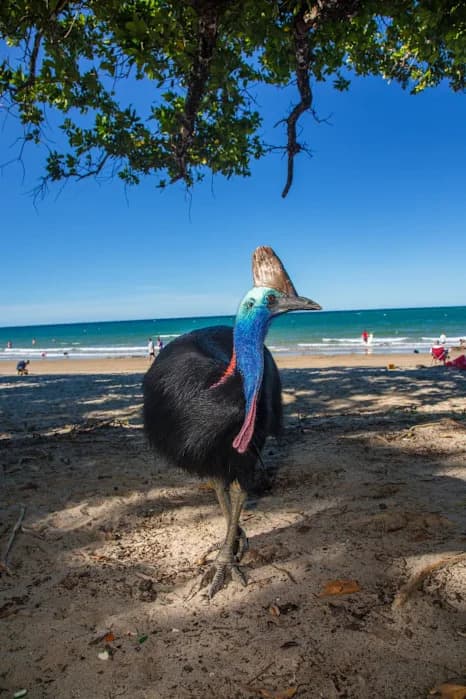
A southern cassowary stands on a beach at Etty Bay in Queensland, Australia. These endangered birds can live up to 50 years.CHRISTIAN ZIEGLER, Nat Geo Image collection
Towering at roughly five and a half feet, able to sprint up to 31 miles per hour and leap as high as seven feet, cassowaries are among the most physically formidable birds alive. They can weigh up to 175 pounds and have rear talons up to about five inches long; a powerful kick can fracture bone or cause serious internal injuries. Those facts, combined with two recorded human fatalities, have earned cassowaries a fearsome reputation.
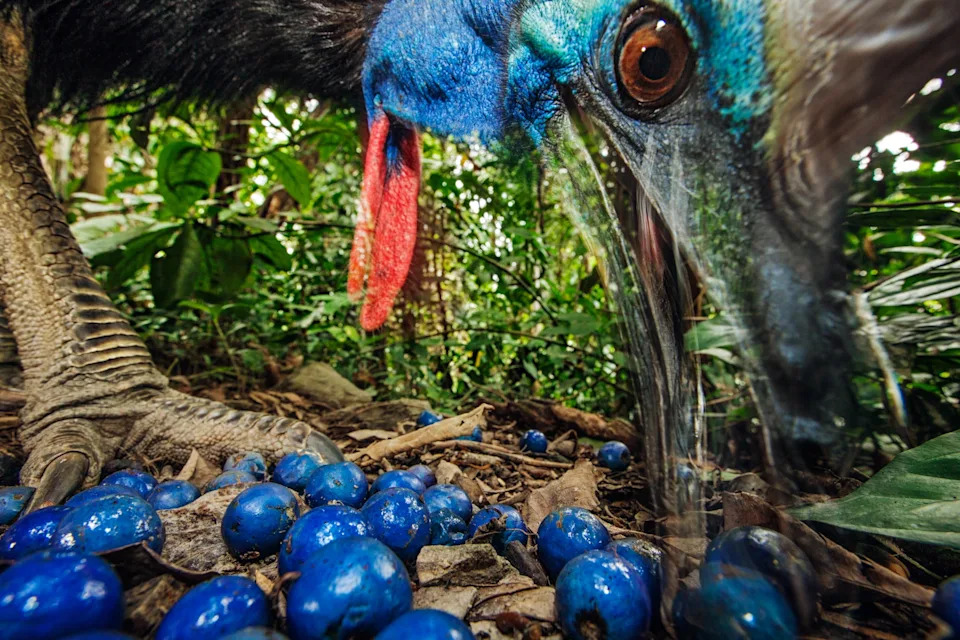
A male cassowary feasts on blue quandongs, a favorite fruit of the species.CHRISTIAN ZIEGLER, Nat Geo Image Collection
Why the Fear?
The Guinness Book of World Records once labeled the cassowary the "world’s most dangerous bird" after two high-profile deaths: a 1926 incident in Australia and a 2019 fatality in Florida involving a cassowary kept in captivity. Sensational stories and wartime warnings (troops in New Guinea were reportedly told to avoid them) helped cement the bird’s scary image.
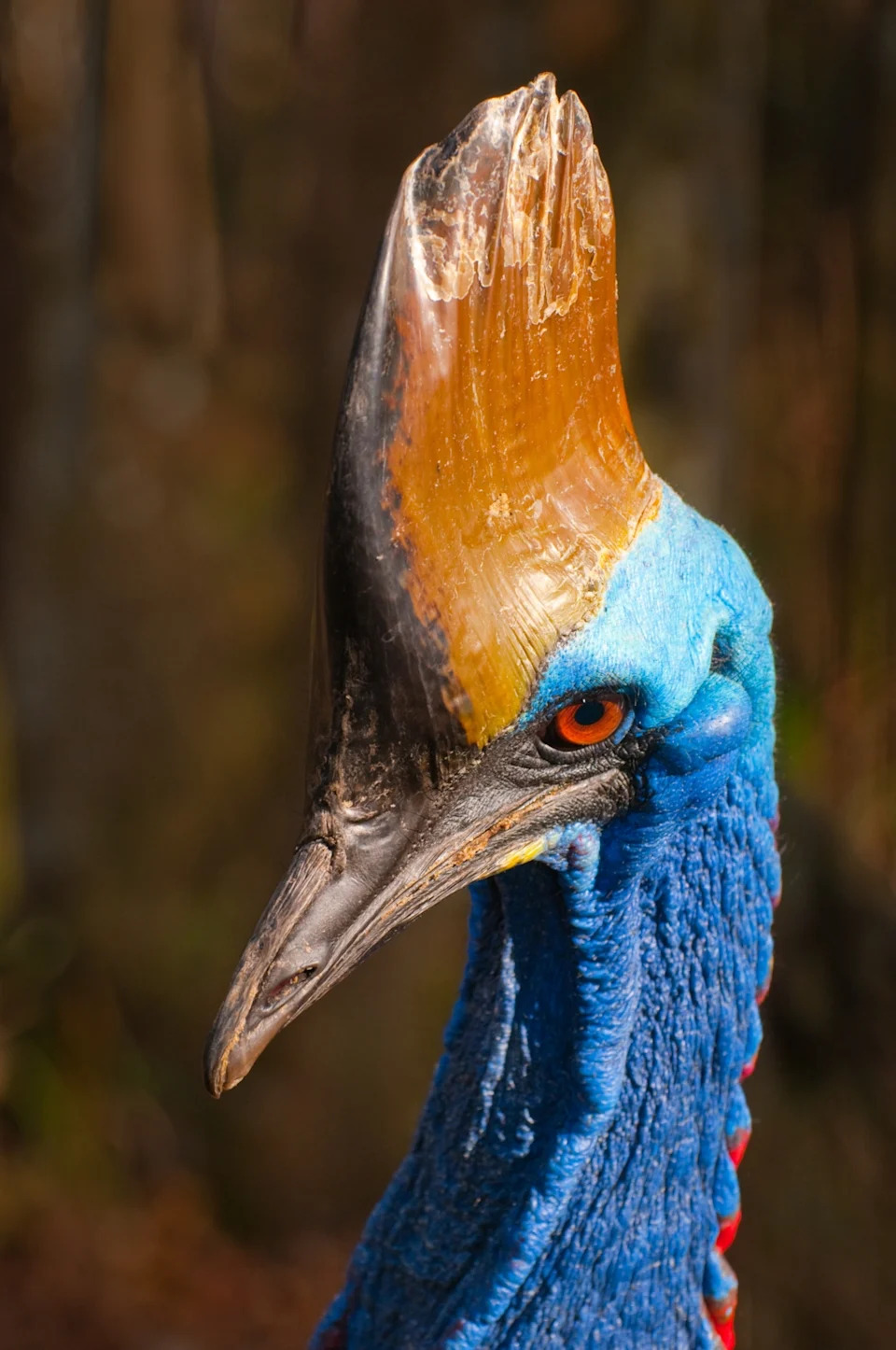
A southern cassowary at White Oak Conservation Center in Nassau County, Florida. The casque—a helmet-like structure sitting on top of the cassowary's head—acts as a thermal radiator to cool the bird in hot rainforests.Fans Lanting, Nat Geo Image collection
What Experts Say
"They have the equipment to cause a lot of damage, but if you respect them and give them space, encounters are unlikely to be dangerous," says Todd Green, a paleontologist at the New York Institute of Technology.
Allen Sheather of Rainforest Rescue’s Cassowary Recovery Team—who has worked with these birds for more than 30 years—says many alarming encounters are simply curiosity. Beverley McWilliams, author of the children’s book Cassowary Dad, notes people who feed cassowaries can unintentionally change their behavior.
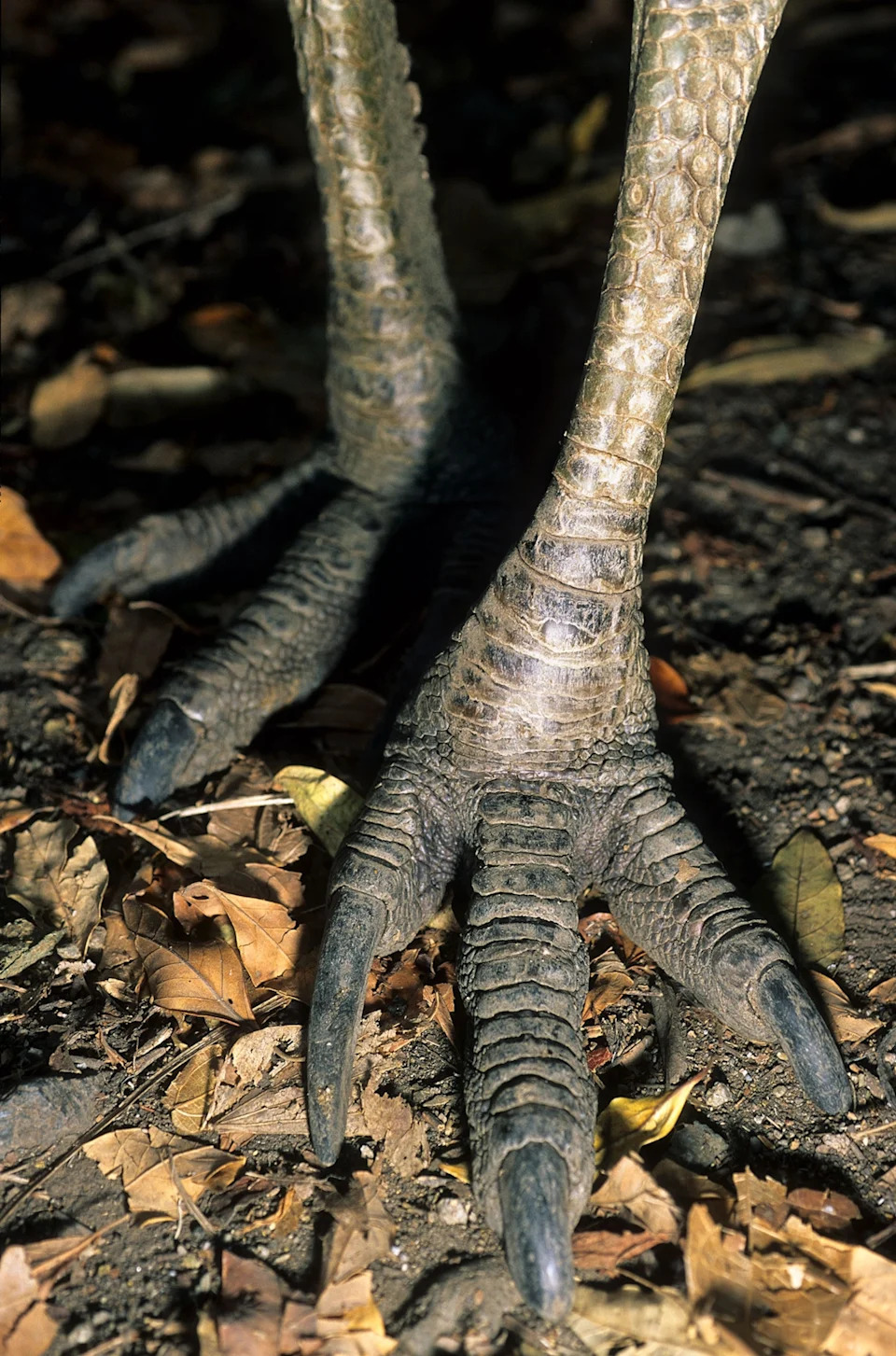
This close up shot shows the feet of a southern cassowary.Roland Seitre, Nature Picture Library
When Do Attacks Happen?
A study of about 150 reported cassowary attacks in Queensland found most incidents occurred when birds were defending food, chicks, eggs, or when they felt cornered. In roughly 75 percent of cases, people had previously fed the birds, teaching them to associate humans with food.
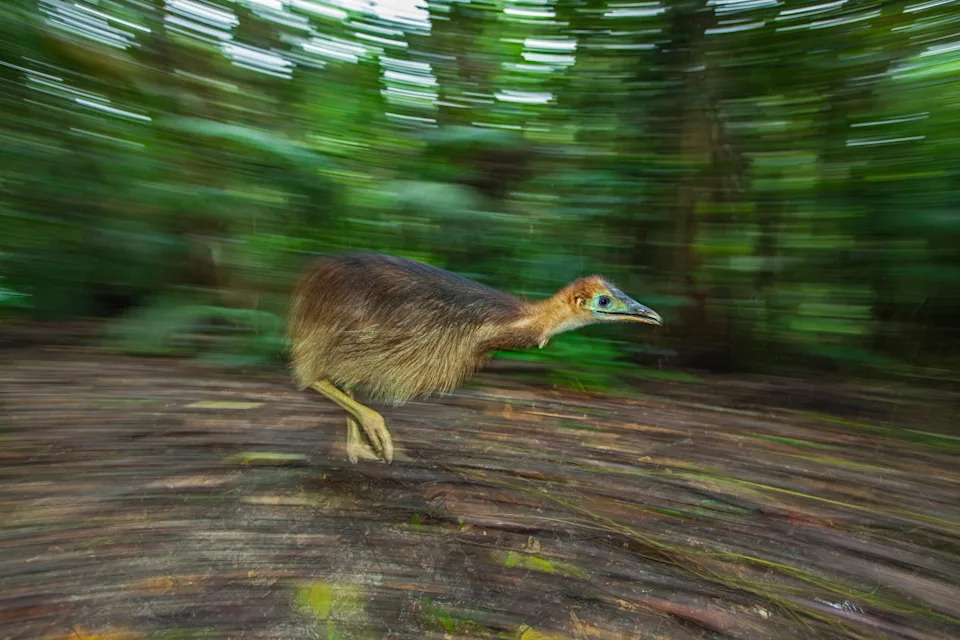
A cassowary chick runs to find a fruit it heard dropping to the ground. Cassowary chicks eat a mix of fallen fruits, insects, and small invertebrates.CHRISTIAN ZIEGLER, Nat Geo Image collection
Cassowaries and Culture
Cassowaries are deeply important to Indigenous communities in New Guinea and northern Australia. Archaeological evidence shows cassowary imagery in artifacts up to nine thousand years old, and the bird features in myths, songs, ceremonies, and traditional uses of meat, feathers, and bones.
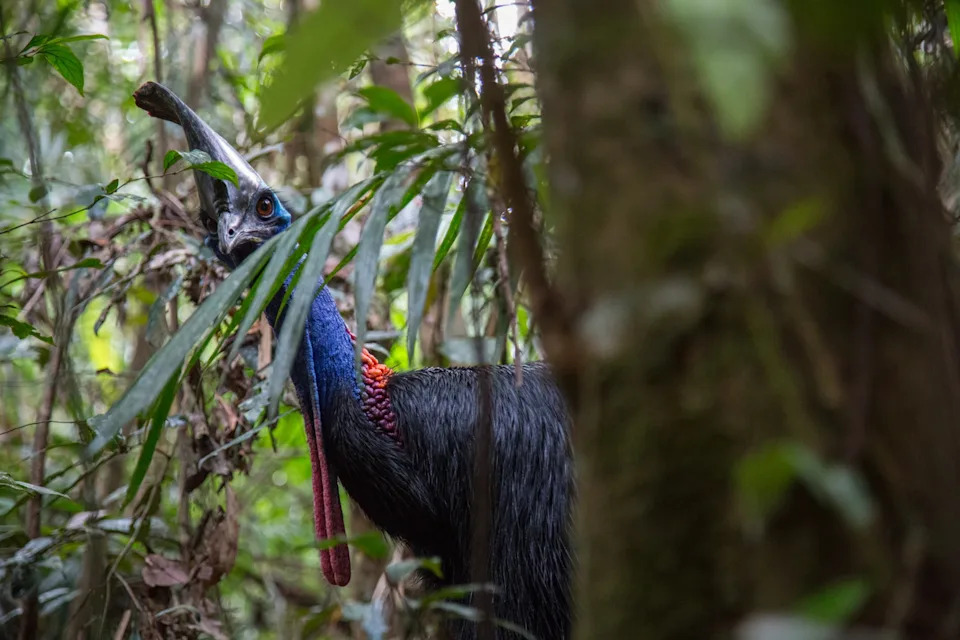
A southern cassowary stands in the foliage of the Wet Tropics of Queensland. UNESCO's World Heritage Convention recognizes this area for its extensive and varied array of plants, as well as rare and endangered animals and plant species.CHRISTIAN ZIEGLER, Nat Geo Image collection
Ecological Importance: A Keystone Seed Disperser
Cassowaries are keystone species in tropical rainforests. They swallow fruit whole and disperse seeds across wide distances, supporting forest regeneration. Some plants depend heavily on them: seeds of the rare Queensland tree Ryparosa kurrangii germinate at about 4% when planted manually but jump to roughly 92% after passing through a cassowary’s gut.
Living Dinosaurs
As descendants of theropod dinosaurs, cassowaries offer paleontologists living models for features like casque structure, sensory adaptations, feather arrangement, and locomotion. Observing cassowaries helps researchers develop plausible ideas about how some extinct dinosaurs behaved.
Conservation Status and Threats
Humans pose the greatest threat to cassowaries. Southern cassowaries in Australia are listed as endangered, with fewer than 5,000 individuals remaining. Major threats include habitat loss and fragmentation, vehicle collisions, and dog attacks. Because cassowaries mature slowly and may live up to 50 years, the loss of adult birds has long-term population consequences.
What’s Being Done
Conservation efforts include improved road signage, community education (particularly about not feeding wild birds and responsible dog ownership), habitat restoration and reconnection, and rescue and rehabilitation programs. Groups such as Rainforest Rescue and local community conservation organizations work on planting native trees, stabilizing populations, and rehabilitating injured birds.
Final Thought
Face-to-face encounters with a cassowary can be intimidating, but portraying them simply as violent predators misrepresents their behavior and endangers conservation efforts. With respect for their space and continued habitat protection, cassowaries can persist as culturally significant, ecologically vital, and scientifically valuable members of rainforest ecosystems.
"These birds are just absolutely magnificent," says Todd Green. "I will never stop appreciating them."
Help us improve.