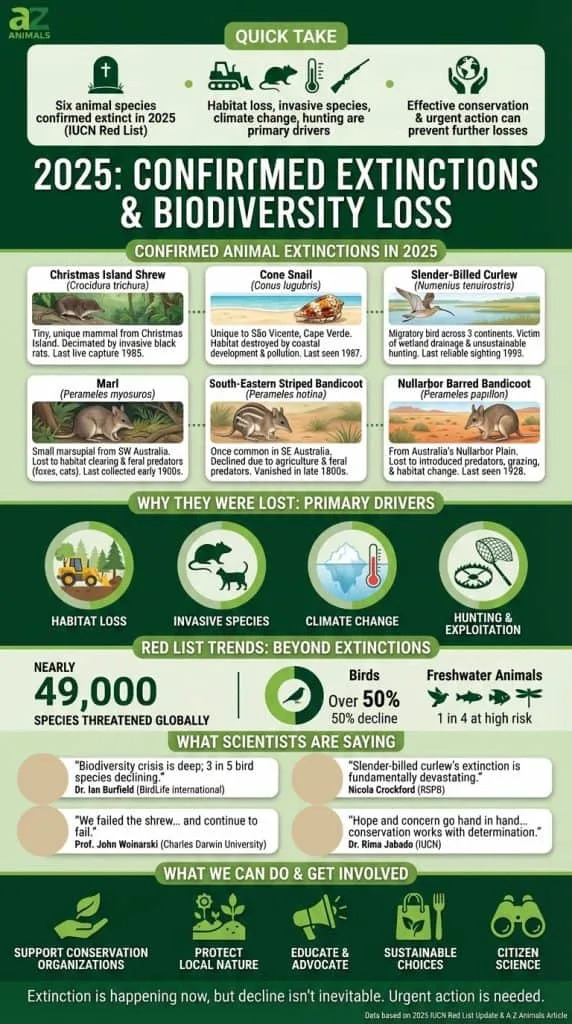
The IUCN’s 2025 Red List confirmed at least six animal extinctions — including the Christmas Island shrew and the slender-billed curlew — following decades of surveys that found no survivors. These losses reflect long-term threats: habitat destruction, invasive species, climate change and hunting. Nearly 49,000 species are now listed as threatened out of more than 172,000 assessed, underscoring an accelerating biodiversity crisis. Experts say urgent, well-funded conservation and public action can still prevent further extinctions.
IUCN Confirms Six Animal Extinctions in 2025 — A Stark Warning on Global Biodiversity Loss
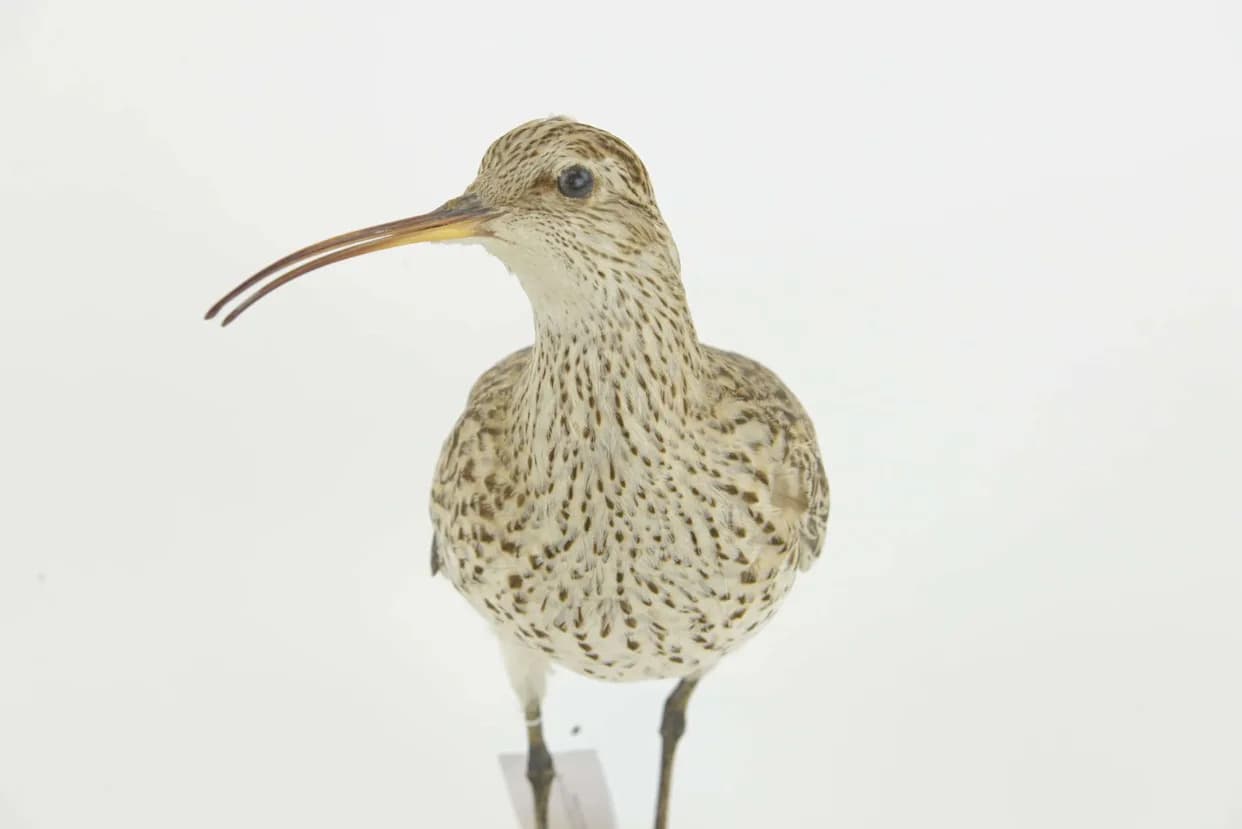
© Naturalis Biodiversity Center, CC0, via Wikimedia Commons
In 2025 the International Union for Conservation of Nature (IUCN) formally moved at least six animal species into its Extinct category after decades of targeted searches and exhaustive surveys found no remaining individuals. These official listings do not always mark the year a species disappeared; rather, they represent the conclusion of long scientific efforts to confirm the loss.
©A-Z Animals
Species Confirmed Extinct
Christmas Island Shrew — A tiny, mouse-sized mammal once common across Christmas Island. Decline began after late-1800s human settlement introduced invasive black rats and blood-borne parasites. No confirmed wild records since the mid-1980s; declared extinct in 2025.
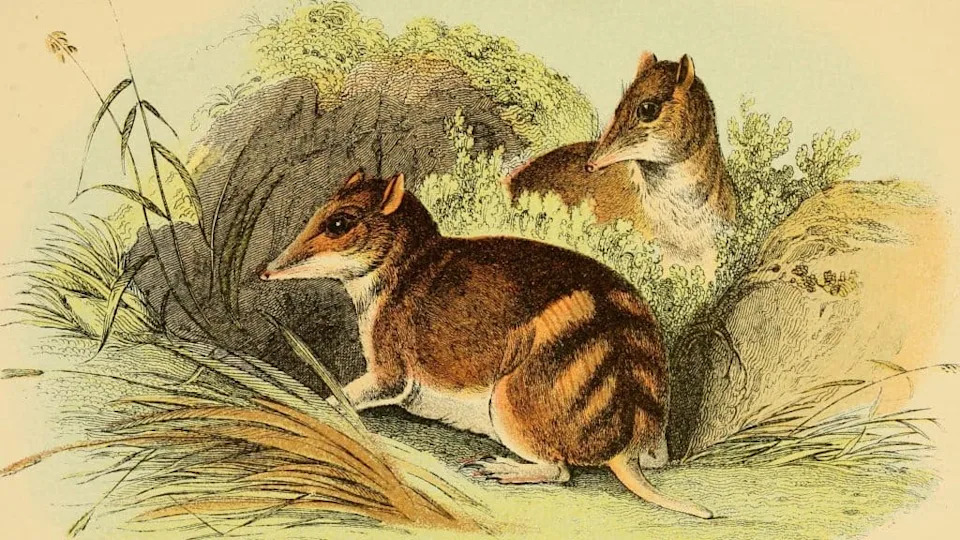
Once common, this bandicoot vanished from southeastern Australia after land-use changes and invasive predators.©Internet Archive Book Images, No restrictions, via Wikimedia Commons –Original/License
Cape Verde Cone Snail (São Vicente) — A small marine predator known for its patterned shell and potent venom. Last collected in 1987; repeated surveys failed to locate any survivors. Coastal development, pollution and shoreline degradation likely destroyed its narrow habitat.
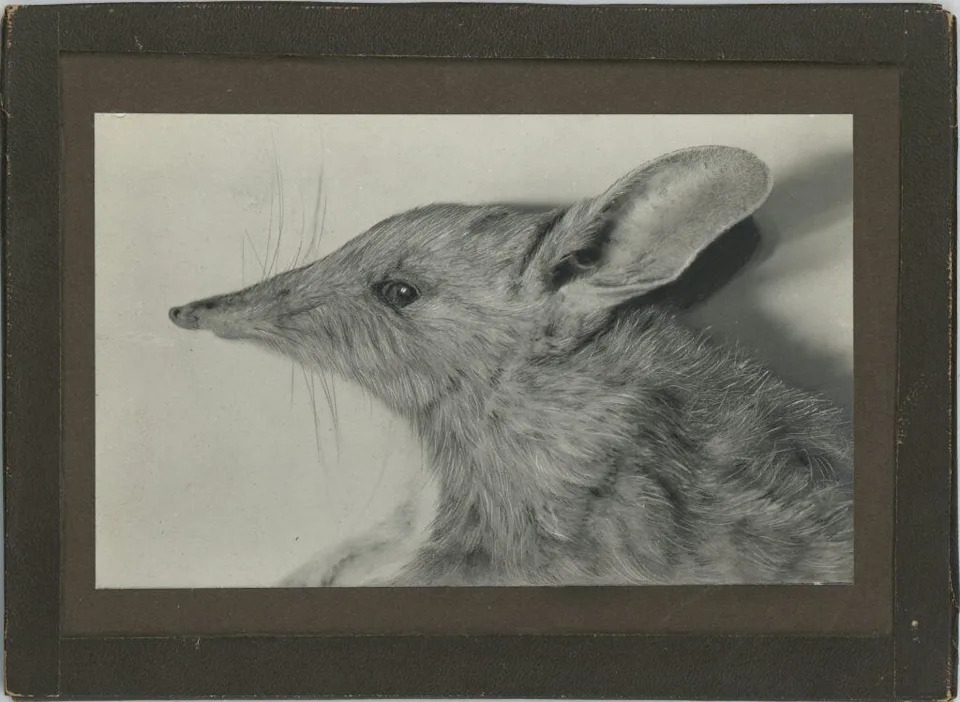
Native to southern Australia’s Nullarbor Plain, this bandicoot was lost to predators, grazing, and habitat degradation.”©Gavan Mitchell, Imaging Technician, ADAPT Lab, Department of Anatomy & Physiology, University of Melbourne, CC BY 4.0 –Original/License
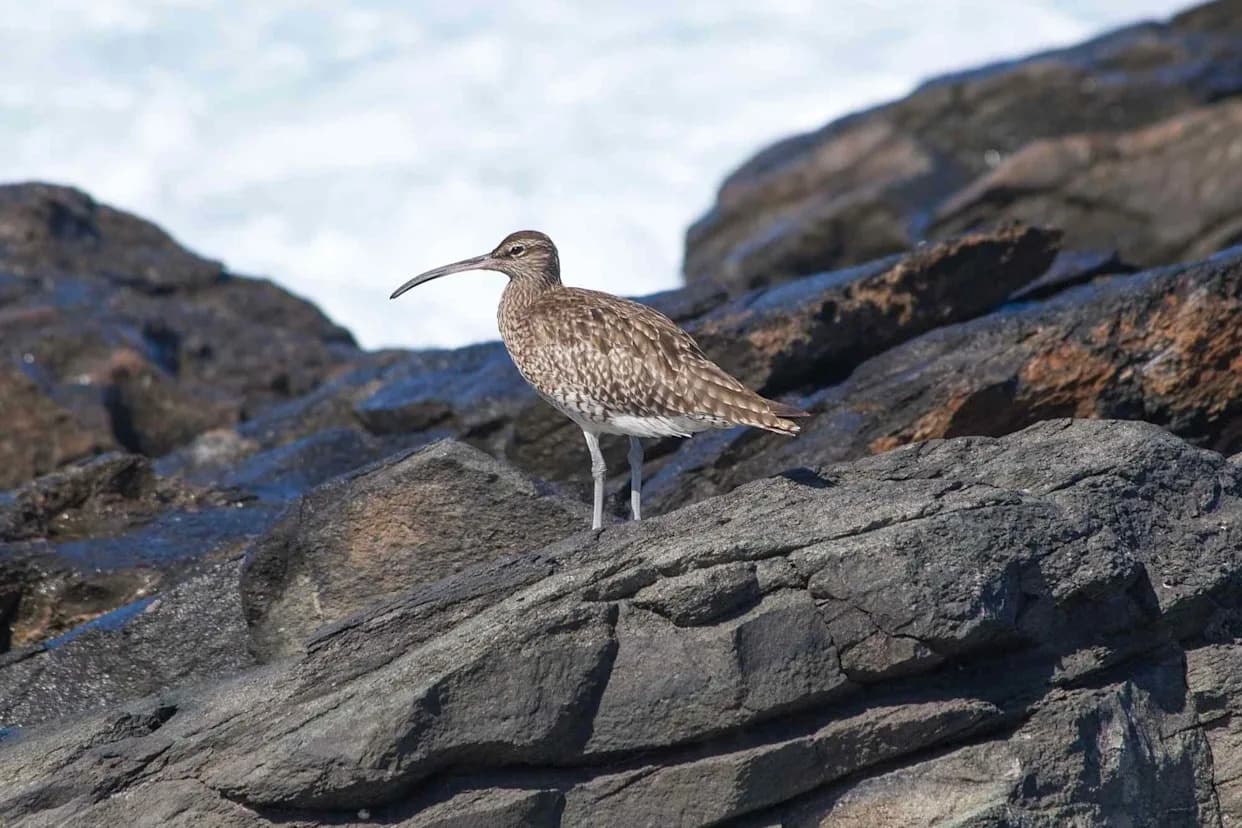
Slender-Billed Curlew — A migratory shorebird that historically ranged from western Siberia to Mediterranean and North African wetlands. Last reliable sighting in 1995; habitat loss, wetland drainage, and unsustainable hunting along flyways drove its collapse. Comprehensive reviews found no verifiable recent records.
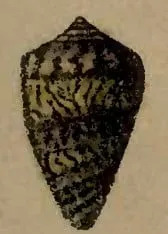
This Cape Verde snail vanished after coastal development and pollution destroyed its limited shoreline habitat©G.W. Tryon, Public domain, via Wikimedia Commons –Original/License
Marl (a Bandicoot) — A small marsupial from southwestern Australia. Known from early 20th-century museum specimens; sparse records and habitat loss from agriculture combined with introduced predators likely caused its disappearance.
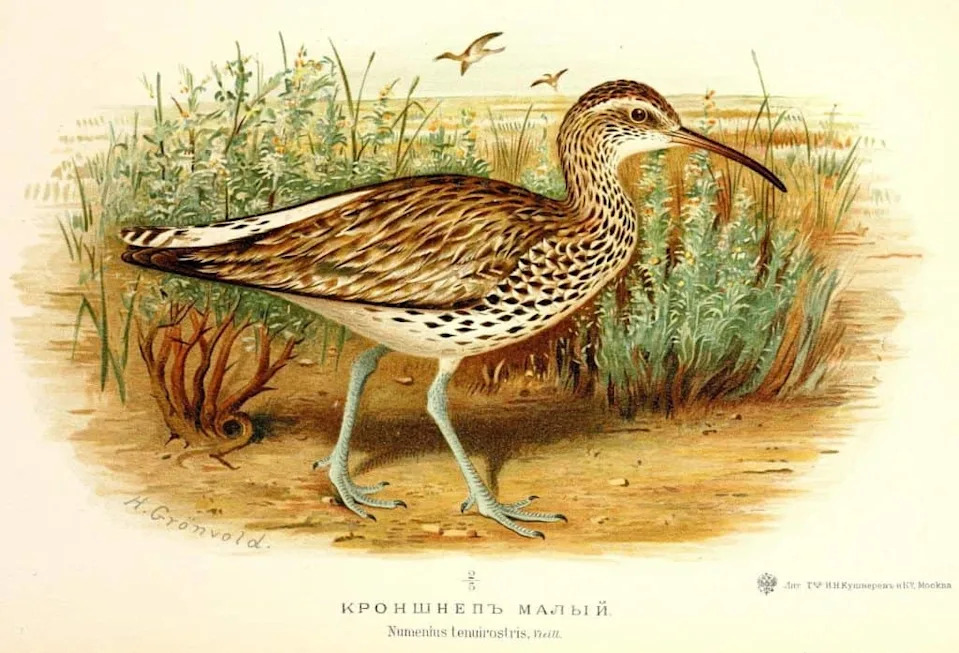
Nearly 49,000 species are now threatened globally, with birds being especially vulnerable, reflecting escalating biodiversity declines and risks©Henrik Grønvold, Public domain, via Wikimedia Commons –Original/License
South-Eastern Striped (Southern Barred) Bandicoot — Once common in southeastern Australia in the mid-1800s, it vanished after land-use change, agricultural expansion and predation by feral cats and foxes. The IUCN assessment confirmed extinction in 2025.
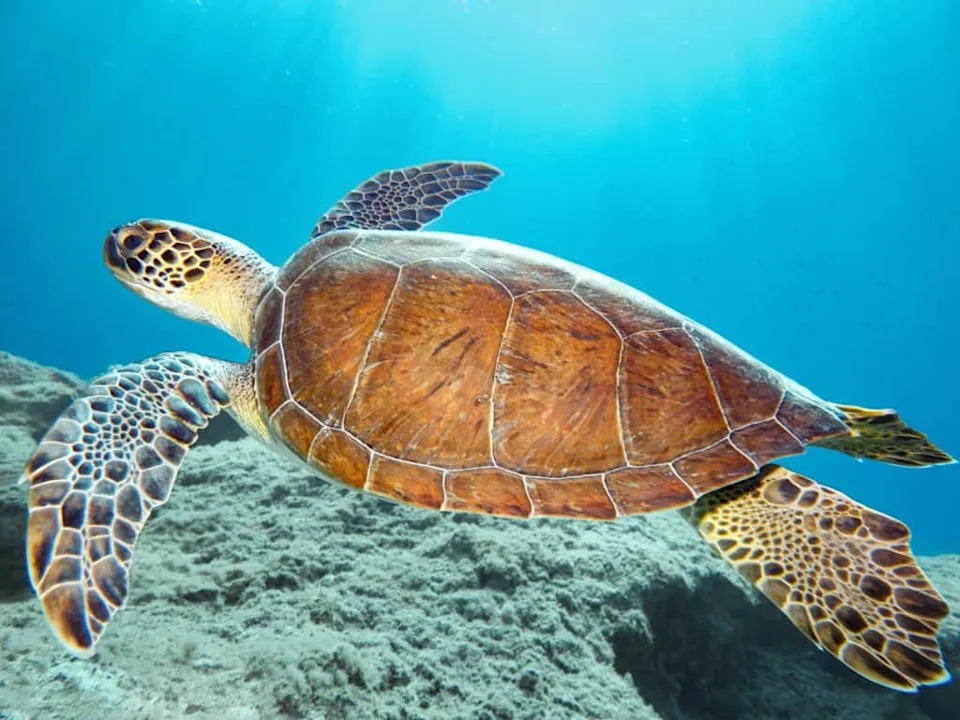
Once endangered, the green sea turtle shows how long-term conservation can bring species back from the brink.©Sakis Lazarides/Shutterstock.com
Nullarbor Barred Bandicoot — Native to the Nullarbor Plain of southern Australia and known mainly from specimens collected through 1928. Introduced predators, grazing by livestock and rabbits, and altered fire regimes contributed to its loss.
Plants Also Lost
At least two plants were declared extinct in 2025: Diospyros angulata (a tree native to Mauritius) and Delissea sinuata (once found in the Waianae Mountains of Oʻahu, Hawaiʻi).
Underlying Drivers
The causes behind these extinctions reflect broader global threats:
- Habitat Loss and Modification: Land clearing, wetland drainage, urbanization, mining and agricultural conversion remove essential breeding and feeding sites.
- Invasive Species: Introduced predators and competitors — notably rats, cats and foxes — have devastated island and mainland species with limited ranges.
- Climate Change: Altered temperatures and precipitation regimes increase stress on already vulnerable species and can accelerate decline.
- Hunting and Exploitation: Unsustainable hunting along migratory routes and local overharvesting have historically driven declines for many birds and mammals.
What the 2025 IUCN Update Shows
The 2025 Red List update underscores a widening crisis: nearly 49,000 species are now classed as threatened (Vulnerable, Endangered or Critically Endangered) out of more than 172,000 assessed. Birds and freshwater species show particularly alarming declines, with more than half of bird species experiencing population drops and nearly one in four freshwater species at high risk.
“The loss of species like the slender-billed curlew and the Christmas Island shrew is a sobering reminder that extinction is happening now,” said conservation experts, while also noting that targeted, well-funded conservation can produce recoveries — such as the green sea turtle.
How Individuals and Communities Can Help
While systemic change is essential, people and communities can make meaningful contributions:
- Support Conservation Organizations: Donate, volunteer, or advocate for groups that protect habitats and run recovery programs.
- Protect Local Habitats: Plant native species, reduce pesticide use, and restore urban green spaces and wetlands.
- Advocate: Contact elected officials to support stronger environmental protections and policies that reduce habitat destruction.
- Make Sustainable Choices: Reduce consumption pressures on natural systems by choosing sustainably sourced products and lowering waste.
- Join Citizen Science: Participate in local surveys and monitoring to help track species trends and inform conservation efforts.
Where to Learn More
Organizations working globally on species and habitat protection include the National Fish and Wildlife Foundation (NFWF), IUCN Save Our Species, The Nature Conservancy (TNC) and Rainforest Trust. Supporting reputable groups focused on habitat protection, restoration and species recovery helps amplify impact.
The IUCN’s formal recognition of these extinctions in 2025 is both a mourning of confirmed losses and a call to urgent action: with coordinated, sustained effort from governments, communities and individuals, more extinctions can still be prevented.
Help us improve.