New Zealand's critically endangered kakapo have started breeding for the first time in four years, with conservationists reporting 236 birds across three island populations and 83 females of breeding age. Officials are hopeful this season could produce the most chicks on record, with hatchings expected from mid-February. The Kakapo Recovery Programme, begun in 1995 with Ngāi Tahu when only 51 birds remained, aims to build healthy, self-sustaining populations and gradually reduce intensive management.
Kakapo Breeding Resumes in New Zealand After Four-Year Hiatus — Conservationists Hope for Record Hatch
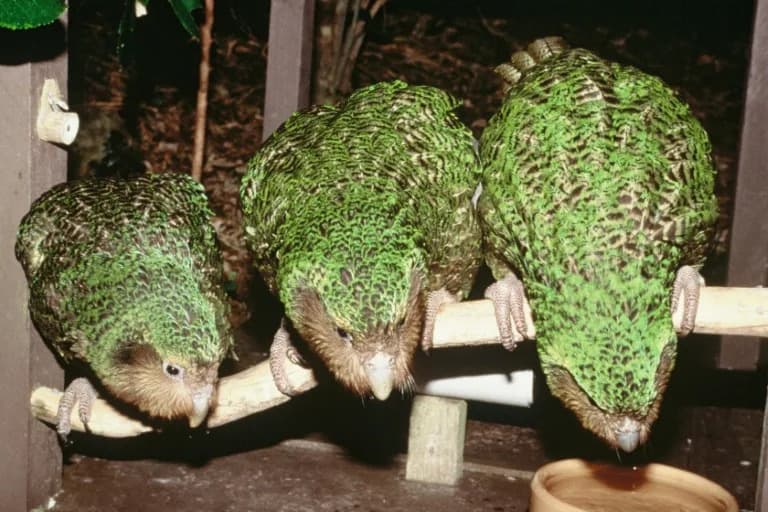
New Zealand's critically endangerd kakapo parrot only breeds every few years. (Don Merton)(Don Merton/DEPARTMENT OF CONSERVATION/AFP)
New Zealand's critically endangered, flightless parrot, the kakapo, has begun breeding again for the first time in four years, the Department of Conservation (DOC) said. Conservation teams report there are now 236 kakapo living in three separate breeding populations on remote southern islands.
Among them are 83 females of breeding age, and officials say there is optimism this season could produce the highest number of chicks on record. The first chicks are expected to hatch in mid-February, with more mating anticipated over the coming month.
"It's always exciting when the breeding season officially begins, but this year it feels especially long-awaited after such a big gap since the last season in 2022," said Deidre Vercoe, DOC's kakapo recovery operations manager.
Vercoe added that while boosting chick numbers is vital, the programme's longer-term aim is to develop healthy, self-sustaining populations and to gradually reduce intensive, hands-on management so the birds can return to a more natural state.
Recovery Efforts and Recent History
The Kakapo Recovery Programme was launched in 1995 by DOC in partnership with the indigenous iwi Ngāi Tahu, at a time when the species had dwindled to just 51 birds. By 2022 the population had rebounded to 252, but 16 kakapo have died over the past four years, leaving 236 today.
This mating season is the 13th in the past 30 years; kakapo typically breed every two to four years. Tane Davis, a Ngāi Tahu representative on the recovery programme, said there is hope kakapo will one day thrive more widely across New Zealand's South Island.
Conservation teams will continue close monitoring, veterinary support and targeted interventions where necessary while working toward reduced intervention and greater natural resilience in kakapo populations.
Help us improve.