President Donald Trump and Republican lawmakers have launched an aggressive, multi‑state effort to redraw congressional maps mid‑cycle to shore up the party’s slim majority in the U.S. House. Democrats have mounted countermeasures of their own, producing a wave of legal fights and high‑stakes court decisions that will help determine control of Congress.
Recent High‑Profile Rulings
A federal court recently upheld California’s new congressional map, drawn by Democrats and approved by voters, a plan intended to improve Democratic chances to flip as many as five GOP seats in the state. The Trump administration filed suit after voters overwhelmingly approved the map.
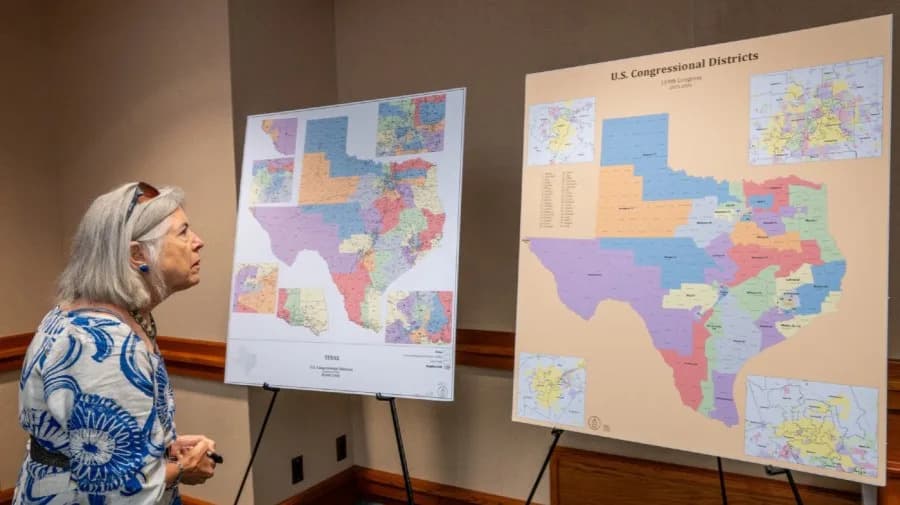
Separately, the U.S. Supreme Court stayed a lower court order that had blocked Texas from using a new map that could create up to five additional Republican‑leaning seats, clearing the way for Texas to deploy that map for the upcoming midterms.
Why This Matters
Redistricting — the redrawing of congressional district boundaries — normally follows the decennial census. But with the House narrowly divided, mapmaking has become a decisive political tool. Mid‑decade redraws, once rare, are now being used strategically to shape competitive races and protect incumbents.
How The Process Varies By State
Procedures differ widely across states. In some, state legislatures can redraw maps unilaterally if they control the political levers; in others, changes require constitutional amendments, independent commissions, or direct voter approval. Republicans currently control more state governments, which gives them more opportunities to enact maps favorable to their party. Some Democratic‑led states had previously shifted map‑drawing authority to independent commissions — moves that are now being challenged or reversed in several places.
Racial And Political Stakes
These redraws carry significant racial and representation implications. Of nine House members identified as targeted by Republican‑drawn maps nationwide, six are Black or Latino, underscoring how map changes can affect communities of color. Ongoing legal challenges and potential rulings from the Supreme Court — including decisions that could limit parts of the Voting Rights Act — could further alter the landscape and make it easier for state legislatures to adopt more aggressive maps.
What To Watch
Expect continued litigation in multiple states and closely watched decisions from federal appeals courts and the Supreme Court. News outlets, advocacy groups and campaigns will be tracking map changes because even small line adjustments can shift a handful of seats and, with them, control of the House.
Note: CNN is tracking new maps and will update this report with the latest state‑level developments. This story has been updated with additional information. Reporting contributed by Molly English, Arit John and Dianne Gallagher. Photo illustration by Alberto Mier/CNN; image elements from state legislatures in California and Missouri and from @SenatorBerger on X.