Archaeologists have uncovered Svælget 2, a nearly 92-foot medieval cog found near Copenhagen and dated by tree rings to about 1410 CE. Buried under roughly 40 feet of sand and silt, the wreck is exceptionally well preserved and contains rare traces of rigging and structural timbers. The excavation provides the first clear archaeological evidence of bow and stern "castles" on a cog and yields roughly 20 times more material than previous wrecks, offering new insight into large-scale medieval shipbuilding and seafaring.
Largest Intact Cog Ever Found: 92‑ft 'Svælget 2' Unearthed Near Copenhagen
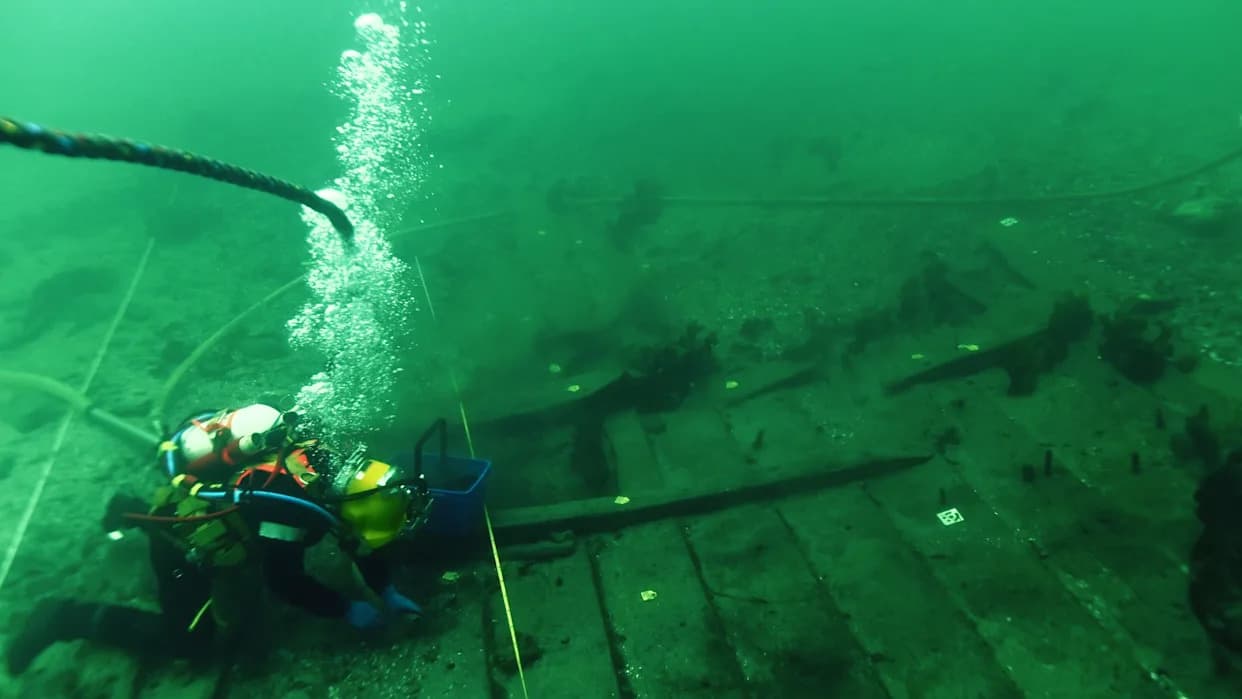
The shipwreck is located off the coast of Copenhagen and is one of the most well-preserved ever found.
Archaeologists in Denmark have unearthed Svælget 2, a nearly 92-foot (28 m) medieval cog discovered in a channel near Copenhagen. Although popularly described as a "Viking" find in some reports, dendrochronology dates the ship's construction to about 1410 CE in the Netherlands—after the Viking Age—making it a remarkable example of late medieval northern European shipbuilding.
Exceptional preservation: Nearly 40 feet of sand and silt buried the wreck after it sank, shielding the hull from the decay that normally consumes wooden ships. That burial preserved unusually large amounts of original material, including rare traces of rigging and structural timbers.
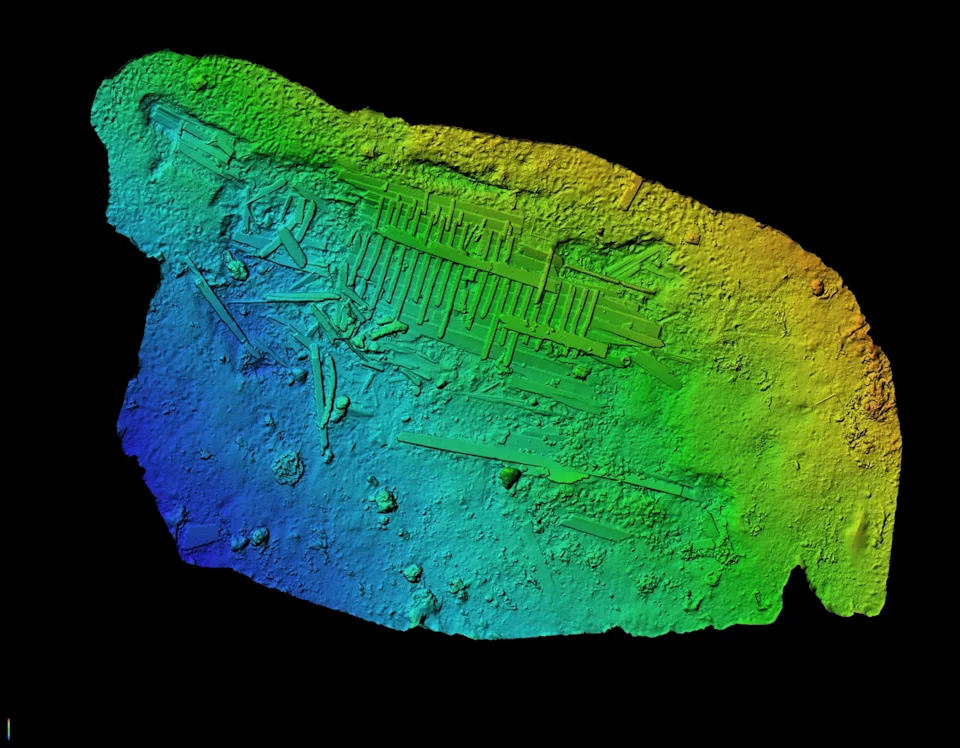
A 3D elevation map showing the remains of Svælget 2. Credit: Viking Ship Museum
New evidence of 'castles': For the first time in an archaeological context, excavators have identified clear remains of tall wooden platforms at both the bow and stern—long depicted in historical illustrations as "castles" but previously unconfirmed by material evidence. At the stern, investigators found features of a covered deck that would have provided shelter and protection for the crew.
"The find is a milestone for maritime archaeology," said excavation lead Otto Uldum. "It gives us a unique opportunity to understand both the construction and life on board the biggest trading ships of the Middle Ages."
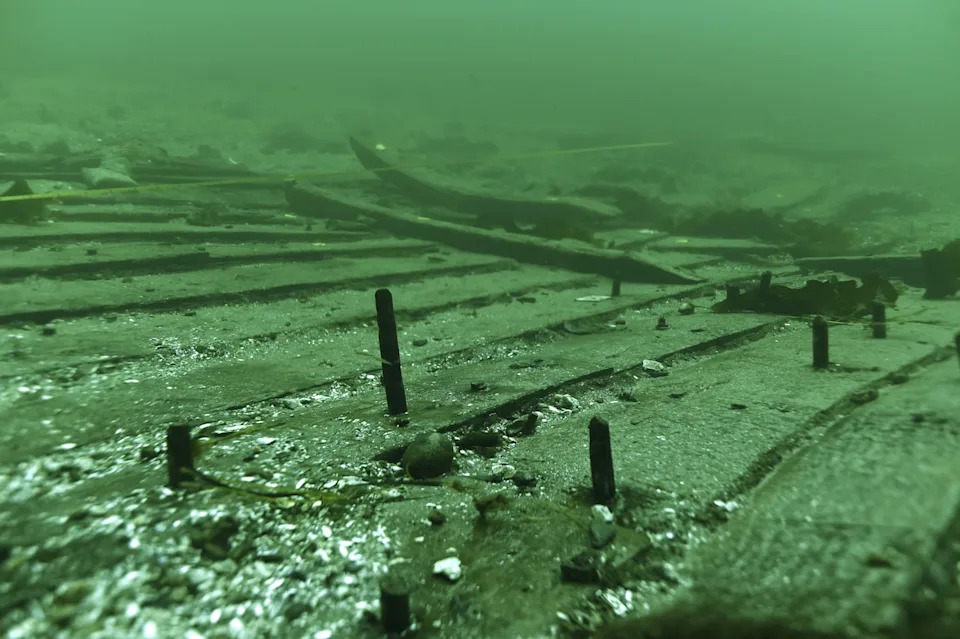 Despite its size, the cog required a relatively small crew to pilot. Credit: Viking Ship Museum
Rigging and sailing technology: Svælget 2 preserves more rigging-related material than any earlier cog wreck—evidence that will help researchers reconstruct how relatively small crews controlled large sails and masts on long trading voyages. "Rigging is absolutely central to a medieval ship," Uldum noted, "as it makes it possible to control the sail, secure the mast and keep the cargo safe."
Research value: Excavators estimate Svælget 2 yields roughly 20 times more surviving material for study than previously recovered cogs. That wealth of evidence will allow researchers to refine models of construction techniques, shipboard life and the scale of maritime commerce in late medieval northern Europe.
Broader significance: While the wreck does not overturn current views of medieval trade, it confirms that the cog ship type could be built at larger scales than previously documented and underscores the resources, organization and technical skill needed to produce such vessels.
Next steps: Archaeologists will continue careful excavation, conservation and analysis of timbers, rigging remains and associated finds. Dendrochronological data, detailed carpentry study and material analysis will inform publication and museum displays in the coming years.
Help us improve.