Elon Musk told attendees at SpaceX’s Starbase that he wants to "make Star Trek real," envisioning large interplanetary ships carrying people to the Moon, Mars and beyond. U.S. War Secretary Pete Hegseth echoed the line with a Vulcan salute and used the visit to call for U.S. technological supremacy and an "AI-first" military that could integrate platforms such as Grok and Google’s Gemini. Supporters praise the blending of commercial innovation with national strategy; critics warn of engineering, oversight and ethical hurdles.
The Vulcan Salute: Musk’s ‘Make Star Trek Real’ Vision Echoed by U.S. War Secretary as Pentagon Pushes an AI-First Force
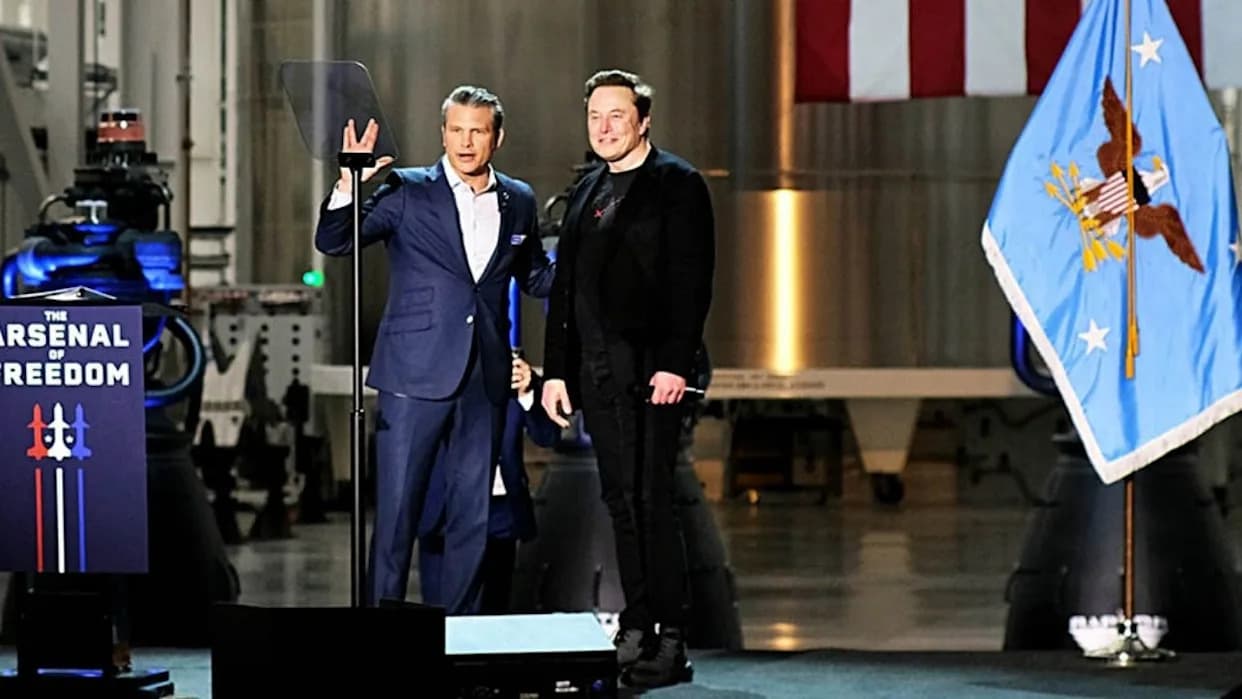
Image Credit: US Dept. of War.
Elon Musk stood before a crowd at SpaceX’s Starbase complex in South Texas and offered another sweeping vision: "We want to make Star Trek real." The remark—framed as a future in which large interplanetary ships routinely carry people between worlds—quickly became the headline line when U.S. War Secretary Pete Hegseth echoed it and flashed a Vulcan salute while standing beside Musk.
From Stagecraft to Strategy
The scene read like a Hollywood tableau: a private-sector billionaire who reshaped cars and rockets, a combative senior defense official, and SpaceX vehicles visible in the background. The audience included aerospace engineers, Pentagon personnel and invited guests. In that blend of Silicon Valley and Washington, Musk’s sci-fi shorthand served a purpose—painting an aspirational picture of the future that captures public imagination and helps frame policy discussions.
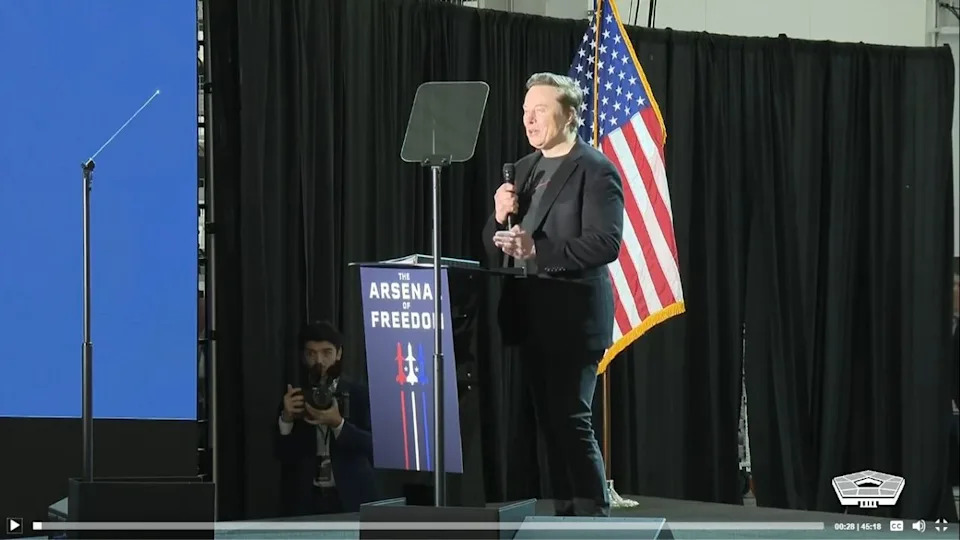
Image Credit: US Dept. of War.
What Musk Said
Musk described SpaceX not only as a launch provider but as an engine for turning what once seemed like science fiction into tangible projects: "spaceships going through space—big spaceships—with people going to other planets, going to the Moon and ultimately beyond our star system," he said, adding that humanity might even encounter alien life as part of the exploration story. "I don't know, but we want to go, and we want to see what's happening," he told the crowd to applause.
What Hegseth Said
Hegseth seized the moment to link Musk’s ambitions to U.S. defense priorities. He repeated "Star Trek real," delivered the Vulcan salute, and used the visit—part of the War Department’s "Arsenal of Freedom" tour—to argue the United States must "win the strategic competition for 21st century technological supremacy." He also outlined plans to integrate advanced artificial intelligence platforms, naming Musk’s Grok alongside Google’s Gemini, toward building what he described as an "AI-first, war-fighting force."
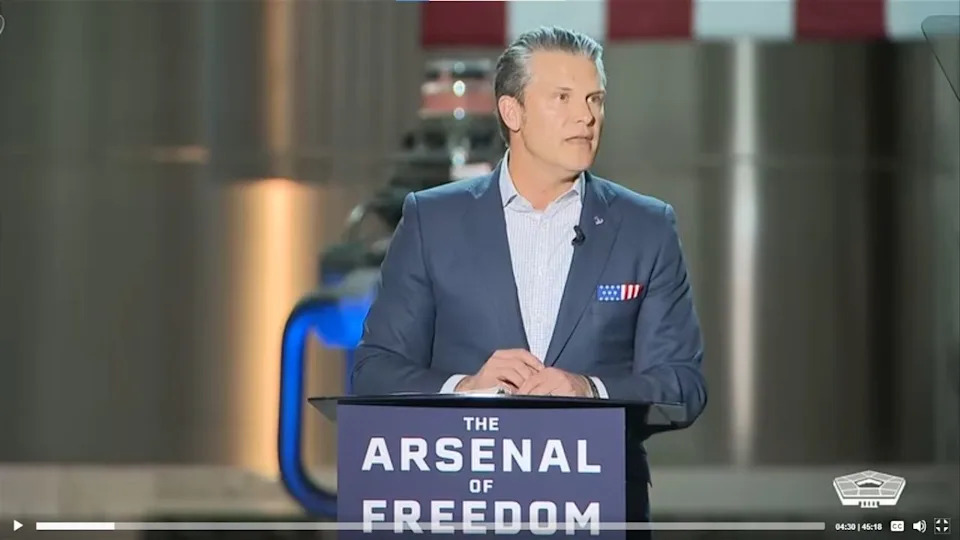
Image Credit: US Dept. of War.
"Outdated acquisition processes must give way to rapid innovation," Hegseth said, arguing for faster adoption of commercial technologies in defense systems.
Why It Matters
The pairing of Musk and a senior defense official highlights a broader trend: governments increasingly look to commercial innovators to move faster and cut costs. Supporters point to SpaceX’s success scaling rocket production and reducing launch prices as a model for modernizing defense acquisition and national space strategy.
Critics warn the rhetoric risks glossing over hard realities. Deep-space travel faces immense scientific and engineering challenges that may be decades—or longer—away from operational reality. Closer integration between private tech firms and national defense raises questions about oversight, procurement transparency, civil-military boundaries and ethical use of AI.
Bottom Line
The event crystallized a narrative: American ingenuity and commercial innovation could push humanity toward a far-reaching spacefaring future. Whether that future looks like Star Trek depends on translating rhetoric into engineering breakthroughs and resolving the policy, ethical and oversight issues that come with tighter ties between industry and the military.
Help us improve.