UCL researchers reanalysed four genetic datasets (nearly 470,000 people) and report that APOE gene variants — especially the common ε3 allele alongside ε4 — may account for over 90% of Alzheimer's cases at the population level. The study suggests ε3 is not neutral and that different APOE allele combinations change the protein's function, affecting neuronal repair, inflammation and amyloid clearance. Authors propose that targeting APOE or its pathways could prevent many cases, but translating this into safe, effective therapies will be technically and clinically challenging.
One Gene's Variants Could Underlie Over 90% Of Alzheimer's Cases, UCL Study Suggests

Just One Gene May Be Responsible For Over 90% of Alzheimer's Cases
New research led by University College London (UCL) researchers suggests that specific variants of a single gene, APOE, and the protein it encodes may underlie more than nine out of 10 Alzheimer's disease cases. The study reanalysed four genetic datasets covering almost 470,000 people and mapped how different APOE allele combinations influence population-level disease risk.
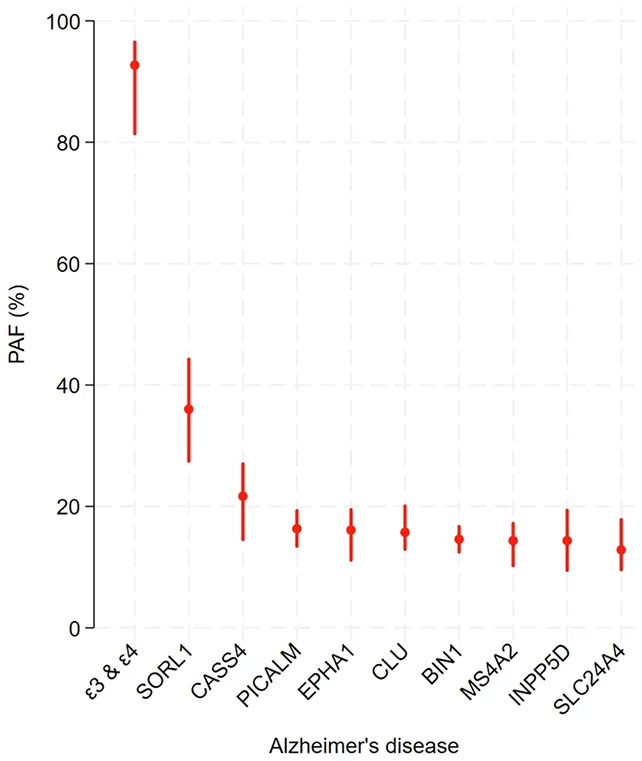
Population estimates of the proportion of Alzheimer's disease attributable to different risk-associated genes suggested certainAPOEvariations (far left, ε3 & ε4) are linked to most cases. (Williams et al.,NPJ Dement., 2026)
APOE Alleles: Not As Simple As ‘Neutral’
The APOE gene has three common alleles: ε2 (associated with relative protection), ε3 (the most common allele, historically considered neutral) and ε4 (known to increase Alzheimer's risk). The new analysis finds that ε3 is not truly neutral and, together with ε4, contributes far more to Alzheimer’s incidence than previously appreciated.
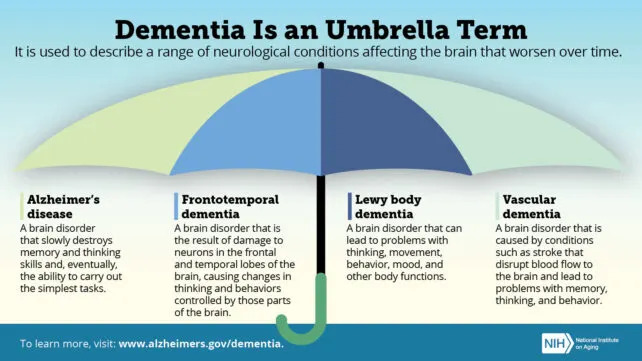
Alzheimer's disease is the most common type of dementia. (NIH)
“When we consider the contributions of ε3 and ε4, we can see that APOE potentially has a role in almost all Alzheimer's disease,”
— Dylan Williams, Genetic Epidemiologist, UCL
How Allele Combinations Affect Risk
Everyone inherits two APOE copies (one from each parent), producing six possible genotype combinations. The ε2/ε2 genotype is the most protective, while ε4/ε4 confers the highest risk; most people fall between these extremes. Different allele pairings alter the APOE protein's structure and function, which in turn affects brain processes tied to Alzheimer's — including neuronal repair, regulation of inflammation, and the clearance of amyloid-beta protein aggregates.

Subscribe to ScienceAlert's free fact-checked newsletter
Population Impact And Implications For Treatment
Based on population estimates from the combined datasets, the authors conclude that APOE ε3 and ε4 together could explain a very large share of Alzheimer's cases, and APOE-related effects might account for nearly half of broader dementia diagnoses. They propose that therapies targeting APOE or the molecular pathways linking APOE to disease processes could substantially lower population risk, potentially shifting many people toward risk levels seen with the protective ε2/ε2 genotype.
However, the researchers stress important caveats: genetic risks interact with environmental and lifestyle factors (for example, obesity, social isolation, and sleep deprivation) in complex ways that this study does not resolve. Translating these findings into treatments will be difficult — targeting genes or proteins safely and effectively is technically challenging, and any gene-based interventions would require rigorous development and oversight.
“Intervening on the APOE gene specifically, or the molecular pathway between the gene and the disease, could have great, and probably under-appreciated, potential for preventing or treating a large majority of Alzheimer's disease,”
— Dylan Williams
The study has been published in NPJ Dementia. While this research highlights an important potential target, the authors advocate exploring multiple strategies to reduce Alzheimer's and dementia risk — both APOE-related approaches and other prevention and treatment avenues.
Help us improve.