An anole photographed with a forked tail illustrates a rare glitch in tail regeneration. After tail loss an epithelial cap forms and a blastema of stem cells rebuilds tissues over days to weeks. Partial injuries or errors in signaling can cause the new tail to bifurcate at the tip or duplicate near the base. These anomalies are uncommon but offer valuable insight into how complex regeneration is patterned.
Why Some Lizards Regrow Two Tails — What Forked Tails Reveal About Regeneration
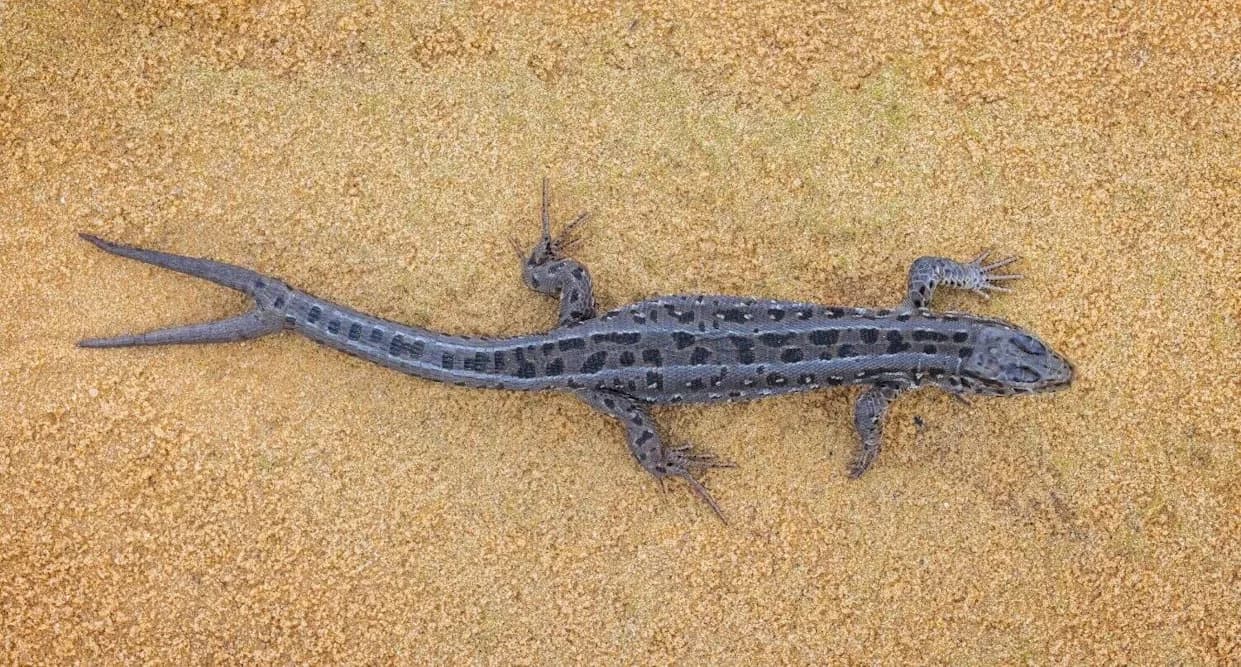
Rare condition of The sand lizard which is having a two tails - Lacerta agilis© Lukas Jonaitis/Shutterstock.com
An unusual photo shared by @bewilderedbryan shows an anole lizard with a forked tail — a rare outcome of an otherwise reliable regenerative process. Many lizard species can deliberately shed and later rebuild their tails to escape predators. Most of the time the new tail looks normal, but occasionally regeneration produces a split or duplicated tail, offering clues about how complex tissues are rebuilt.
How Tail Regeneration Works
After a lizard loses its tail, the wound is quickly covered by an epithelial cap, a protective layer of cells. Beneath that cap, stem cells proliferate and form a blastema, a concentrated mass of undifferentiated cells that directs the reconstruction of muscle, cartilage, nerves, and skin. Depending on the species, this rebuilding process takes days to weeks.
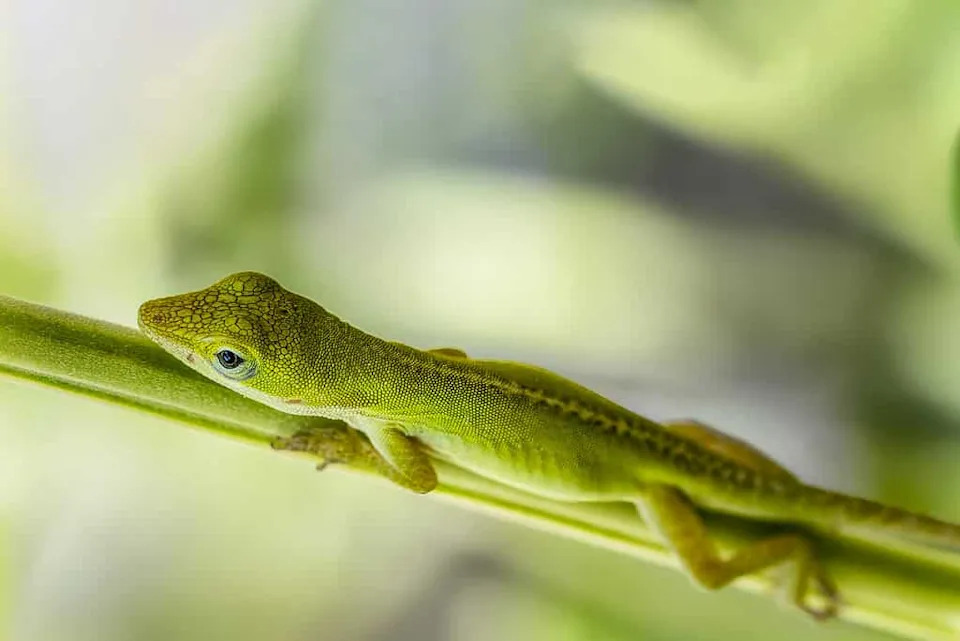
Anoles have the ability to regenerate their tails.©DjMiko/iStock / Getty Images Plus via Getty Images
Where Things Can Go Wrong
Regeneration depends on tightly controlled signals and physical conditions. If the original tail is only partially injured rather than fully detached, remaining tissues can compete with new outgrowth and create branching. Scientists describe a split at the tip as bifurcation and a fork near the base as duplication. Both outcomes are uncommon and can arise from mechanical factors (like an incomplete break) or from errors in the cellular signaling and patterning that guide the blastema.
Why Forked Tails Matter
Although visually striking and rare, bifurcated or duplicated tails are valuable natural experiments. They reveal the delicate balance of signals needed to pattern complex structures during regeneration. Studying these anomalies helps researchers understand blastema formation, epithelial-cap function, and how vertebrate tissues know where and how to grow — knowledge that could one day inform regenerative medicine.
Note: The photo by @bewilderedbryan — showcased by A-Z Animals — illustrates one of these rare outcomes and reminds us how both robustness and fragility are built into biological repair systems.
Help us improve.