The Johns Hopkins study shows that, after retinal injury in mice, surviving cells extend new branches—"sprouting"—to form connections in the brain, restoring nearly preinjury connection numbers over time. Neurons did not regrow their original axons, but increased branching led to partial functional recovery. Male mice recovered faster and more fully than females, a sex difference that may inform future therapies to enhance repair.
How Mammals May Recover Lost Vision: Neuronal Sprouting Restores Connections in Mice
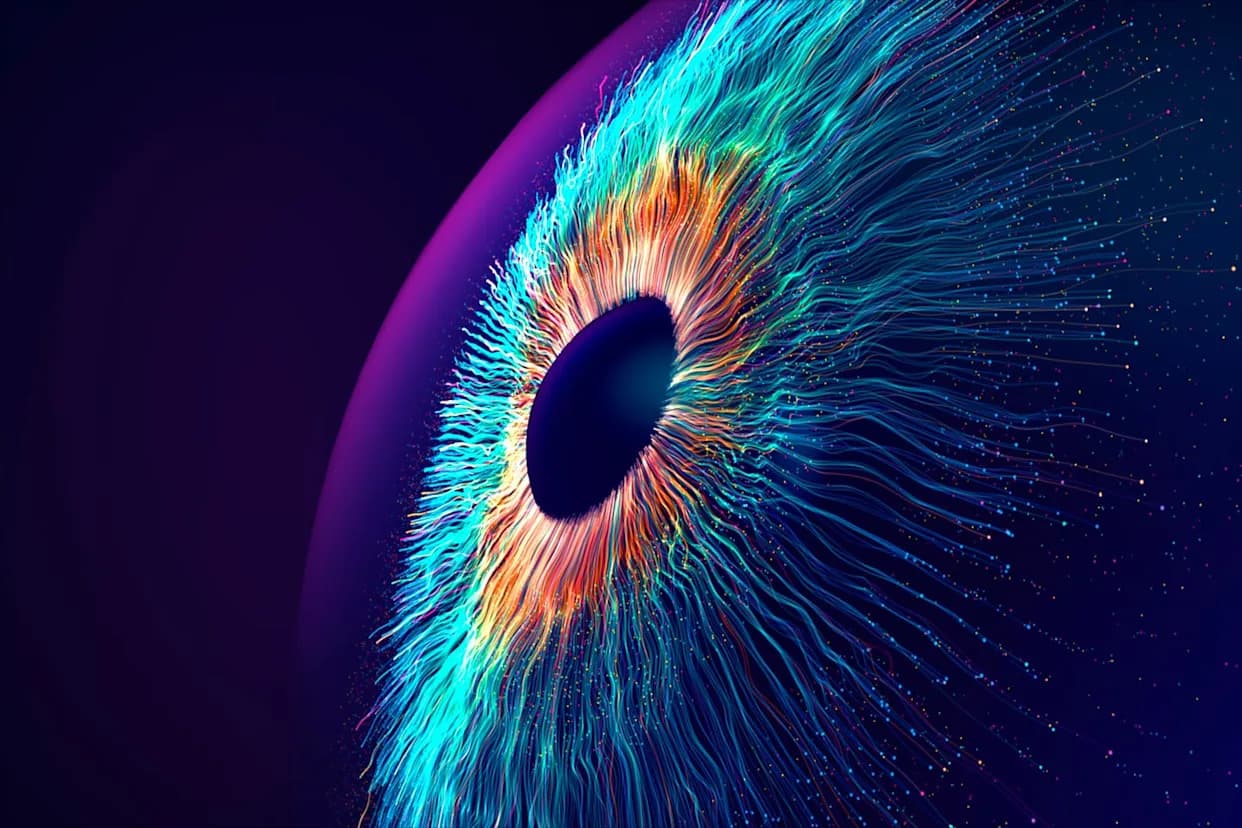
This Is How Humans Can Recover Lost VisionAndriy Onufriyenko - Getty Images
Many animals can fully regenerate eyes and restore vision, but mammals—including humans—largely lack that dramatic capacity. A new study from Johns Hopkins University shows mammals may nonetheless retain subtler repair mechanisms: after injury, surviving retinal cells can extend new branches to rewire the brain's visual circuits.
Working in mice, the researchers found that damaged retinal neurons did not regrow their original axons, but surviving cells responded by increasing their branching—an adaptive process known as "sprouting." Over weeks, this sprouting produced nearly the same number of connections in the brain's visual target areas as before the injury, and functional measures showed partial recovery of visual signaling.
The team quantified both structural and functional changes in the terminal fields of the injured visual system to follow how connections evolved after damage. Their results appear in the journal JNeurosci, providing a detailed view of how the central nervous system can support repair without full neuronal regeneration.
"The central nervous system is characterized by its limited regenerative potential, yet striking examples of functional recovery after injury in animal models and humans highlight its capacity for repair," the authors wrote. "Here we ... explore, for the first time, the evolution of structural and functional changes in the terminal fields of the injured visual system."
An important and unexpected finding was a sex difference in recovery: male mice recovered faster and more completely than female mice. That pattern echoes clinical observations that women often experience longer-lasting symptoms after concussion or other brain injuries. Lead author Athanasios Alexandris said understanding why sprouting is delayed or reduced in females could point to strategies that promote repair after neural injury.
These results join a broader search for vision-restoration strategies across the animal kingdom. Researchers are studying regenerative species—such as zebrafish and, recently, reports on the apple snail's eye-regenerating genetics (August 2025)—to identify mechanisms that might be adapted for mammals. Other groups have already used evolutionary insights from zebrafish to achieve partial vision recovery in mice.
Though humans currently lack methods to fully regenerate retinal cells and restore vision in every case, promoting or enhancing natural sprouting and rewiring in the mammalian visual system could become a promising therapeutic avenue. With billions worldwide affected by some form of vision loss and millions living with severe or complete blindness, mapping these compensatory mechanisms could accelerate development of treatments that improve sight or visual outcomes after injury.
Help us improve.