
Kamil Idris, head of Sudan’s transitional civilian government, presented a U.N.-backed peace plan calling for a U.N./AU/Arab League‑monitored ceasefire, RSF withdrawal to supervised camps and disarmament. The U.S. delegation urged both sides to accept an immediate humanitarian truce backed by regional mediators. U.N. officials warned that continued weapons flows and a lack of compromise threaten any pause in fighting. The conflict has killed 40,000+ people and displaced more than 14 million.
Sudan Prime Minister Takes Peace Plan to U.N. as U.S. Presses for Immediate Humanitarian Truce

FILE - Sudanese soldiers from the Rapid Support Forces unit, led by Gen. Mohammed Hamdan Dagalo, the deputy head of the military council, secure the area where Dagalo attends a military-backed tribe's rally, in the East Nile province, Sudan, June 22, 2019. (AP Photo/Hussein Malla, File)(ASSOCIATED PRESS)
Sudan’s prime minister presented a comprehensive, U.N.-backed peace proposal to the U.N. Security Council on Monday, urging international support to end a conflict that has now lasted nearly 1,000 days. The plan calls for a monitored ceasefire, the withdrawal and disarmament of paramilitary fighters, and supervised camps to reduce the risk of renewed fighting.
What Kamil Idris Proposed
Kamil Idris, who leads Sudan’s transitional civilian government, told the council his initiative envisions a ceasefire overseen by the United Nations, the African Union and the Arab League. The plan requires Rapid Support Forces (RSF) fighters to withdraw from populated areas, be relocated to supervised camps and be disarmed under international monitoring.
“This initiative can mark the moment when Sudan steps back from the edge,” Idris told council members, urging them to be remembered “not as a witness to collapse, but as a partner in recovery.”
International Response
The U.S. delegation, represented by Deputy Ambassador Jeffrey Bartos, urged both sides to accept an immediate humanitarian truce proposed by regional mediators and backed by the United States. Bartos called for the truce to be accepted “without preconditions immediately” and condemned atrocities committed in Darfur and Kordofan, saying both the Sudanese Armed Forces and the RSF must be held accountable.
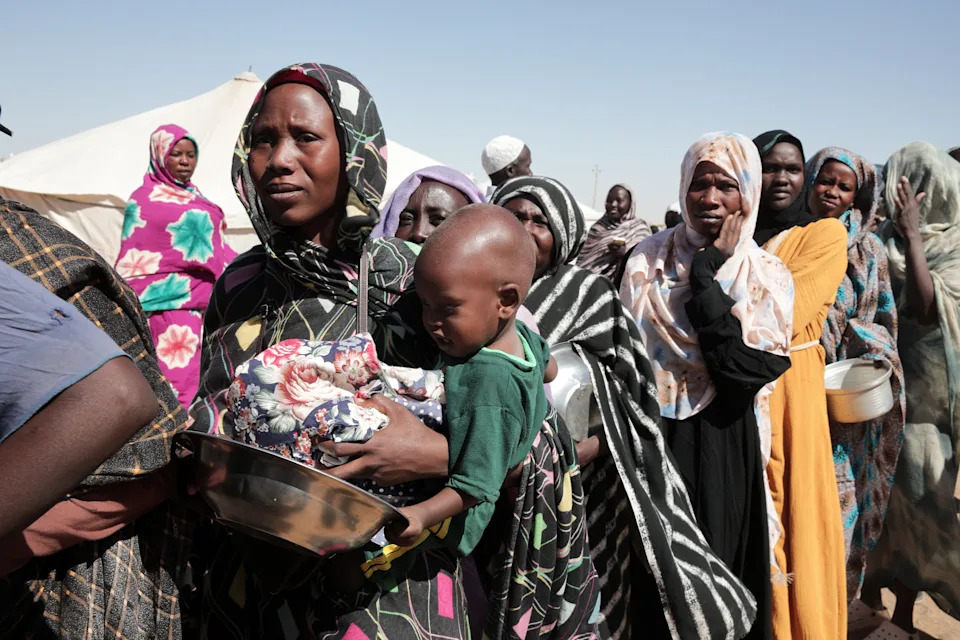
FILE - Women displaced from El-Fasher stand in line to receive food aid at the newly established El-Afadh camp in Al Dabbah, in Sudan's Northern State, Nov. 16, 2025. (AP Photo/Marwan Ali, File)(ASSOCIATED PRESS)
Members of the Quad — Saudi Arabia, Egypt and the United Arab Emirates — have pushed for a humanitarian pause to allow urgent aid deliveries. UAE Ambassador Mohamed Abushahab said a truce is a necessary first step and must be followed by a permanent ceasefire and a transition to civilian rule independent of the warring parties.
Barriers and Warnings
Idris and other officials warned that a truce cannot succeed unless paramilitary fighters are confined to camps and disarmed. U.N. officials criticized continued flows of increasingly sophisticated weapons into the conflict and urged external backers to use their influence to stop the slaughter.
Human Cost
The war, which erupted in April 2023 after a power struggle between the regular military and the RSF, has been marked by mass killings, sexual violence and ethnically targeted attacks that U.N. and rights groups say amount to war crimes and crimes against humanity. U.N. figures put the death toll at more than 40,000, while aid organizations warn the true number may be much higher. The conflict has produced one of the world’s largest humanitarian emergencies, with more than 14 million people displaced and widespread disease and hunger in parts of Sudan.
Idris challenged the Security Council to back his plan, saying international support is essential to prevent further collapse and to help Sudan begin a recovery process.


