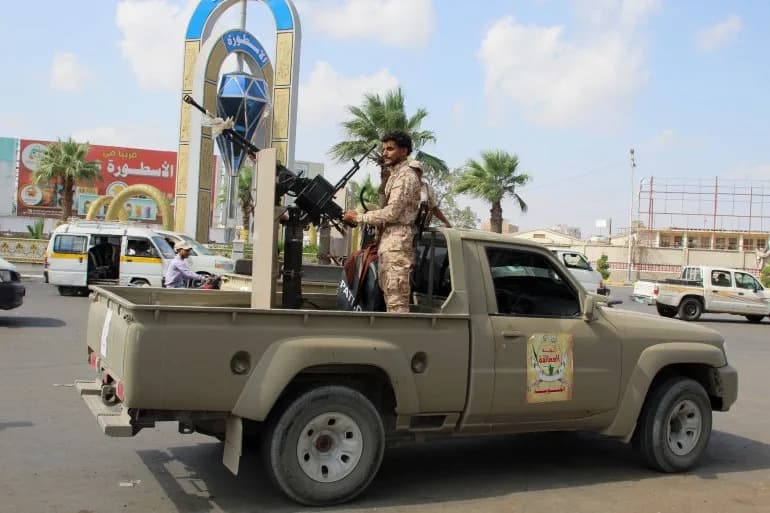
The Yemeni Presidential Leadership Council has formed a Supreme Military Committee to unify anti-Houthi forces and integrate them into the official military after the fragmentation of the Southern Transitional Council. Pro-government fighters say the move — backed by Saudi support — could enable offensives into Houthi-held northwestern Yemen if talks fail, while Houthi supporters fear the resumption of large-scale conflict. Analysts say the SMC's impact depends on its ability to deliver security and services locally, and that a political settlement remains the preferred outcome to avoid a devastating new phase of war.
Yemen Government Regains Momentum: New Supreme Military Committee Aims at Houthis in the North
[Al Jazeera]
Sanaa, Yemen — After nearly a decade of fragmentation and stalled offensives, Yemen's UN-recognised Presidential Leadership Council (PLC) has moved to unify anti-Houthi forces by establishing a Supreme Military Committee (SMC) on January 10. The committee's stated purpose is to bring disparate southern and pro-government militias under a single command and integrate them into the official Yemeni military.
For soldiers like Naef, who joined government forces in the south in 2016 at age 19, the move is a long-awaited chance to address the command and cohesion problems that have hobbled government efforts. "The formation of an inclusive military committee is a boost to our morale and a prelude to a powerful government comeback," he told Al Jazeera.
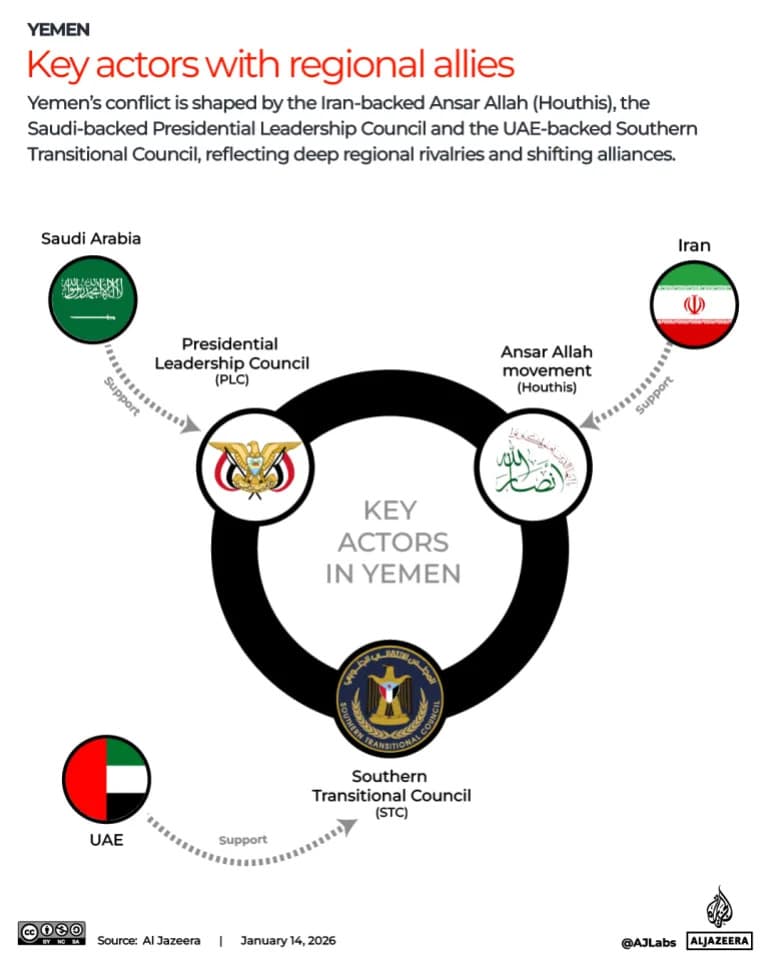
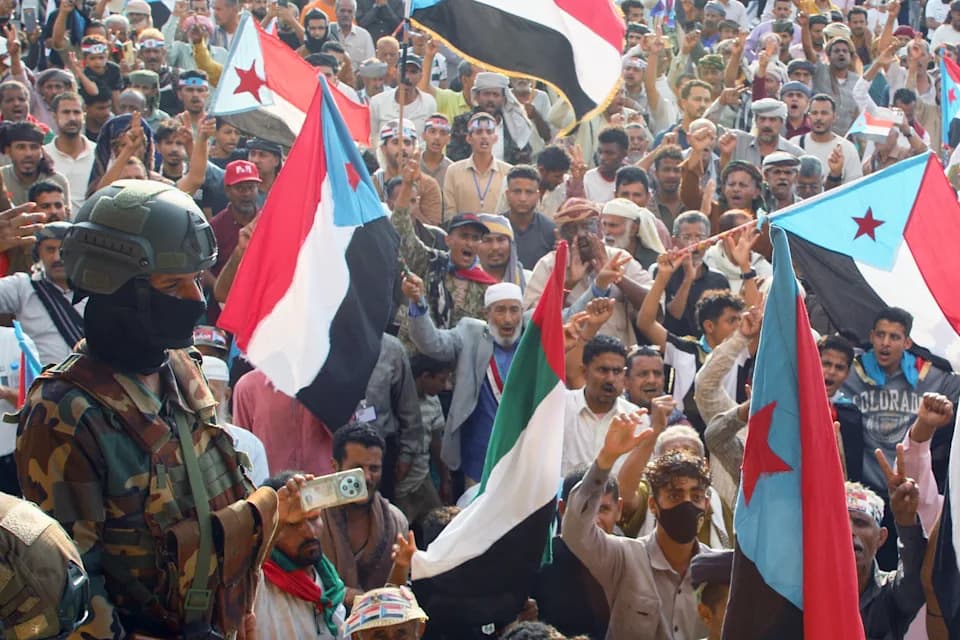
What changed? The Southern Transitional Council's (STC) recent attempt to seize broad control of southern and eastern Yemen collapsed, and Saudi Arabia shifted support toward government-aligned troops to roll the STC back. The STC is now fractured, with leadership in disarray—creating an opening for the PLC to exert greater authority.
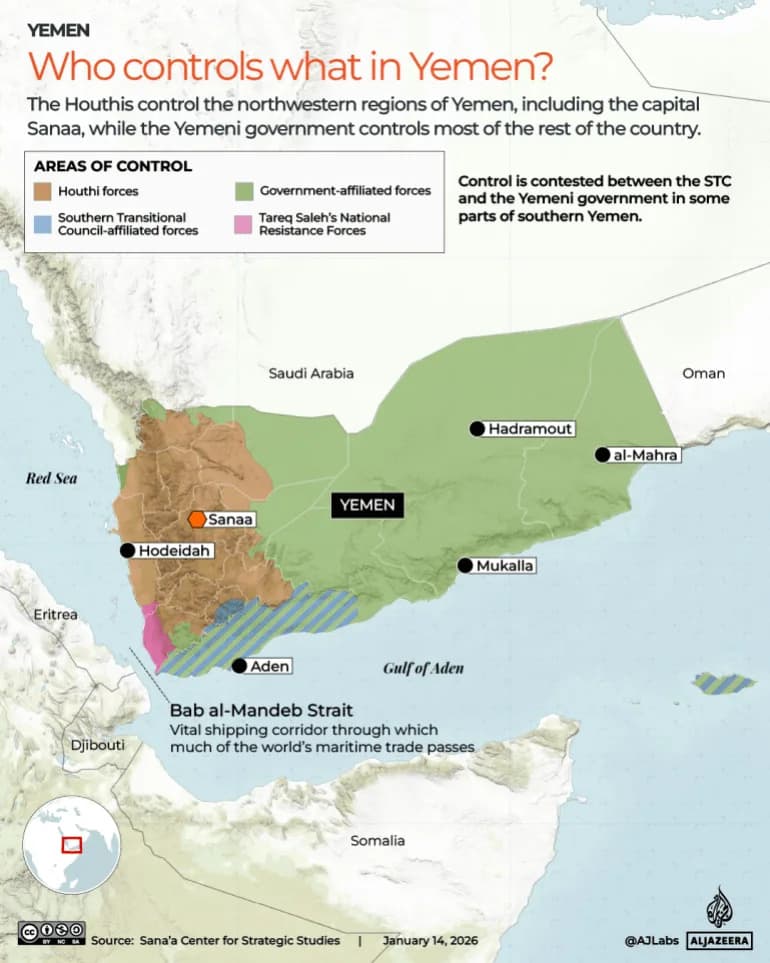
The PLC and its backers frame the SMC as a vehicle to reclaim territory from the Iran-backed Houthis, who have controlled Sanaa since they seized the city in 2014 and ousted the internationally recognised government in 2015. Government officials and supporters say a more unified command could enable operations into Houthi-held northwestern Yemen if diplomacy fails.
"The PLC has achieved remarkable success in the south over the past few weeks with support from the Saudi leadership... Whether this success will be short-lived or lasting remains to be seen," said Naef.
The formation of the SMC has raised alarm among Houthi supporters in the north. Critics portray the committee as organising Saudi-influenced proxies in the south and warn that renewed cohesion among anti-Houthi forces could reignite large-scale fighting that has been largely frozen since 2022.
Pro-Houthi analysts reject the notion that the SMC will change the balance of power. Aziz Rashid, a pro-Houthi military expert, argued that a military confrontation would only further outside agendas and insisted the solution is political. Houthi leaders have also warned supporters to remain alert while asserting their continued control.
Challenges and risks
Defeating the Houthis remains difficult. The Saudi-led coalition's initial air campaign failed to dislodge the group, and the Houthis now possess extensive battlefield experience and advanced weapons systems, including drones and missiles. Observers caution that any renewed offensive would carry heavy humanitarian risks and could escalate regional tensions.
Analysts say the SMC's success depends on its ability to deliver security and public services where it operates, reduce illicit armed presence and settle rivalries among southern factions. Adel Dashela of MESA Global Academy and Abdulsalam Mohammed of the Abaad Studies and Research Center note factors that may be weakening the Houthis—internal public discontent in Houthi areas, Iran's challenges, and the UAE's reduced role in the south—but warn these do not guarantee a decisive military victory.
For civilians in southern cities such as Aden, the main hope is immediate stability: an end to extortion, inter-unit clashes and parallel chains of command that have disrupted daily life. "We are desperate for law and order," said Fawaz Ahmed, reflecting widespread public yearning for security and normalcy.
Outlook
The SMC represents a strategic attempt by the Yemeni government to consolidate forces and leverage recent momentum. If it succeeds in stabilising southern areas and presenting a credible negotiating posture, it could strengthen the government's hand in any political talks with the Houthis. If diplomacy fails, however, a return to wider military confrontation would risk renewed devastation across Yemen and strain regional security.
Help us improve.