
The article reports from Bamako on the Alliance of Sahel States (AES), formed by Mali, Niger and Burkina Faso after coups and a diplomatic break with France. At a recent summit the three leaders launched a Sahel Investment and Development Bank, a state TV channel and a joint military battalion to confront insurgents and assert regional sovereignty. Supporters praise speed and self‑determination; critics warn the bloc concentrates power, curtails independent media and sidesteps regional norms.
A Marriage of Three: Can Mali, Niger and Burkina Faso’s New Bloc Reshape the Sahel?

Motorcycles line up near a closed petrol station, amid ongoing fuel shortages caused by a blockade imposed by al Qaeda-linked fighters in early September, in Bamako, Mali [Stringer/Reuters]
“Bienvenue à Bamako!” The fixer, the minder and men linked to Mali’s government met us at the airport — polite, measured and watchful.
It was late December. We had flown on Air Burkina from Dakar across a Sahel marked by political upheaval and mounting armed violence. Mali now sits at the centre of a regional pivot: after two coups in 2020 and 2021, Bamako broke formal ties with France, expelled French troops, pushed out the UN peacekeeping mission and began rewiring its external partnerships.
With Burkina Faso and Niger — both also under military rule and aligned with Russian private military contractors — Mali helped form the Alliance of Sahel States (AES) in September 2023. The three governments subsequently withdrew from the Economic Community of West African States (ECOWAS), accusing it of defending outside interests rather than regional priorities.
Summit, Symbols and New Institutions
This month the alliance’s leaders gathered in Bamako for the AES Confederal Summit. The event was part policy rollout, part public relations drive: leaders inaugurated a Sahel Investment and Development Bank designed to fund infrastructure without Western lending conditions; they unveiled a state-funded TV channel intended to promote a shared narrative across the Sahel; and they announced a joint military battalion to operate across borders against insurgent groups.
Those moves were less about signing mechanics and more about signaling — and speed. AES leaders present their bloc as a fast-moving alternative to ECOWAS: decisive, sovereign and focused. Critics see an architecture that centralizes power in uniforms, narrows civic space and sidelines independent oversight.
Life in Bamako: Between Normalcy and Pressure
Driving from the airport, Bamako felt alive: motorbikes, hawkers, Malian pop. Yet supply shocks are real. Since September, the government says, armed groups have operated a blockade around the capital that choked fuel and essential goods. Petrol stations queued into the night; daily life continued but strained. Rumours floated that local authorities struck quiet deals with fighters to keep the city moving.
At the newly created Sahel Alliance Square, young people cheered as troops passed. Staged quizzes drilled children on the AES countries and their leaders — Assimi Goïta of Mali, Ibrahim Traoré of Burkina Faso and Abdourahamane Tchiani of Niger — and winners walked away with T‑shirts bearing their faces. The optics were clear: cultivate loyalty among a new generation.
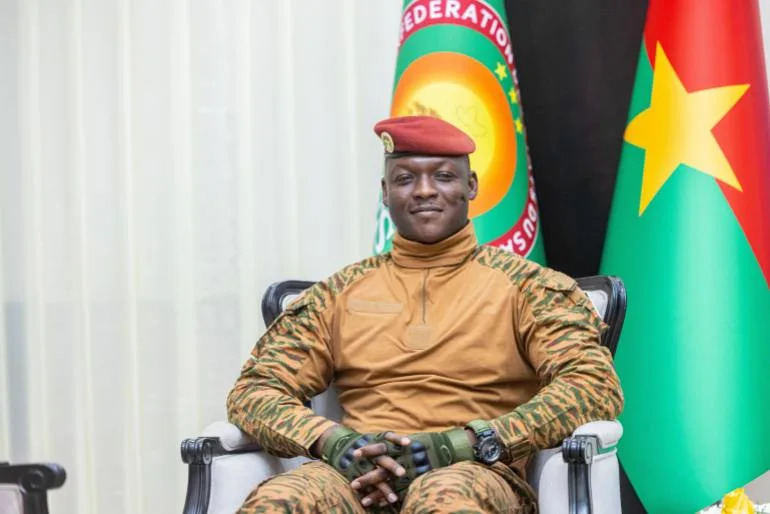
Captain Ibrahim Traore of Burkina Faso attends the Alliance of Sahel States (AES) second summit in Bamako, Mali [Mali Government Information Center via AP]
Voices, Threats and Tensions
Armed groups have exploited fractured governance and long-standing grievances. Jama’at Nusrat al-Islam wal-Muslimin (JNIM), an al‑Qaeda affiliate, has expanded beyond rural Mali to strike across the region and reach as far as Benin’s coast. In September 2024 coordinated attacks hit a military police school in Bamako and nearby targets, underscoring how violence can edge close to the capital.
Inside the summit’s guarded halls, officials presented a confident front. Outside, journalists and critics described a more fraught environment. A spokesman’s remark about sometimes wanting to jail journalists “just for fun” — and his curt questioning of a reporter’s national ties — illustrated the strain between rulers who view dissent as a security risk and observers who see shrinking space for independent scrutiny.
From Coup to Coalition
Though each country’s coup had its own dynamics, their outcomes converged. Between 2020 and 2023 incumbent, democratically elected presidents in Mali, Burkina Faso and Niger were removed by the military amid narratives that civilian leaders had failed to protect citizens. What began as separate seizures of power has become a formal political project under AES.
The alliance reframes threats as shared and foreign influence as the primary problem. To supporters, AES is an assertion of dignity and self‑determination; to critics, it is an arrangement that may entrench military rule and weaken checks on force.
Alternatives, Irony and Institutions
AES is building parallel institutions: a development bank, a media channel, a joint force, proposals for a regional penal court and even discussions about a common currency. The new TV channel — billed as a tool to fight disinformation and elevate Sahel voices — was stocked with imported cameras and installed under the supervision of foreign technicians, an irony not lost on observers.
Leaders have also pushed cultural and rhetorical frames. At the summit, Burkina Faso’s Ibrahim Traoré — handed the AES rotating leadership — delivered a speech warning of a so‑called “black winter,” accusing some African governments of hypocrisy and urging a break with imperial legacies.
“Why are we, Black people, trying to cultivate hatred among ourselves…? We have only two choices: either we put an end to imperialism once and for all, or we remain slaves until we disappear,” Traoré said.
What Comes Next
The AES experiment is still young and untested. Its speed and symbolism have mobilised support across parts of the Sahel, but the alliance faces immediate practical challenges: financing large infrastructure projects without Western lenders, sustaining security gains against insurgents, and balancing state control with civic freedoms.
For many Malians, the louder lesson is quieter: everyday life persists amid change. Music still drifts through public squares. Mali’s celebrated duo Amadou and Mariam remain part of that soundtrack — their song Sabali, forbearance, a reminder that people adapt, endure and hope even as the region’s future is fought over in summit halls and borderlands.


