Chinese researchers operating the EAST tokamak report surpassing the Greenwald density limit by deliberately managing plasma-wall interactions from startup. Using controlled initial gas pressure and electron cyclotron resonance heating, they created a "density-free regime" and reached plasma densities about 65% above the theoretical threshold. The result offers a practical pathway to push density limits and inform ITER, but major materials and engineering hurdles remain before commercial fusion is achievable.
China’s EAST Tokamak Breaks the ‘Unbreakable’ Greenwald Limit — Achieves 65% Higher Plasma Density
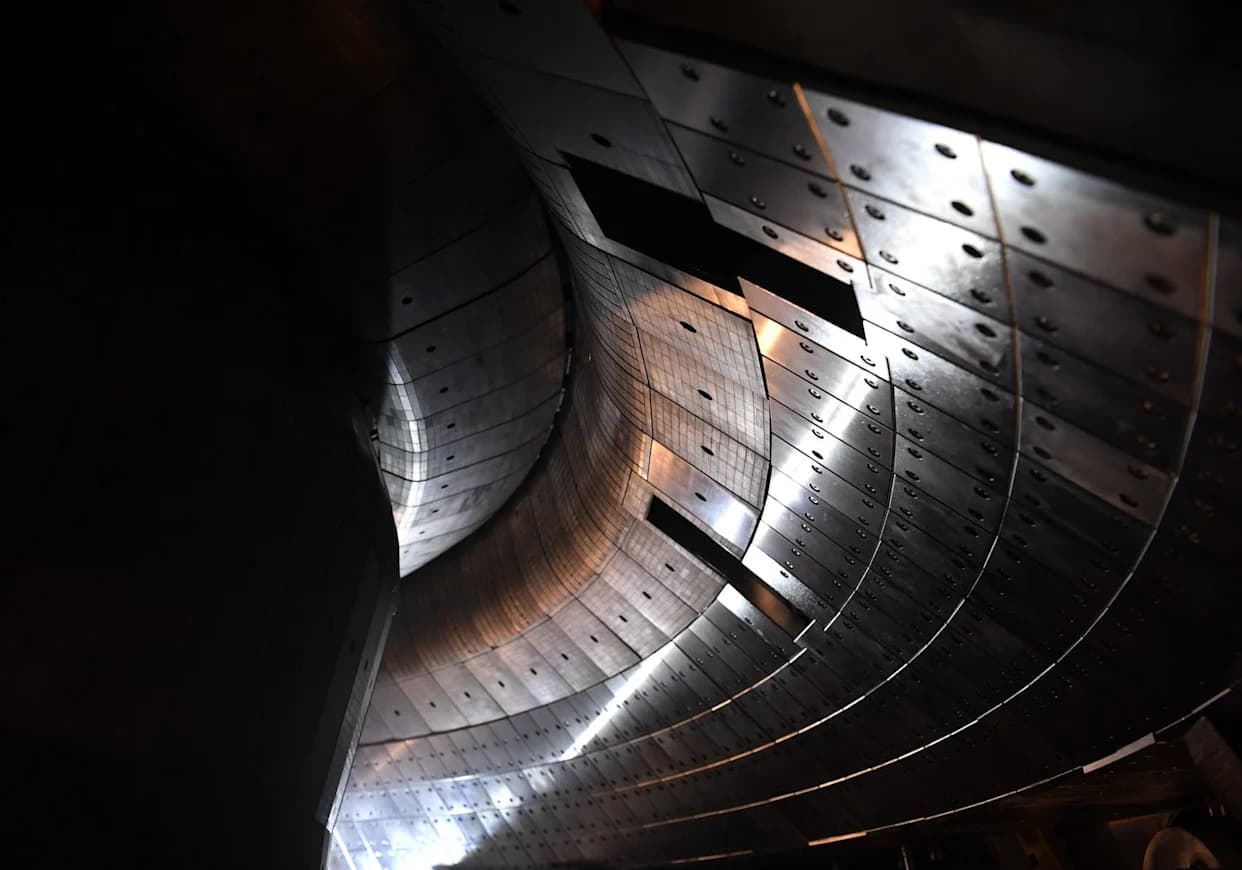
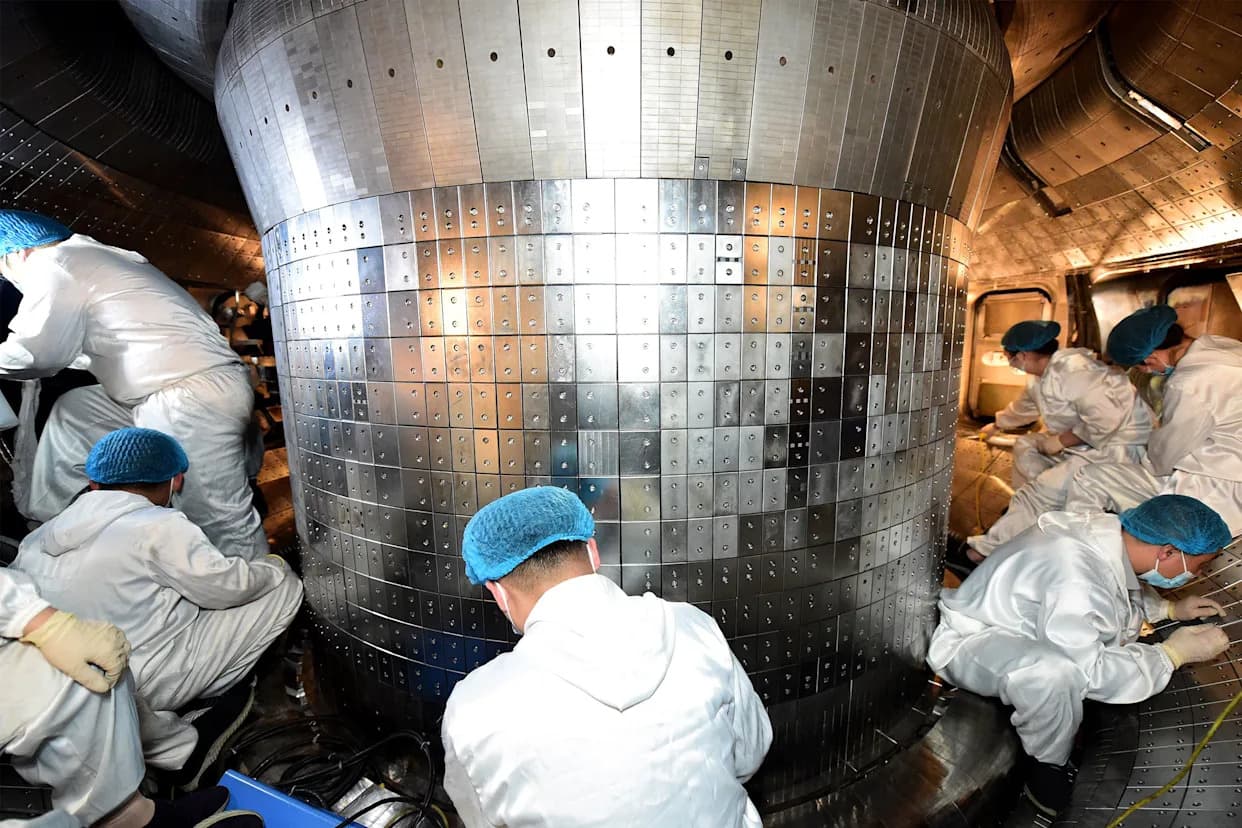
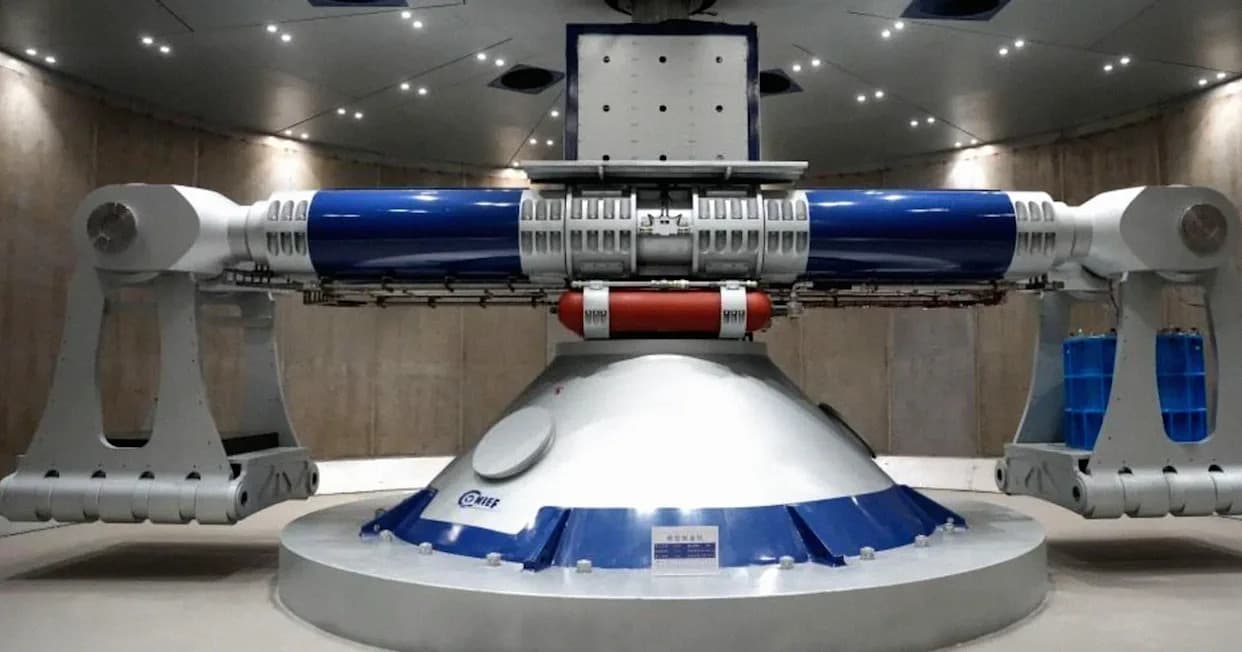
China’ Reactor Broke an ‘Unbreakable’ Fusion LimitXinhua News Agency - Getty Images
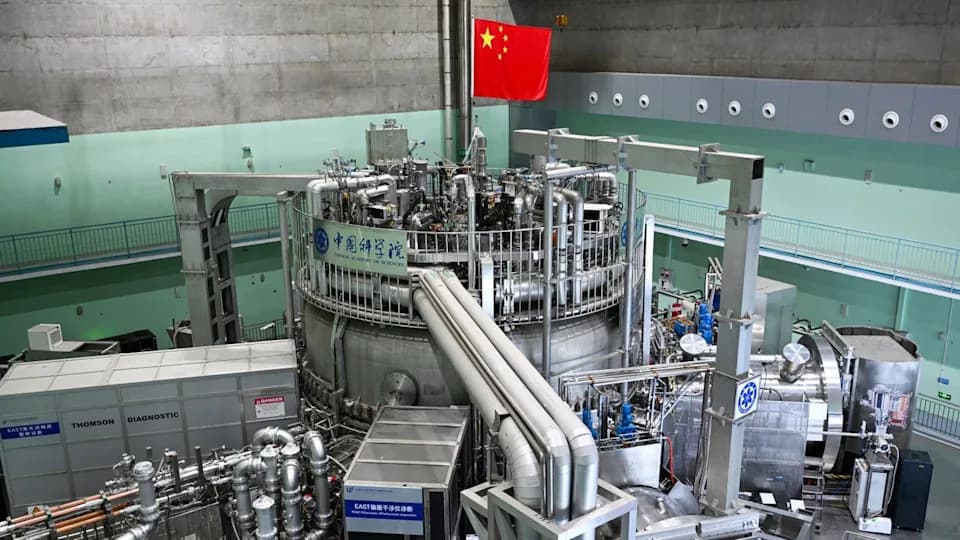
Scientists working on China’s Experimental Advanced Superconducting Tokamak (EAST) in Hefei report a major experimental milestone: they deliberately managed plasma-wall interactions from startup and sustained plasma densities about 65% above the long-standing Greenwald limit.
What the Greenwald Limit Means
The Greenwald limit, identified by physicist Martin Greenwald in 1988, is a mathematical threshold describing the plasma density above which tokamak plasmas typically become unstable. It reflects well-documented behaviour—the way material eroded from the reactor wall enters the plasma and triggers cooling and instabilities—not an immutable physical law.
How EAST Surpassed the Limit
In a paper published in Science Advances, researchers from the Chinese Academy of Sciences describe creating a so-called "density-free regime" by organizing plasma-wall interactions through plasma-wall self-organization (PWSO). The team controlled the initial fuel gas pressure and applied electron cyclotron resonance heating (ECRH) to every discharge so that plasma-wall interactions formed predictably from startup rather than developing chaotically. With those measures in place, the tokamak achieved sustained plasma densities roughly 65% beyond the Greenwald limit.
"The findings suggest a practical and scalable pathway for extending density limits in tokamaks and next-generation burning plasma fusion devices," said Ping Zhu (Huazhong University of Science and Technology), a co-author of the study.
Why This Matters
Higher controllable plasma densities can improve conditions for approaching fusion ignition—the point where fusion reactions become self-sustaining—because more fuel in the plasma increases reaction rates. EAST's result therefore offers a practical method to push density limits in existing tokamaks and informs design and operation strategies for next-generation burning-plasma devices.
Context, Caveats, and Next Steps
EAST has already demonstrated notable performance milestones: last year it maintained a high-confinement plasma for nearly 17 minutes, breaking a previous record of 403 seconds. The research team’s next objective is to realize the density-free regime under high-performance conditions that are directly relevant for progressing toward fusion ignition.
However, surpassing the Greenwald limit is not a shortcut to commercial fusion power. Major engineering challenges remain—especially developing structural and plasma-facing materials that can withstand extreme temperatures, neutron irradiation and long-term wear. As a partner in the international ITER project in France, China’s EAST program will likely share lessons learned with the broader fusion community.
Bottom Line
EAST’s controlled-startup approach and use of PWSO and ECRH demonstrate a promising, scalable technique for extending operational density in tokamaks. It is an important step forward, but one of many required to make practical fusion power a reality.
Help us improve.