The Howard Center’s investigation found more than 3,000 U.S. rail accidents from 2015–2024 tied to human error and track defects, causing 23 deaths and nearly 1,200 injuries. The NTSB issued 81 safety recommendations in that period; the FRA has fully implemented only five. Recurrent themes include worn rail, missed walking inspections, excessive inspector workloads, crew fatigue and lobbying that delays or weakens reforms. Investigators say the pattern of industry pressure and regulatory delay has contributed to preventable tragedies.
Blocked Safety Fixes: How Railroads, Regulators and Lobbying Have Cost Lives
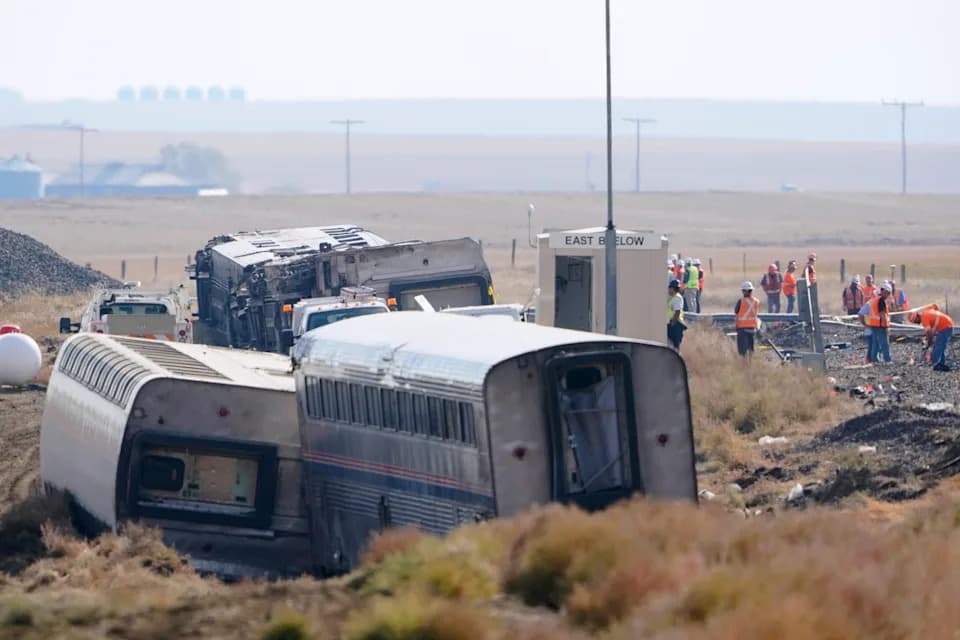
FILE - In this Sept. 27, 2021, file photo, workers stand near train tracks next to overturned cars from an Amtrak train that derailed near Joplin, Mont. (AP Photo/Ted S. Warren, File)(ASSOCIATED PRESS)
More than 3,000 U.S. rail accidents over the last decade have been attributed to human error and track defects, killing 23 people and injuring nearly 1,200, an original analysis by the Howard Center for Investigative Journalism at the University of Maryland found. Yet federal regulators have implemented only a fraction of safety recommendations issued after investigations — a failure investigators say has cost lives.
What the Data Shows
The Howard Center’s review of National Transportation Safety Board (NTSB) investigation reports found the NTSB issued 81 safety recommendations to federal rail regulators between 2015 and 2024. The Federal Railroad Administration (FRA) has fully implemented just five of those recommendations, the lowest completion rate among Department of Transportation agencies in that period.
FRA officials say the agency currently has 102 open NTSB recommendations, some dating back to 1998, and that it is taking or planning action on more than 70% of them. The FRA also says some recommendations are infeasible or addressed under existing rules.
How Failures Recur: Industry Pressure, Regulatory Delay, Tragedy
The Howard Center traced a recurring cycle: after a serious accident the NTSB issues safety recommendations, the railroad industry resists or lobbies for alternatives, the FRA delays or declines to write new regulations, and similar accidents happen again. The story includes repeated examples where investigators urged straightforward reforms — limits on rail wear, workload caps for inspectors, stronger rules to prevent crew fatigue — yet regulators did not adopt binding standards.
Joplin, Montana — Empire Builder (Sept. 25, 2021)
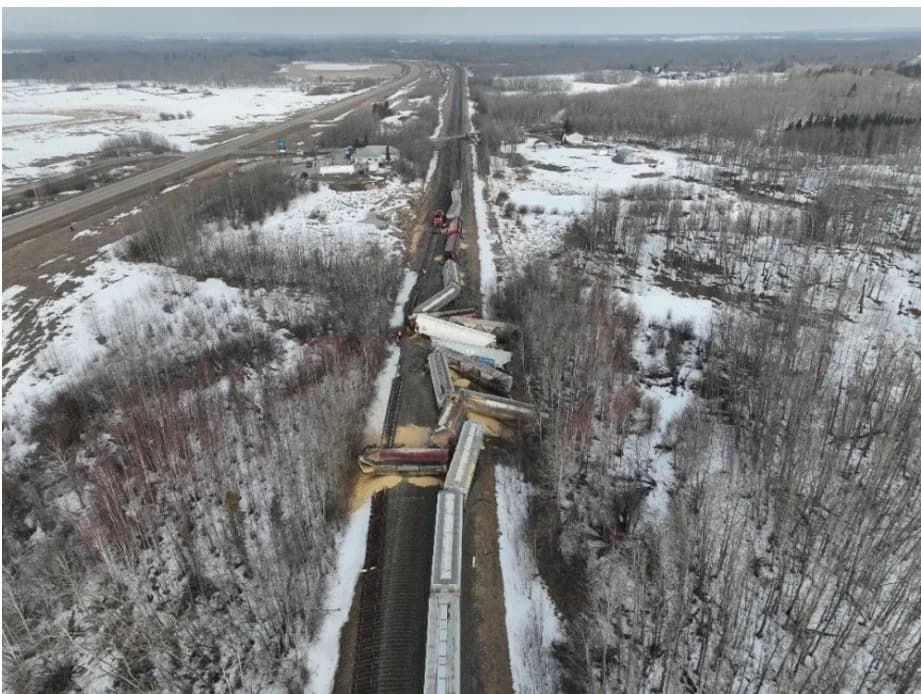
Three passengers — Zach Schneider (28) and Margie and Don Varnadoe — were killed and 49 people injured when Amtrak's Empire Builder derailed near Joplin, Montana. NTSB investigators cited worn rail and other track defects on BNSF Railway property. A company inspector had driven the route twice that week and recorded concerns but did not perform a walking inspection; NTSB found a walking inspection would likely have revealed the problems. The board also faulted the FRA for not issuing rules on rail replacement limits and inspector workloads — measures the NTSB had repeatedly recommended after earlier accidents.
Muldraugh, Kentucky (1980) and Historic Rail-Wear Warnings
In 1980 a derailment carrying vinyl chloride in Muldraugh exposed thousands to toxic fumes, injured crew members and forced mass evacuations. Investigators then recommended setting federal limits on how much rail wear is acceptable before replacement is required. An FRA-sponsored study in 1998 found such limits would improve safety, but regulators still took no binding action. Over the 45 years since Muldraugh, Howard Center analysis of FRA data identified nearly 15,000 main-line accidents blamed on track defects, resulting in 44 deaths and about 2,300 injuries.

FILE - An unidentified man is helped through the decontamination process at the University of South Carolina Aiken after being exposed to chlorine gas from a train derailment in Graniteville, Jan. 6, 2005, in Aiken, S.C. (AP Photo/Mary Ann Chastain, File)(ASSOCIATED PRESS)
Macdona, Texas — Fatigue-Related Tragedy (June 28, 2004)
A Union Pacific engineer operating on less than two hours of sleep ran a signal and collided with a BNSF train, puncturing a chlorine tank and releasing more than 9,000 gallons of the toxic gas. The crash killed the conductor and two local residents and left dozens with severe respiratory injuries. The NTSB concluded fatigue — driven by long, irregular shifts and on-call schedules — caused the error. The NTSB recommended stronger FRA regulation of crew scheduling in 2006. Congress required fatigue risk management in the Rail Safety Improvement Act soon after, but the FRA only finished approving fatigue plans for all railroads in 2024, more than 15 years later.
Automation vs. Human Inspection
The railroad trade group, the Association of American Railroads (AAR), has pushed to reduce required human track inspections in favor of automated inspection technologies. In May the AAR proposed shifting toward automation, and on Dec. 5 federal regulators granted a waiver allowing participating railroads to halve weekly visual inspections if they meet new safety and reporting conditions.
The NTSB and rail workers caution automation should supplement, not replace, human inspections. Automated systems excel at detecting some defects but miss many issues human inspectors find, including a majority of the defects inspectors are trained to spot. Inspectors interviewed for this investigation described longer territories and higher workloads as the workforce has shrunk in places where automation has been adopted.
Delayed Technology: Positive Train Control
Positive train control (PTC) — systems that automatically slow or stop trains to prevent collisions and overspeed events — was first urged by the NTSB in 1970. Congress mandated PTC after deadly early-2000s accidents and set a 2015 deadline. Railroads lobbied for delays and won extensions; full compliance was not achieved until 2020. An internal NTSB tally estimates that the delay contributed to 154 preventable accidents, 300 deaths and 6,800 injuries.
Industry Response and Regulatory Choices
The major rail carriers named in this story — BNSF, Norfolk Southern and Union Pacific — provided statements asserting their commitment to safety and did not dispute the factual findings. The AAR says operational complexity and the dynamic nature of railroading complicate regulatory mandates and has asked administrations to cut regulatory burdens it deems excessive.
Advocates, investigators and some rail workers argue that many safety improvements could be achieved through enforceable, transparent rules (limits on rail wear, workload standards for inspectors, firmer crew-scheduling controls) rather than voluntary guidance. They warn that continuing reliance on slow, reactive policymaking — coupled with industry pressure — will likely yield more preventable accidents.
NTSB Chair Jennifer Homendy: "There’s no substitute for robust track inspection practices."
The Howard Center’s reporting highlights a consistent pattern: repeated recommendations from the safety board, industry lobbying that resists or reshapes those recommendations, regulatory inaction or delay, and avoidable human and material costs. The question remains whether regulators, lawmakers and the industry will adopt durable, enforceable changes before more lives are lost.
Help us improve.