The Royal Entomological Society Journal reports that extreme heat reduces monarch butterflies' tolerance to a protozoan parasite by weakening milkweed's protective toxins. Experiments show monarchs exposed to elevated temperatures were 22% less tolerant of infection, while parasites thrived in warmer conditions. Infection prevalence across North America has risen from historical averages of about 2–5% to roughly 10–15% since 2002. Researchers will investigate why milkweed loses its medicinal effect in heat and map results across the monarchs' range to forecast future risks.
Heat Waves Strip Milkweed’s 'Medicine,' Leaving Monarchs 22% Less Tolerant to Parasites
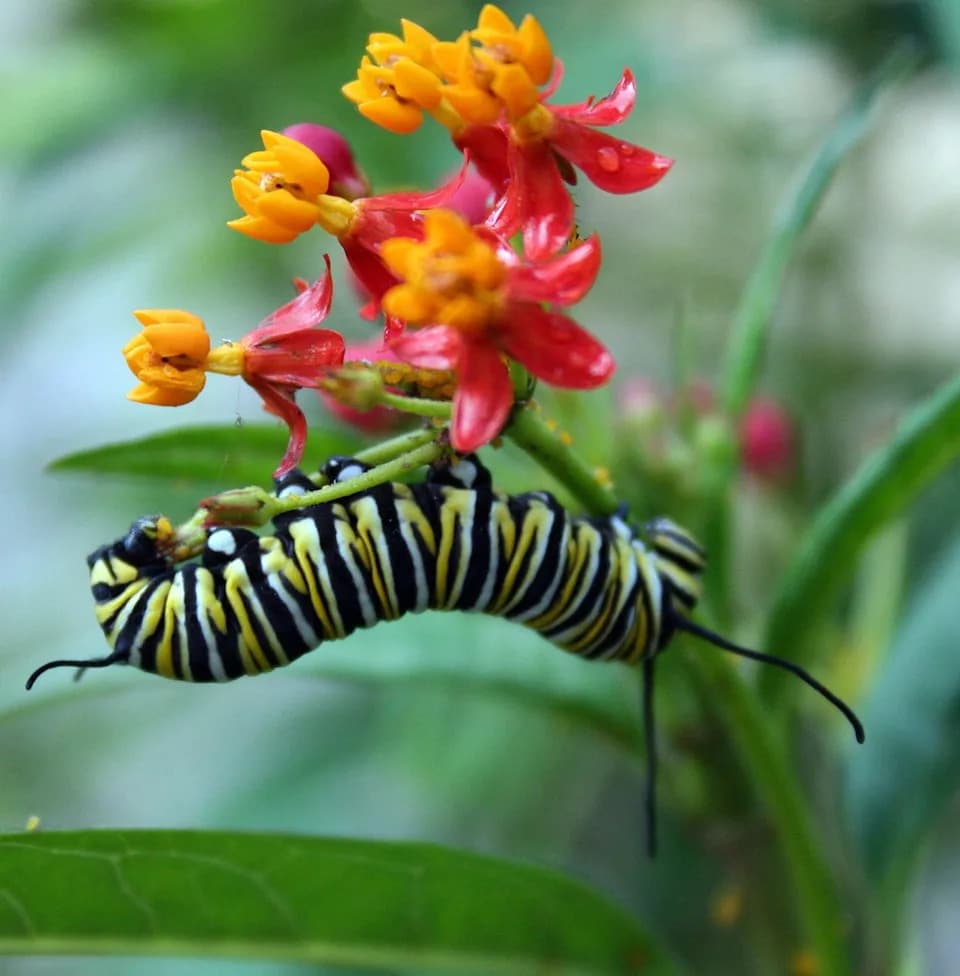
A monarch caterpillar feasts on tropical milkweed. Photo courtesy of Sonia Altizer
A new study in the Royal Entomological Society Journal finds that extreme heat — a growing consequence of climate change — reduces monarch butterflies' ability to resist a debilitating protozoan parasite by weakening the protective effects of milkweed toxins.
What Researchers Found
Sonia Altizer, a professor of entomology at the University of Georgia who has studied monarch migration and disease for about 30 years, led experiments showing that monarch caterpillars become infected when they consume milkweed leaves contaminated with protozoan spores. Once infected, monarchs tend to be smaller, live shorter lives and have reduced flight capacity — serious handicaps for a species that migrates thousands of kilometers each year.
"These butterflies that are infected have difficulty completing the migration," Altizer said. "In recent years, the prevalence of this parasite has more than tripled over the past two decades."
Historically, roughly 2–5% of monarchs across North America were infected on average. Since about 2002, that rate has risen to approximately 10–15%, prompting questions about whether climate change, habitat loss or other factors are driving the increase.
Heat, Milkweed Chemistry and Parasites
In controlled experiments, monarchs exposed to elevated temperatures were 22% less tolerant of infection. The parasites themselves performed better under hotter conditions and infected more butterflies than researchers had expected.
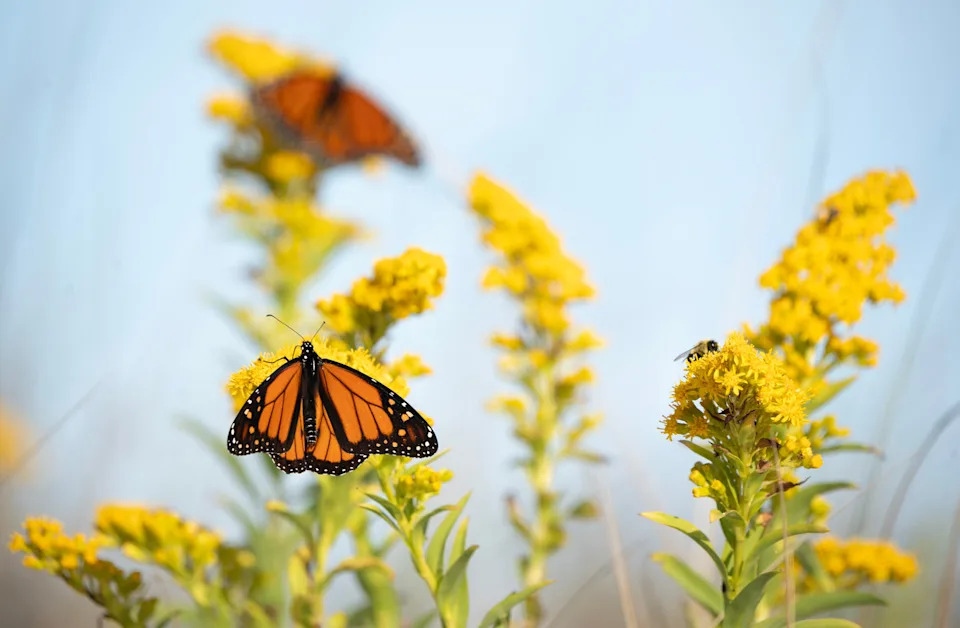
Monarch butterflies ride the wind and stop on native plants during their migration along the coast. Beautiful weather prevails along the Jersey Shore as fall begins. Thursday, October 2, 2025 Seaside Park, NJ
Milkweed plants produce cardiac glycosides and related compounds that make monarchs distasteful to predators and can confer some protection against the protozoan parasite. The study found that rising temperatures reduced this plant-derived medicinal effect: toxic milkweeds became less effective at protecting monarchs under warmer conditions.
Implications and Next Steps
Because milkweed quality helps shape caterpillar nutrition and immune defense, warming-driven changes in plant chemistry can alter host-parasite dynamics with consequences for conservation and agricultural planning. Altizer and colleagues plan to investigate the physiological mechanisms inside butterflies that change under heat and to scale their experiments across the monarchs' continental range to better predict future disease outcomes under different warming scenarios.
The research highlights a chain of effects — climate warming alters plant chemistry, which weakens insect immunity, allowing parasites to thrive — and underscores the importance of integrating plant, insect and climate science to protect migratory pollinators.
Reporting: This article is based on reporting by Erica Van Buren, climate change reporter for The Augusta Chronicle, part of the USA TODAY Network.
Help us improve.