Pulsar Helium reports detecting helium-3 in subsurface gas from northern Minnesota, with concentrations of 1.3–14.5 ppb and a consistent isotopic signature pointing to a single source. Although those levels are comparable to Apollo lunar soil samples and are noteworthy for a terrestrial find, the quantities remain small and currently useful mainly for niche applications like quantum-computer refrigeration. Independent verification, expanded sampling and economic assessments are needed to determine any realistic potential for large-scale fusion fuel supply.
Rare Helium-3 Found Beneath Northern Minnesota — Could It One Day Fuel Fusion?
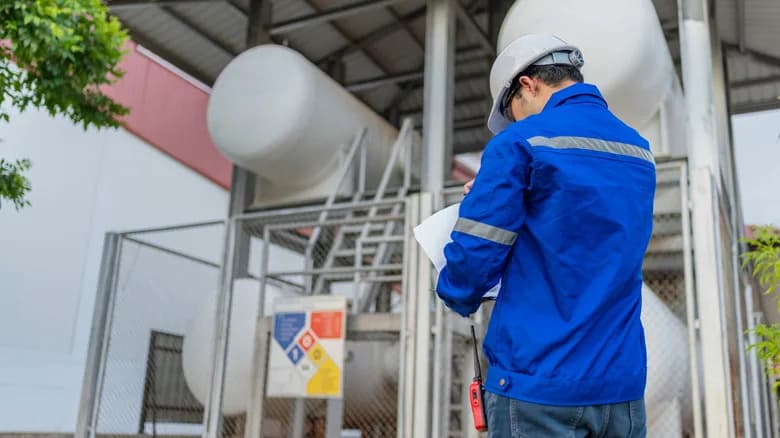
Man supervising tanks holding helium being used for clean energy - kittirat roekburi/Shutterstock
Pulsar Helium has reported measurable quantities of helium-3 in subsurface gas samples collected in northern Minnesota. Laboratory assays from the company show helium-3 concentrations in produced gas ranging from 1.3 to 14.5 parts per billion (ppb), and the isotope's signature was consistent across multiple samples — suggesting a single, common subsurface source.
Helium exists in multiple isotopic forms that differ by neutron count. The most common isotope, helium-4, has two protons and two neutrons and is widely used in medical imaging, industrial processes and cryogenic cooling. Helium-3, by contrast, has only one neutron; that small atomic difference gives it physical properties that make it attractive for certain nuclear and low-temperature applications. However, helium-3 is far rarer on Earth and typically occurs in the atmosphere at trace levels measured in parts per trillion.
Why This Discovery Matters — And Why To Be Cautious
Pulsar says the Minnesota reservoir contains both helium-4 and helium-3, and reports that the measured helium-3 concentrations are comparable to levels recorded in lunar soil samples returned by NASA's Apollo missions. If confirmed and found in commercial quantities, a terrestrial source of helium-3 could, in principle, reduce dependence on two current supply paths: extraction from lunar regolith or production via the radioactive decay of tritium associated with nuclear programs.
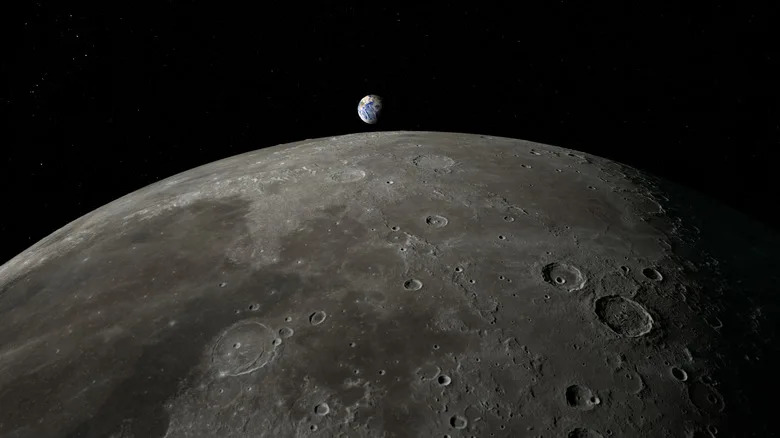
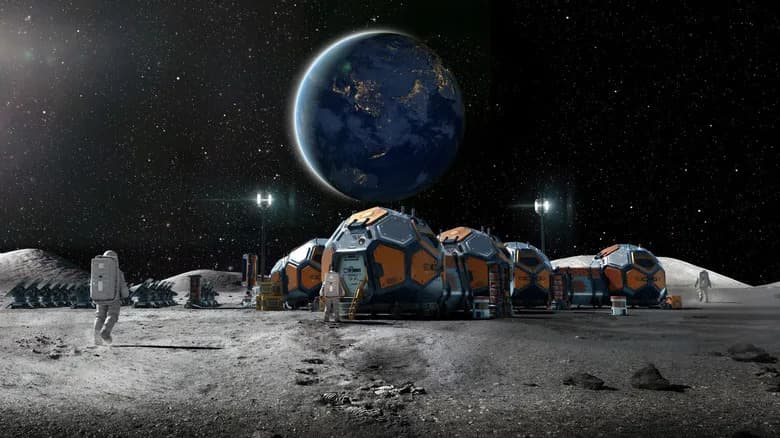
Earth viewed from the surface of the moon - Gettinthere/Getty Images
Important caveat: The reported concentrations, while notable for terrestrial samples, are still very small and do not by themselves prove the deposit could support large-scale fusion research or a fusion industry. Independent verification, expanded sampling, and rigorous economic and engineering assessments are necessary to determine the deposit's size, recoverability, and commercial viability.
Current Uses and Near-Term Reality
Today, helium-3 is chiefly valuable for highly specialized applications, such as ultra-low-temperature refrigeration systems used to cool quantum computers and certain physics experiments to a few degrees above absolute zero. The isotope also has niche uses in neutron detection and fundamental research. Any future role as a fusion fuel remains speculative: fusion concepts that use helium-3 promise cleaner reactions, but they typically require far larger quantities and advanced technology than currently available.
In short, the Minnesota finding is scientifically intriguing and may justify more exploration and peer-reviewed study, but it is not an immediate solution for large-scale fusion fuel supply. The discovery could, however, spur further research that uncovers larger resources or new extraction methods.
Next steps: Independent laboratory verification, broader regional sampling, geologic modeling, and economic feasibility studies are required before determining whether the discovery has commercial or strategic significance.
Help us improve.