UCLA and collaborators measured the masses of planets orbiting the 20-million-year-old star V1298 Tau and found them far puffier than expected. Although these worlds have volumes hundreds of times Earth's and range from Neptune- to Jupiter-sized, their masses are only about five to 15 Earth masses, giving them extremely low, "styrofoam-like" densities. This first direct measurement confirms that young giant planets are highly inflated and supports the idea that atmospheric loss will shrink them into the super-Earths and sub-Neptunes most common in the galaxy.
Baby Planets With Styrofoam-Like Density Reveal Early Stages of Planet Evolution
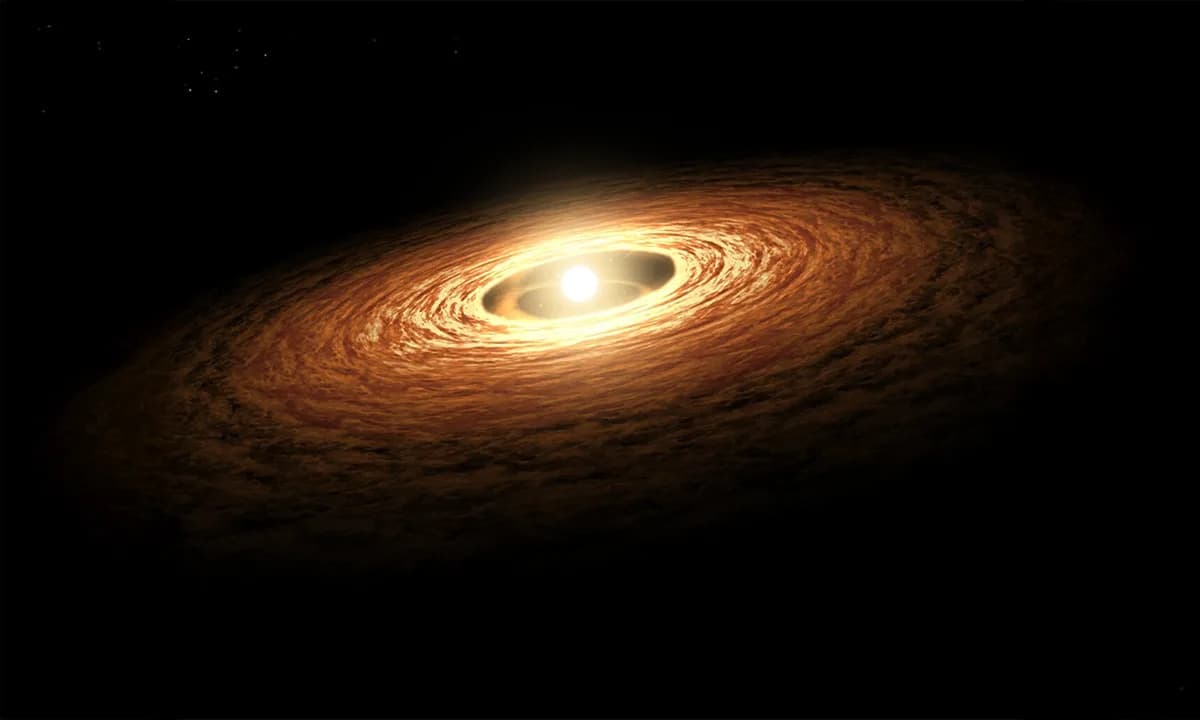
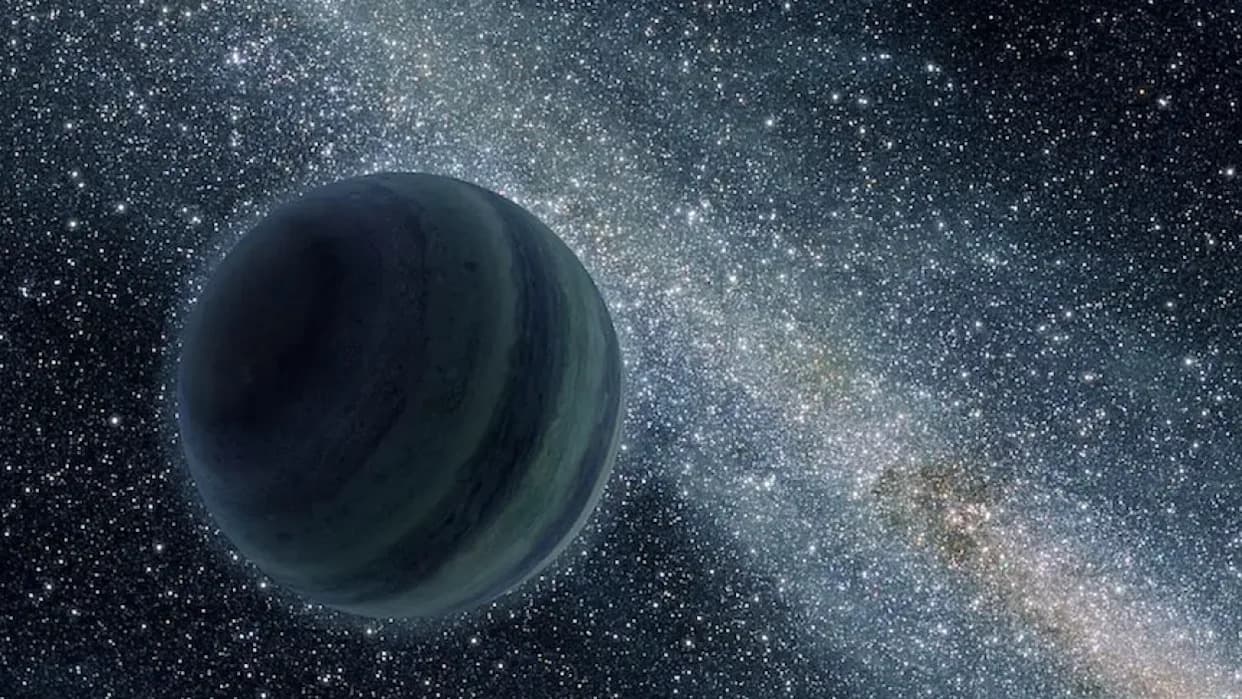
Lead image: NASA/JPL-Caltech
Finding a typical planet to study has proved unexpectedly difficult: most planets discovered across the galaxy are larger than Earth but smaller than Neptune, yet none of these common types exist in our own solar system. That absence has forced astronomers to look outward, and an international team led by researchers at the University of California, Los Angeles has now identified promising examples orbiting the young star V1298 Tau. Their results, published in Nature, offer a rare glimpse into the formative years of planetary systems.
Compared with our 4.5-billion-year-old Sun, V1298 Tau is an infant at roughly 20 million years old, making the system an excellent laboratory for observing how planets form and evolve. Astronomers monitored the system for nearly a decade, patiently watching for planets to transit the star and combining those observations with detailed computer modeling to constrain orbits and physical properties.
“V1298 Tau is a critical link between the star- and planet-forming nebulae we see all over the sky, and the mature planetary systems that we have now discovered by the thousands,” said study co-author Erik Petigura of UCLA.
From the recorded transits and follow-up analysis, the team determined an unexpected combination of size and mass. These planets have volumes hundreds of times greater than Earth’s — with radii ranging from Neptune-like up to Jupiter-like — yet their masses are only about five to 15 times Earth’s. Put simply: these worlds are extremely low density, comparable to the fluffiness of styrofoam.
“The unusually large radii of young planets led to the hypothesis that they have very low densities, but this had never been measured,” said co-author Trevor David of the Flatiron Institute. “By weighing these planets for the first time, we have provided the first observational proof. They are indeed exceptionally ‘puffy,’ which gives us a crucial, long-awaited benchmark for theories of planet evolution.”
Rather than continuing to inflate, the researchers conclude these planets are losing their primordial, hydrogen-rich atmospheres relatively quickly. Over time, atmospheric escape and cooling will cause the planets to contract, shifting them toward the sizes most commonly found in galactic surveys: super-Earths and sub-Neptunes.
“The four planets we studied will likely contract into ‘super-Earths’ and ‘sub-Neptunes’ — the most common types of planets in our galaxy,” said co-author John Livingston. “But we’ve never had such a clear picture of them in their formative years.”
These observations provide the first direct mass and density measurements for very young, highly inflated planets and supply a valuable benchmark for models of atmospheric loss and planet evolution. Continued monitoring of V1298 Tau and similar young systems will help refine timelines for atmospheric escape and illuminate the processes that sculpt the diversity of exoplanets we observe today.
Originally reported in Nautilus and published in Nature by a UCLA-led team.
Help us improve.