The James Webb Space Telescope has probed a Jupiter-sized exoplanet, PSR J2322-2650b, revealing an unusual helium–carbon atmosphere with soot-like clouds and possible diamond condensates. The planet orbits a pulsar about 750 light-years away, completes an orbit in 7.8 hours, and lies roughly 1 million miles (1.6 million km) from its host. Its composition and extreme proximity to a pulsar defy known formation models, and scientists plan more observations to solve the mystery.
JWST Discovers Baffling 'Diamond' Planet: Sooty Skies and a Carbon-Rich Atmosphere Orbiting a Pulsar

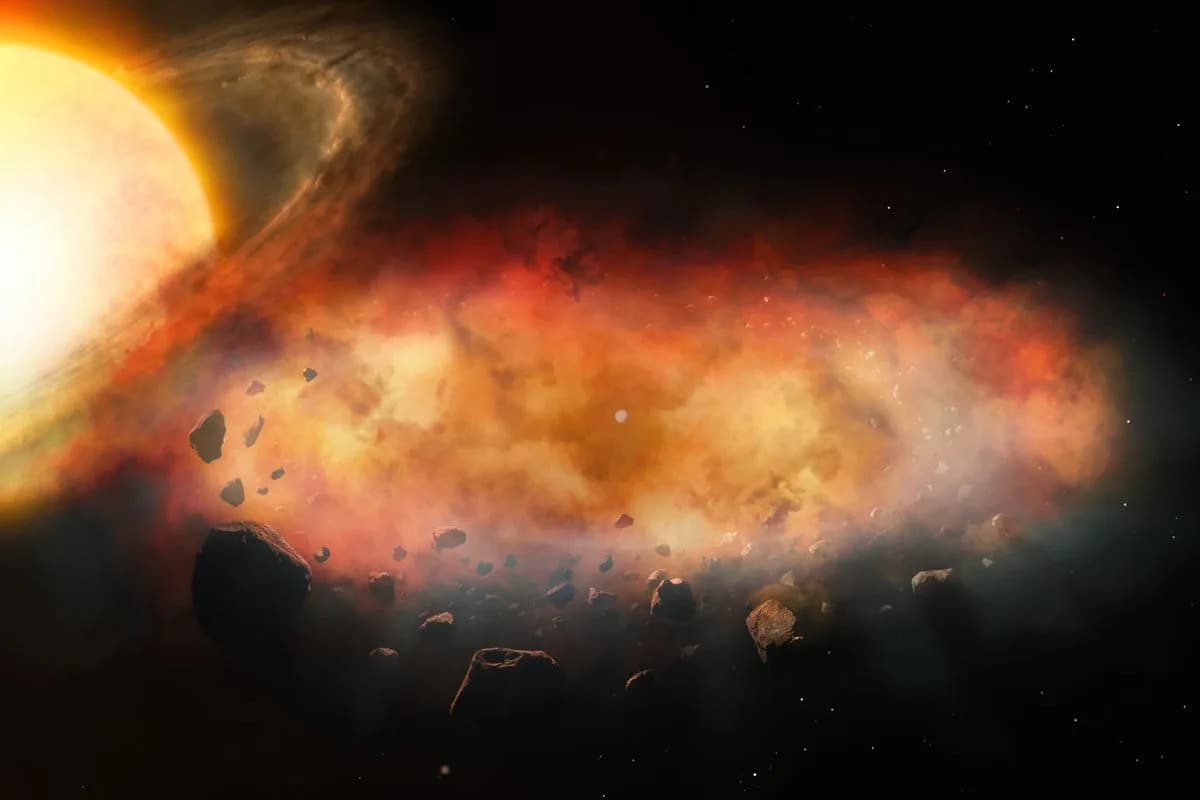
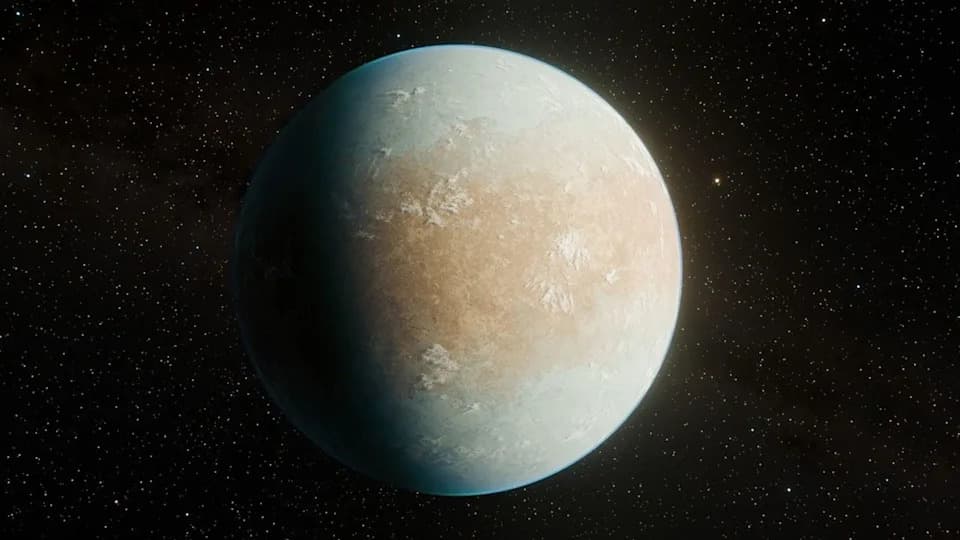
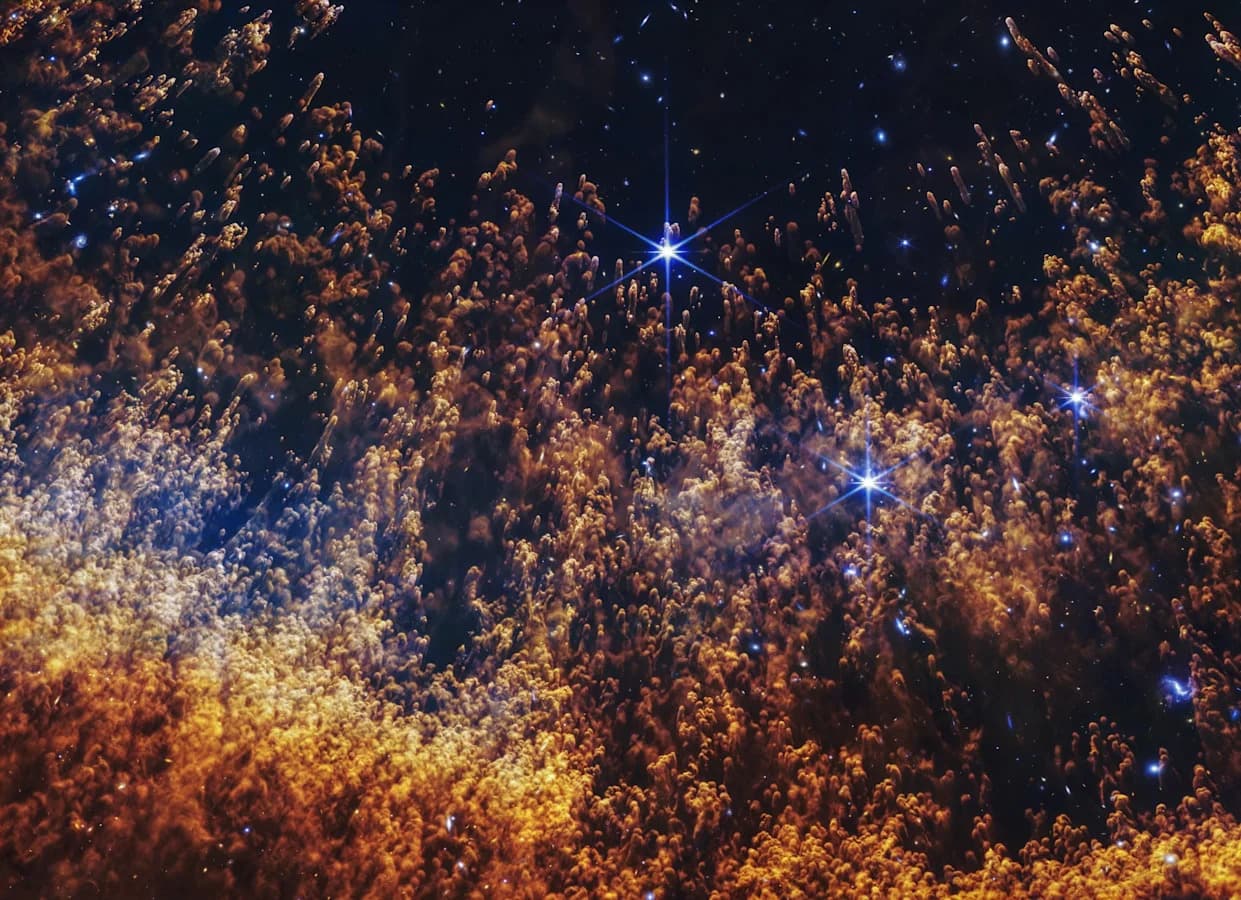
The exoplanet PSR J2322-2650b has an atmosphere of soot and diamonds, new James Webb telescope observations hint. | Credit: NASA, ESA, CSA, Ralf Crawford (STScI)
A distant, Jupiter-sized exoplanet observed by the James Webb Space Telescope (JWST) has revealed an atmosphere unlike any previously seen: dominated by helium and carbon, with soot-like clouds near the top and possible diamond-forming condensates deeper down.
Unusual Composition and Discovery
The world, designated PSR J2322-2650b, shows no strong signatures of common atmospheric molecules such as water, methane, or carbon dioxide. Instead, the JWST infrared data are best explained by an atmosphere unusually enriched in helium and carbon — a combination not previously detected on another planet. The finding appears in a paper published Dec. 16 in The Astrophysical Journal Letters.
A Planet Around a Pulsar
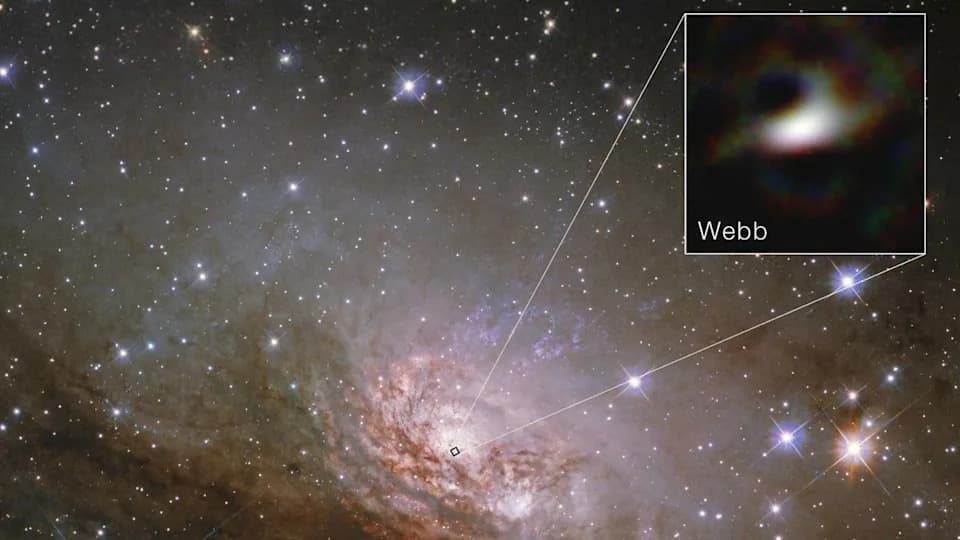
PSR J2322-2650b orbits a pulsar — a rapidly spinning neutron star left behind after a supernova. The system is about 750 light-years away and was first identified in a 2017 radio survey; JWST’s infrared sensitivity made it possible to probe the planet’s atmosphere in detail. Because the pulsar emits primarily high-energy radiation (gamma rays) rather than infrared light, JWST cannot detect the host directly — which, paradoxically, makes it easier to isolate the planet’s signal.
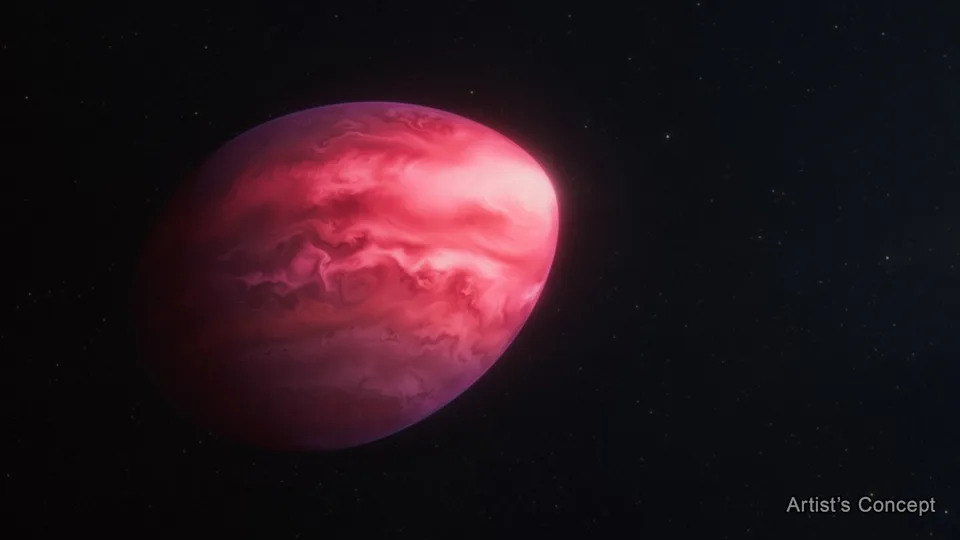
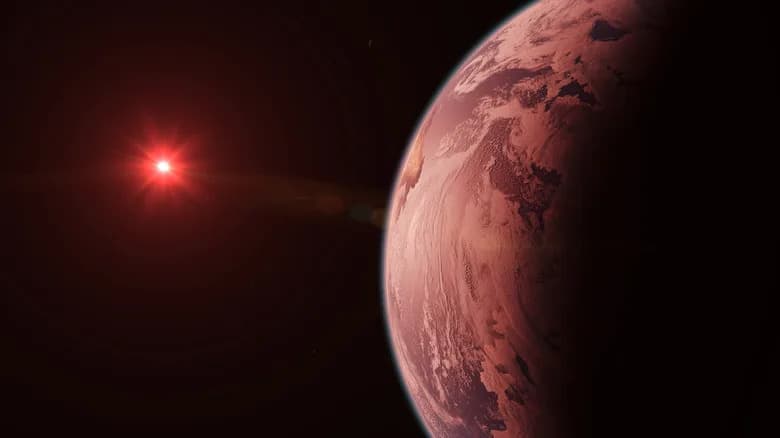
An artist's concept of the exoplanet PSR J2322-2650b. | Credit: NASA, ESA, CSA, Ralf Crawford (STScI)
Extreme Environment
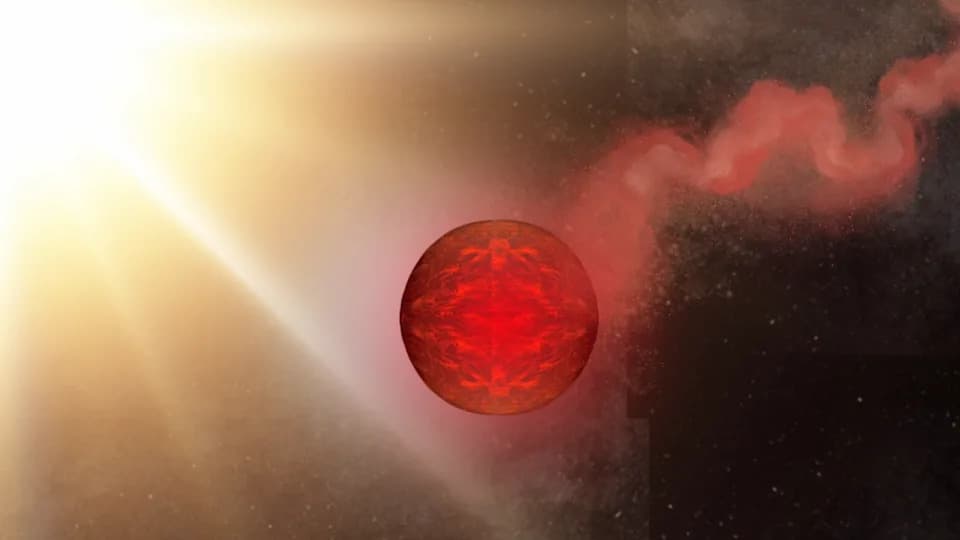
The planet lies extremely close to its host, at roughly one million miles (1.6 million kilometers) — nearly 100 times closer than Earth is to the Sun. It completes an orbit in just 7.8 hours and is dramatically stretched by tidal forces into a lemon-like shape. Such proximity to a pulsar, together with the planet’s unusual composition, makes its origin and evolution difficult to explain with known planet-formation scenarios.
Formation Puzzles and Hypotheses
Researchers considered analogies to so-called "black widow" systems, where a pulsar strips material from a companion, but that pathway does not readily explain PSR J2322-2650b’s carbon-rich makeup. Lead author Michael Zhang (University of Chicago) said the composition appears inconsistent with normal planet formation. Co-author Roger Romani (Stanford University) suggested one hypothesis: as the object cooled, carbon and oxygen in its interior might have crystallized, with dense carbon-rich crystals migrating upward and mixing into a helium-rich envelope, leaving a carbon-dominated atmosphere. However, that idea raises further questions — for example, what keeps oxygen and nitrogen from appearing in the atmosphere?
"This was an absolute surprise," said Peter Gao (Carnegie Earth and Planets Laboratory). "I remember after we got the data down, our collective reaction was, 'What the heck is this?' It's extremely different from what we expected."
What Comes Next
The authors emphasize that PSR J2322-2650b’s origin remains an enigma and that further observations and modeling are needed to understand how soot-like cloud particles and potential diamond condensates can persist so close to a powerful radiation source. The system provides a rare and valuable laboratory for testing models of extreme atmospheric chemistry and formation around compact remnants.
Help us improve.