Marine Le Pen begins an appeal in Paris challenging a five‑year ban that currently prevents her running in the 2027 presidential election. Convicted of misusing more than €4 million in EU funds, Le Pen and her co‑defendants contest the verdict and the penalties. A ruling is expected before summer; if the ban stands, RN leader Jordan Bardella is poised to become the party’s candidate. The case has drawn international attention and raised concerns about potential foreign pressure on France’s judiciary.
Le Pen’s 2027 Hopes Hinge on Paris Appeal as Court Considers Five-Year Ban
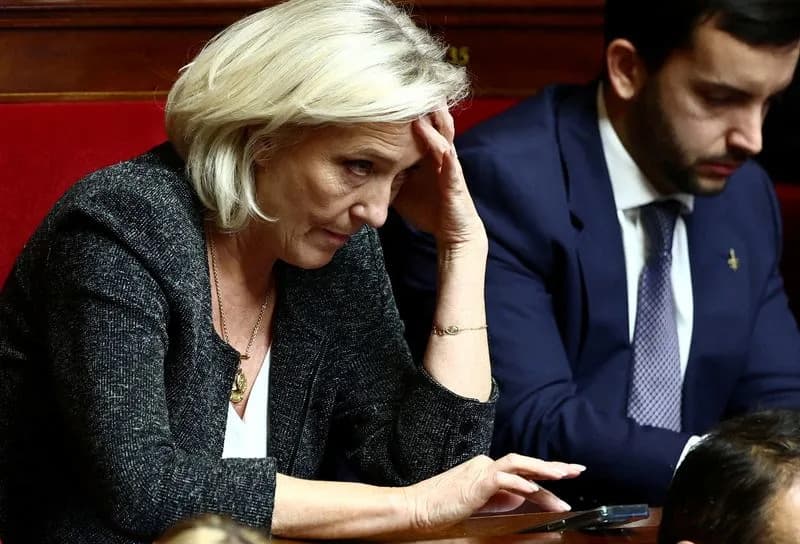
FILE PHOTO: French far-right leader and member of parliament Marine Le Pen, President of the French far-right National Rally (Rassemblement National - RN) party parliamentary group, and member of parliament Jean-Philippe Tanguy attend a debate following French Prime Minister Sebastien Lecornu's first general policy speech in front of the parliament and the new government at the National Assembly in Paris, France, October 14, 2025. REUTERS/Gonzalo Fuentes/File Photo
Paris — Marine Le Pen, the long‑time leader of France’s far‑right National Rally (RN), begins a high‑stakes appeal in Paris this week that will determine whether she remains eligible to stand in the 2027 presidential election. Le Pen was convicted last year of misusing European Parliament funds and given an immediate five‑year ban from running for public office.
What’s At Stake
Le Pen was found guilty of diverting more than €4 million (about $4.7 million) in EU funds to pay parliamentary staff who judges say were actually working for her party. The original ruling also ordered more than €3 million in damages to the European Parliament and a €2 million fine for the RN, half of which was suspended.
The Appeal Hearing
The appeal opens on Tuesday and is scheduled to run through Feb. 12. Court observers expect a final ruling before the summer. If the five‑year ban is overturned or substantially reduced, Le Pen could rejoin the race for the 2027 presidency. If the ban is upheld, she has indicated her protege — 30‑year‑old RN president Jordan Bardella — would likely be the party’s candidate.
Political And International Dimensions
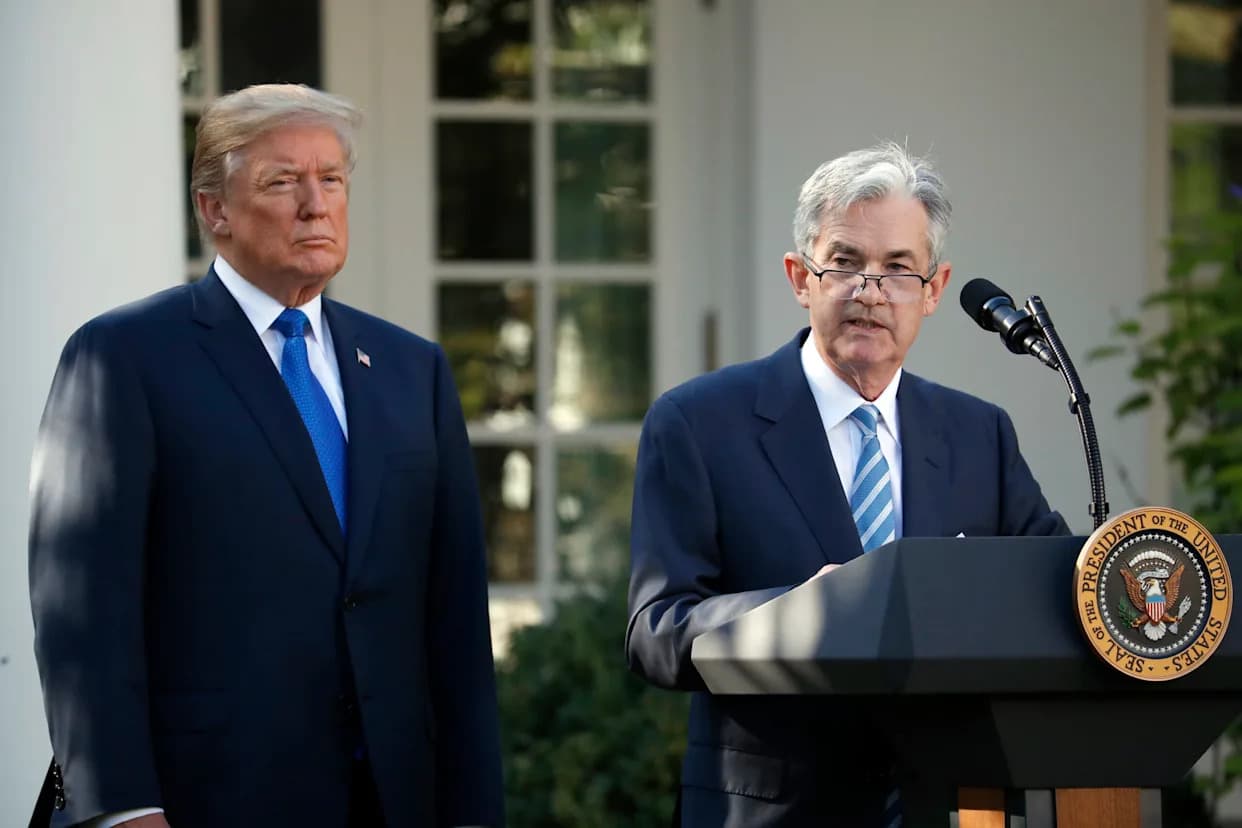
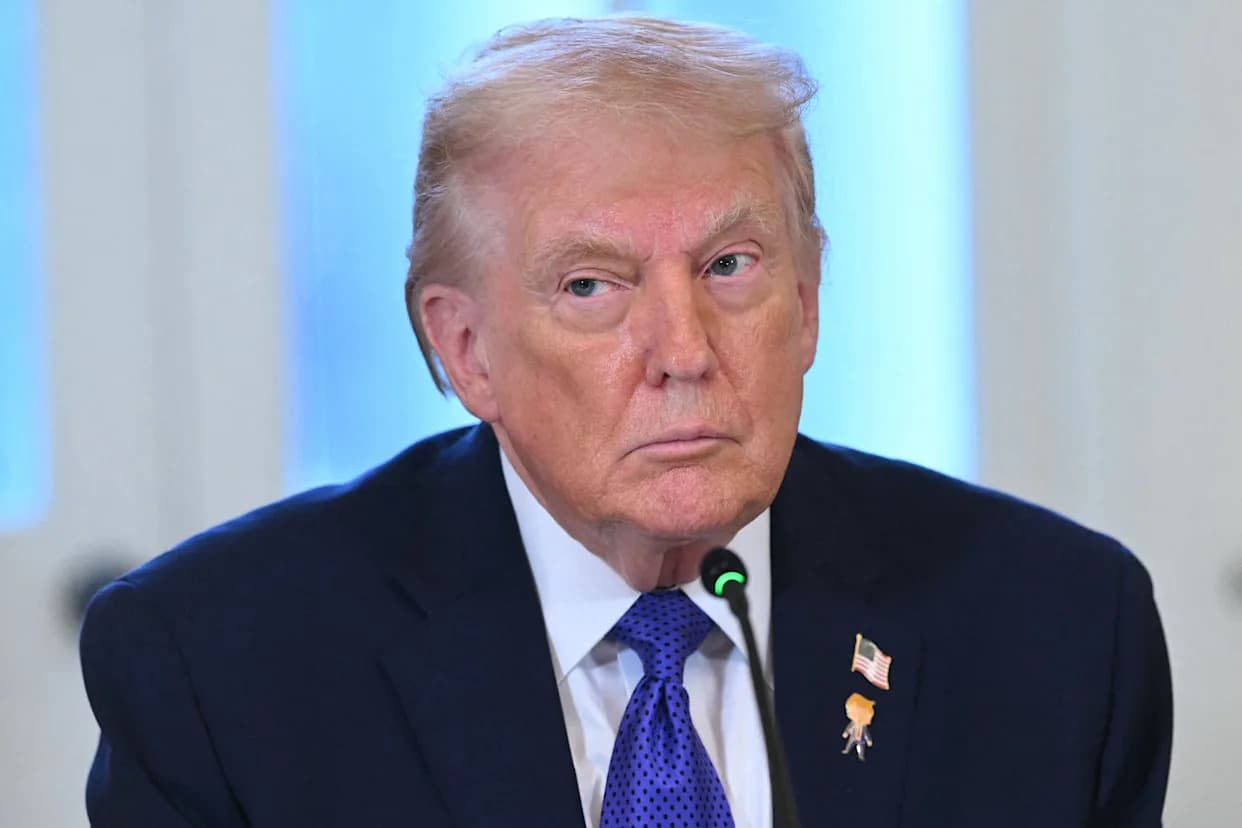
The case has attracted significant international attention. U.S. President Donald Trump and senior figures in his circle publicly expressed support for Le Pen after the conviction. Reports that some Trump administration officials considered sanctions against the French prosecutors and judges involved were later described as inaccurate by U.S. officials; Under Secretary of State Sarah B. Rogers called the initial report a "fake story," and the State Department said, "We do not preview potential actions."
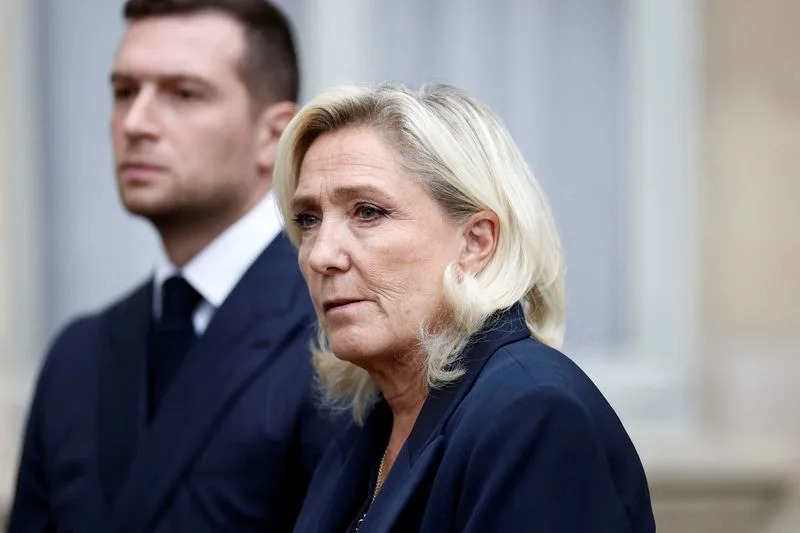
FILE PHOTO: Jordan Bardella, president of the French far-right National Rally (Rassemblement National - RN) political party, and French far-right leader and member of parliament Marine Le Pen talk to journalists as they leave after a meeting with the French Prime Minister as part of a series of consultations with political parties, a week before a confidence vote he is seeking from the National Assembly on the budget issue, at the Hotel Matignon in Paris, France, September 2, 2025. REUTERS/Benoit Tessier/File Photo
"In the country of human rights, judges have implemented practices that we thought were reserved for authoritarian regimes," Le Pen told French television channel TF1 after the verdict, calling the ban politically motivated.
French authorities and the Paris judicial court warned that any move against French judges would be seen as unacceptable interference in France's internal affairs. The French government said it would remain vigilant against foreign meddling.
Legal Arguments And Public Reaction
Le Pen and co‑defendants have maintained their use of funds was legitimate. Judges, however, said they made the ban effective immediately to prevent what they described as "irreparable harm to democratic public order." Opinion polls at the time suggested a majority of French respondents supported the court’s decision.
Political Fallout
Le Pen’s legal troubles appear to have elevated Jordan Bardella’s profile; a poll last autumn suggested he would perform strongly in a presidential run. Analysts say the appeal’s outcome could reshape the RN’s strategy ahead of 2027 and influence broader debates across Europe about judicial oversight, political accountability and foreign influence.
Reporting by Juliette Jabkhiro, Elizabeth Pineau, Gabriel Stargardter and Humeyra Pamuk; writing and editing consolidated for clarity.
Help us improve.