The Justice Department has dismantled the Community Relations Service (CRS), a long-standing federal team of conciliators known as "peacemakers," and reassigned much of its work to U.S. attorneys' offices. The decision—documented in a June 2025 report and a 2026 budget proposal—has led to layoffs, reassignments and a lawsuit from civil-rights groups. Advocates warn that embedding CRS functions inside prosecutors' offices undermines neutrality and rapid deployment, while Congress considers $20 million in funding to restore the service.
Justice Department Disbands Community Relations 'Peacemakers,' Shifts Duties to U.S. Attorneys
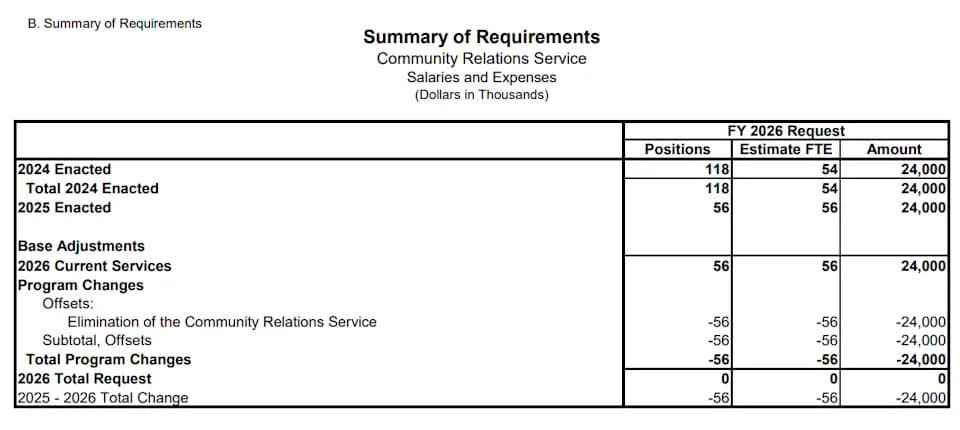
Caption: Excerpt from Justice Dept. 2026 shows department planned to reduce Community Relations Service office staffing from 56 to zero.
The Justice Department has dismantled its Community Relations Service (CRS) — a decades-old team of conciliators often called "America's peacemakers" — and reassigned many of its functions to U.S. attorneys' offices. The move, announced in budget documents and internal reports, has prompted layoffs, rapid reassignments and a legal challenge from civil-rights groups.
What CRS Did
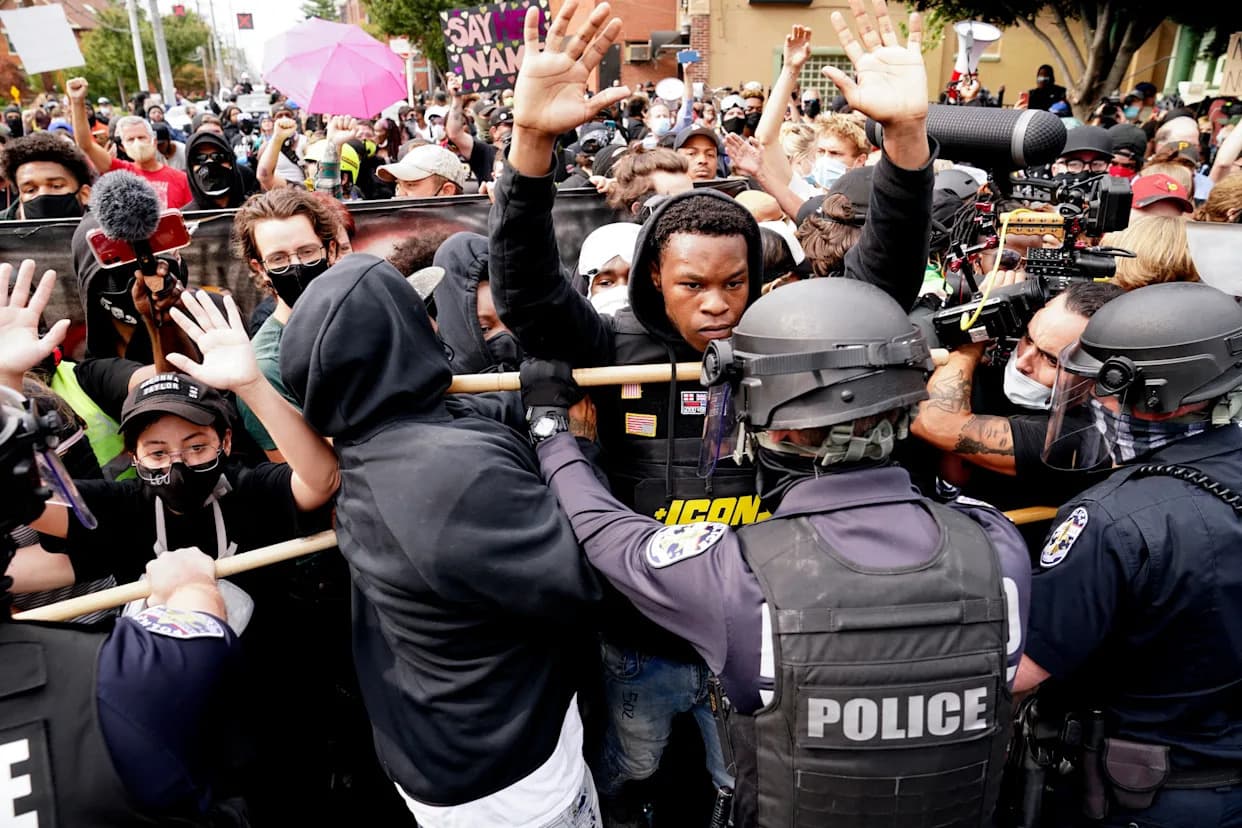
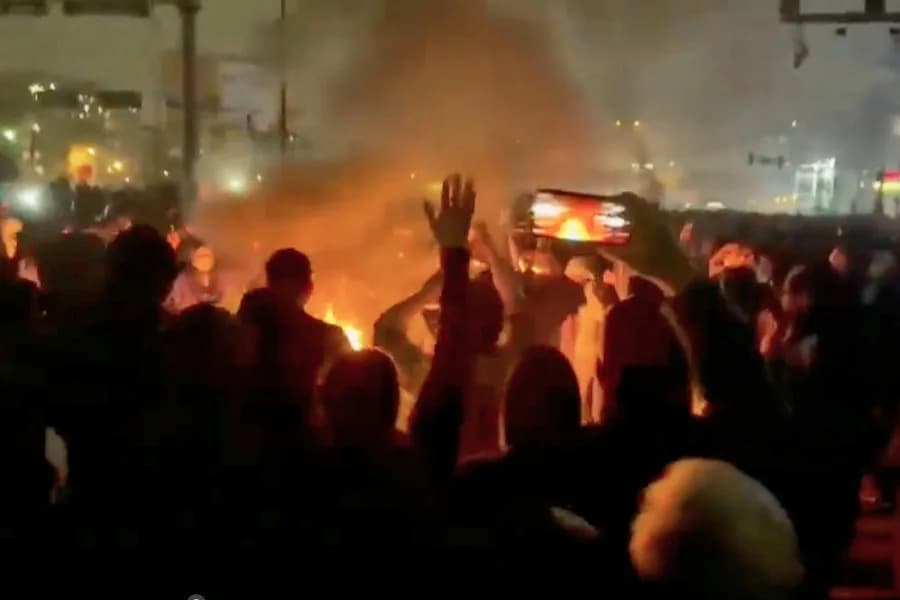
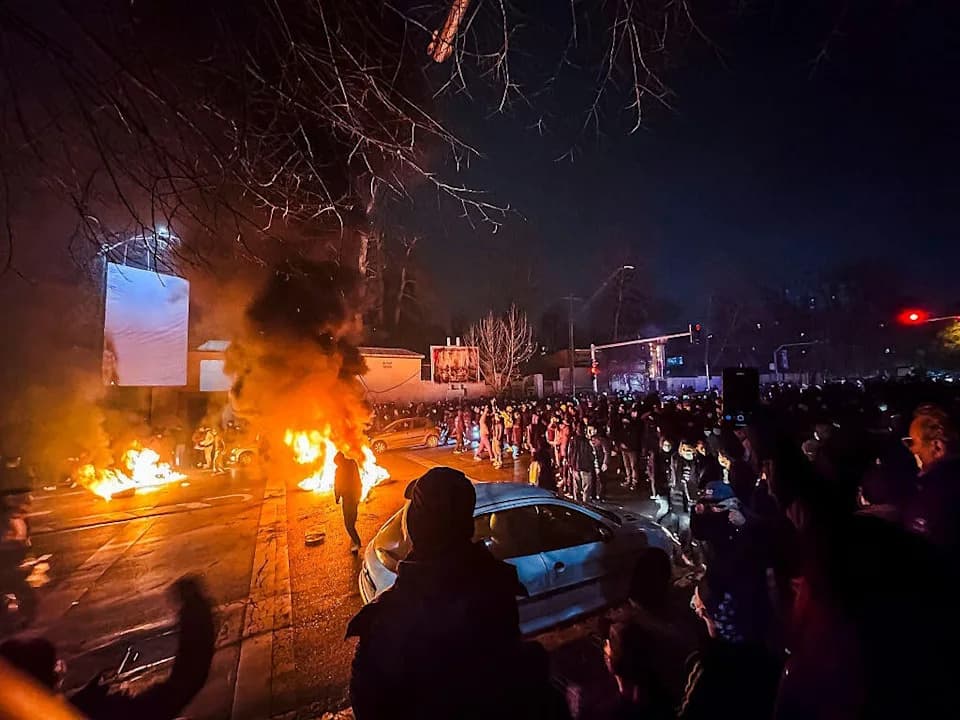
CRS conciliators specialized in mediation, de-escalation and community engagement. For years the office maintained regional staff who could be deployed quickly to cities experiencing unrest or strained relations between police and the public. Between 2021 and 2024, CRS conducted more than a dozen formal mediations and ran over 100 trainings, according to agency records. Its deployment to Minneapolis during the Derek Chauvin trial and sentencing in 2021 was the largest CRS operation that year.
What Changed
Sources, including current and former Justice Department employees, say the Trump administration has effectively shuttered CRS. A June 2025 report stated, "The (community relations service) mission does not comport with Attorney General and Administration law enforcement and litigating priorities." A 2026 agency budget request proposed cutting CRS staffing from 56 positions to zero; the department estimated that cut would save $24 million this year. Separately, a Justice Department spokesperson told CBS News that reassigning CRS work to prosecutors would "save the Department over $11 million" while advancing administration priorities.
Concerns From Former Staff And Advocates
Former CRS specialists warned that moving conciliators into U.S. attorneys' offices risks undermining their neutrality and rapid-deployment capacity. Julius Nam, a former DOJ prosecutor and CRS specialist, told reporters that CRS' independence from law-enforcement agencies was crucial to building trust with communities and that reassignment to prosecutors could compromise those relationships. "Those people could have gone to Minneapolis immediately this week," he said, arguing the office's impartial status enabled effective mediation.
"When we sideline peacemakers, we all pay the price." — Bert Brandenburg, former CRS employee
Legal And Legislative Pushback
Nearly a dozen civil-rights organizations and charities filed a lawsuit in Massachusetts seeking to block the cuts, arguing the administration's actions disrupted ongoing de-escalation efforts and were unlawful. Plaintiffs include NAACP St. Louis County and the Haitian Community Help & Support Center. Nearly 100 congressional Democrats have filed a court motion supporting the legal challenge, calling the closure an "executive fiat" that leaves communities without vital peacemaking services.
Congressional action may yet restore funding: a newly introduced federal funding bill aimed at averting a government shutdown would allocate $20 million for CRS if approved, and Democratic support for that funding appears strong.
History And Stakes
CRS was established in the 1960s amid rising civil unrest to provide neutral mediators to ease tensions between communities and police. Over six decades, the office has been credited with helping prevent or reduce violence and unrest in multiple episodes, including the aftermath of the Rodney King-related tensions in 1993, a 1997 fatal shooting in Rohnert Park, California, and community tensions in Akron, Ohio, in 2022.
The debate continues as community leaders, former CRS staff, civil-rights groups and some members of Congress press to preserve or restore an independent conciliatory function within the federal government. Supporters say impartial peacemakers are essential to defusing conflicts before they escalate; the administration says the work can be absorbed into prosecutors' offices to increase efficiency.
Help us improve.