Iran announced that three domestically designed satellites were placed into orbit aboard a Russian rocket, a launch broadcast by state TV and confirmed by AP and Reuters. Tehran says the satellites are for civilian uses like environmental monitoring and agriculture, while Western officials warn the technology could have dual‑use missile applications. The launch highlights deepening strategic and technical cooperation between Russia and Iran since 2022, set against growing tensions with the United States. Both governments portray the partnership as a response to Western pressure and sanctions.
Iran Launches Three Domestically Designed Satellites On Russian Rocket As Tehran‑Moscow Ties Deepen
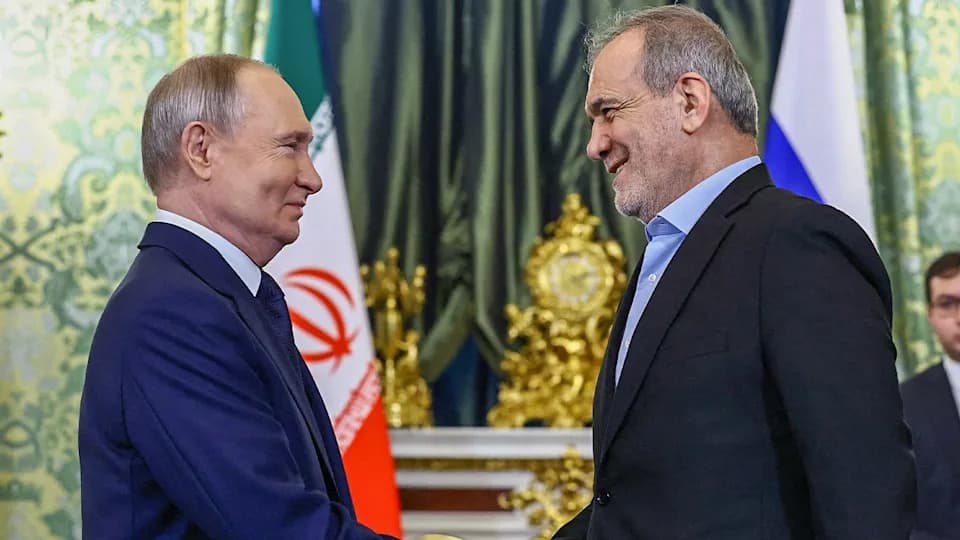
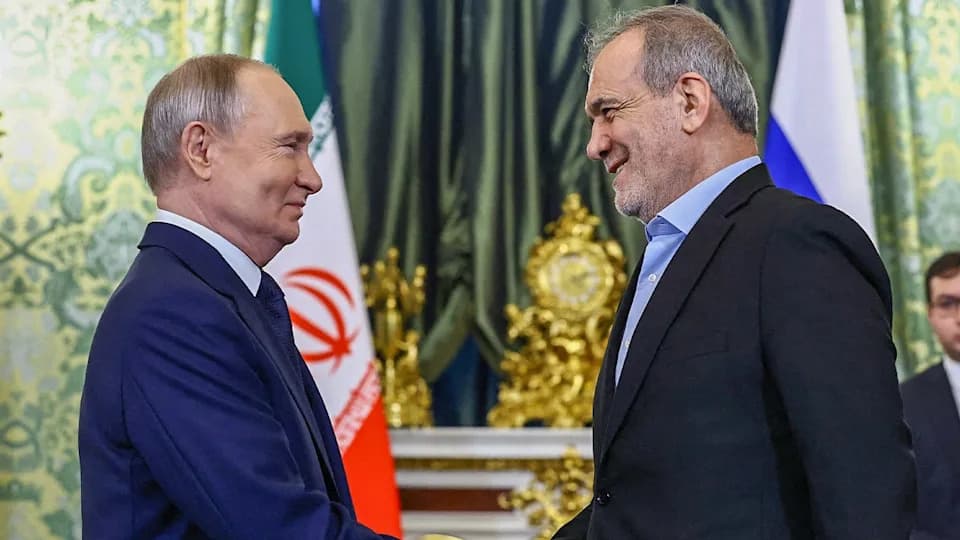
Russian President Vladimir Putin and Iranian President Masoud Pezeshkian shake hands as they meet in Moscow, Russia Jan. 17, 2025.
Iran confirmed this week that three satellites it says were designed at home were placed into orbit aboard a Russian rocket, a development broadcast on Iran's Al‑Alam state channel and reported by the Associated Press and Reuters.
Launch Details
Footage aired by Al‑Alam showed the liftoff from eastern Russia. International news agencies reported the vehicle carried Iran's payload into orbit, marking the seventh time Tehran has conducted a satellite launch with Russian assistance.
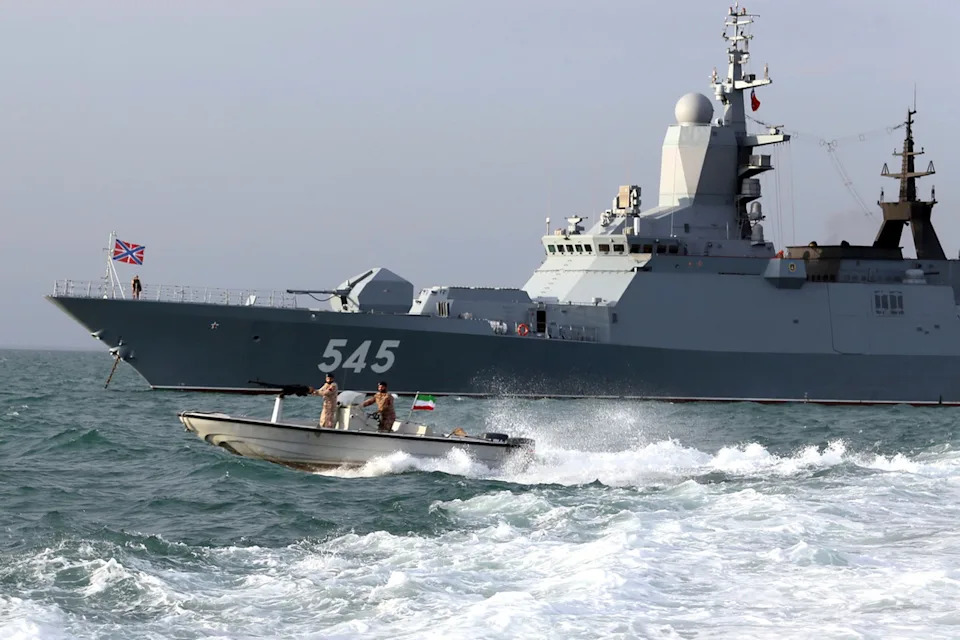
A Russian warship and an Iranian army speed boat attend a joint naval exercise on Tuesday. (AP/Iranian Army)
Iranian Ambassador to Russia Kazem Jalali said the satellites were "designed and produced by Iranian scientists," and stressed that cooperation between Tehran and Moscow continues "despite all the sanctions and threats."
Declared Purpose And International Concern
Iranian officials say the satellites are intended for civilian uses such as environmental monitoring and agricultural applications. Western governments, however, have repeatedly cautioned that advances in space launch and satellite technology can have dual uses, including technologies relevant to ballistic missile development and testing.
Strategic Context
The mission underscores a broader deepening of ties between Moscow and Tehran since Russia's 2022 invasion of Ukraine. Iran has supplied Russia with drones and other military equipment used on the battlefield, while Russia has offered diplomatic backing, economic cooperation and technical support as both countries face sweeping Western sanctions.

Russian army Mi-24 helicopters fly above a warship at the Turali range on the Caspian Sea coast in the Republic of Dagestan in Southern Russia on Sept. 23, 2020 during the "Caucasus-2020" military drills gathering China, Iran, Pakistan and Myanmar troops, along with ex-Soviet Armenia, Azerbaijan and Belarus.
Rising Tensions With Washington
Tensions between Tehran and Washington remain high. After former U.S. President Donald Trump warned the United States could strike Iran again if it sought to rebuild its nuclear capabilities, Iranian President Masoud Pezeshkian responded that any U.S. attack would be met with a "harsh and discouraging" response, according to reporting by the Associated Press. Iranian officials describe such statements as deterrence; Tehran continues to assert its nuclear program is peaceful, a claim disputed by the U.S. and its allies.
What This Means
Beyond the technical milestone, the launch serves as a political signal: Moscow and Tehran are increasingly framing their partnership as a way to resist Western pressure. For Iran, cooperating with Russia highlights resilience under sanctions and progress in space capabilities; for Russia, it illustrates that international isolation has not stopped some states from building closer ties.
Help us improve.