
Iranian President Masoud Pezeshkian warned of a harsh response to any attack after President Donald Trump suggested the U.S. could strike again if Iran rebuilds its nuclear capabilities. The exchange follows a 12-day June air campaign that reportedly killed nearly 1,100 Iranians and a retaliatory missile barrage that killed 28 in Israel. Analysts say the June strikes slowed Iran's nuclear program by months but left enriched uranium up to 60% and emphasized that Iran's ballistic missiles remain a major regional threat. Observers also note divergent U.S. and Israeli intelligence assessments could affect policy choices.
U.S. and Iran Exchange Stark Warnings as Tensions Flare Seven Months After June Strikes

President Trump welcomes Israeli Prime Minister Benjamin Netanyahu to his Mar-a-Lago resort, Dec. 29, 2025, in Palm Beach, Florida. / Credit: Joe Raedle/Getty
Tehran — Iranian President Masoud Pezeshkian warned Tuesday that Iran would respond harshly to any attack, replying directly to a U.S. warning the previous day about Tehran's alleged efforts to rebuild its nuclear capabilities. In a social media post he wrote:
“The Islamic Republic of Iran's answer to any cruel aggression will be harsh and discouraging.”
Pezeshkian offered no operational details. His comment came a day after U.S. President Donald Trump suggested the United States might carry out further strikes if Iran attempts to reconstitute its nuclear program.
Speaking at a news conference at his Mar-a-Lago estate in Florida after meetings with Israeli Prime Minister Benjamin Netanyahu, Mr. Trump said: “Now I hear that Iran is trying to build up again. And if they are, we're going to have to knock them down. We'll knock them down. We'll knock the hell out of them. But hopefully that's not happening.”
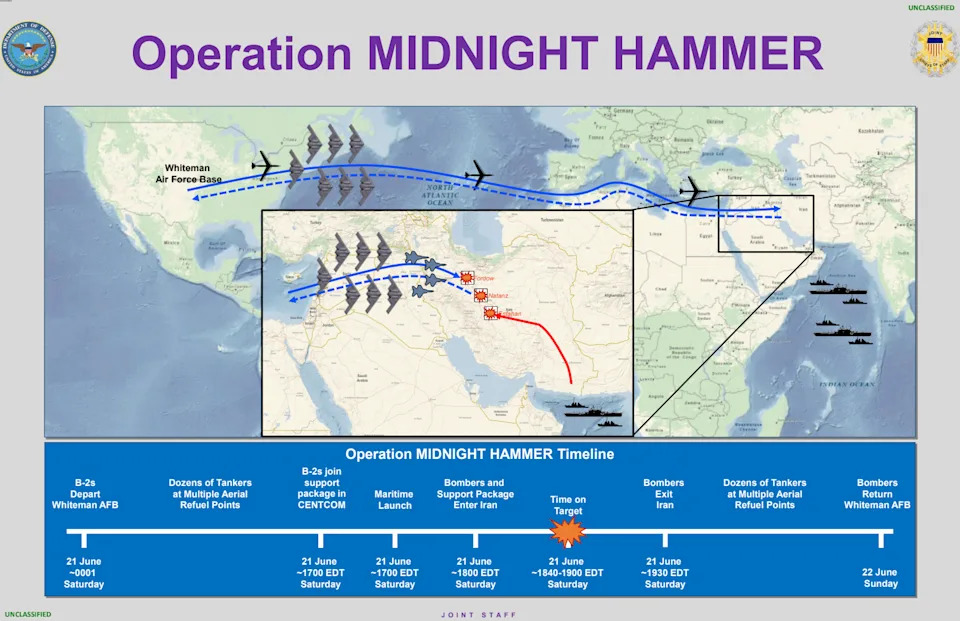
A graphic released by the Pentagon shows the flight path and timeline of Operation Midnight Hammer, the U.S. operation to strike nuclear sites in Iran on June 21, 2025. / Credit: U.S. Department of Defense
Background: June Operations and Retaliation
The comments revived talk of renewed military action seven months after a 12-day air campaign in June that officials said killed nearly 1,100 Iranians, including senior commanders and scientists. Iran's retaliatory missile strikes in that exchange killed 28 people in Israel.
U.S. officials have described the June campaign — publicly referred to in some reporting as Operation Midnight Hammer — as a covert effort to damage Iran's nuclear infrastructure. Public assessments of the operation's effects have varied: an initial classified assessment concluded the strikes set Tehran's nuclear efforts back by months, while Mr. Trump publicly characterized the setback as “basically decades.” Some Democratic lawmakers who received classified briefings said the president had overstated the results.
Intelligence, Capabilities, and Regional Risk
CBS News national security contributor Samantha Vinograd, a former senior Homeland Security official, noted that U.S. and Israeli intelligence may differ on Iran's intentions and capabilities. She said the summer strikes did damage some nuclear facilities but emphasized that Iran still retains highly enriched uranium up to about 60 percent, a technical step short of weapons-grade levels but significant in a breakout scenario.
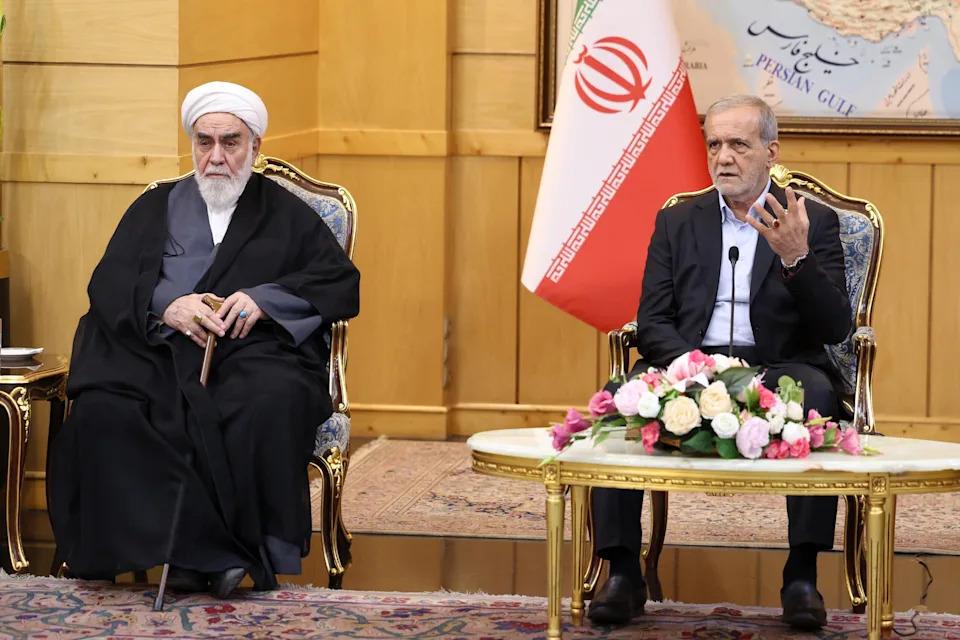
Iranian President Masoud Pezeshkian, right, speaks during a press conference in Tehran on Sept. 27, 2025. / Credit: Iranian Presidency/Handout/Anadolu via Getty Images
Vinograd and other analysts caution that Iran's most immediate regional threat may not be an imminent nuclear weapon but rather its large conventional ballistic missile arsenal and proxy networks. “Iran has more ballistic missiles than any other country in the region aside from Israel, and those missiles are a major source of leverage when it comes to striking targets across the region, including Israel and U.S. forces,” she said.
Vinograd added that the apparent intelligence gap between U.S. and Israeli assessments could shape differing policy recommendations in Washington and Jerusalem.
Diplomacy, Denials, and the Nuclear Timeline
Pezeshkian also asserted on Saturday that tensions had escalated, saying: “We are in a full-scale war with the U.S., Israel and Europe; they don't want our country to remain stable.”
Iran has publicly stated that it is not enriching uranium at any domestic site, signaling a willingness to leave space for diplomatic engagement. U.S. intelligence agencies and the International Atomic Energy Agency (IAEA) assessed that Iran last had an organized nuclear weapons program in 2003, though Tehran has continued enriching uranium up to 60 percent — a threshold that shortens the technical distance to weapons-grade material.
With both sides issuing stark warnings, analysts say the coming weeks and the quality of shared intelligence will be crucial in determining whether rhetoric escalates into further military action or is contained through diplomacy.


