
Iran executed Ali Ardestani on spying charges as the government struggles to contain nationwide protests that entered their 11th day. The demonstrations began over soaring prices and sanctions-related economic pain and have reportedly left nearly 40 people dead, according to HRANA. President Trump warned of possible U.S. intervention if protesters are harmed, while Tehran announced a modest subsidy increase and ordered security forces not to target peaceful demonstrators. Iran's new army commander issued stern warnings to external adversaries as tensions rise.
Iran Intensifies Anti‑Western Rhetoric Amid Deadly Nationwide Protests

An image taken from a social media video, the date of which could not be confirmed, shows a large crowd marching through the streets of Abdanan, a city in Iran's southwest Ilam province, believed to be part of nationwide protests against the Islamic Republic's government. / Credit: Reuters/Social media
Iran on Wednesday executed a man identified by state media as Ali Ardestani after convicting him of spying for Israel's Mossad, the state news agency IRNA reported. The execution came as Iranian leaders struggled to quell widespread street demonstrations that have prompted warnings of U.S. intervention from President Trump.
IRNA said Ardestani was found guilty of providing Israeli intelligence 'with images and photos of specific locations and information on target subjects, and received amounts in the form of digital currency at the end of each mission.' Trials in Iran are often held behind closed doors, and authorities have not made the evidence public. Amnesty International reports that Iran carried out more than 1,000 executions last year — the highest annual total since 1989.
Unrest Spreads Across the Country
The execution occurred amid the most serious wave of domestic unrest the clerical leadership has faced in years. Nationwide demonstrations, which entered their 11th day on Wednesday, began with shopkeepers and small business owners in Tehran protesting soaring inflation and the rising cost of everyday goods in an economy strained by years of U.S. and international sanctions.
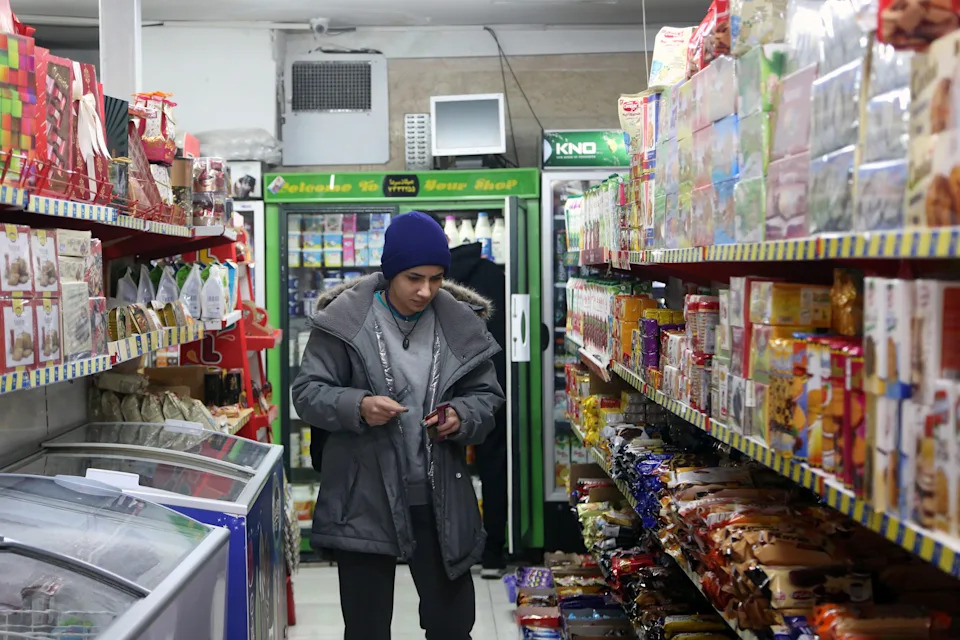
Someone shops in a supermarket in Tehran, Iran, on Jan. 7, 2026, as the Iranian people grapple with soaring prices, a rapidly devaluing currency, and mounting economic pressure ahead of a planned rollout by the government of a monthly food coupon system amid the Islamic Republic's worst economic crisis since 1979. / Credit: Fatemeh Bahrami/Anadolu/Getty
The U.S.-based Human Rights Activists News Agency (HRANA), founded by Iranian activists, reports that nearly 40 people have been killed since the protests began. What started as economic anger has quickly broadened into the widest protests seen in Iran since 2022.
International Tension and Domestic Measures
President Trump told reporters aboard Air Force One that the U.S. could hit Iran 'very hard' if protesters are not protected and said, 'We're watching it very closely.' He had previously warned that if Iran 'violently kills protesters,' the U.S. would 'come to their rescue.' So far, there has been no overt sign of U.S. military action, and the White House has not specified which Iranian actions would trigger a response.
To ease domestic pressure, Tehran announced a package of economic relief measures intended to help households. State media reported that President Masoud Pezeshkian ordered security forces not to attack peaceful demonstrators. Government spokesperson Fatemeh Mohajerani told the state-controlled Mehr News Agency that the measures would, among other steps, triple national subsidies intended to help ordinary households buy essential goods.
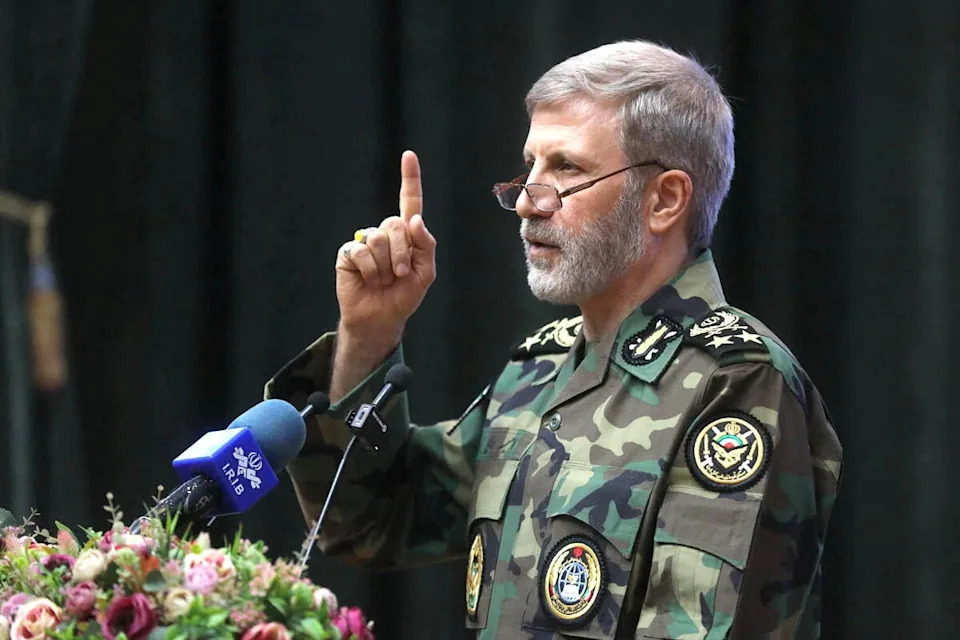
Commander-in-Chief of the Iranian Army, Amir Hatami speaks during a meeting with military academy students, in Tehran, Iran, in an image provided by the army on Jan. 7, 2026. / Credit: Iranian Army/WANA (West Asia News Agency)/Handout via REUTERS
The main subsidy boost — due to begin Wednesday — would effectively triple the amount Iranians receive for basic food items, adding roughly the equivalent of $7 per month on top of existing support, based on current exchange rates. Some residents said the increase is far from sufficient. One Tehran resident told CBS News that 'if two people in a family want to have eggs, bread, and cheese for their breakfast, the subsidy is spent on the first day.'
Hardline Rhetoric From Military Leaders
At times of domestic turbulence, Tehran often adopts a combative posture toward Israel and the United States. Addressing students at Iran's Army Command and Staff University in Tehran, the country's new overall army commander, Major General Amir Hatami, warned he would 'cut off the hand of any aggressor.' According to The Associated Press, Hatami said that intensifying hostile rhetoric from Iran's enemies is viewed as a threat that 'will not be left unanswered.'
'Islamic Iran considers the intensification of the enemies' rhetoric against the Iranian nation as a threat and will not leave its continuation unanswered,' the commander said.
As protests continue, the government faces the dual challenge of calming rising public anger at home while managing growing international scrutiny and threats. The situation remains fluid, and both domestic policies and foreign rhetoric will shape what happens next.
Help us improve.


