Russian President Vladimir Putin held separate calls on Jan. 16 with Israeli Prime Minister Benjamin Netanyahu and Iran's President Masoud Pezeshkian, offering Moscow's willingness to mediate regional tensions, the Kremlin said. The calls come amid nationwide protests in Iran and heightened regional friction. Kremlin spokesman Dmitry Peskov said Russia is already providing assistance aimed at regional stability and de‑escalation. Moscow said it would publish a readout of the call with Pezeshkian later.
Putin Offers Russia As Mediator After Separate Calls With Netanyahu And Iran's President

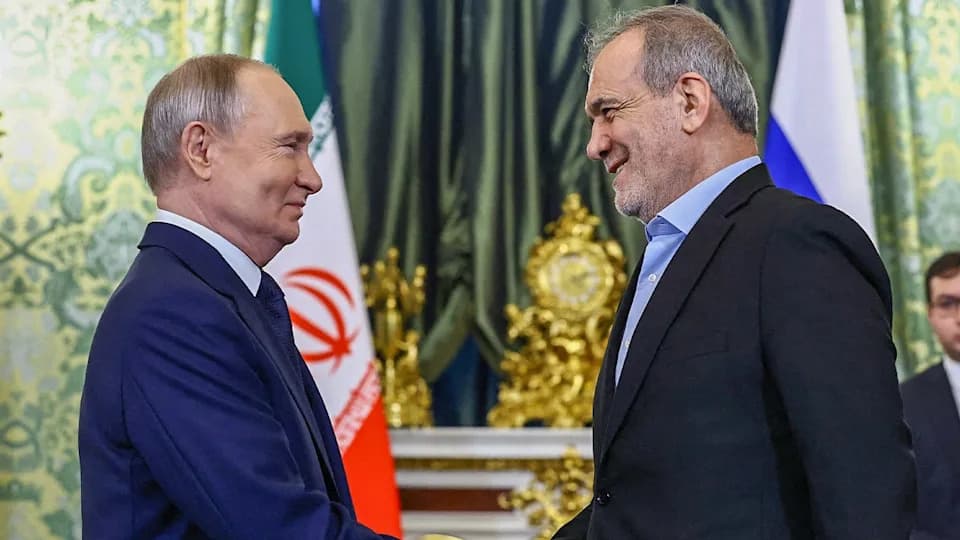
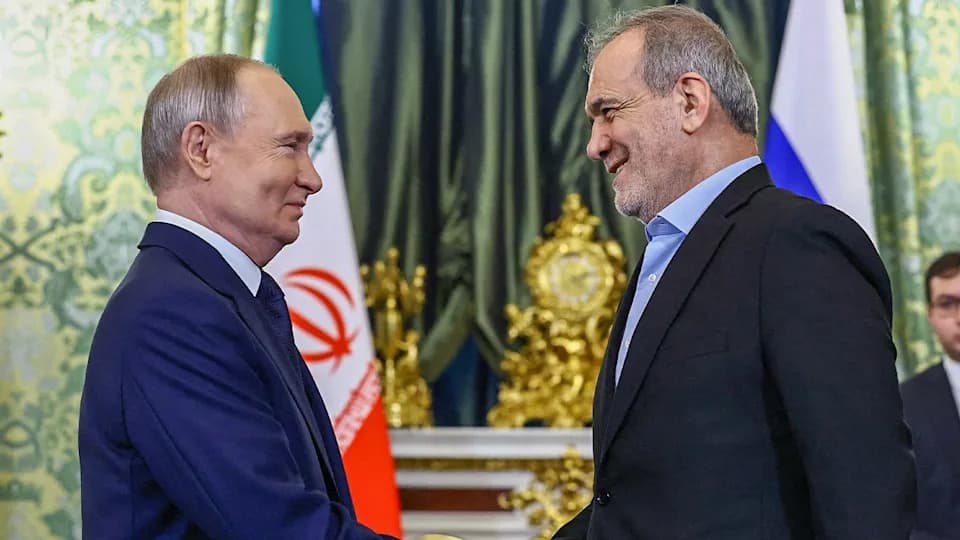
FILE PHOTO: Russian President Vladimir Putin speaks on the day he attends a documents signing ceremony with Iranian President Masoud Pezeshkian in Moscow, Russia January 17, 2025. REUTERS/Evgenia Novozhenina/Pool/ File Photo
Russian President Vladimir Putin held separate phone calls on Jan. 16 with Israeli Prime Minister Benjamin Netanyahu and Iran's President Masoud Pezeshkian, the Kremlin said, offering Moscow's services as a mediator to help reduce tensions in the Middle East.
What the Kremlin Said
According to the Kremlin, Putin outlined proposals to bolster stability in the region and expressed Russia's willingness "to continue its mediation efforts and to promote constructive dialogue with the participation of all interested states." The Kremlin said it would publish a readout of the call with President Pezeshkian at a later time.
Dmitry Peskov, Kremlin Spokesman: "Russia is already providing assistance not only to Iran but also to the entire region, and to the cause of regional stability and peace. This is partly thanks to the president's efforts to help de-escalate tensions."
Context
Tehran has faced a nationwide crackdown on protests that began late last month. The Kremlin framed Moscow's engagement as driven by concerns about regional stability and the potential consequences of any threat to Iran's leadership, and by Russia's broader strategic ties in the Middle East.
Russia and Iran have expanded cooperation since the start of the Ukraine war; last year President Putin and President Pezeshkian signed a reported 20-year strategic partnership agreement. The Kremlin reiterated that Moscow supports Iran's right to peaceful nuclear energy, while Western governments continue to accuse Iran of seeking nuclear weapons capabilities — allegations Iran denies.
Why It Matters
Russia's offer to mediate underscores Moscow's intent to play a diplomatic role in the Middle East at a time of heightened tensions. Any mediation efforts would need the buy-in of multiple regional and international actors to be effective, and the Kremlin framed its approach as one of promoting dialogue rather than taking sides.
Reporting attributed to the Kremlin and newswire accounts. The article focuses on statements released by Russian officials and does not attempt to independently verify every historical claim referenced in original briefings.
Help us improve.