A recent study analyzing LOFAR and other radio data finds a radio dipole amplitude about three times larger than expected, which — if interpreted as motion — suggests the solar system may be moving much faster than prior estimates. The measured direction agrees with previous determinations, but the amplitude discrepancy could point to nonuniform radio-galaxy distributions, survey systematics, or a real challenge to the cosmological principle. Independent confirmation and careful systematic checks are needed before revising cosmological models.
Radio Survey Suggests Solar System May Be Moving 3× Faster Than Expected — A Potential Challenge for Cosmology

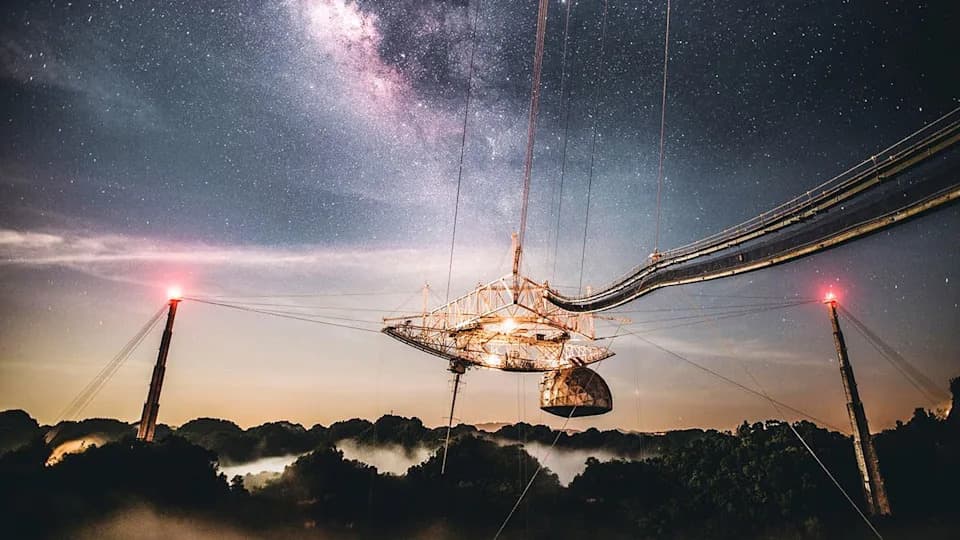
A new analysis of low-frequency radio observations reports a surprising result: the motion inferred for the solar system relative to distant radio galaxies appears to be roughly three times larger than previous estimates. The claim comes from a study that measured an excess of radio sources in the sky in the direction of our motion, using data from the European LOFAR array and other radio catalogs.
What the researchers did
The teams looked for a predicted anisotropy — a small excess of radio galaxies in the direction an observer is moving — known as the radio dipole. The expected amplitude of this dipole follows well-understood kinematic formulas, given the solar system's velocity measured from the cosmic microwave background (CMB). While the measured direction of the excess aligns with previous determinations, the amplitude is significantly larger than predicted, implying a much higher speed if interpreted purely as our motion.
Why this matters
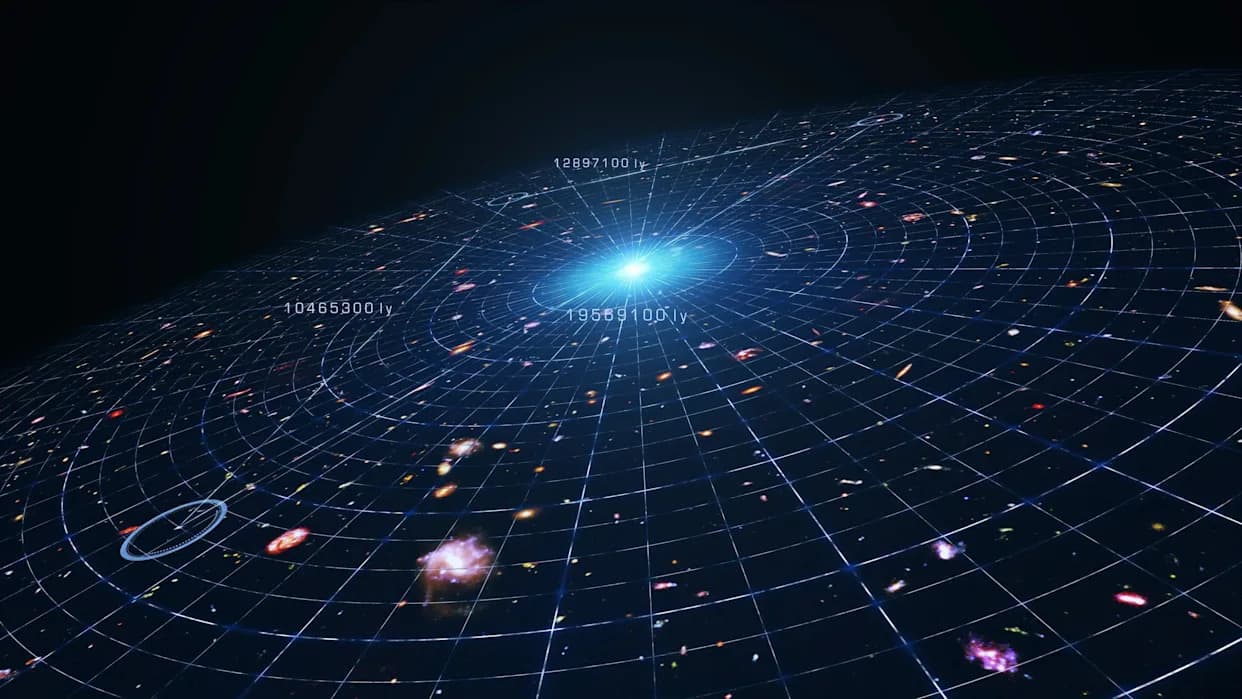
If the excess truly reflects the solar system's velocity, it would have important implications for our understanding of the large-scale distribution of matter and for the so-called cosmological principle, which assumes the universe is homogeneous on the largest scales. A substantially larger local velocity could indicate unexpected large-scale structure or require new physics to explain the discrepancy between different cosmic reference frames.
Alternative explanations and next steps
Before revising fundamental assumptions, other possibilities must be carefully evaluated. These include unrecognized systematic errors in the radio surveys, biases in source counting or calibration, and genuine anisotropy in the spatial distribution of radio galaxies. Similar anomalous radio-dipole results have appeared in earlier quasar-based studies and were sometimes attributed to calibration issues; this new work strengthens the case for a thorough re-examination.
Professor Dominik J. Schwarz, a co-author on the study, commented: "If our solar system is indeed moving this fast, we need to question fundamental assumptions about the large-scale structure of the universe. Alternatively, the distribution of radio galaxies itself may be less uniform than we have believed. In either case, our current models are being put to the test."
Independent confirmation will be essential. Future analyses using additional radio surveys, cross-checks with optical and infrared catalogs, refined handling of systematics, and theoretical work to interpret any confirmed discrepancy are the most likely paths forward. For now, the result is an intriguing puzzle that could either reveal new astrophysical structure or expose subtle observational biases.
Help us improve.