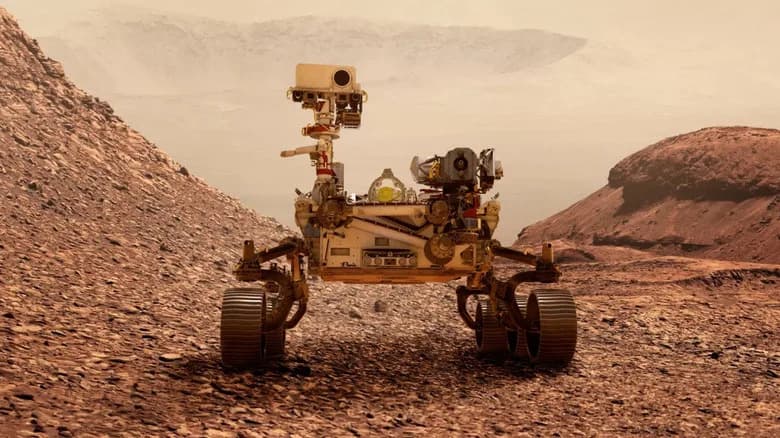
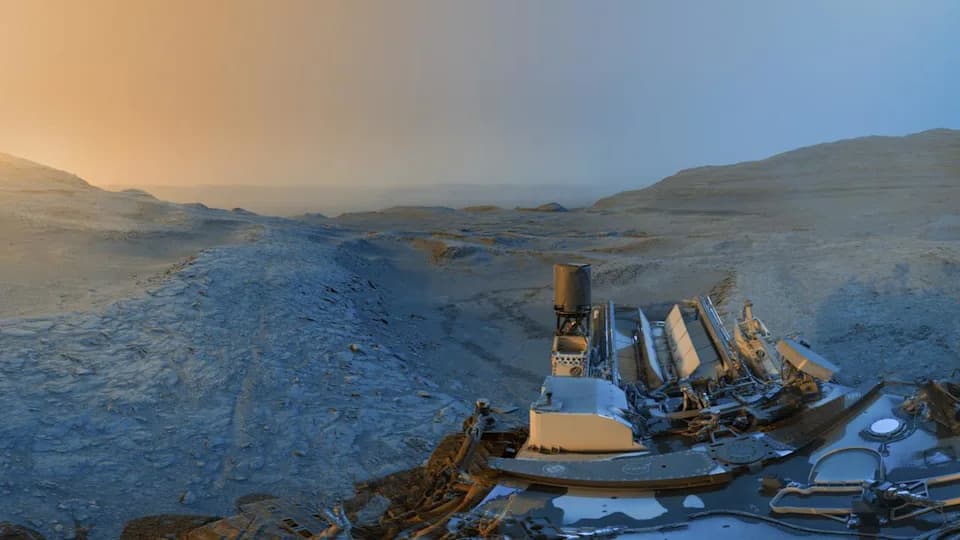
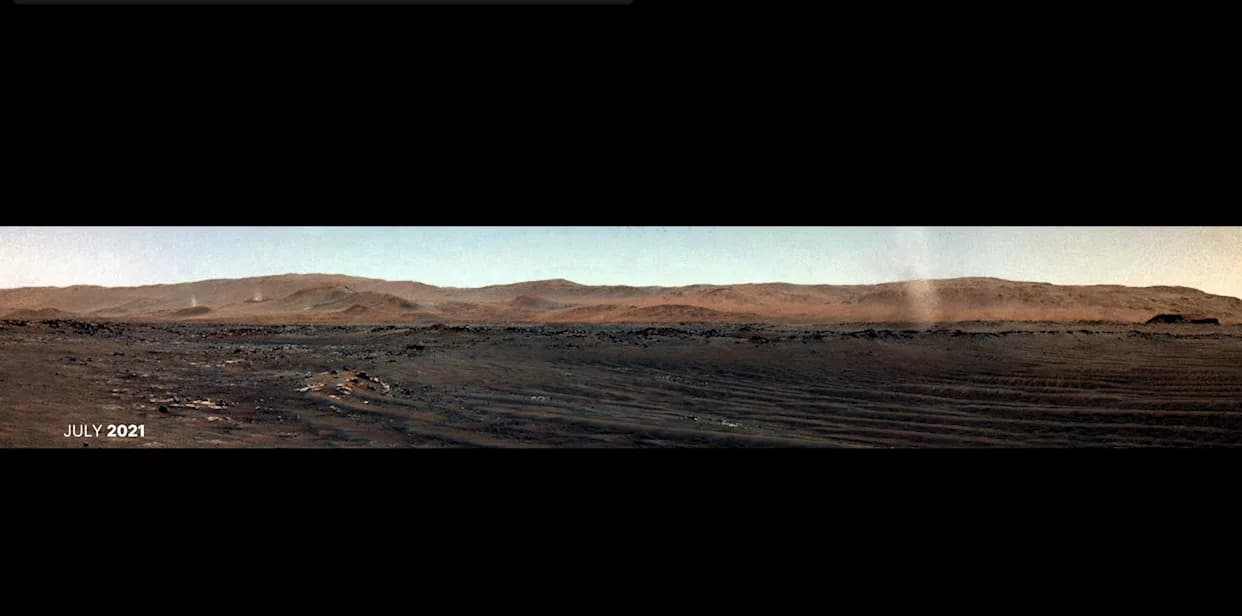
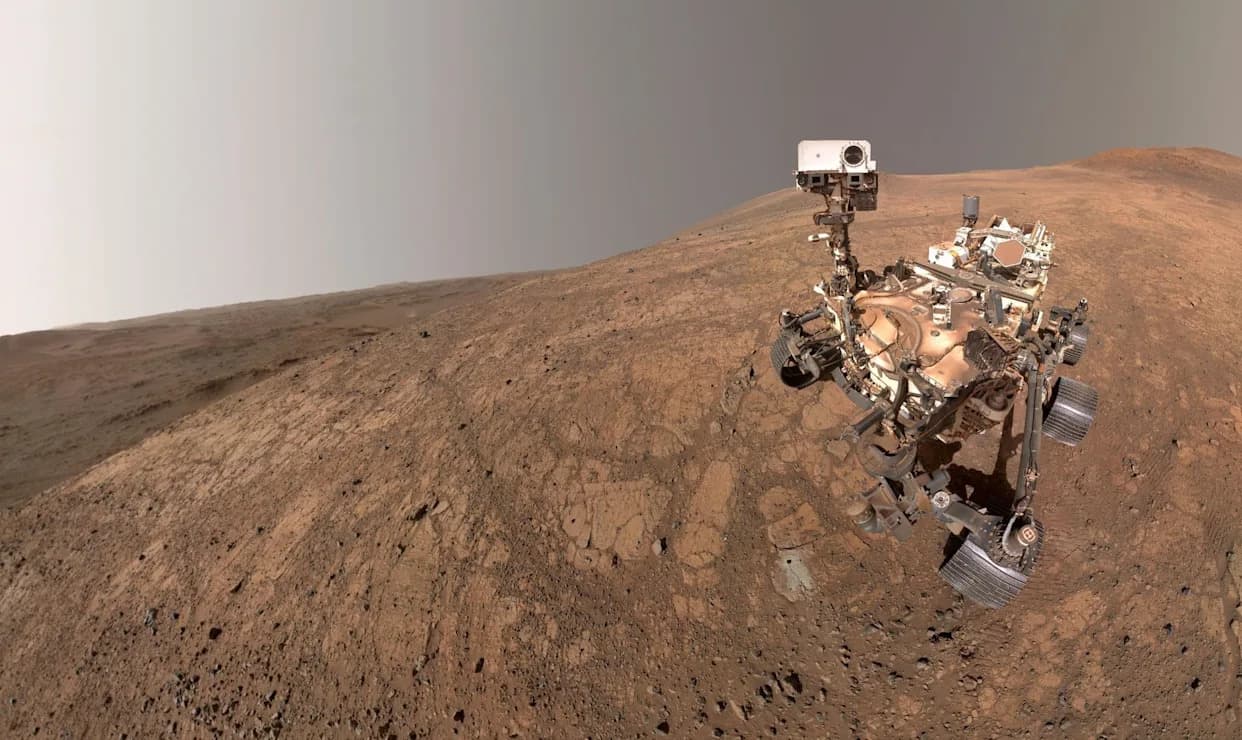
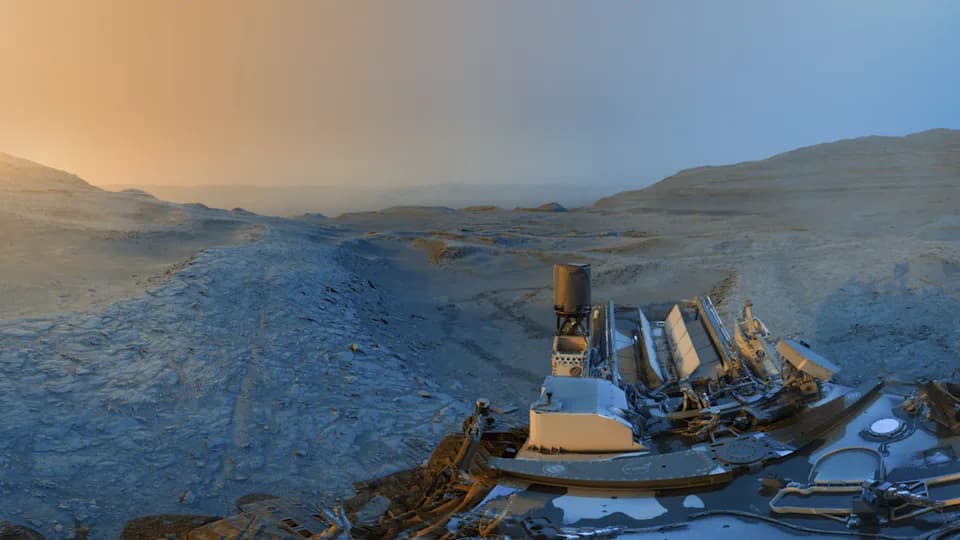
Perseverance may have found its first meteorite on Mars: a roughly 31‑inch (81 cm) rock nicknamed Phippsaksla that shows strong iron and nickel signatures in SuperCam data. The object was first imaged on Sept. 2 (Sol 1612) and sits in Jezero Crater at a site called Vernodden. If confirmed, this will be Perseverance's first meteorite since its Feb. 18, 2021 landing; earlier rovers, including Curiosity, Opportunity and Spirit, have found similar iron‑nickel space rocks. Perseverance's main mission — searching for past life and caching samples for return to Earth — continues.
Perseverance May Have Found Its First Meteorite on Mars — 3‑ft Iron‑Nickel Rock 'Phippsaksla'

Perseverance may have discovered its first meteorite on Mars
NASA's Perseverance rover appears to have detected a probable iron‑nickel meteorite on the floor of Jezero Crater. The science team first photographed the unusual, "sculpted, high‑standing" rock on Sept. 2 (Sol 1612) using the left Mastcam‑Z camera mounted on the rover's mast. Follow‑up observations with the rover's SuperCam laser instrument showed a composition consistent with iron and nickel.
The target, nicknamed Phippsaksla, measures roughly three feet long (about 31 inches / 81 centimeters). The team named the nearby site Vernodden; both names are drawn from locations in Svalbard, Norway. If confirmed as a meteorite, Phippsaksla would be Perseverance's first such find since the rover landed on Mars on Feb. 18, 2021.
How scientists identified it
Perseverance first imaged the rock and then used SuperCam to analyze its elemental composition at a distance. SuperCam's results indicate a strong iron and nickel signature, a hallmark of metallic meteorites whose parent bodies were the cores of larger asteroids. The rover team flagged the object for closer inspection based on its distinctive, isolated appearance compared with the surrounding low, fractured bedrock.
Context: meteorites on Mars and why this matters
Meteorites are common on Mars and have been documented by earlier missions. Curiosity has found several iron‑nickel meteorites in Gale Crater, including the roughly 1‑meter specimen nicknamed "Lebanon" (2014) and another dubbed "Cacao" (2023). The earlier Mars Exploration Rovers — Opportunity and Spirit — also discovered metallic meteorites during their missions.
Scientists expected Jezero Crater to host meteorites because its surface age and population of small impact craters are similar to other regions where meteorites have been found. Still, locating and characterizing a metallic meteorite is useful: these rocks provide direct samples of asteroid interiors and help scientists understand impact rates and surface processes on Mars.
Primary mission remains astrobiology and sample caching
Finding meteorites is a valuable secondary result, but Perseverance's primary goals remain searching for signs of ancient life and collecting rock and sediment samples for possible return to Earth. Last month the mission reported chemical signatures that may reflect reactions between sediment and organic matter; however, definitive determination of biological origin would require laboratory analysis back on Earth.
Credit: Candice Bedford (Purdue University) is the author of the team update describing the discovery.
Help us improve.