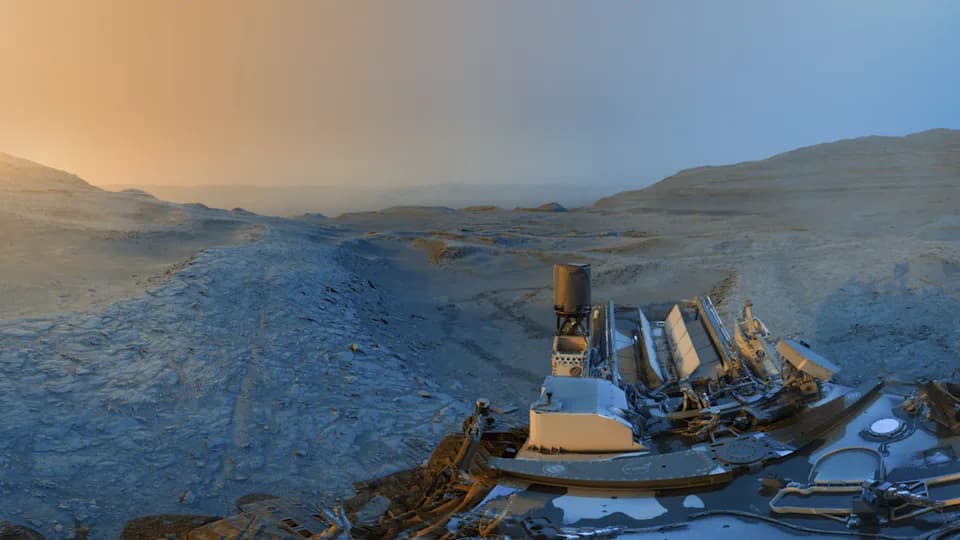
Perseverance has detected a bright, metallic rock called Phippsaksla near Jezero crater with unusually high iron and nickel, a chemical signature typical of iron–nickel meteorites. SuperCam’s laser spectrometer measured the composition from several meters away, and scientists say the readings strongly suggest an extraterrestrial origin. If confirmed, the rock would be Perseverance’s first clear metallic meteorite candidate and could help researchers study how meteorites weather on Mars. The rover continues follow-up observations while it pursues its broader mission objectives.
Perseverance Finds Shiny Iron–Nickel Rock on Mars — Possible Meteorite 'Phippsaksla'

NASA’s Perseverance rover has identified a bright, metallic rock on the floor of Jezero crater that scientists say could be a meteorite formed deep inside an ancient asteroid. The target, nicknamed Phippsaksla, stood out against the flat, fractured terrain and prompted closer inspection by the mission team.
To probe the object's composition, engineers aimed the rover’s SuperCam instrument — a mast-mounted laser and spectrometer — at Phippsaksla. SuperCam vaporizes tiny bits of material with a focused laser and analyzes the emitted light to determine elemental composition from several meters away. The instrument measured unusually high levels of iron and nickel, an elemental signature strongly associated with iron–nickel meteorites known from both Earth and Mars.
Why this matters
Iron and nickel typically occur together only in meteorites that crystallized deep within ancient asteroids, not in typical Martian bedrock. If further analyses confirm an extraterrestrial origin, Phippsaksla would be Perseverance’s first clear metallic meteorite candidate and would join previous finds by earlier rovers such as Curiosity, Opportunity and Spirit. Comparing this rock to other meteorites on Mars can help scientists understand how cosmic fragments weather and change in the Martian environment over time.
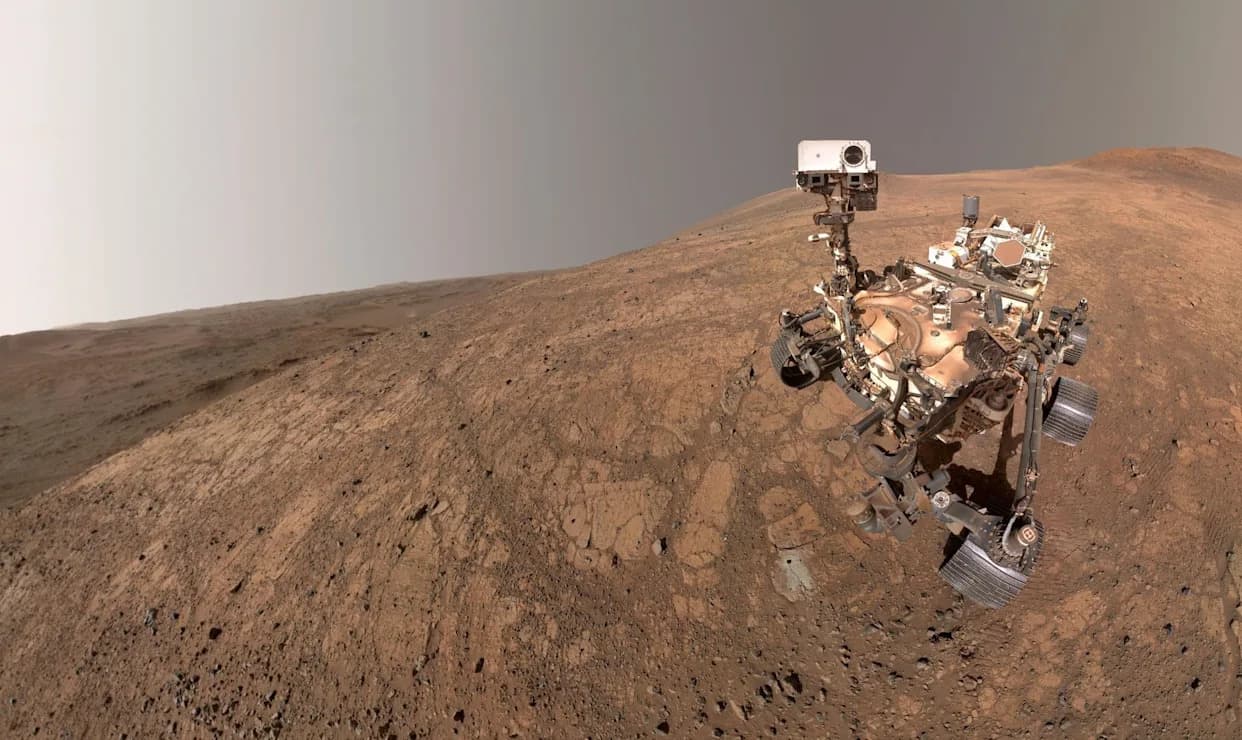
Phippsaksla’s position atop impact-formed bedrock just outside the Jezero crater rim could also reveal clues about how it landed and how long it has been exposed at the surface. The science team is continuing to analyze SuperCam data and planning follow-up observations to refine their understanding of the object's composition and origin.
Mission context
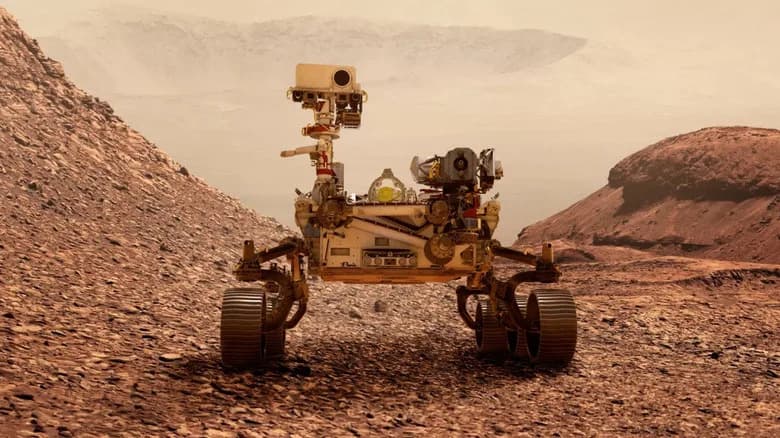
Perseverance launched on a United Launch Alliance Atlas V rocket on July 30, 2020, traveled roughly 293 million miles (about 472 million kilometers) and landed in Jezero crater on February 18, 2021. The rover, built at NASA’s Jet Propulsion Laboratory in Pasadena, California, cost about $2.7 billion and measures roughly 10 ft long × 9 ft wide × 7 ft tall (3.0 × 2.7 × 2.1 m). It is powered by a radioisotope thermoelectric generator and carries seven scientific instruments, a seven-foot robotic arm and a coring drill to collect samples that may one day be returned to Earth. The mission also supports preparations for possible human exploration of Mars in the 2030s.
Help us improve.