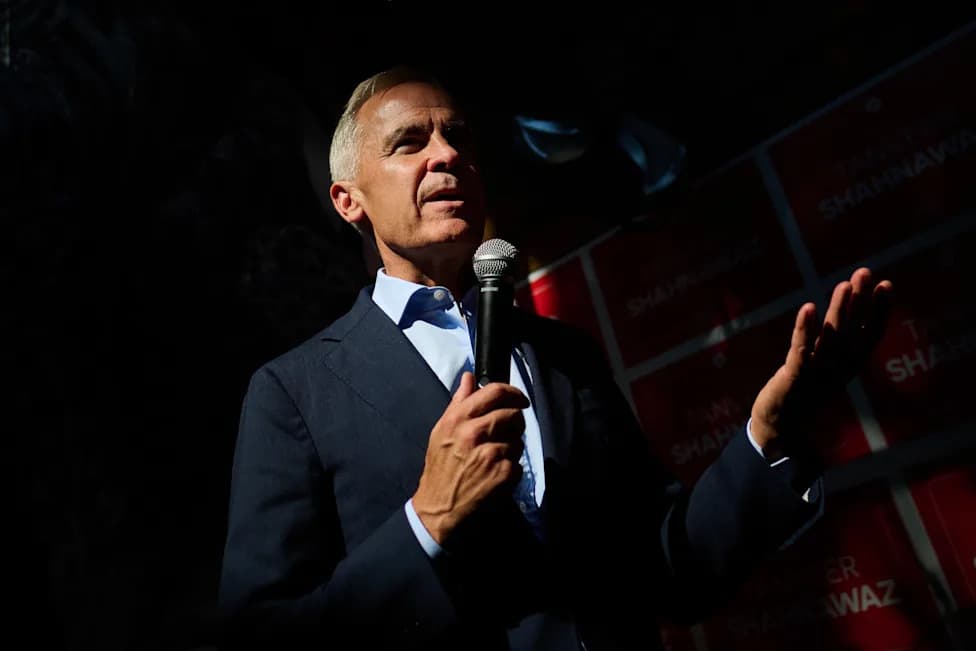
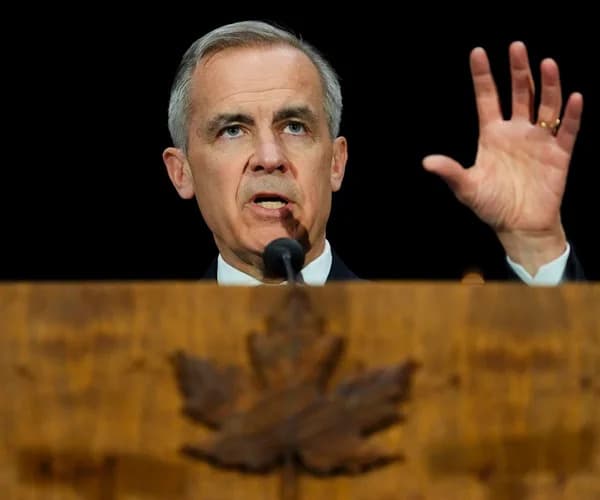
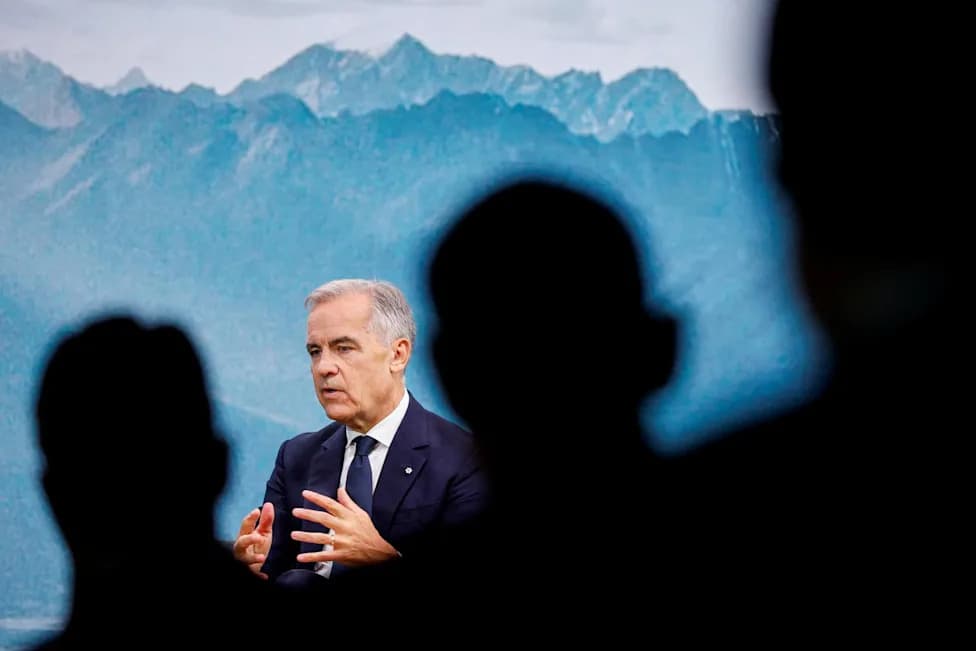
Mark Carney is accelerating Canada’s effort to reduce economic dependence on the United States by courting Europe and other partners. He has proposed a form of EU "associate" status to diversify trade while preserving policy sovereignty and has set an ambition to double non-U.S. trade within a decade. The strategy faces limits—Europe cannot quickly replace the U.S. market—but it gains cross‑party support as a hedge against tariffs and political pressure.
Carney Urges Canada to Pivot Toward Europe as U.S. Trade Tensions Rise
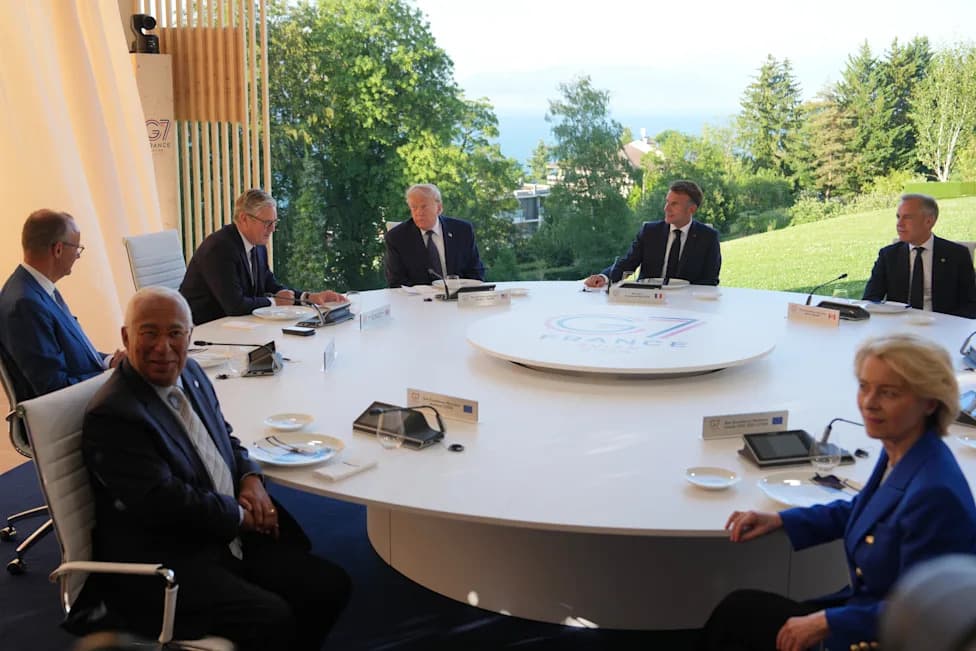
FILE - U.S. President Donald Trump and France's President Emmanuel Macron meet at the G7 summit, June 15, 2026, in Evian-les-Bains, France, with European Commission President Ursula von der Leyen, right, European Council President Antonio Costa, front left, Germany's Chancellor Friedrich Merz, Britain's Prime Minister Keir Starmer and Canada's Prime Minister Mark Carney. (AP Photo/Julia Demaree Nikhinson, File)(AP Photo/Julia Demaree Nikhinson)
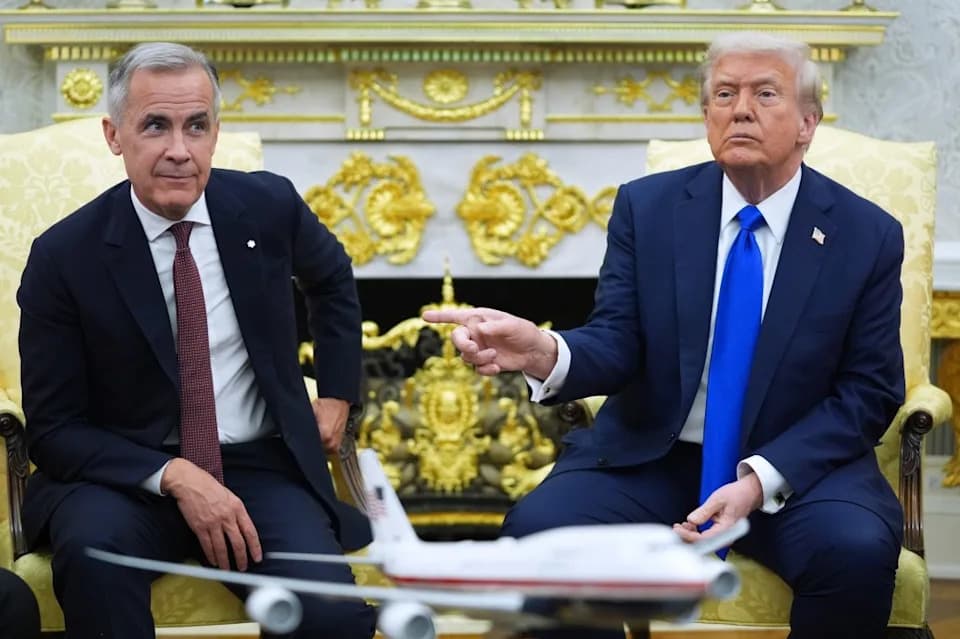
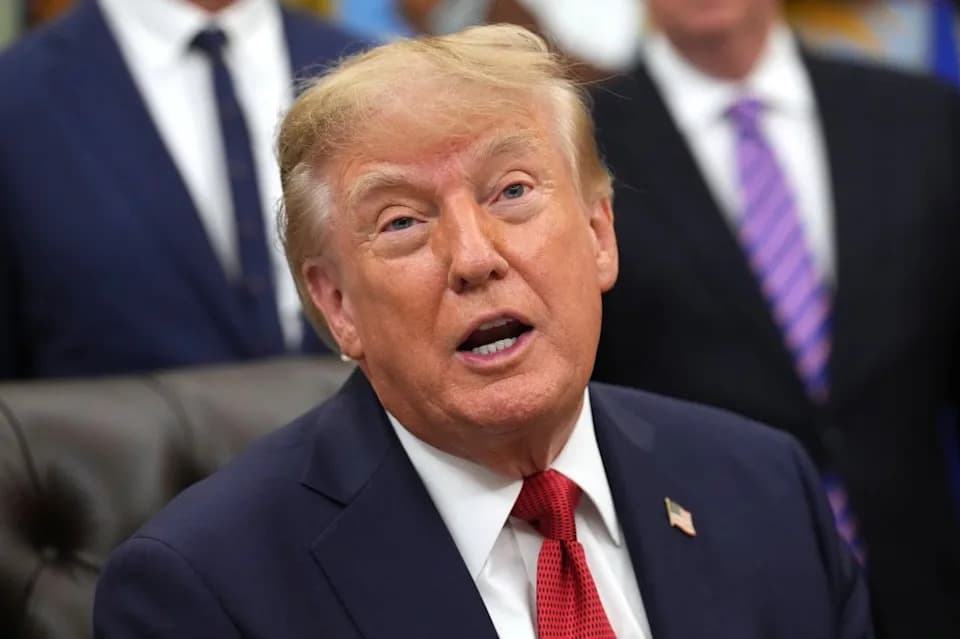
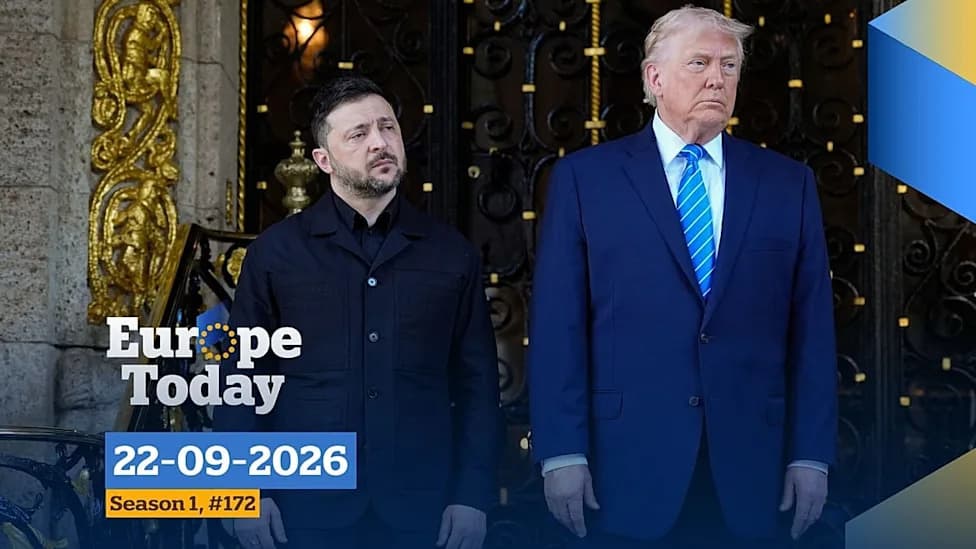
For nearly four decades Canada structured much of its economy around ever-closer ties with the United States. Under President Donald Trump, that dependence has at times become leverage: tariffs, investment conditions and policy demands have heightened Ottawa’s sense of vulnerability.
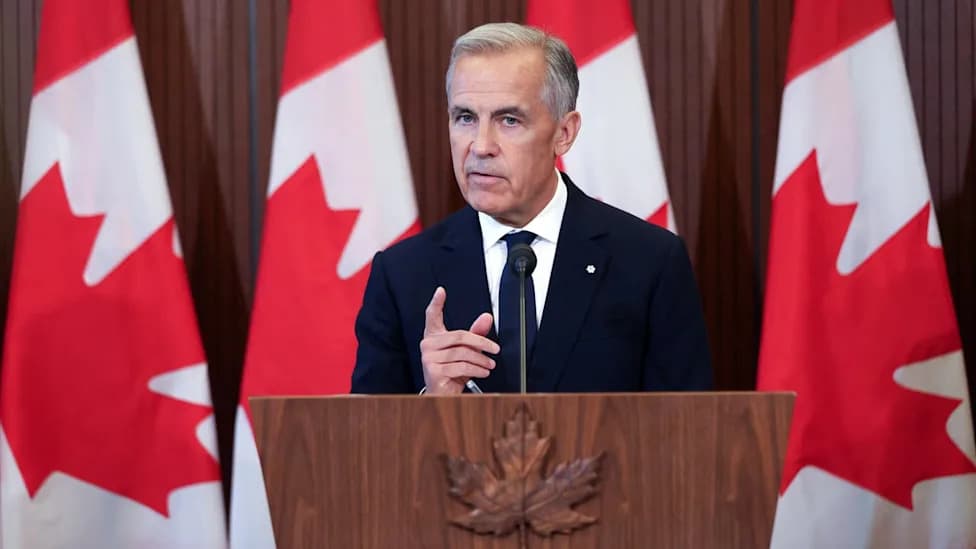
Mark Carney has responded by accelerating efforts to diversify Canada’s economic partnerships rather than waiting for a political reset in Washington. Last week he publicly raised the idea that Canada could pursue a form of associate status with the European Union — not as a path to full EU accession, but as a practical way to reduce dependence on any single market while retaining policy sovereignty.
Making the Case in Europe
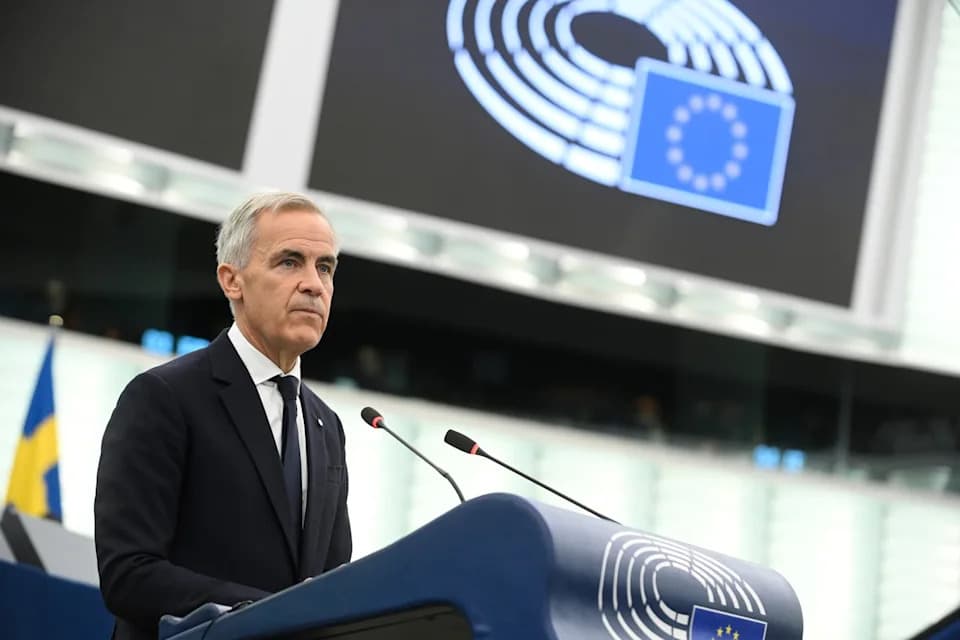
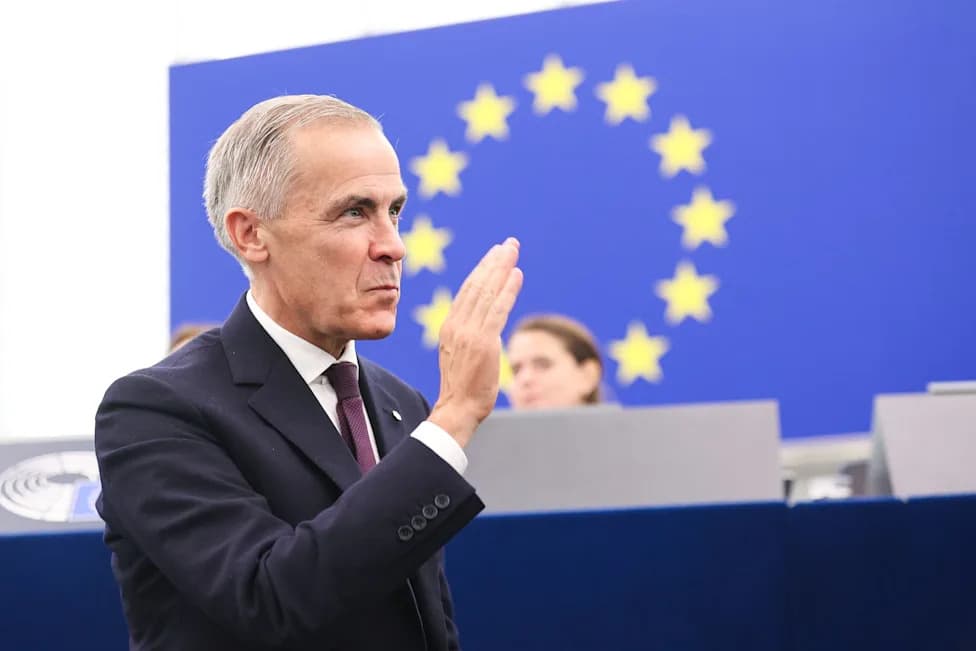
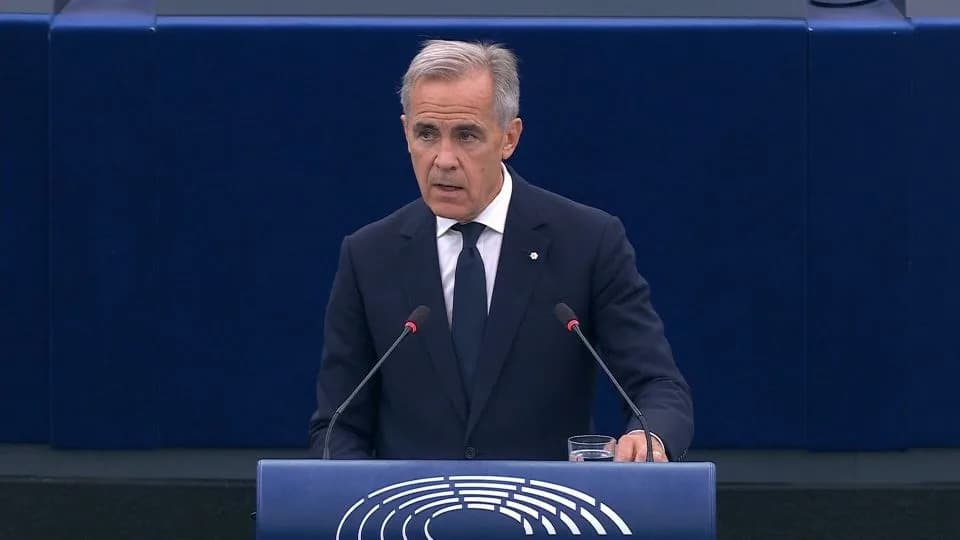
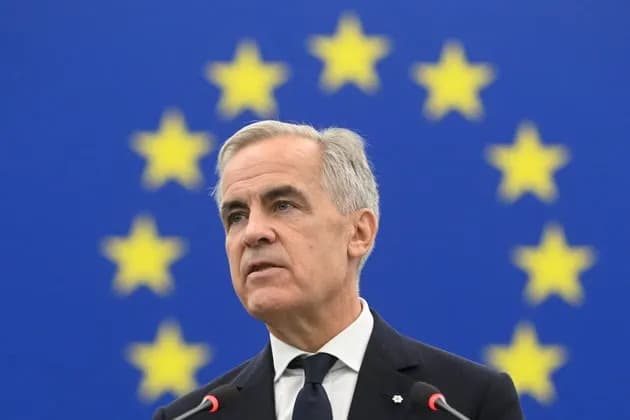
Carney presented his argument to the European Parliament, saying nations need sufficient economic strength to avoid having any single power dictate their choices. He repeated that theme alongside French President Emmanuel Macron in Saint-Pierre-et-Miquelon, noting that a Canada–Europe alliance would "strengthen our collective resilience so we can live our lives as we choose based on the values that we share."
His schedule has underlined the urgency of the push: in recent days Carney convened major global investors in Toronto, attended the European Commission president's State of the Union in Strasbourg, met Britain’s new prime minister in Liverpool, addressed the European Parliament and held talks with leaders including Macron and Norway’s prime minister.
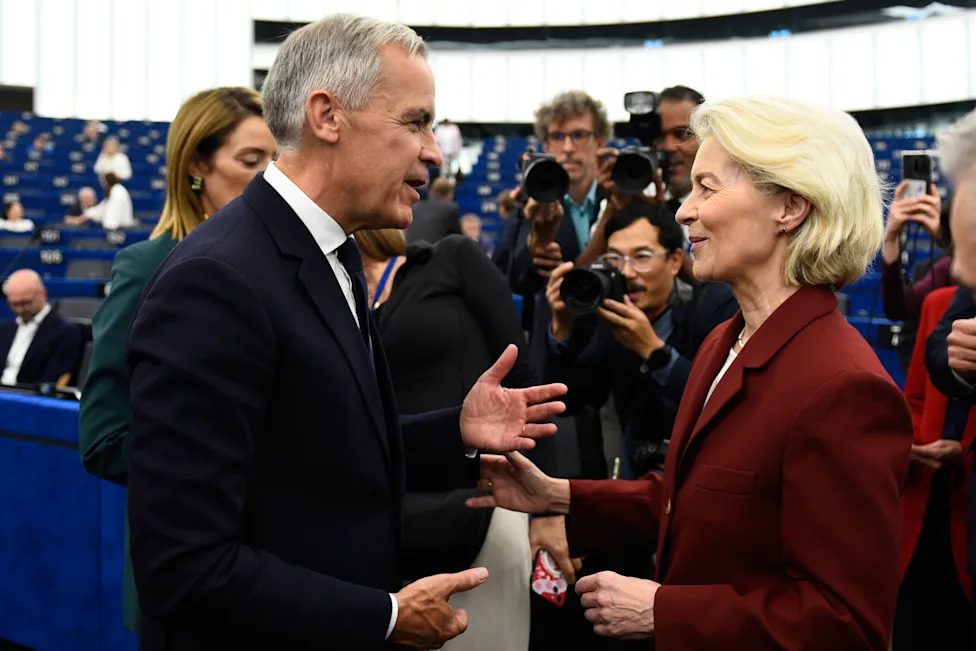
FILE- Canada's Prime Minister Mark Carney, front left, speaks with European Commission President Ursula von der Leyen at the European Parliament in Strasbourg, eastern France, Sept 17, 2026. (AP Photo/Pascal Bastien, File)(AP Photo/Pascal Bastien)
Policy Shift and Practical Limits
Carney walked away from trade talks in August, saying the terms on offer were unacceptable and that returning to them without better outcomes would risk repeating a harmful overreliance on a single partner. Historically roughly 70% of Canadian exports have flowed to the United States, meaning Europe cannot quickly replace that market.
Still, Carney and his allies argue that diversification is both necessary and achievable. Dominic Barton, Carney’s pick to chair Invest in Canada, framed the strategy not as abandoning the U.S. but as a deliberate effort to "crank the non-U.S." economy and build larger global Canadian companies. The government has set an ambition to double non-U.S. trade over the next decade and pursue a free-trade agreement with India by the end of the year.
"There is now a price to be paid for access to the United States market," Carney said, pointing to tariffs, investment commitments and demands for domestic policy changes.
A Strategic Pitch to Global Investors
Carney is reframing Canada’s offer to global capital: amid doubts about the predictability of U.S. policy, Canada can sell stability, the rule of law and a reliable investment climate. Finance Minister François-Philippe Champagne put it this way: "The most sought after commodity today is trust." Support for diversification spans the political spectrum — former prime minister Stephen Harper described the shift as regrettable but necessary to preserve Canadian sovereignty.
There are clear limits: an EU "associate membership" is not an established mechanism, and Europe cannot immediately replace the scale and proximity of the U.S. market. Nonetheless, the coming Canada–EU summit in Montreal (Oct. 29–30) will be an important test of how far Ottawa can realistically move toward a Europe-centered hedge on its economic exposure to the United States.
What’s next: Watch for concrete trade and investment agreements with non-U.S. partners, follow-up negotiations with EU institutions, and Ottawa’s progress toward doubling non-U.S. trade over the coming decade.
Help us improve.