President Trump’s second-term pardons and commutations have erased nearly $1.7 billion in fines, forfeitures and restitution for white-collar defendants — far more than recent administrations. About $700 million of that total was canceled before courts had formally imposed penalties because clemency was granted rapidly. Rapid pardons and commutations, frequent waivers of financial conditions, and ties to lobbying or donations have reduced victims’ and taxpayers’ chances of recovery.
Trump’s Second-Term Clemency Has Erased Nearly $1.7 Billion in Financial Penalties — A Historic Shift
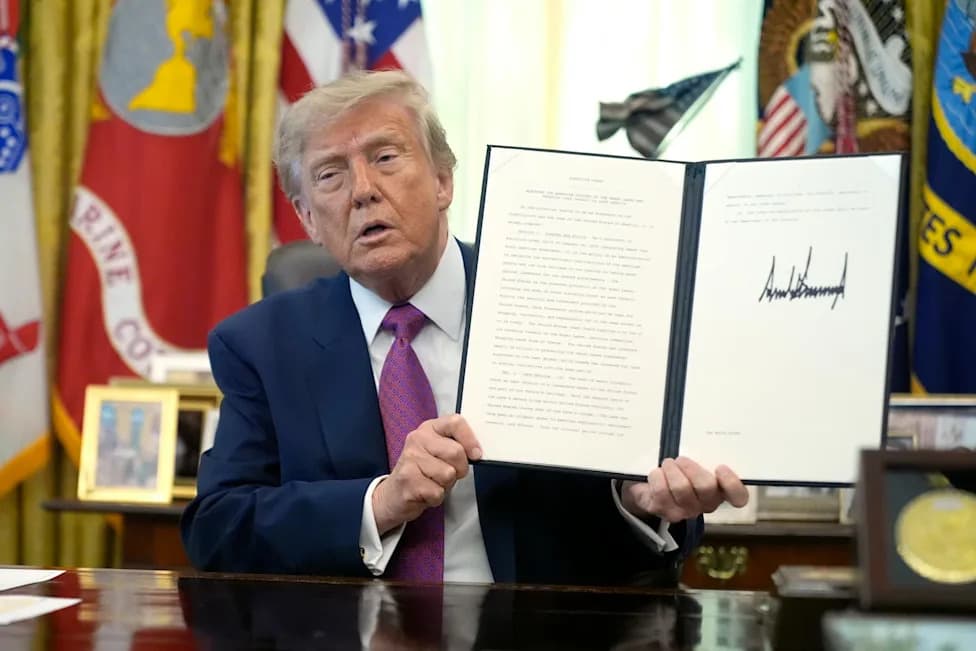
President Donald Trump holds up a signed executive order in the Oval Office in August 2026.AP Photo/Manuel Balce Ceneta
President Donald Trump’s return to the White House in January 2025 has coincided with an unprecedented wave of presidential clemency that has erased nearly $1.7 billion in court-ordered financial penalties for convicted white-collar defendants. Those penalties include fines, forfeiture of assets and restitution intended to repay victims.
Scope and Speed of Clemency
House Democrats reported that roughly $700 million of the amount canceled had not yet been formally imposed because clemency arrived very soon after sentencing. Much of the remaining roughly $1 billion represented restitution orders meant to compensate victims.
How This Compares With Past Administrations
In a review of every pardon and commutation issued by U.S. presidents from 1989 through Trump’s second term, earlier presidents did cancel tens of millions of dollars in financial penalties, but none matched the scale of cancellations seen under Trump’s second term. For context:
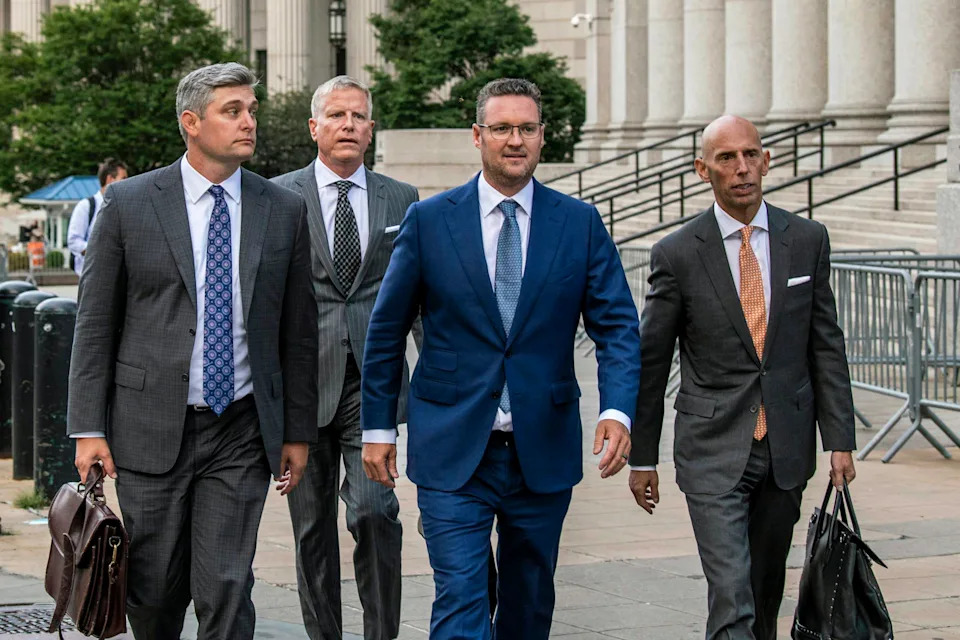
Trump pardoned Nikola Corp. founder and former Executive Chairman Trevor Milton, center, in March 2025.AP Photo/Brittainy Newman
- George H.W. Bush and George W. Bush each stayed under the $1 million mark in canceled financial obligations.
- Bill Clinton canceled nearly $10 million (notably including the controversial Marc Rich pardon).
- Barack Obama forgave roughly $23 million in financial penalties.
- Donald Trump’s first term canceled about $195 million; his second term so far has erased far more.
Changes in How Clemency Is Granted
The U.S. Constitution gives the president broad pardon power, and since 1894 the Office of the Pardon Attorney has advised a norm: generally wait five years after release (or five years after sentencing if never incarcerated) before petitioning for a pardon. Presidents from George H.W. Bush through Barack Obama largely adhered to that guideline (94–100% compliance for those administrations). Joe Biden’s preemptive pardons lowered that share to around 68%.
By contrast, of the 216 individual pardons Trump granted in his second term so far, only 34 — roughly 15% — met the five-year guideline. Moreover, commutations in his second term increasingly remove not only imprisonment but also "fines, restitution, probation or other conditions," which has resulted in more than $300 million canceled through commutations alone.
Timing Matters
Public records often list the full amount a judge ordered but do not always indicate how much of that obligation was already paid. Thus, official totals represent an upper bound. A useful proxy for how much defendants may have repaid is the speed with which clemency was granted: the quicker the pardon or commutation, the less time for victims or the government to collect.
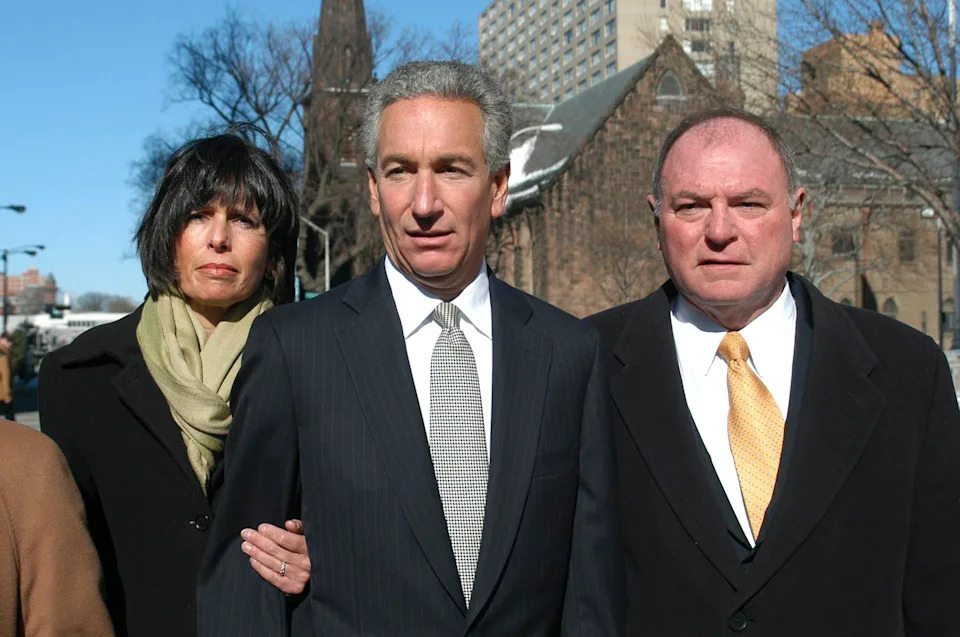
In 2020, President Donald Trump pardoned Charles Kushner, center, the father of his son-in-law Jared Kushner.AP Photo/Marko Georgiev, File
Under George H.W. Bush, Barack Obama and Joe Biden, the median delay between sentencing and pardon exceeded 20 years. Under Trump’s second term, at least 44 recipients received clemency within a year of sentencing, together accounting for more than $270 million in financial obligations.
Representative Examples
- A nursing-home executive convicted of withholding payroll taxes was pardoned 12 days after sentencing, avoiding roughly $4 million in restitution.
- A cryptocurrency firm received clemency hours before it was due to pay a $100 million anti–money-laundering fine.
- A digital-media founder ordered to repay investors $36 million had his sentence commuted and restitution canceled within four months.
Implications
The combination of rapid timing, high-dollar cases and apparent links to lobbying, donations and fundraising tied to Trump-affiliated causes has heightened concerns about fairness and accountability. Victims and taxpayers — who shoulder the cost of investigations and prosecutions — are more likely to be left without recovery when clemency arrives before money has flowed to victims or the government.
Author: Caren Morrison, Georgia State University. This article is republished from The Conversation, an independent nonprofit providing fact-based analysis.
Help us improve.