Prime Minister Mark Carney has directed a special envoy to explore arrangements that would give Canada closer access to the EU's $21 trillion single market without full membership. Officials are considering cooperation in energy, AI, critical minerals, defense and digital infrastructure, including joint data centers and satellite networks. Proposals could include easier movement of goods and workers and visa‑free arrangements, but major hurdles remain, such as regulatory gaps, sovereignty issues and Europe's limited ability to fully replace U.S. trade. Negotiations and leader‑level discussions — notably with President Macron — are ongoing.
Canada Accelerates Push for Closer EU Ties as U.S. Relations Cool
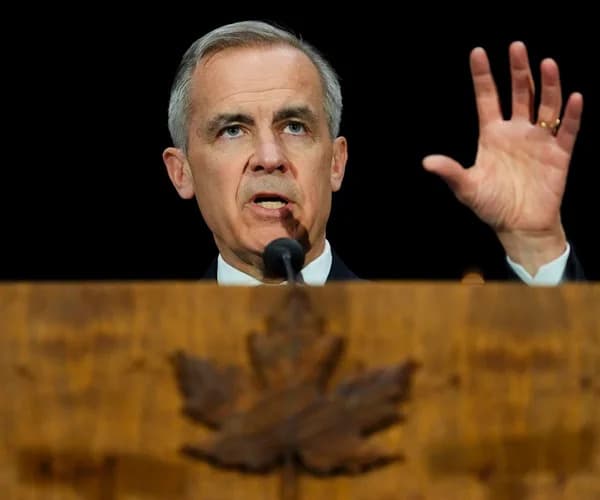
Canadian Prime Minister Mark Carney is stepping up efforts to deepen economic and strategic ties with the European Union as relations with the United States have cooled, The Wall Street Journal reports.
A New Direction Short Of Membership
Carney has instructed Canada's special envoy to Europe to explore arrangements that stop short of full EU membership but would give Canada closer access to the bloc's roughly $21 trillion single market. Officials are weighing cooperation across a range of strategic areas including energy, artificial intelligence, critical minerals, defense and other high‑tech industries, according to the Journal.
Practical Proposals Under Consideration
Proposals being discussed could include:
- Easier movement of Canadian goods, services and workers into EU markets;
- Visa‑free living and work arrangements for Canadians in EU countries;
- Joint infrastructure projects such as underwater cables, shared data centers, cloud storage and new satellite networks;
- Stronger academic and research partnerships, including participation in EU study‑abroad programs;
- New energy‑shipping infrastructure to route Canadian energy exports to European markets.
Canada's economy remains closely tied to the United States: roughly two‑thirds of Canadian exports still go to the U.S., underscoring the scale of any realignment.
Officials tell the Journal the goal is to find practical, high‑value cooperation that increases market access and strategic resilience without full EU membership.
Obstacles and Political Sensitivities
European and Canadian officials acknowledge substantial hurdles. Regulatory divergences, legal and sovereignty questions, and Europe's limited capacity to fully replace the U.S. market are significant practical and political obstacles. The Journal also notes that past efforts to deepen ties have faced domestic resistance: more modest trade agreements struck over a decade ago remain unratified by several EU member states.
Carney has reportedly discussed the possibility of visa‑free living and working arrangements for Canadians with several EU leaders, most notably French President Emmanuel Macron, citing unnamed officials familiar with the talks. Both leaders are due to meet later this month.
European and Canadian negotiators are now working to turn the proposed realignment into concrete agreements, while acknowledging that any package will require complex legal, regulatory and political work on both sides.
Reporting in this article is based on coverage by The Wall Street Journal, which cited multiple unnamed officials. Some details remain subject to further confirmation as negotiations progress.
Help us improve.