Mark Carney, the former central banker, told the Canada Investment Summit that Ottawa will seek a "unique security and economic alliance" with the EU while positioning Canada as a safe harbour for global capital. He announced a corporate tax "mega-deduction," plans to open four major airports to foreign investment and highlighted Canada’s entry into the EU’s €150bn defence loans scheme. EU integration short of membership faces red lines—especially the single market’s four freedoms—and Ceta ratification remains incomplete in several member states.
Carney Urges ‘Unique’ Canada–EU Security and Economic Alliance as Ottawa Seeks New Investment
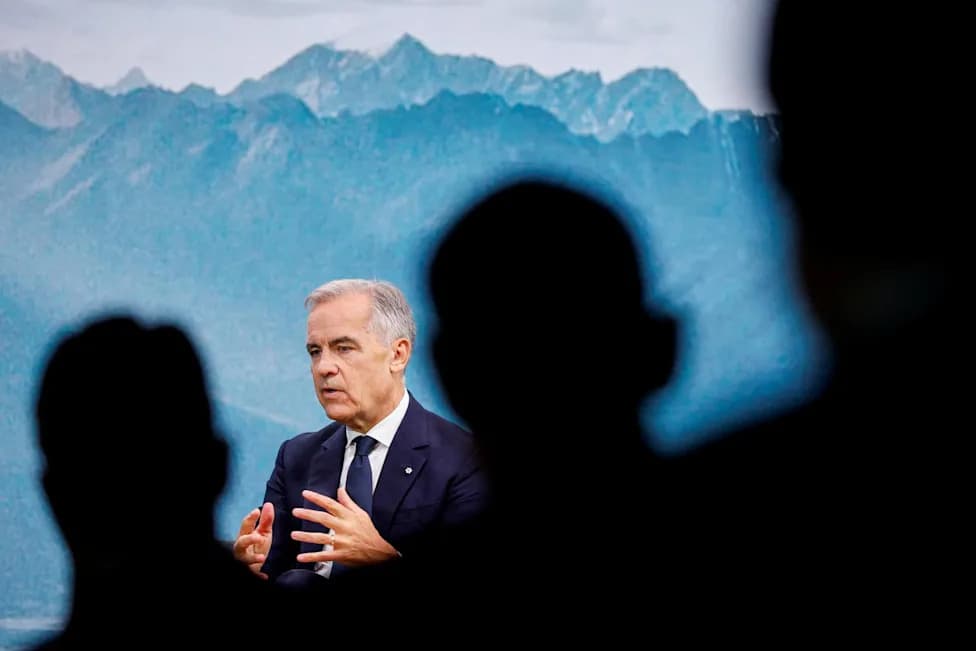
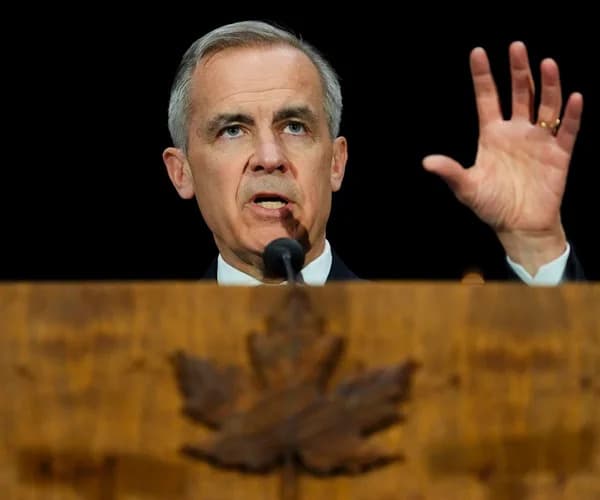
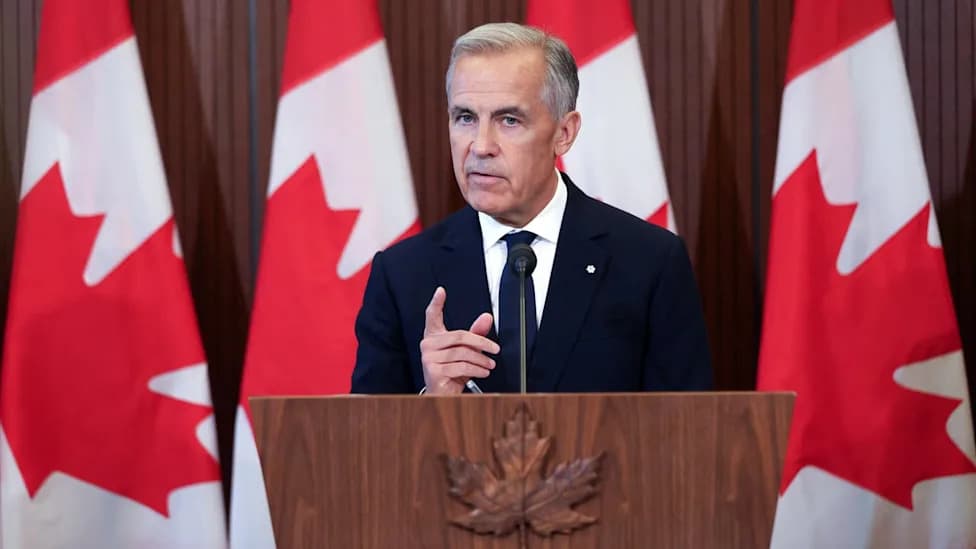
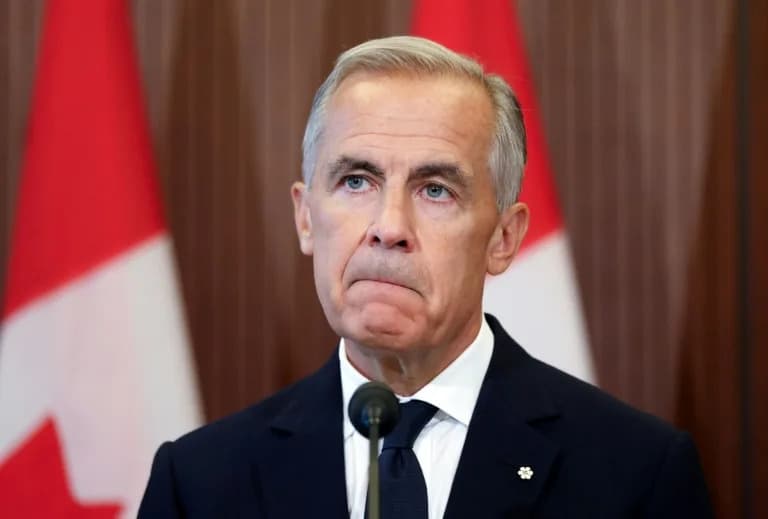
Mark Carney, Canada's prime minister, speaks during the Canada Investment Summit in Toronto, Ontario, Canada, on 15 September 2026.Photograph: Carlos Osorio/Reuters
Mark Carney, the former governor of the Bank of Canada and the Bank of England, told delegates at the inaugural Canada Investment Summit that Canada will pursue a "unique security and economic alliance" with the European Union as it seeks to diversify away from overreliance on the United States.
Carney Frames Canada As A Safe Harbour For Capital
Speaking to investors, corporate leaders and government officials, Carney positioned Canada as a stable, investment-friendly platform in the "new global economic order." He argued that growing geopolitical friction has made sovereignty and openness increasingly difficult to reconcile and said economic integration is being used as leverage, citing recent US trade tensions.
"The world is becoming more divided and dangerous. Sovereignty and openness are now in tension. Economic integration is being weaponised. Tariffs are used as leverage," Carney said.
Key Policy Announcements
Carney highlighted a package of measures designed to attract foreign capital and strengthen domestic capacity. He said foreign investment has risen sharply, the government is on track to balance the operating budget a year early, and announced a corporate tax "mega-deduction" that allows companies to immediately deduct 100% of the cost of new investment across a wider range of assets.
He also confirmed plans to open four major Canadian airports to foreign investment to "unlock their true value," while promising lessons would be applied from past cases where partial private investment did not meet expectations.
Deepening Ties With The EU
Carney has recently sought closer political and economic ties with the EU. He noted Canada is the only non-European participant in Europe’s defence procurement initiative and that Ottawa has become the first non-European member of the EU’s €150bn defence loans scheme—moves that create opportunities for Canadian suppliers.
At the summit he said Ottawa would explore a broad set of options with Brussels, including discussions that have floated visa-free travel and work mobility, though he emphasized talks are at an early stage.
EU Reaction And Red Lines
European officials say they want Canada as close as possible to the EU without offering membership. The EU is adamant it will not split the single market’s four freedoms (movement of people, goods, services and capital), so any deepened relationship will respect that red line. In the near term the EU hopes to expand cooperation on raw materials and energy.
Javier Moreno Sánchez, who leads the European Parliament’s Canada delegation, urged "concrete steps" to boost mobility for professionals, expand student exchanges, and deepen collaboration on defence and artificial intelligence.
Trade Reality And Political Headwinds
EU–Canada trade in goods and services reached €130bn in 2025, up about 80% since the Comprehensive Economic and Trade Agreement (Ceta) was signed in 2016, but this still pales beside Canada’s trade with the United States—nearly US$880bn. Ten EU member states, including France, Italy and Poland, have yet to ratify Ceta, meaning parts of the deal remain dormant.
French MEP Valérie Hayer urged her government and other national parliaments to speed ratification, while noting forthcoming elections in several EU states could complicate progress.
Domestic Pushback
The government’s push for foreign capital has drawn protests. Ahead of the summit, thousands demonstrated in Toronto at the "Many vs The Moneycounter" rally, arguing that public money should not underwrite private risks while communities shoulder social and environmental costs. Activists such as Stephen Hill said Indigenous-led groups and local communities struggle to get government attention.
Outlook
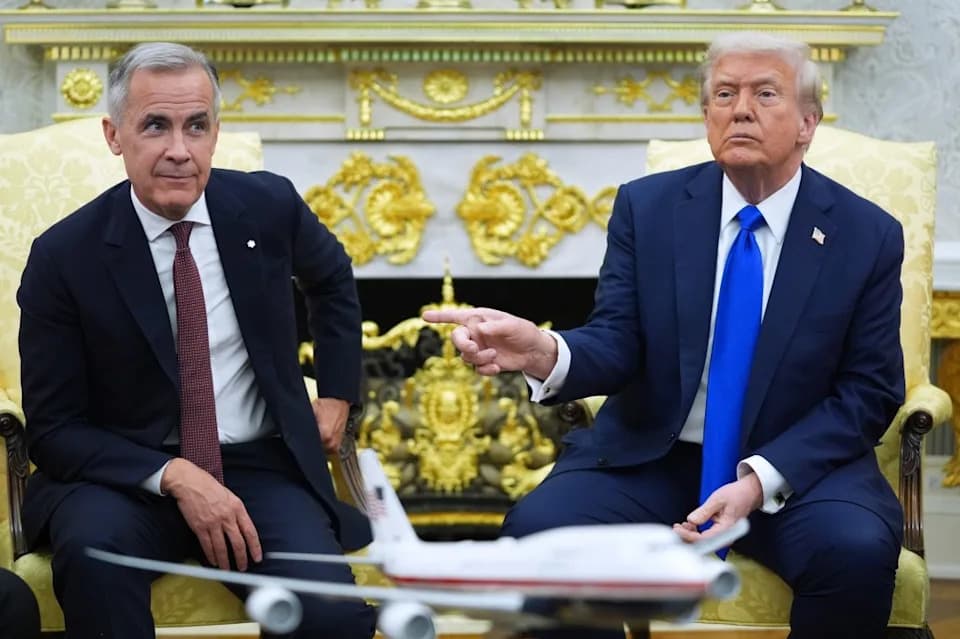
Carney acknowledged the geographic and economic reality that the United States will remain Canada’s largest trading partner but argued Ottawa can broaden its horizons without abandoning that relationship. "We will always be neighbours, and Canada will continue to be the US's most important partner in many key areas," he said, adding that partnerships work when based on mutual respect for sovereignty and tradition.
Help us improve.