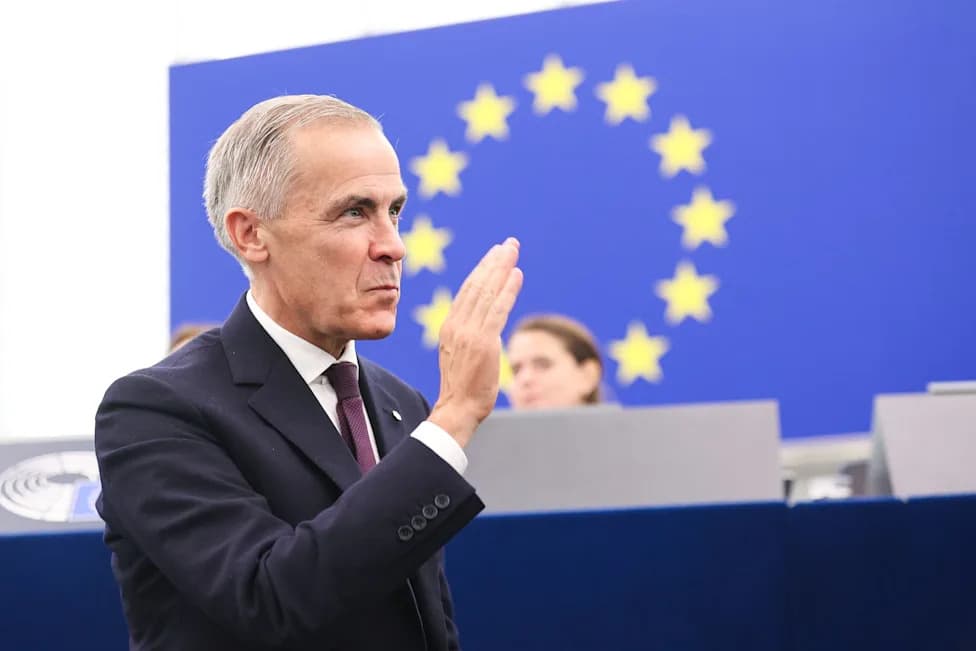
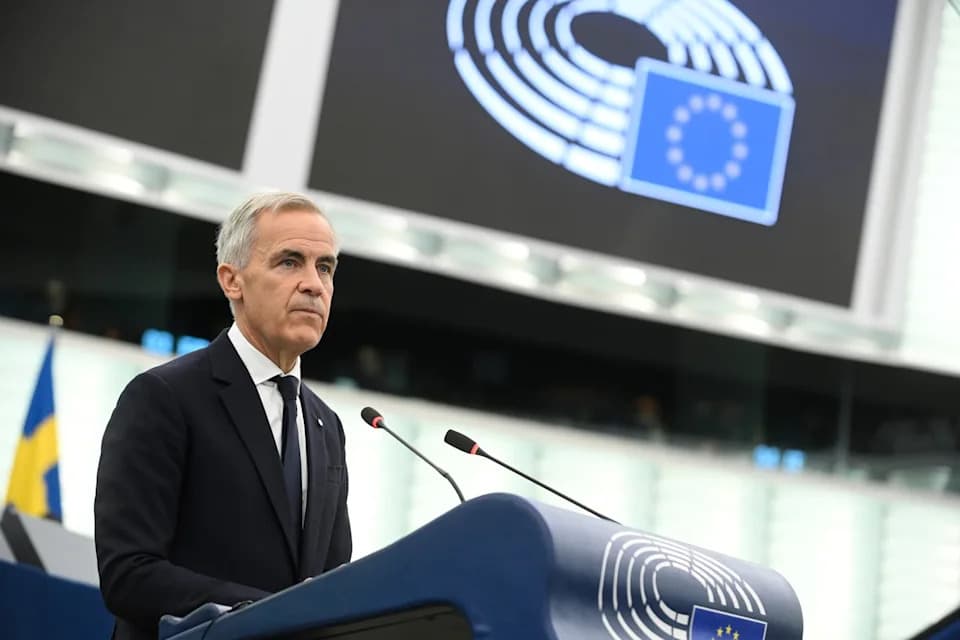
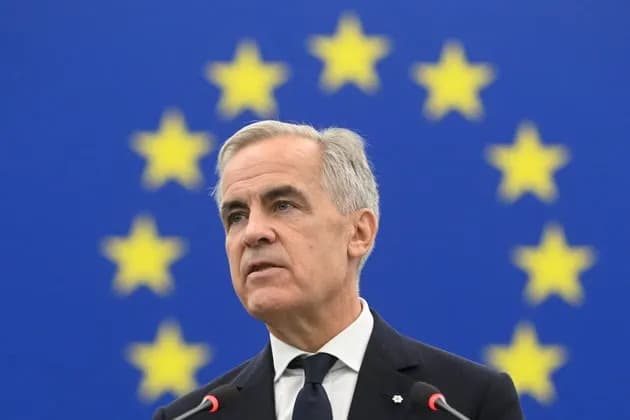
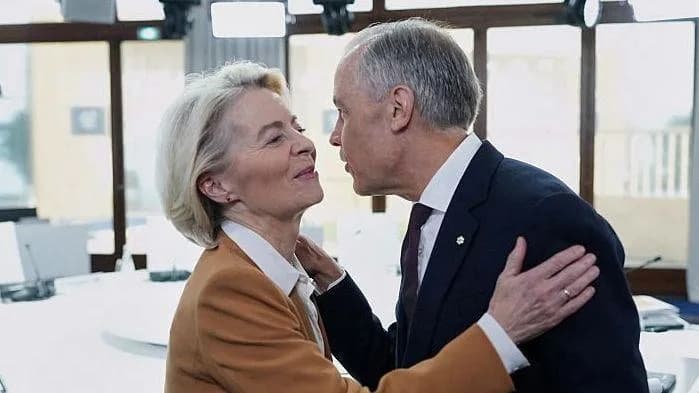
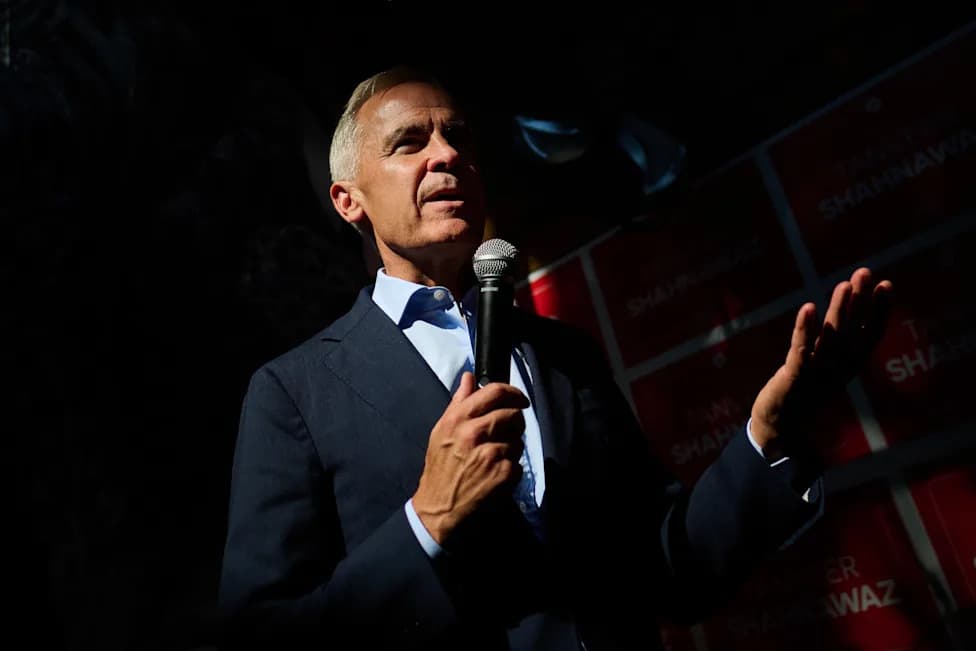
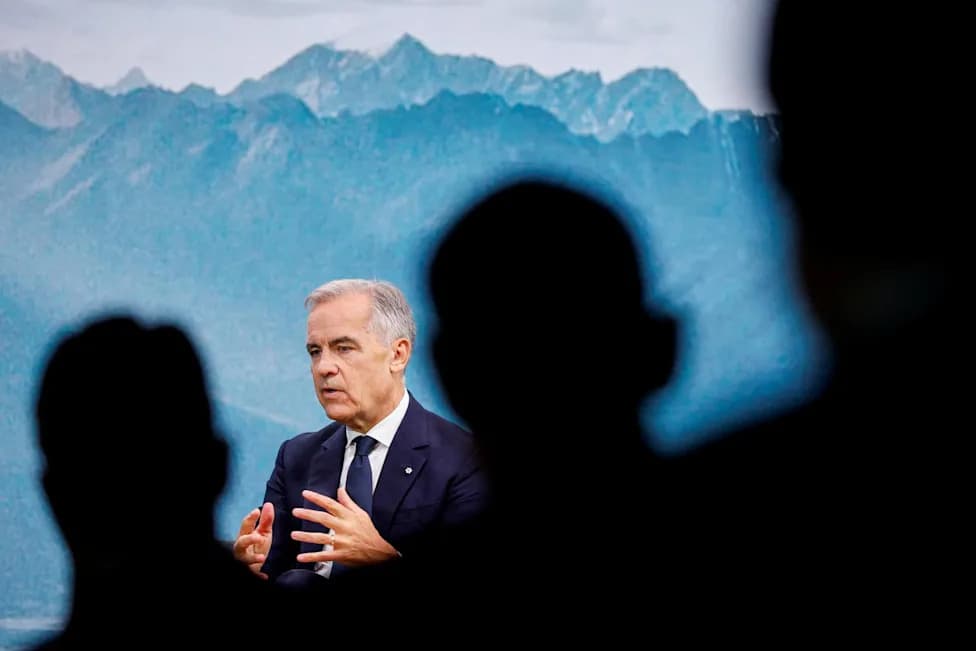
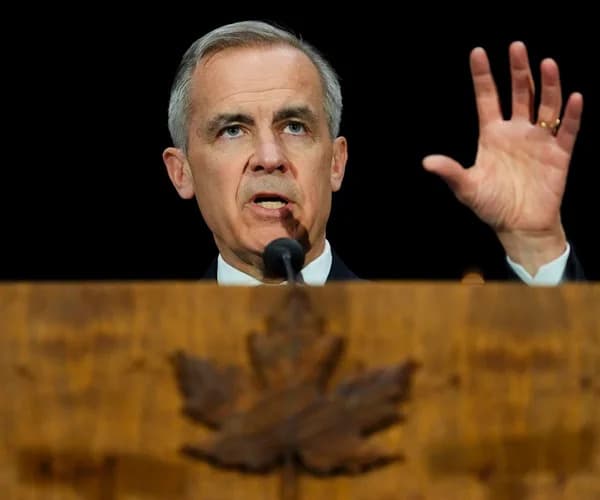
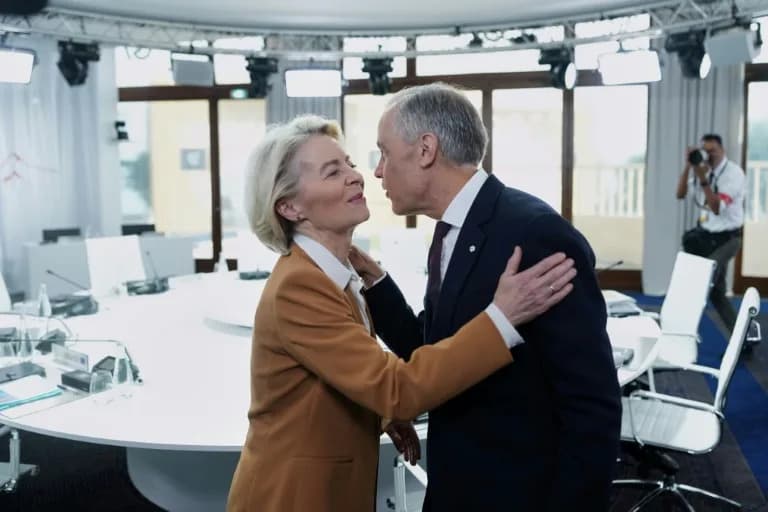
Mark Carney, a Canadian economist and former central bank governor, told the European Parliament that a closer Canada–EU partnership is aimed at strengthening resilience—against climate risks, trade weaponization and democratic erosion—not at forming a rival power bloc. His remarks followed Ursula von der Leyen’s proposal to consider Canada as an EU "associate member," a move that drew a tariff threat from the U.S. Carney highlighted practical cooperation on energy (LNG, hydrogen), critical minerals, defense production, payments, AI safety and youth mobility.
Carney: Canada–EU Partnership Should Build Resilience, Not Become A Rival With "Better Manners"
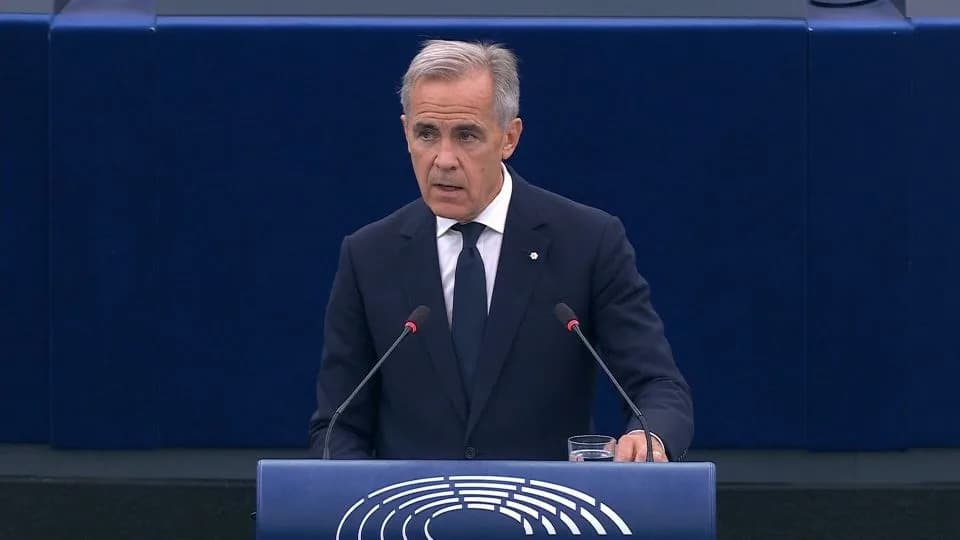
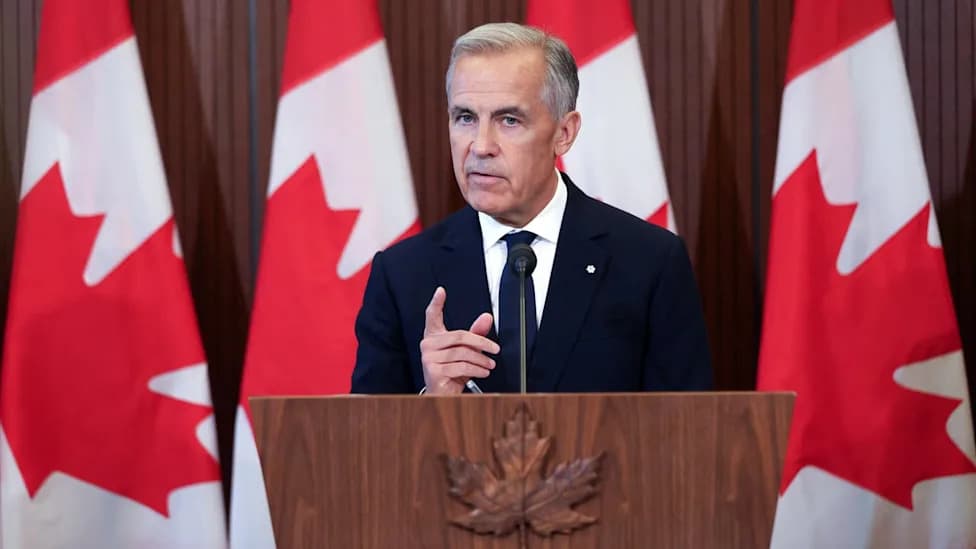
Canadian prime minister Mark Carney used his speech to the European Parliament on Thursday to provide more detail on what a deeper alliance between Canada and the EU could look like. Carney made it clear that he was "not proposing a third bloc" to "become a great power rival" with "better manners," in what could be perceived as a swipe at President Donald Trump.- Clipped From Video
Mark Carney, a Canadian economist and former governor of the Bank of Canada and the Bank of England, told the European Parliament that a deeper Canada–EU relationship is intended to strengthen resilience — not to create a new geopolitical bloc to outcompete others.
Speaking in France and occasionally in French, Carney rejected suggestions that closer ties would amount to a third power bloc. "I'm not proposing a third bloc in order to become a great power rival, only with better manners," he told EU lawmakers, adding that the goal is to protect open markets, sovereignty and democratic norms rather than to dominate.
"We do not seek power to dominate others. On the contrary, we are pursuing resilience so no one can control our open markets, impair our sovereignty, threaten territorial integrity or undermine our freedoms, our democracies, our rule of law."
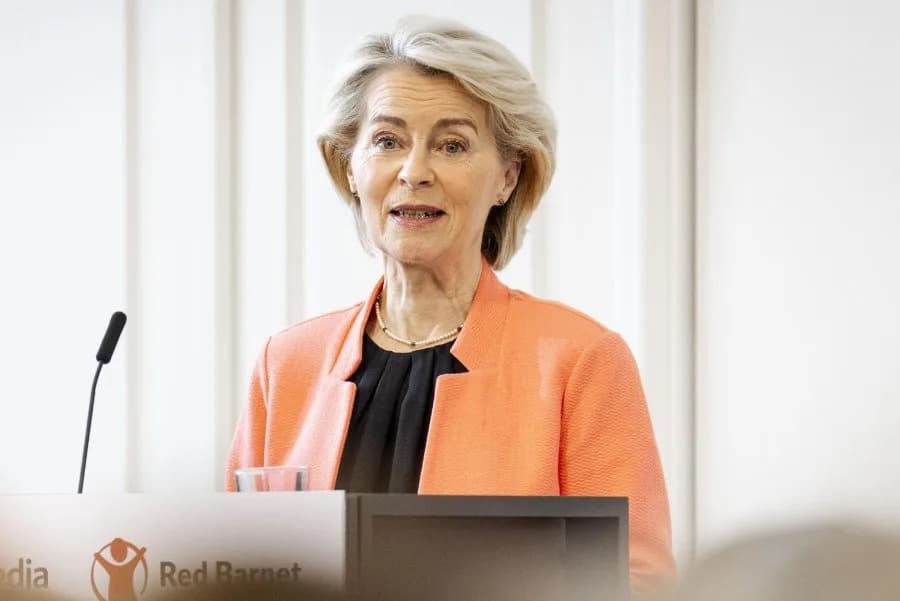
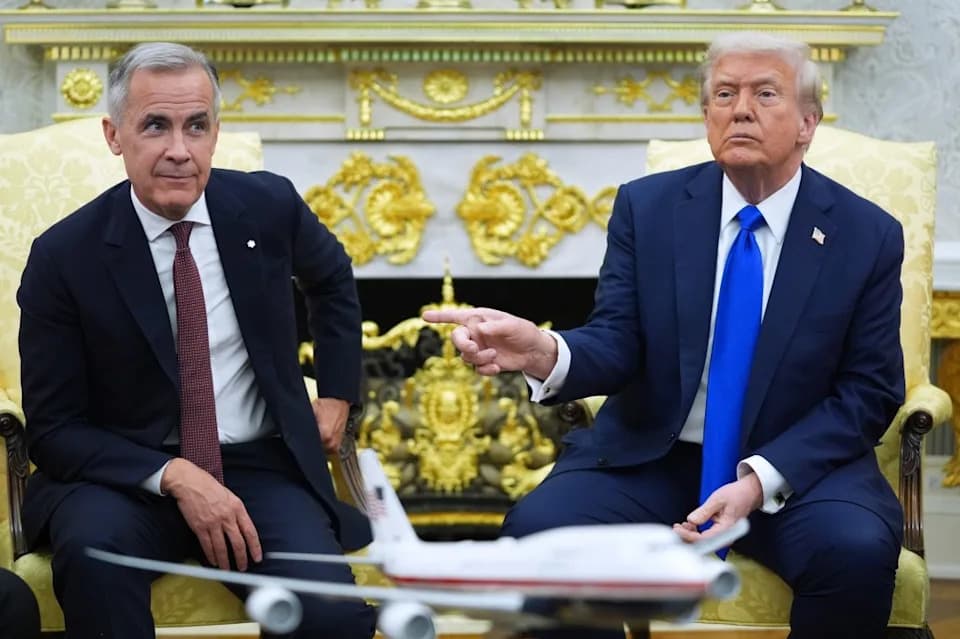
Carney’s remarks followed European Commission President Ursula von der Leyen’s suggestion that Canada be considered as the EU’s first "associate member," an idea that reportedly prompted a renewed tariff threat from U.S. President Donald Trump.
Why Carney Says Closer Ties Make Sense
Carney framed the initiative as preparation for shared global challenges he called "new storms": climate change, the weaponization of trade and the erosion of democratic norms. He argued that deeper Canada–EU cooperation could serve as "a beacon for other democracies." Polling, he said, shows broad Canadian support for closer relations with Europe.
Practical Areas For Cooperation
He outlined a series of concrete cooperation opportunities where Canada and the EU could deepen ties:
- Energy Security: Canada as a supplier of liquefied natural gas (LNG) and low-carbon hydrogen to Europe.
- Critical Minerals: Joint efforts to secure supply chains for minerals essential to clean energy and technology.
- Defense and Industrial Collaboration: Cooperation on defense production and related technologies.
- Payments and Digital Infrastructure: Strengthening cross-border payments and financial resilience.
- Artificial Intelligence: Joint development of AI safety protocols and standards.
- People-to-People Links: Expanded mobility for youth to live, work and study across the Atlantic and access to EU programmes such as Erasmus+ and Horizon.
Carney welcomed von der Leyen’s ambition and urged practical steps to convert political goodwill into concrete partnerships — from energy contracts and mineral agreements to research collaboration and shared regulatory standards.
Note: This article corrects earlier mischaracterizations of Mark Carney’s official role. He is a prominent Canadian economist and former central bank governor, not the Canadian prime minister.
Help us improve.