The VLT's MUSE spectrograph has reclassified Ve 7–27 as a protostar rather than a planetary nebula after detecting bipolar jets studded with bright "bullets." The object lies embedded in the Vela Junior supernova remnant at about 4,500 light‑years, and a nearby neutron star marks the remnant's origin. Linking Ve 7–27 to the supernova debris helps fix Vela Junior's distance and clarifies its size, expansion rate and age.
Neutron Star 'Photobombs' Baby Star — VLT Reclassifies Ve 7–27
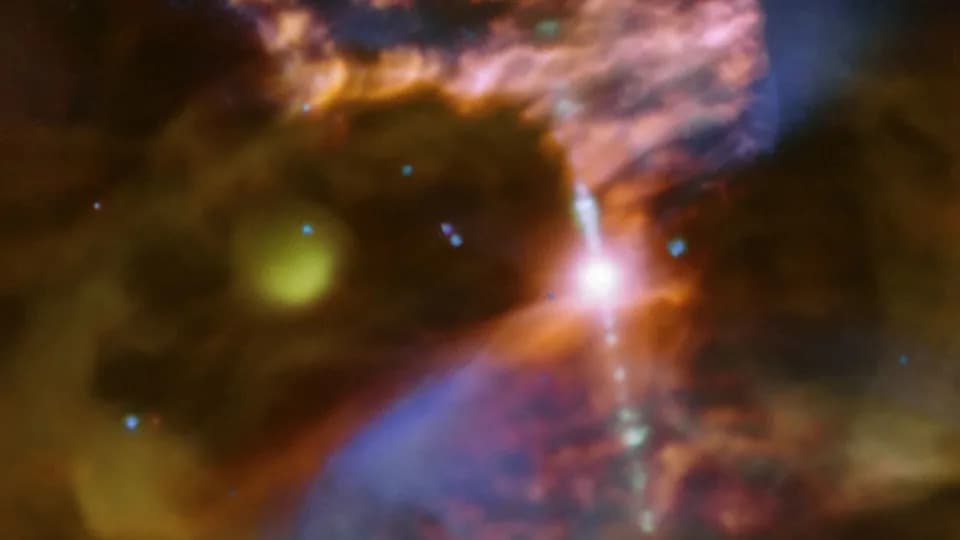
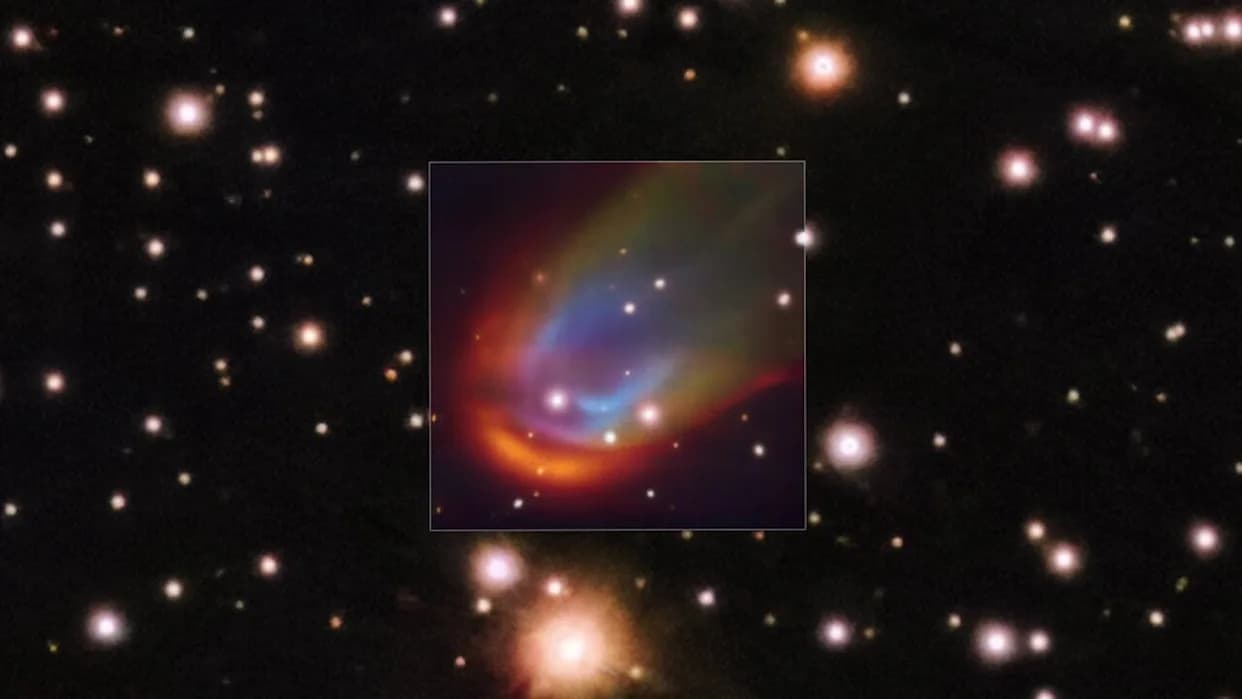
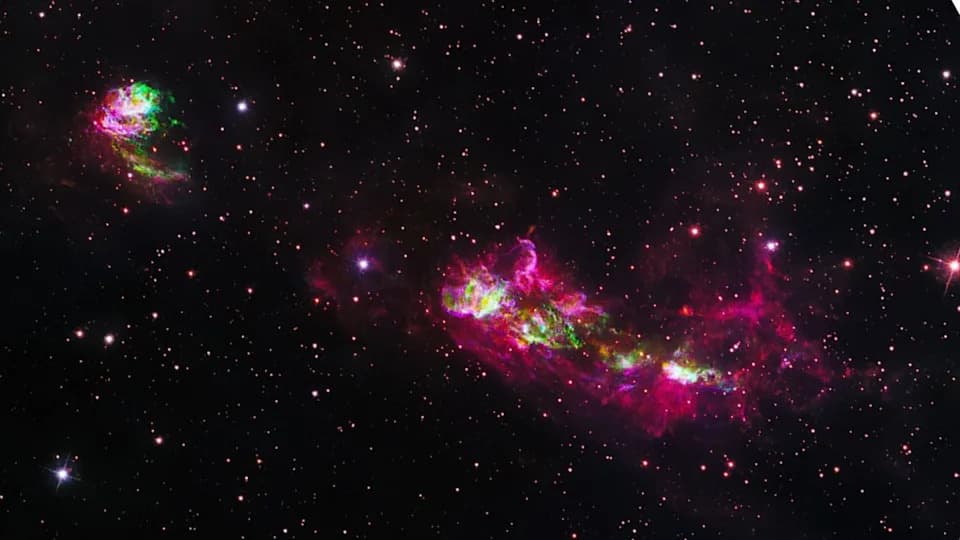
The Very Large Telescope (VLT) recent caught this image of a planetary nebula, hosting both a neutron star and young stars. | Credit: ESO/J. Suherli et al.
Appearances in astronomy can be deceiving. What was long cataloged as a planetary nebula, Ve 7–27, has now been reclassified as a still-forming star thanks to new spectroscopic imaging from the European Southern Observatory's Very Large Telescope (VLT).
The VLT's MUSE instrument — an integral-field spectrograph that captures images and breaks light into spectra across the field — provided the decisive data. By mapping the chemical makeup, temperature and motion of gas across Ve 7–27, astronomers identified features that are inconsistent with a dying, sun-like star and instead point to an active protostar.
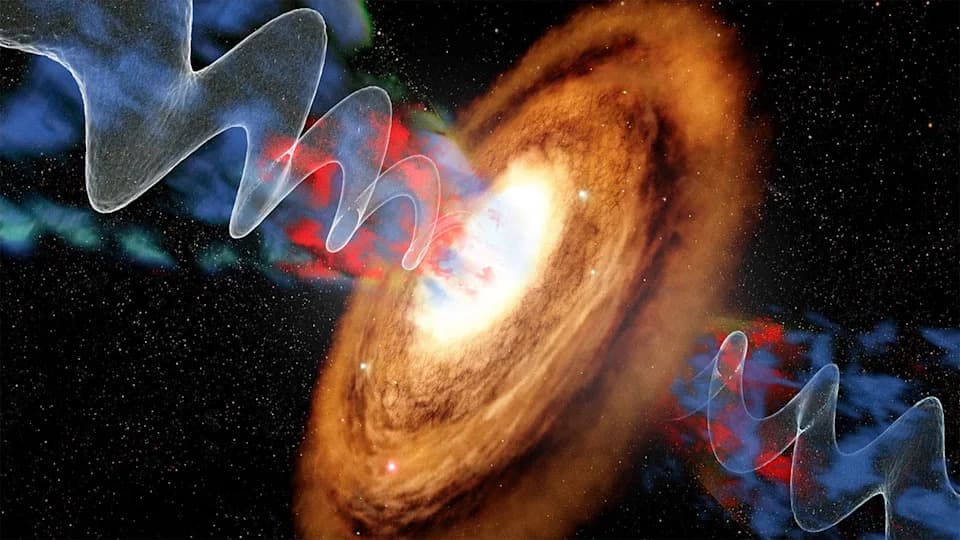
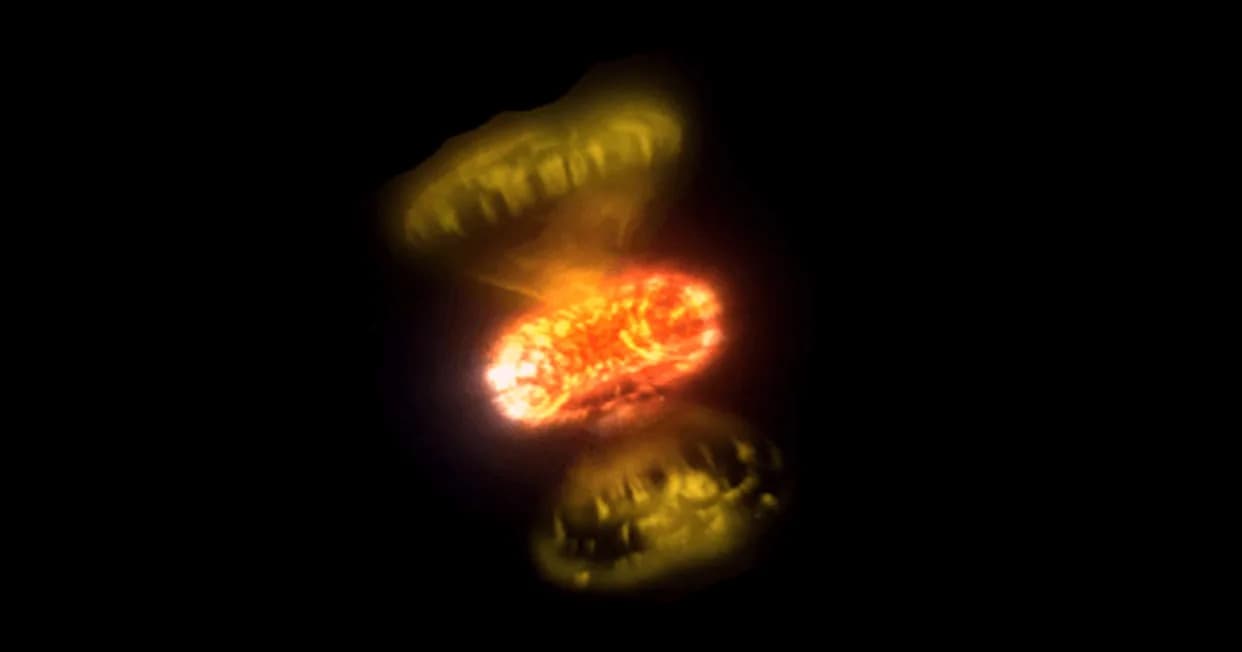
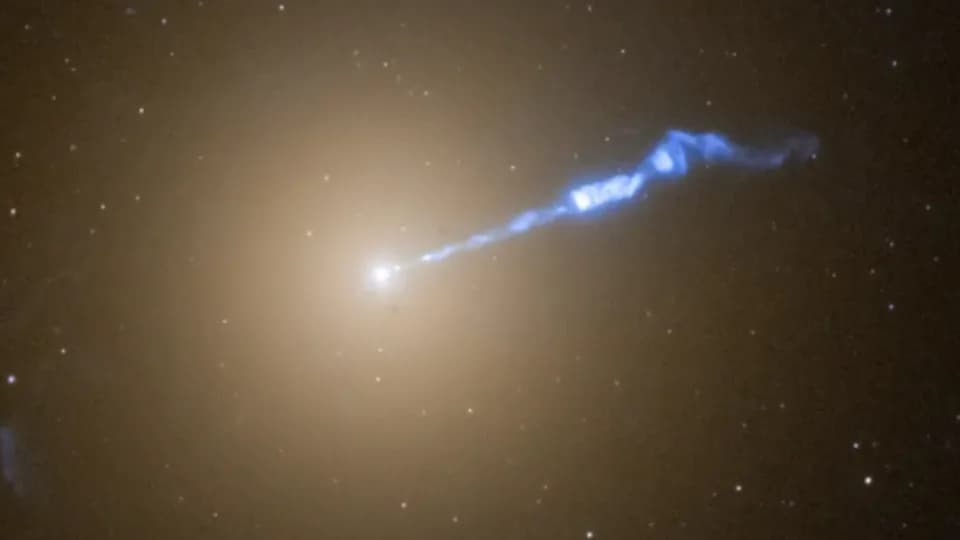
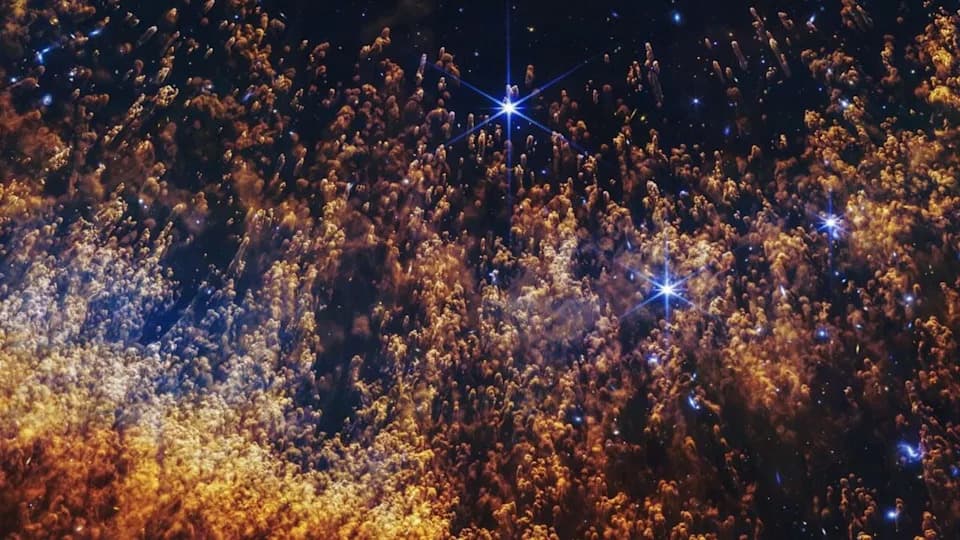
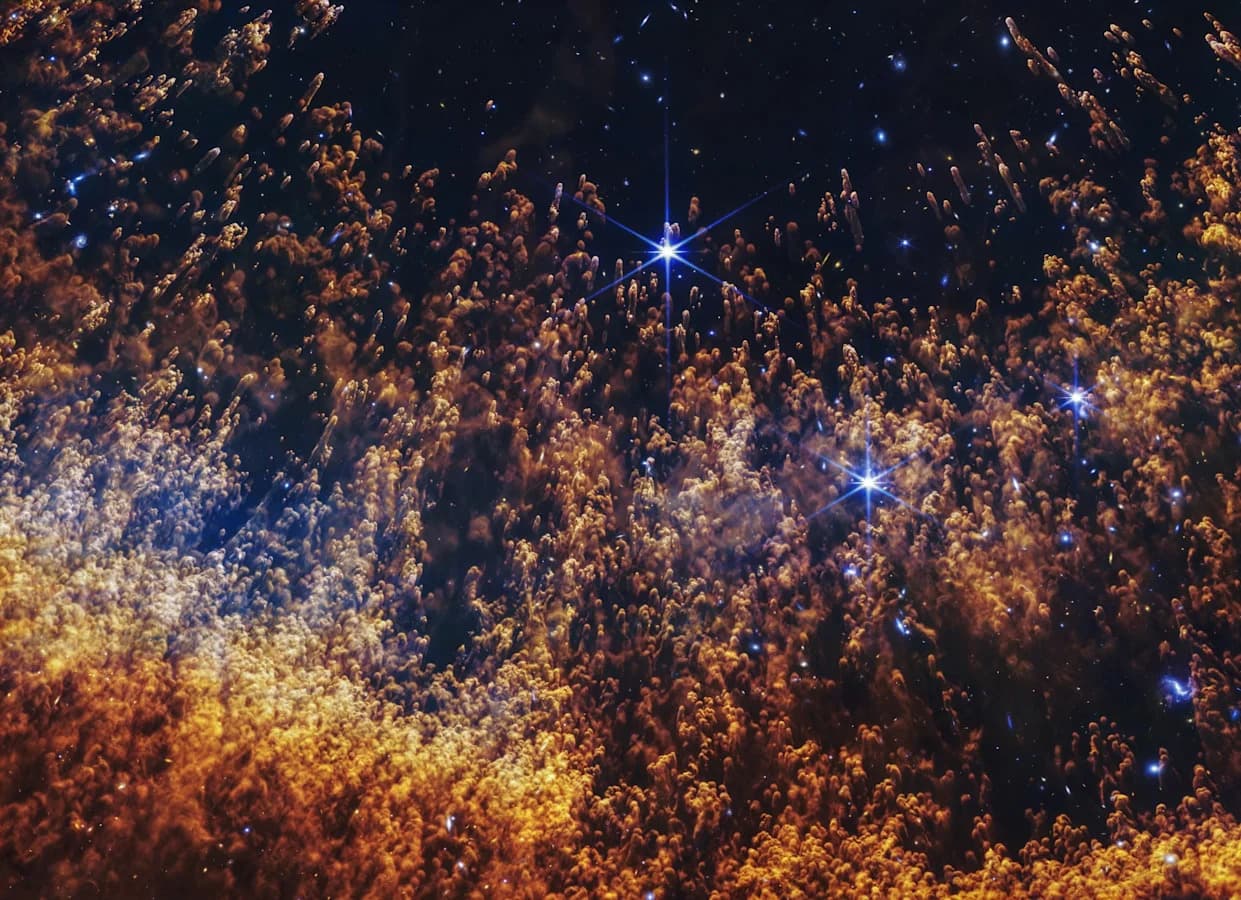
What reveals a newborn? The MUSE observations show energetic bipolar jets peppered with bright knots, often called "bullets," streaming from the object. Those knotty, high-speed outflows are a hallmark of protostars as they accrete material and drive supersonic jets into their surroundings.
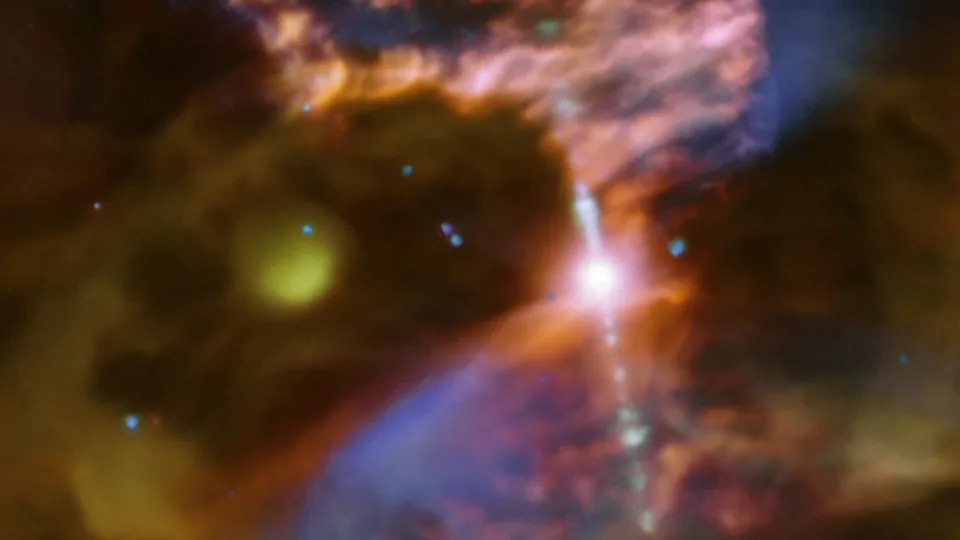
Object Ve 7–27 is considered a young star due to its jets of energy being shot out into its environment. | Credit: ESO/J. Suherli et al.
"Instead of being the 'last breath' of a dying star, Ve 7–27 is a newborn one," said Janette Suherli, a Ph.D. candidate at the University of Manitoba and lead author of the study.
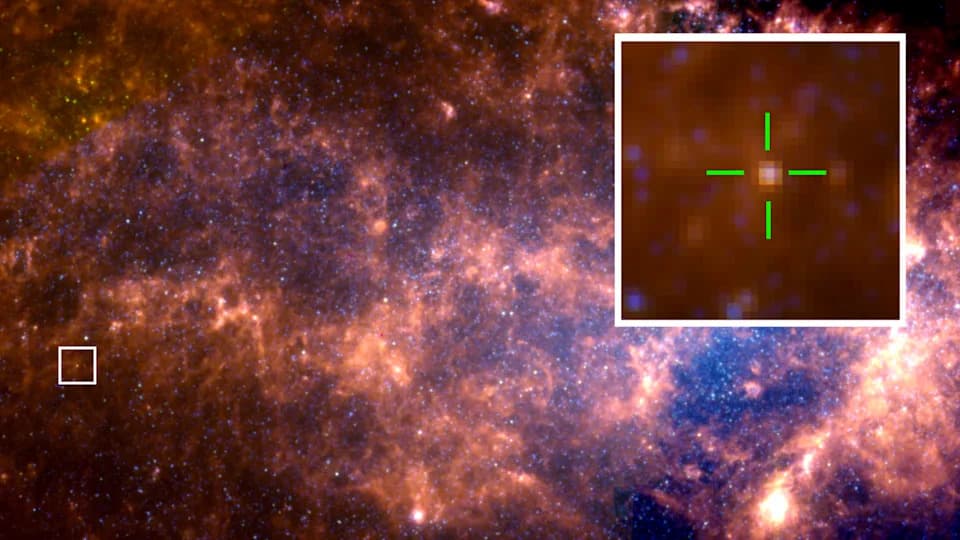
Ve 7–27 sits at roughly 4,500 light-years from Earth and is embedded within the Vela Junior supernova remnant. The same VLT image also shows a compact, yellowish-green patch near the center identified as a neutron star — the ultra-dense remnant left after a massive star exploded in a supernova. That juxtaposition highlights both stellar death and birth in the same region.
MUSE's spectroscopic mapping indicates the protostar is immersed in material expelled by the Vela Junior blast. Tying Ve 7–27 to the remnant allows astronomers to place Vela Junior at about 4,500 light-years, resolving earlier disagreements about the remnant's true size, expansion velocity and age. The spatial and kinematic association also raises the possibility that the supernova debris influenced or helped trigger local star formation, though causation has not been proven.
These VLT/MUSE observations therefore not only reclassify a long-misunderstood object but also show how the remnants of stellar explosions and newly forming stars can coexist and interact within the same cloud of gas.
Help us improve.