A 2023 ultrahigh-energy neutrino detected by KM3NeT may have originated from an exploding primordial black hole, researchers at UMass Amherst propose. Their model invokes a 'dark charge' carried by a hypothetical heavy 'dark electron' that makes certain primordial black holes quasi-extremal and alters their evaporation. This idea could explain why IceCube did not see the event and, if validated, would provide evidence for Hawking radiation, primordial black holes, and a possible dark matter candidate. The study has been accepted by Physical Review Letters but remains speculative pending further observations.
Did Astronomers Catch a Black Hole Explosion? A 2023 'Impossible' Neutrino May Offer a Clue
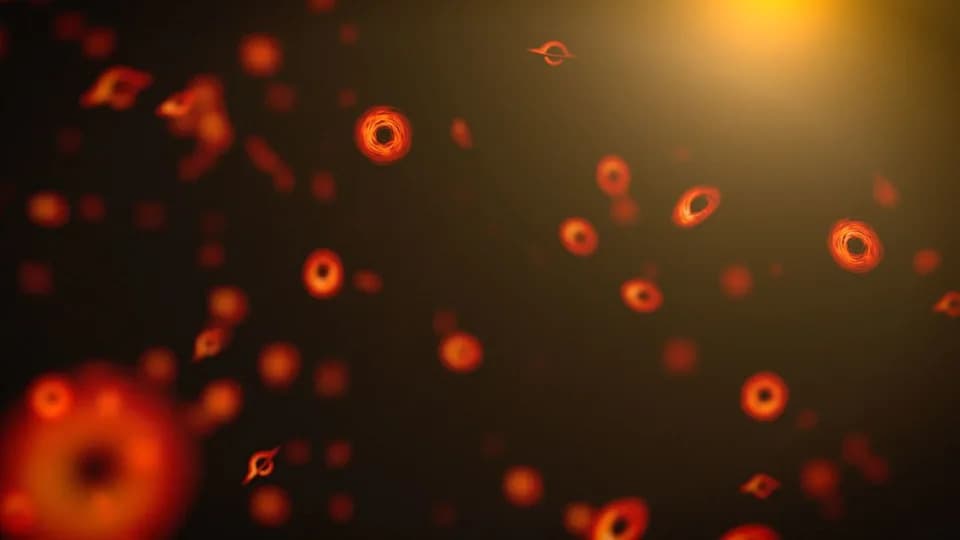
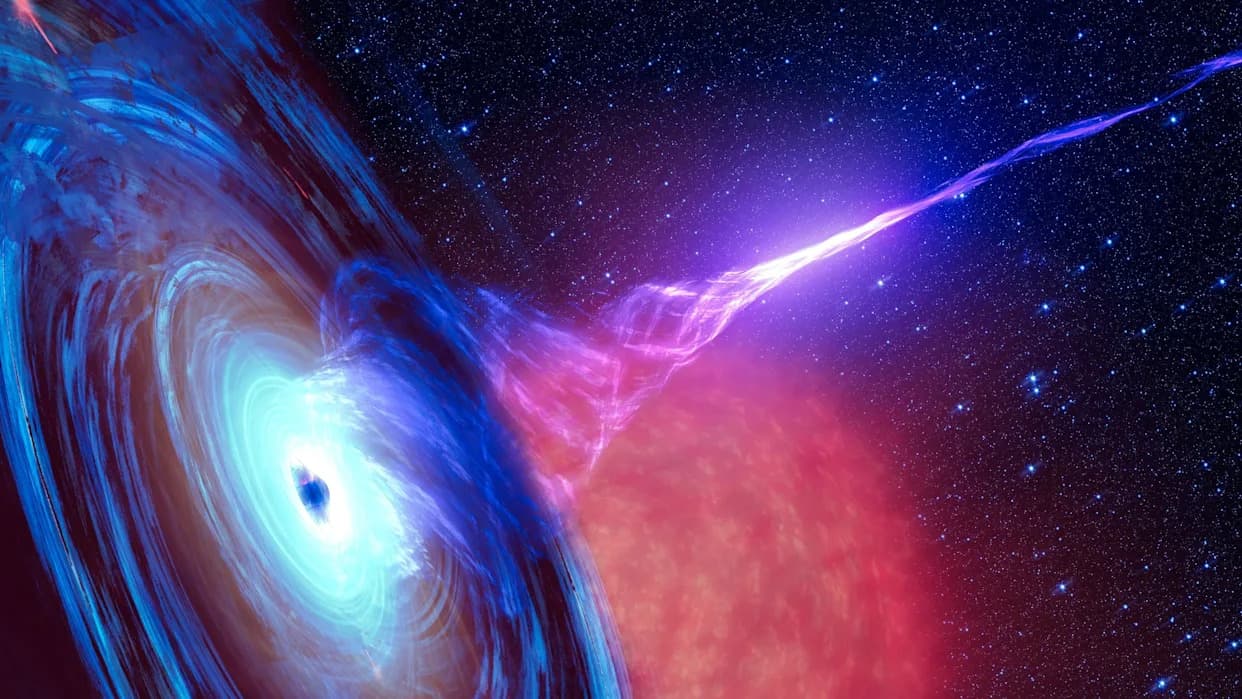
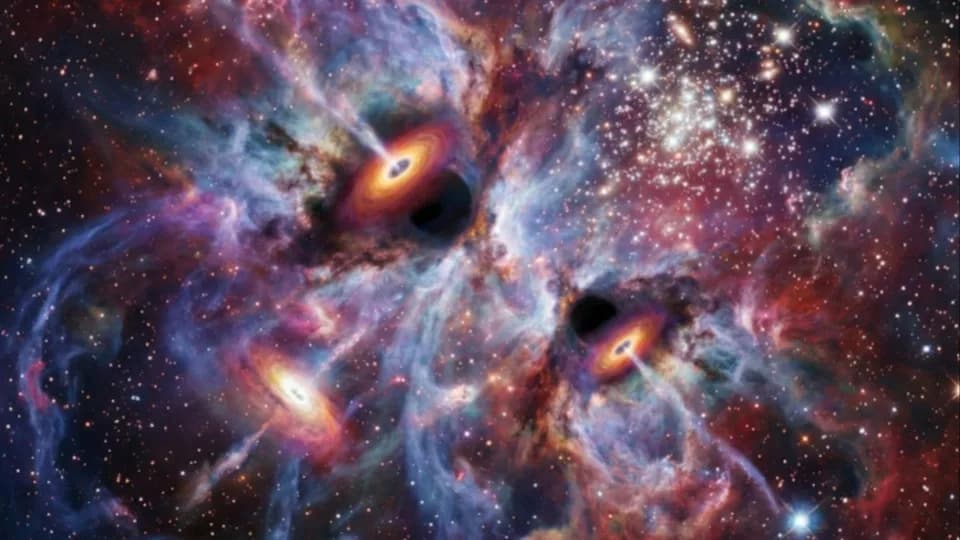
A speculative illustration of tiny primordial black holes. Have physicists just seen one explode?. | Credit: University of Massachusetts Amherst
An extraordinarily energetic neutrino detected at Earth in 2023 — described by researchers as effectively 'impossible' — might be debris from a primordial black hole exploding after forming in the Big Bang. If confirmed, that detection could provide the first direct evidence for primordial black holes and offer fresh insight into the nature of dark matter.
What Was Detected?
In 2023, KM3NeT, a network of neutrino detectors in the Mediterranean Sea, recorded a neutrino with an energy roughly 100,000 times greater than the highest-energy particles produced by the Large Hadron Collider (LHC). The signal's energy is so extreme that no well-established natural astrophysical source comfortably accounts for it.
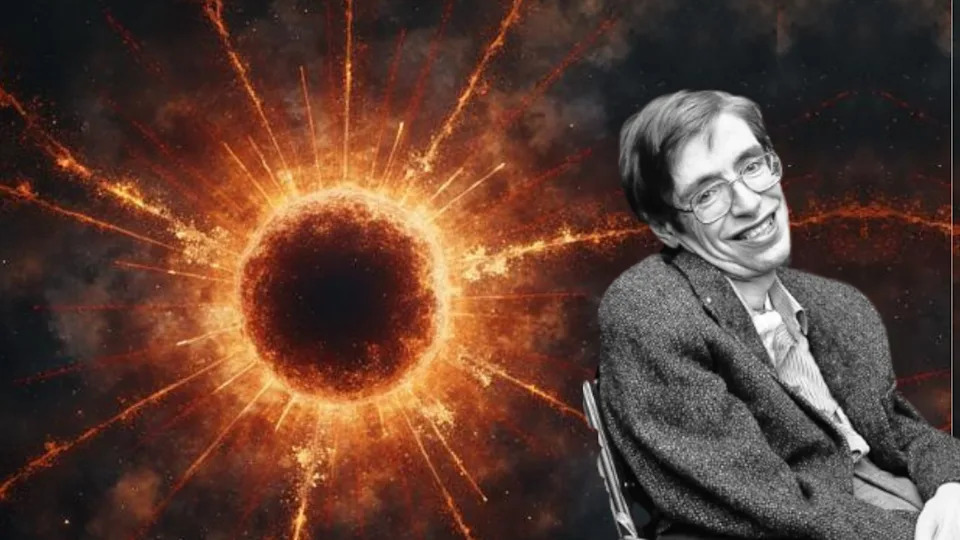
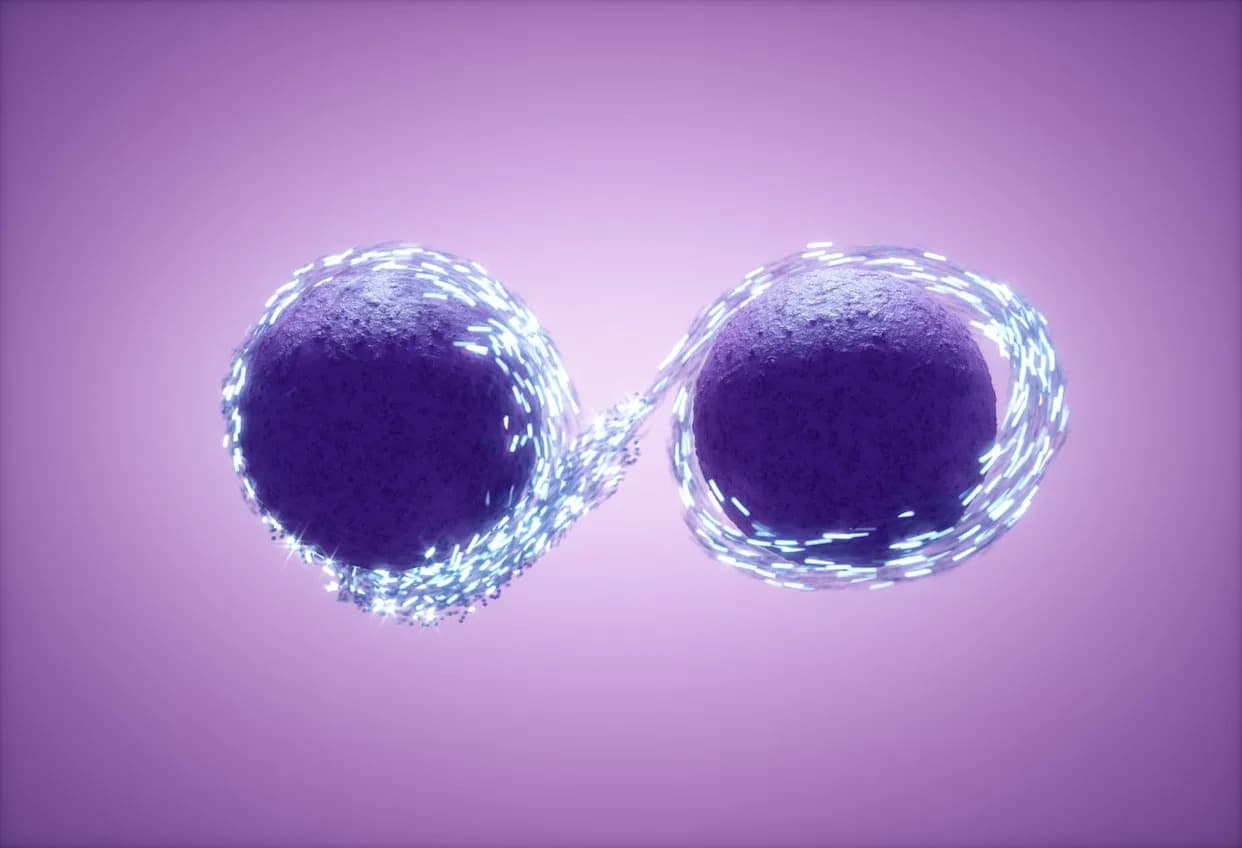
An illustration of an exploding primordial black hole and the theorist who first proposed them, Stephen Hawking | Credit: NASA/Robert Lea (created with Canva)
How Could a Black Hole Produce Such a Particle?
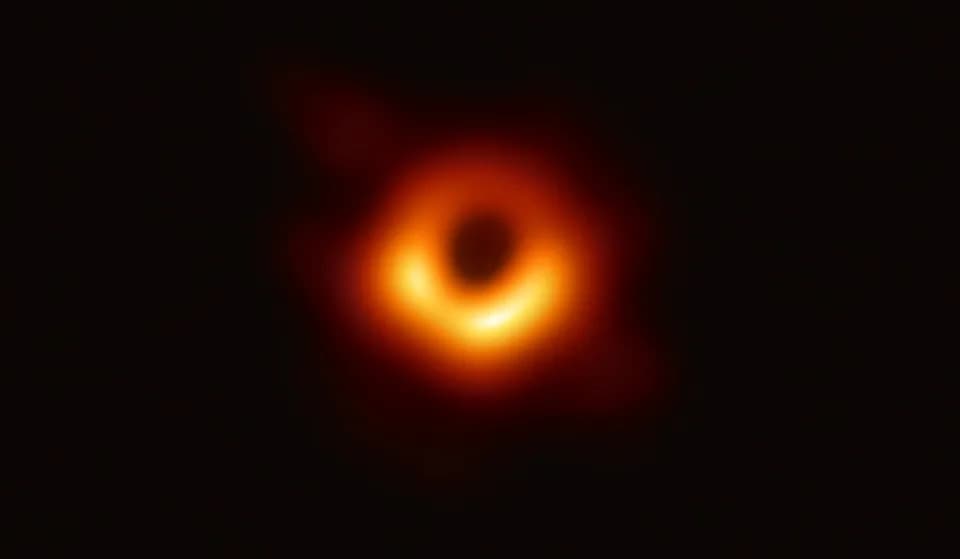
The University of Massachusetts Amherst research team proposes that an ultrahigh-energy neutrino like this could be emitted when a small, primordial black hole reaches the end of its life and explodes via Hawking radiation. Hawking radiation, a theoretical thermal emission process first proposed by Stephen Hawking in 1974, causes black holes to lose mass slowly. Smaller black holes are hotter and radiate faster, potentially ending in a violent evaporation.
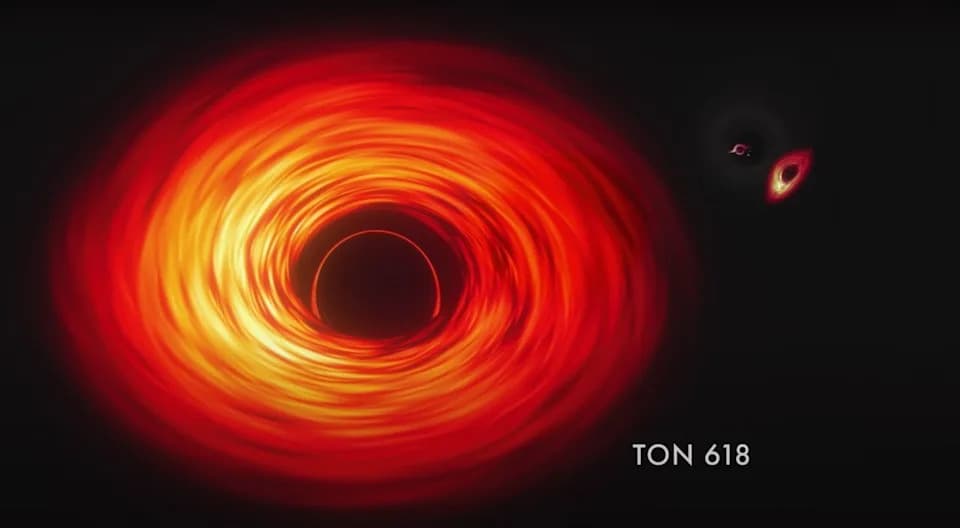
Stellar black holes born from collapsing stars are far too massive and cold to evaporate within the current age of the universe — estimates give timescales on the order of 10^67 years. But primordial black holes, formed from density fluctuations in the very early universe, could be much smaller (masses comparable to a planet or large asteroid) and thus hot enough to evaporate on astrophysically relevant timescales.
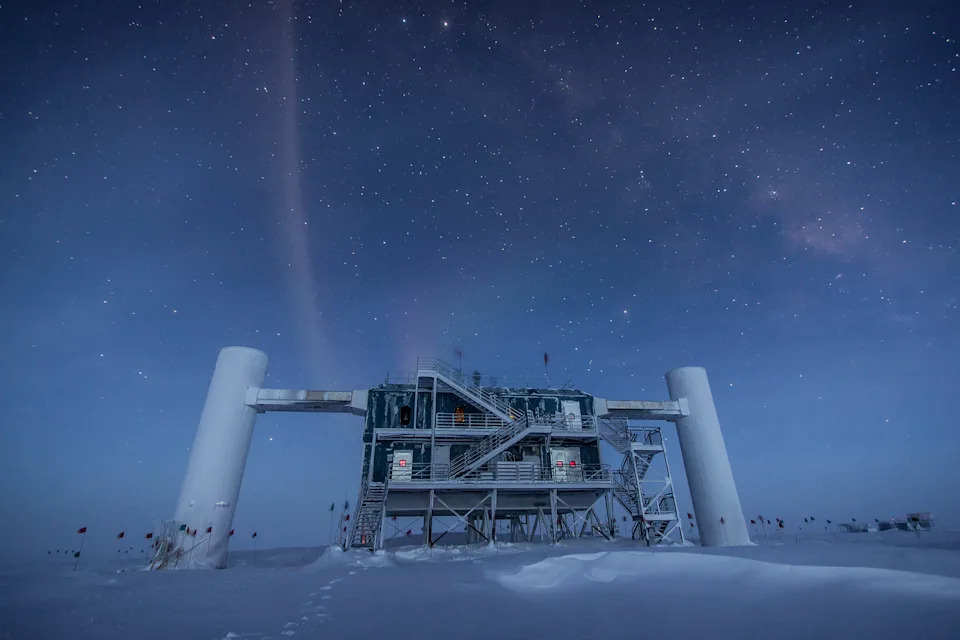
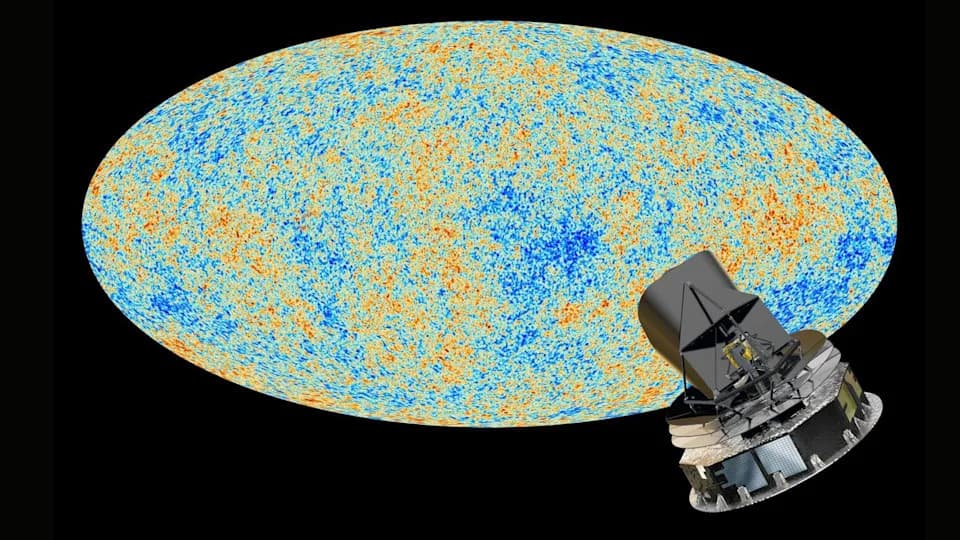
The neutrino observatory known as IceCube. | Credit: Courtesy of IceCube Neutrino Observatory
The 'Dark Charge' Hypothesis
To explain why km3NeT saw the event while IceCube — the South Pole neutrino observatory designed to detect high-energy neutrinos — did not, the team introduces a refined model: quasi-extremal primordial black holes that carry a 'dark charge.' This dark charge is an analogue of electric charge but associated with a hypothetical heavier partner to the electron, dubbed the 'dark electron.'
A black hole with such a dark charge would have different evaporation and emission properties than an uncharged primordial black hole. The researchers argue these differences could produce directional or particle-type asymmetries that make an ultrahigh-energy neutrino visible to KM3NeT but effectively invisible to IceCube, helping reconcile the two observatories' differing records.
'Observing the high-energy neutrino was an incredible event,' said Michael Baker of UMass Amherst. 'It gave us a new window on the universe. If this interpretation holds up, we could be on the cusp of experimentally verifying Hawking radiation and finding evidence for both primordial black holes and new particles beyond the Standard Model.'
Implications and Cautions
If quasi-extremal, dark-charged primordial black holes exist in sufficient numbers, they could contribute substantially to the universe's missing mass — the dark matter problem. However, the idea remains speculative: neither primordial black holes nor Hawking radiation have yet been observed unambiguously, and alternative explanations for the KM3NeT event remain under consideration.
The UMass Amherst team's paper has been accepted for publication in Physical Review Letters. Upcoming observations by multiple neutrino observatories and further theoretical work will be needed to test the dark-charge hypothesis and the broader claim that exploding primordial black holes produced the 2023 neutrino.
Help us improve.