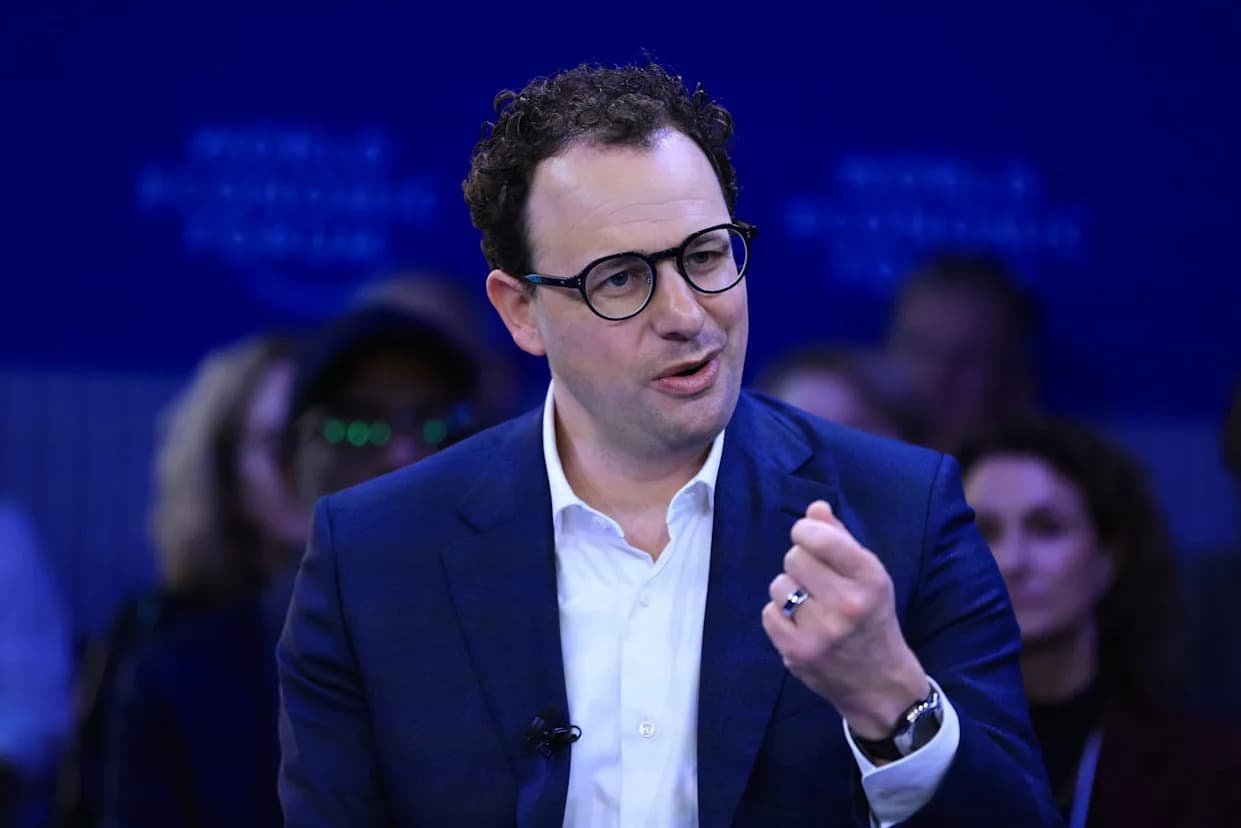
David Kipping reported that senior faculty at the Institute for Advanced Study privately described agentic AI systems that can produce code, analyses, and publishable research with minimal prompting, in some cases accounting for up to 90% of intellectual labor. Meeting participants raised concerns about privacy, ethics, skill atrophy, and the risk that AI-driven breakthroughs may be hard for humans to interpret. Kipping — who uses AI in his own work — warned of a possible surge of AI-assisted papers while stressing the need for human oversight and stronger institutional policies.
Elite Scientists Say Agentic AI Now Performs Most Research Work — Closed-Door Meeting Sparks Ethical Alarm
Senior researchers at the Institute for Advanced Study (IAS) in Princeton privately acknowledged that agentic artificial intelligence systems are now producing much of the technical work that has traditionally defined scientific prestige, according to Columbia University astrophysicist David Kipping.
Kipping described the conversation on his Cool Worlds podcast after attending a closed-door session at IAS. He said senior faculty demonstrated agentic AI agents that, with only a handful of prompts, produced sophisticated code, detailed analyses, and research-ready outputs that previously would have taken scientists days or weeks to complete. A short clip of Kipping describing the meeting has been widely viewed.
According to attendees Kipping quoted, presenters estimated these agentic tools now carry out as much as 90% of the intellectual labor behind contemporary research in some workflows, often delivering publishable results with minimal human direction. One speaker described AI as having achieved what he called complete coding dominance over humans and noted that analytic reasoning capabilities were rapidly improving.
“Maybe no human being will understand how this fusion machine works,” Kipping reported hearing at the meeting, and he said some participants found that prospect disquieting.
At least one physicist described fully integrating AI into daily work by granting it access to emails, file systems, and calendars, arguing that the competitive advantage outweighed privacy concerns. Meeting participants discussed several risks: skill atrophy comparable to overreliance on GPS, ethical and professional questions about authorship and credit, and the possibility that AI could generate breakthroughs that are difficult or impossible for humans to interpret.
Nuance and Use
Kipping, who leads research on exoplanets, planetary habitability, and astrophysical data analysis, emphasized that he is not a sensationalist and that he personally uses AI tools for coding, debugging, and literature searches. He framed the technologies as powerful research aids while warning of a likely surge in AI-assisted papers and urging continued human oversight to verify results and reduce hallucinations.
Implications
Participants framed the moment as a historic transition in scientific practice. While attendees described AI as democratizing access to technical work by lowering barriers, they also urged institutions and researchers to adapt policies, auditing procedures, and norms to preserve scientific integrity, reproducibility, and accountability.
Help us improve.