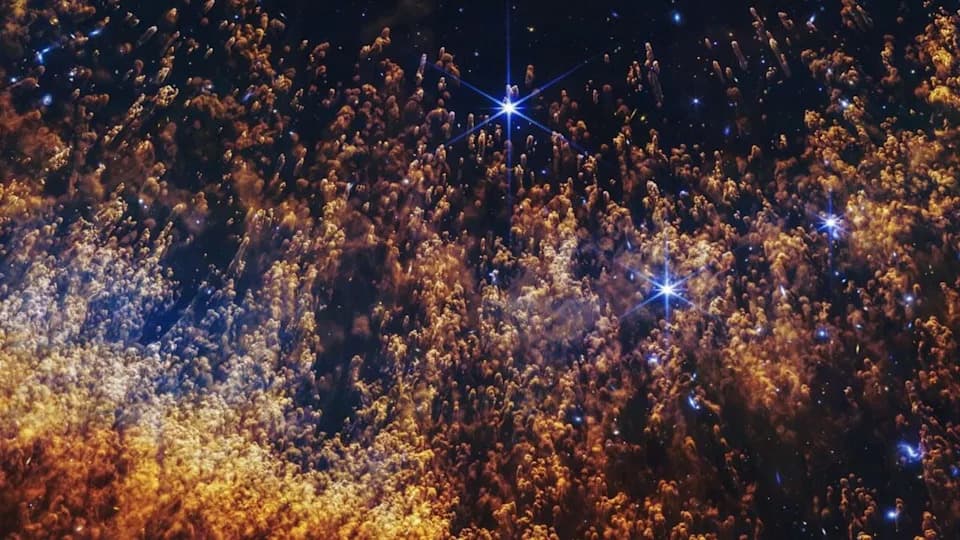
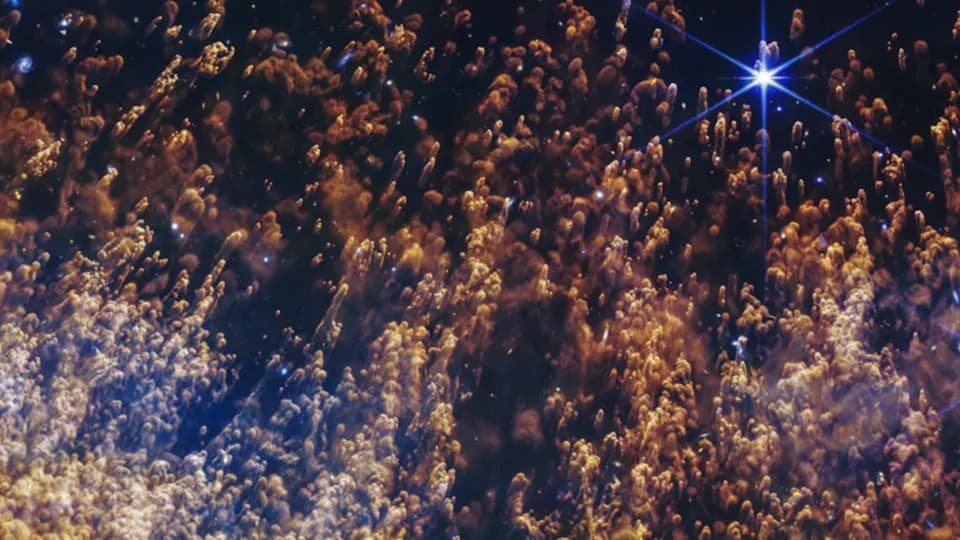
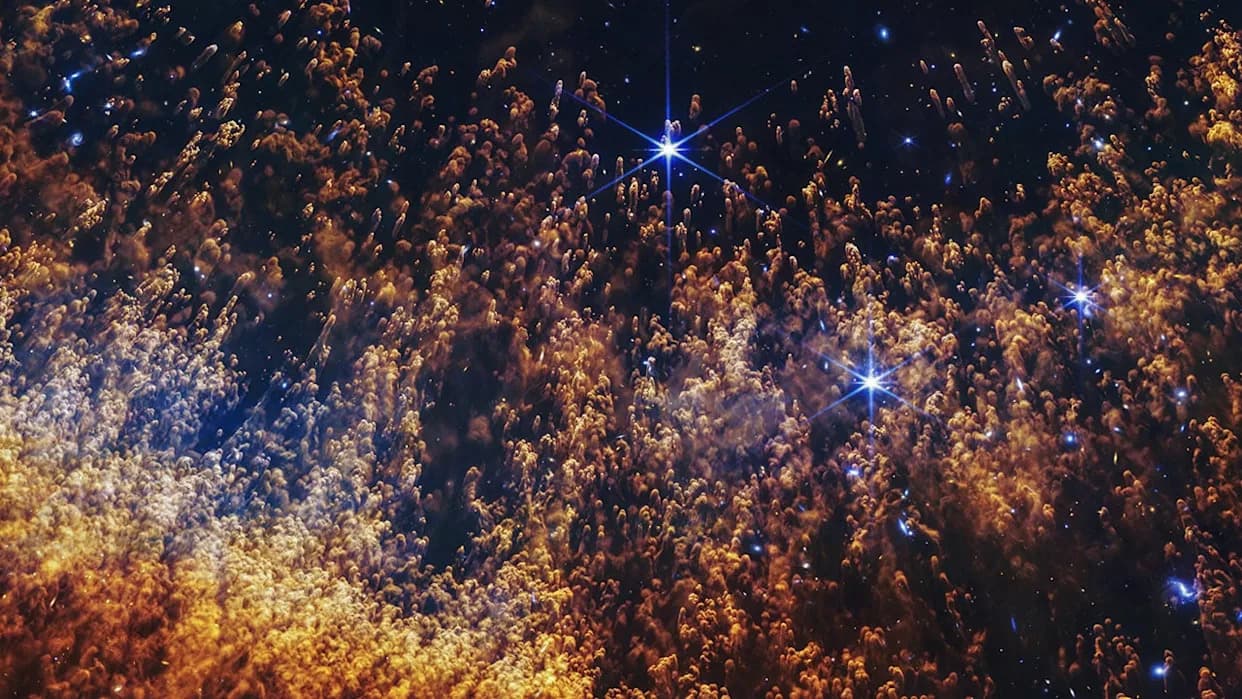
JWST’s Near-Infrared Camera has captured striking new images of the Helix Nebula — the “Eye of God” — about 650 light-years away. The images reveal a warm, ionized core surrounded by cooler dust shells, with knotty, comet-like plumes where hot gas breaches the dust. JWST resolves what Hubble and Spitzer saw as a haze into intricate filaments and fractal structures, showing how dying stars return material that can later form new stars and planets.
JWST Reveals the Helix Nebula’s “Eye of God” in Unprecedented Detail
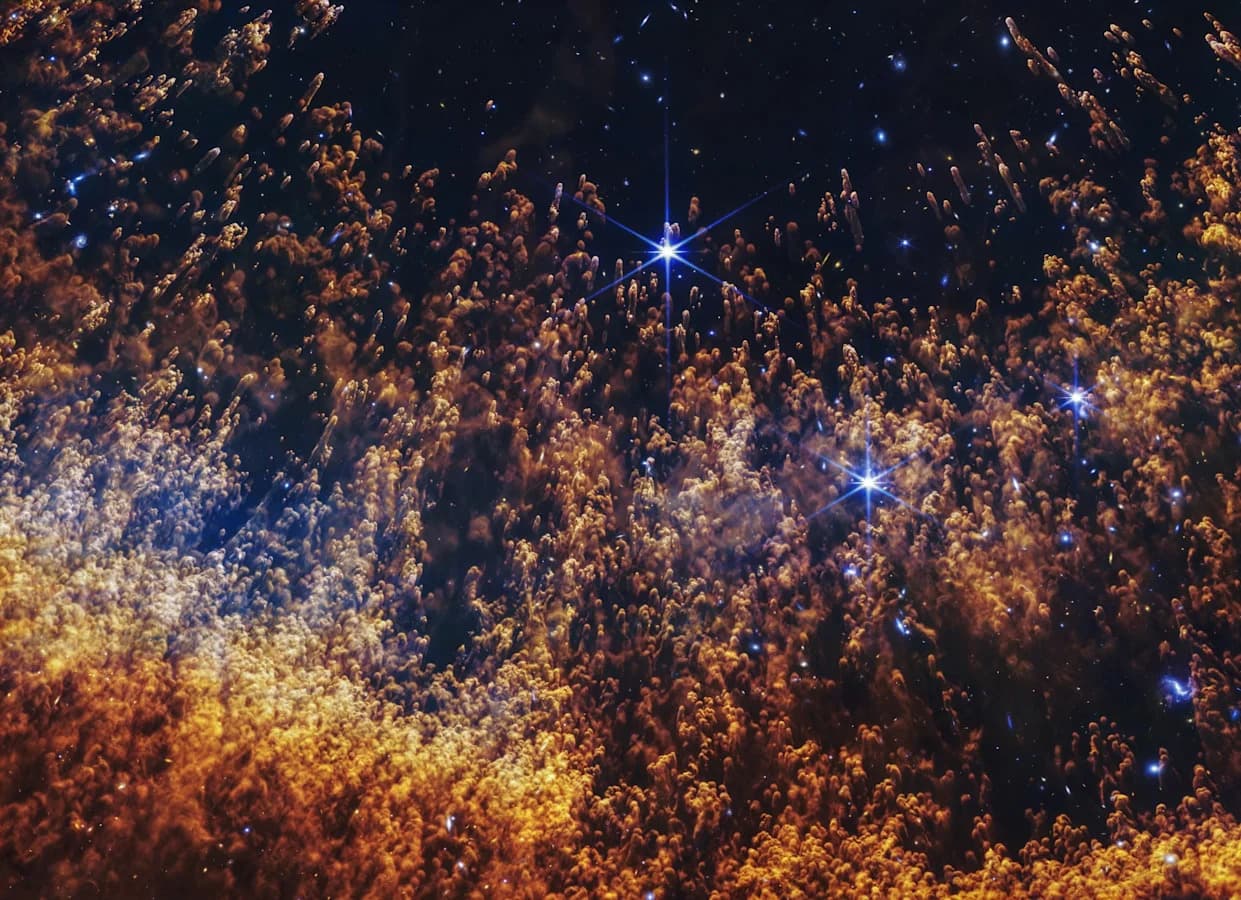
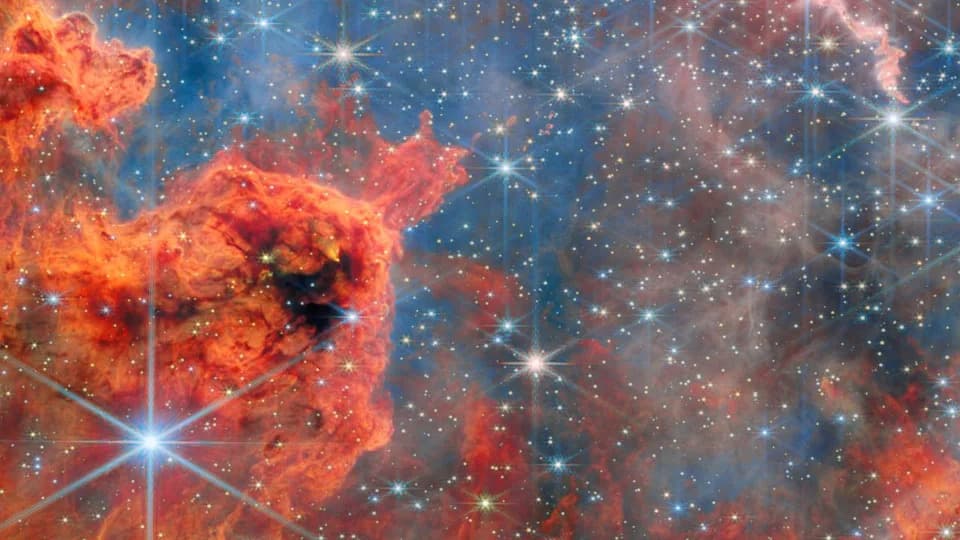
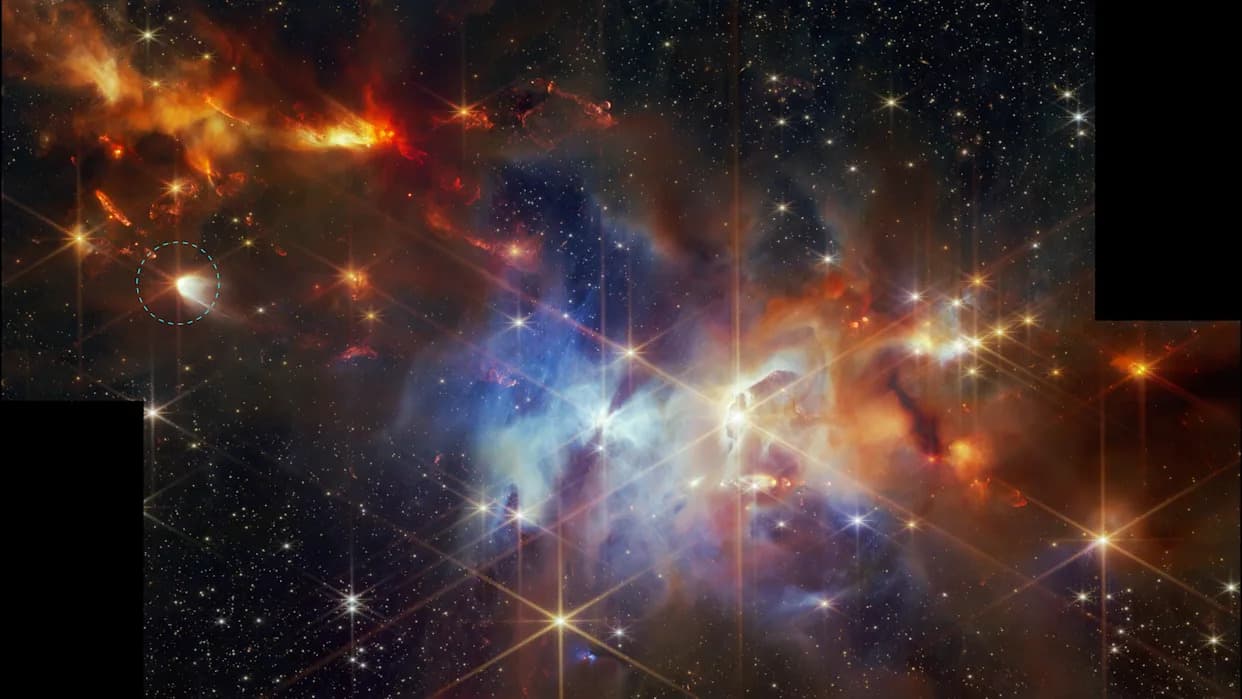
A new image of a portion of the Helix Nebula from NASA’s James Webb Space Telescope (JWST) highlights cometlike knots, fierce stellar winds and ejected shells of gas interacting with the environment surrounding a dying star.(NASA/ESA/CSA/STScI (image); Alyssa Pagan/STScI (image processing))
The James Webb Space Telescope (JWST) has delivered remarkably sharp new images of the Helix Nebula — the so-called “Eye of God” — a planetary nebula roughly 650 light-years away in the constellation Aquarius. These observations, taken with JWST’s Near-Infrared Camera (NIRCam), resolve fine structures that previous telescopes only hinted at.
Fresh Views of a Familiar Object
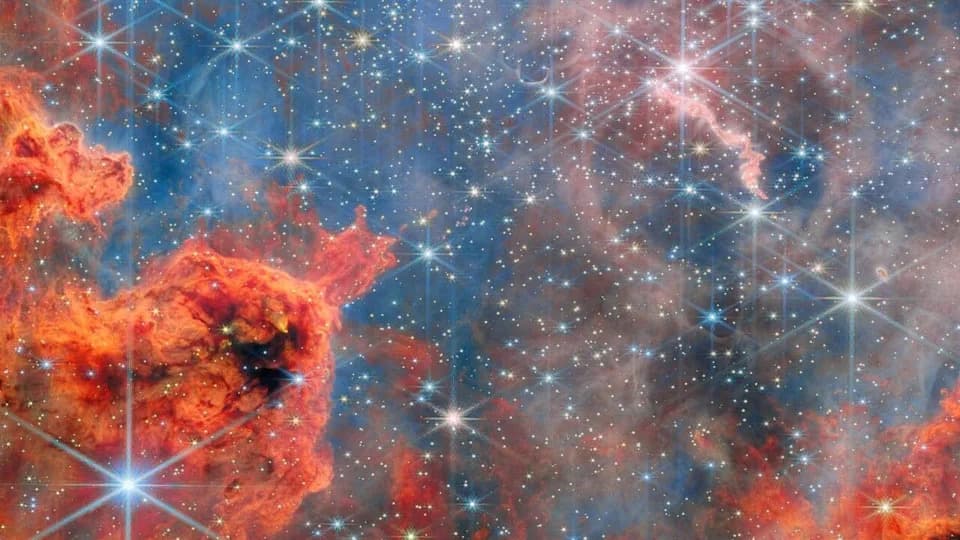
Australian astrophysicist Jessie Christiansen captured the wonder many astronomers felt:
“I thought this was a close-up of lavender until I saw the galaxies.” — Jessie Christiansen
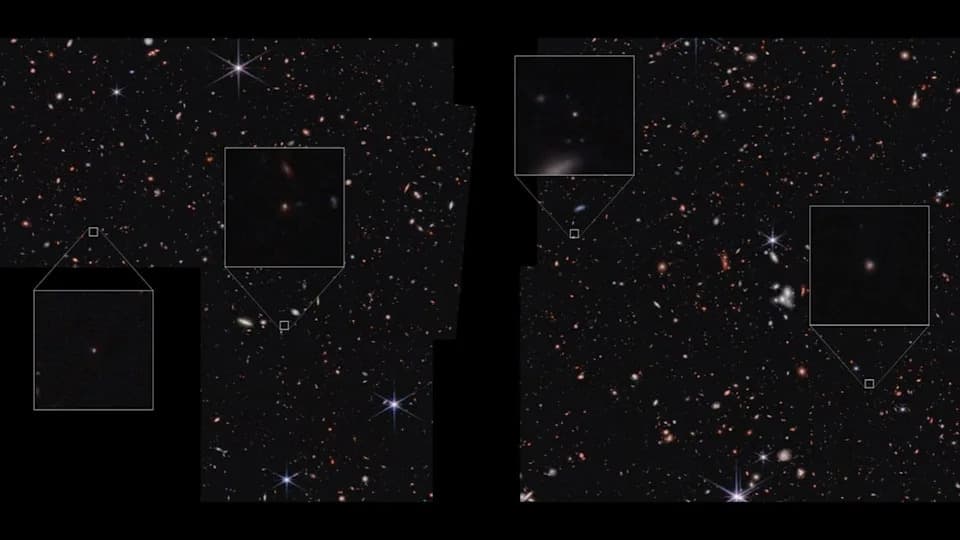
Her remark highlights two striking features of the images: the nebula’s richly colored, petal-like edges and JWST’s ability to reveal faint background galaxies in nearly every deep observation.
What JWST Revealed
The Helix is a classic planetary nebula — a glowing shell of gas and dust expelled by a dying, sun-like star. JWST’s NIRCam shows a warm, recently ionized interior surrounded by cooler, older shells of dust. At the boundary between these regions, columns of hotter gas push through the dusty layers, forming knotty, comet-like plumes that were previously seen only as a diffuse haze in Hubble and Spitzer images.
Rather than a soft glow, JWST resolves a richly textured collision zone: sparse tendrils of dust give way to billowing ripples of gas and countless fractal structures. These intricate filaments and knots trace the processes that both end a star’s life and seed the surrounding space with the raw materials for future stars and planets.
Why This Matters
By resolving fine-scale features in planetary nebulae, JWST helps astronomers study how dying stars shed mass, how dust and molecules survive harsh conditions, and how that material mixes into the interstellar medium. The Helix images are a vivid reminder that stellar death is also a source of cosmic renewal.
Technical note: The observations shown were taken with JWST’s NIRCam, which operates in the near-infrared and excels at penetrating dusty regions while revealing faint background sources such as distant galaxies.
Help us improve.