This study reports the largest nearby relativistic jet observed to date in galaxy VV340a, stretching about 20,000 light-years and showing clear wobble (jet precession). Multiwavelength data from Keck, JWST, and the VLA reveal an unprecedentedly large coronal gas structure, helical radio jets, and an outflow removing roughly 20 solar masses per year. Finding such a powerful, precessing jet in a young, merging disk galaxy challenges current ideas about SMBH–galaxy co-evolution, and higher-resolution radio observations are planned to probe a possible second central black hole.
Astronomers Spot a Gigantic, Wobbling Black-Hole Jet in VV340a — A Discovery That Rewrites Galaxy Evolution
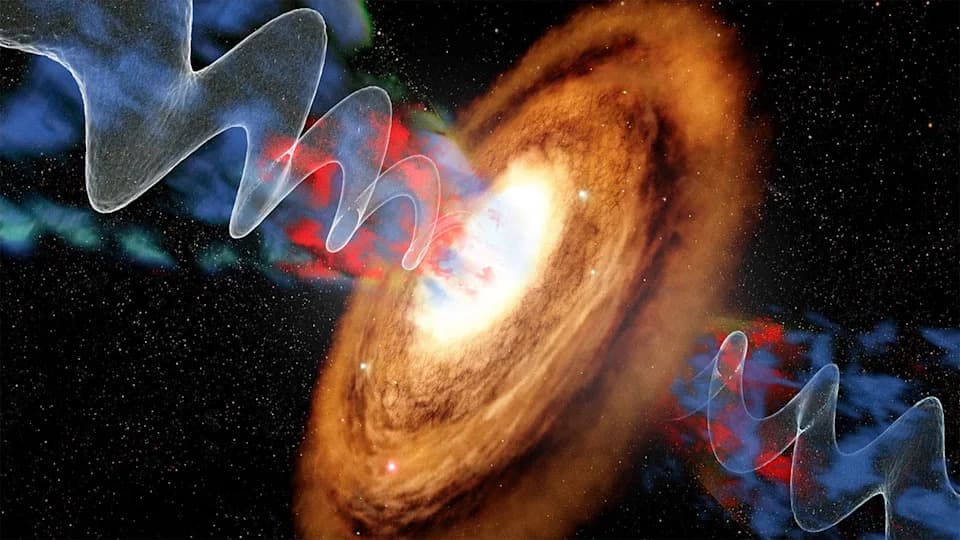
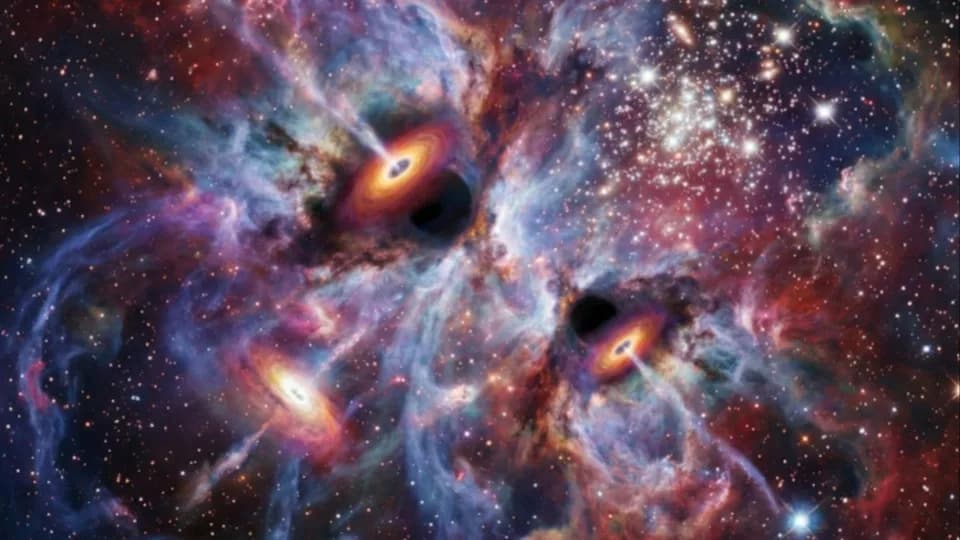
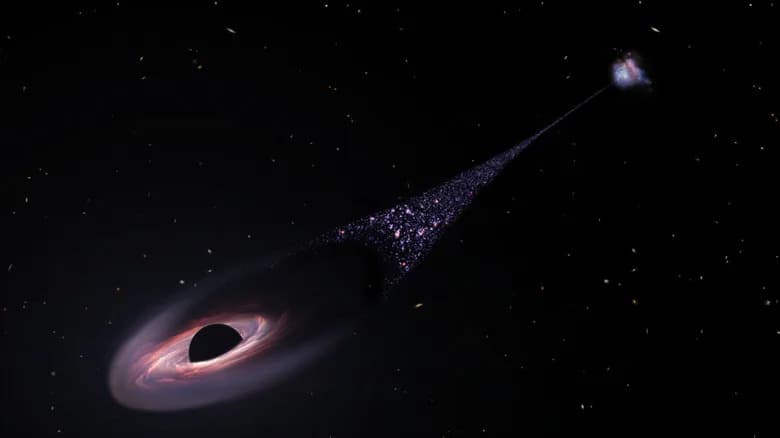
This artist’s rendering illustrates a precessing jet erupting from the supermassive black hole at the center of galaxy VV 340a. | Credit: W. M. Keck Observatory / Adam Makarenko
A team of astronomers has discovered an enormous, wobbling relativistic jet in the nearby galaxy VV340a that extends roughly 20,000 light-years, offering the clearest evidence yet that supermassive black holes can reshape galaxies well beyond their cores.
Multiwavelength Observations Reveal a Colossal Outflow
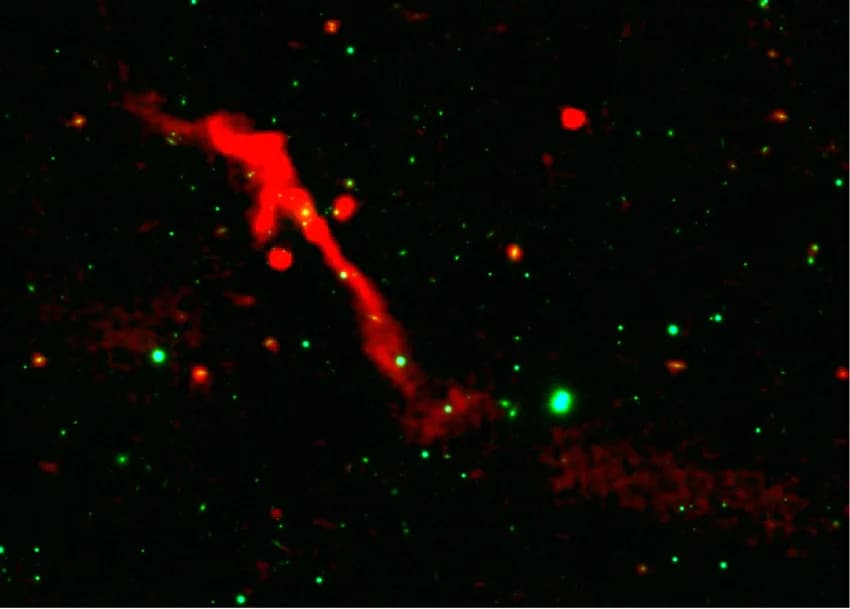
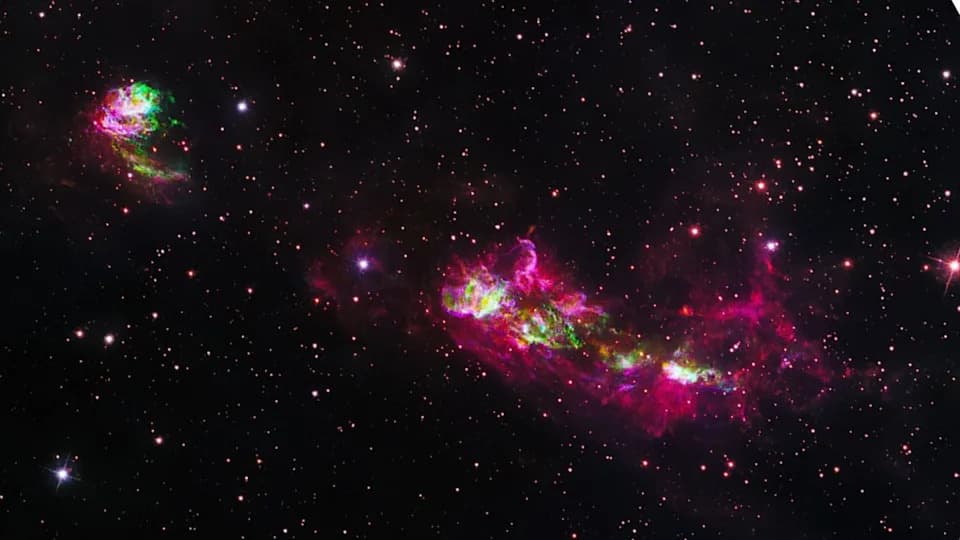
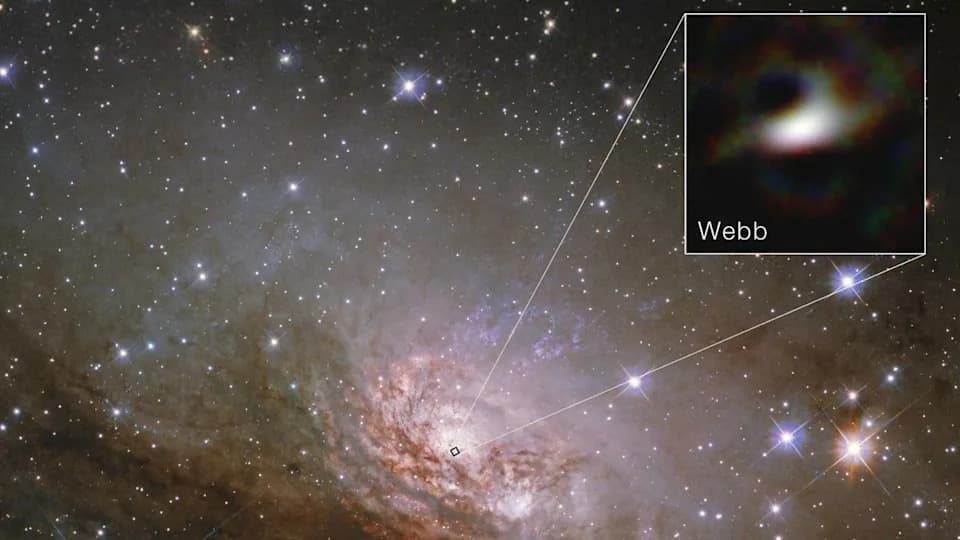
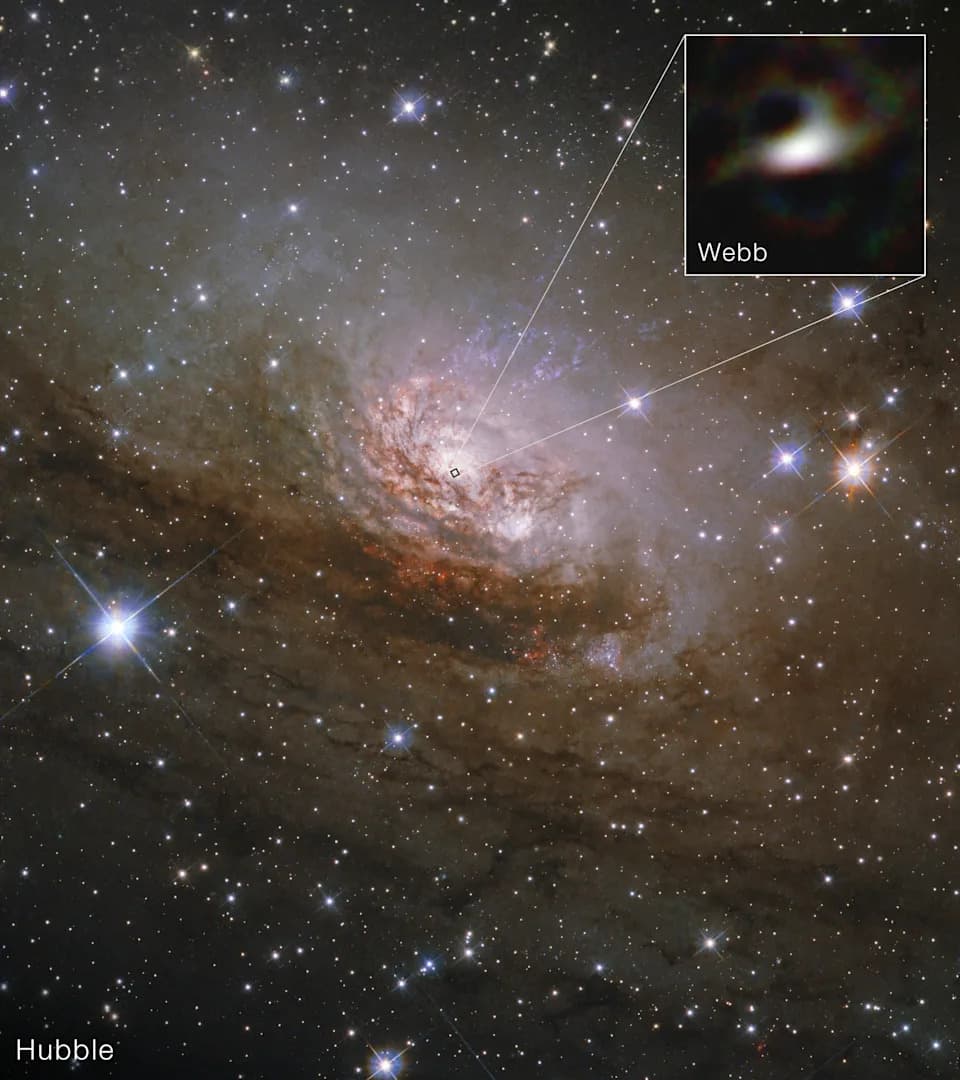
Using the W. M. Keck Observatory on Maunakea with the Keck Cosmic Web Imager (KCWI), together with infrared data from the James Webb Space Telescope (JWST) and radio maps from the Karl G. Jansky Very Large Array (VLA), the team mapped the jet and its impact across multiple wavebands. KCWI's optical spectroscopy traced gas pushed to the greatest distances by the black hole, while Webb revealed an exceptionally extended, superheated coronal gas region, and the VLA exposed helical, precessing radio jets.
What the Data Show
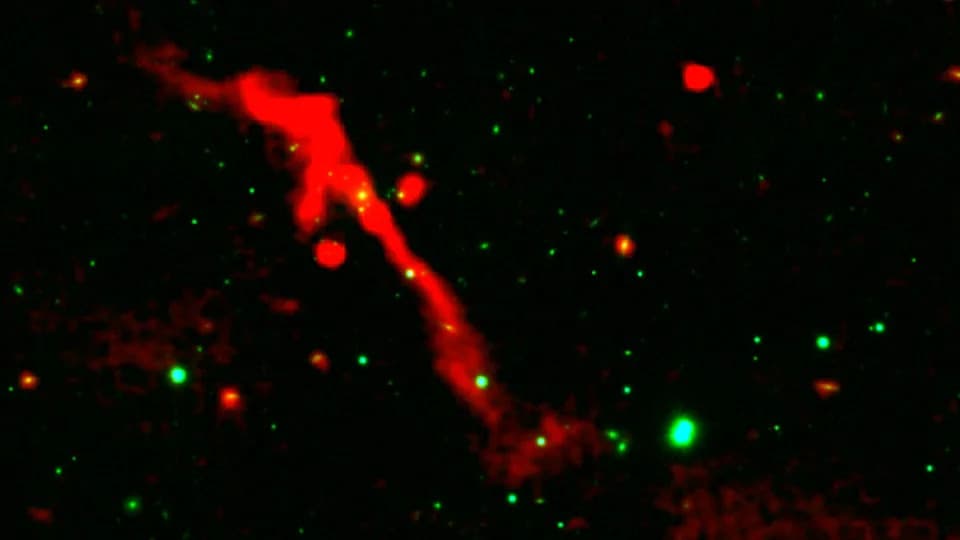
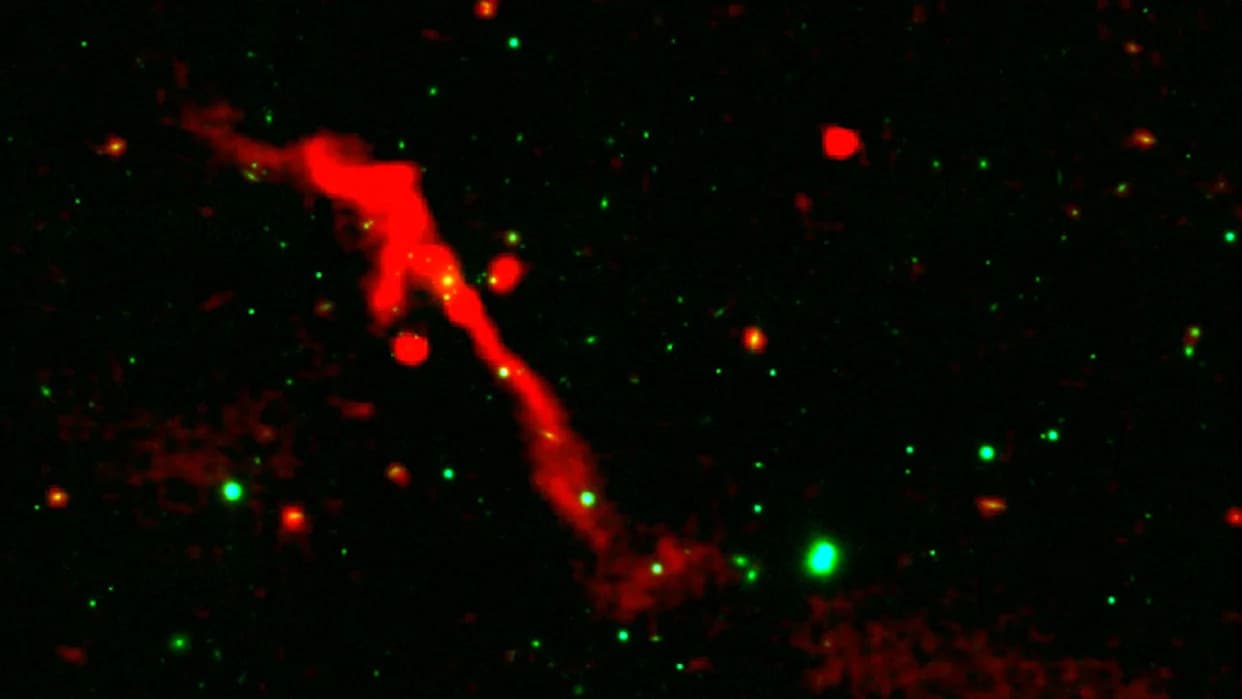
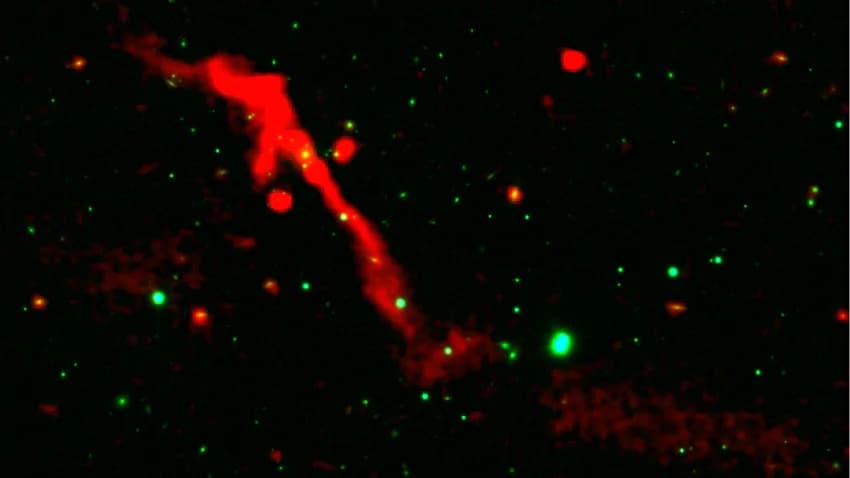
KCWI observations revealed a spear-like structure aligned with the galactic nucleus and measured an outflow removing gas at a rate near 20 solar masses per year, sufficient to suppress star formation across large parts of the galaxy. JWST detected coronal gas spanning several thousand parsecs — far larger than typical coronal structures — while the VLA images show twin plasma jets twisted into a helical pattern, a hallmark of jet precession (slow directional wobble).
"The Keck Observatory data is what allowed us to understand the true scale of this phenomenon. The gas we see with Keck Observatory reaches the farthest distances from the black hole, which means it also traces the longest timescales. Without these observations, we wouldn't know how powerful — or how persistent — this outflow really is," said Justin Kader, lead author and UC Irvine postdoctoral researcher.
Why This Matters
Powerful, precessing jets like this are usually associated with older elliptical galaxies that have largely stopped forming stars. Finding a kiloparsec-scale, precessing radio jet driving a massive outflow in a relatively young, merging disk galaxy challenges prevailing models of how supermassive black holes and their host galaxies co-evolve. As Kader notes, "This is the first time we've seen a precessing, kiloparsec-scale radio jet driving such a massive outflow in a disk galaxy... It changes the way we think about the galaxy we live in."
Next Steps
The team plans higher-resolution radio observations to test whether a second central black hole might be present in VV340a and causing the jet's wobble. Vivian U (Caltech/IPAC), second and senior author on the study, added: "We're only beginning to understand how common this kind of activity may be. With Keck Observatory and these other powerful observatories working together, we're opening a new window into how galaxies change over time."
The findings were published in the journal Science and presented at the 247th Meeting of the American Astronomical Society. The original version of this article first appeared on Universe Today.
Help us improve.