The Ring Nebula (M57), about 2,000 light-years away, contains a newly discovered, rod-like cloud of ionized iron detected by WEAVE on the William Herschel Telescope. The iron feature stretches roughly 1,000 times the Sun–Pluto distance (≈40,000 AU, ~0.6 ly) and holds an iron mass comparable to Mars. Astronomers suggest it may trace asymmetric stellar ejection or the vaporized remains of a rocky planet; higher-resolution WEAVE observations are planned to determine its origin.
Astronomers Find a Massive Iron 'Bar' Piercing the Ring Nebula — A Cosmic Mystery
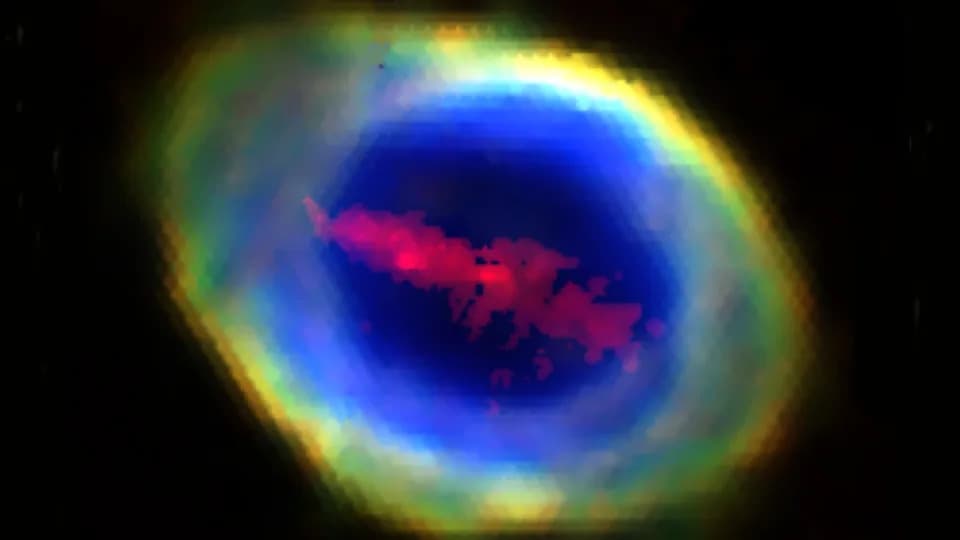
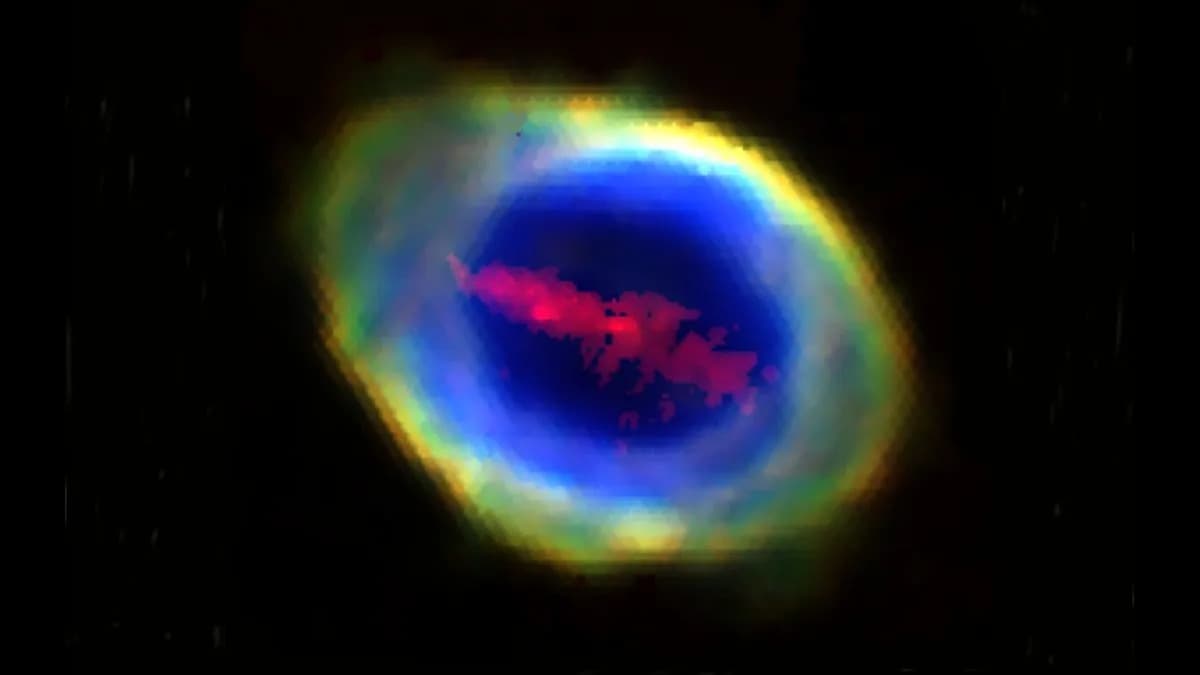
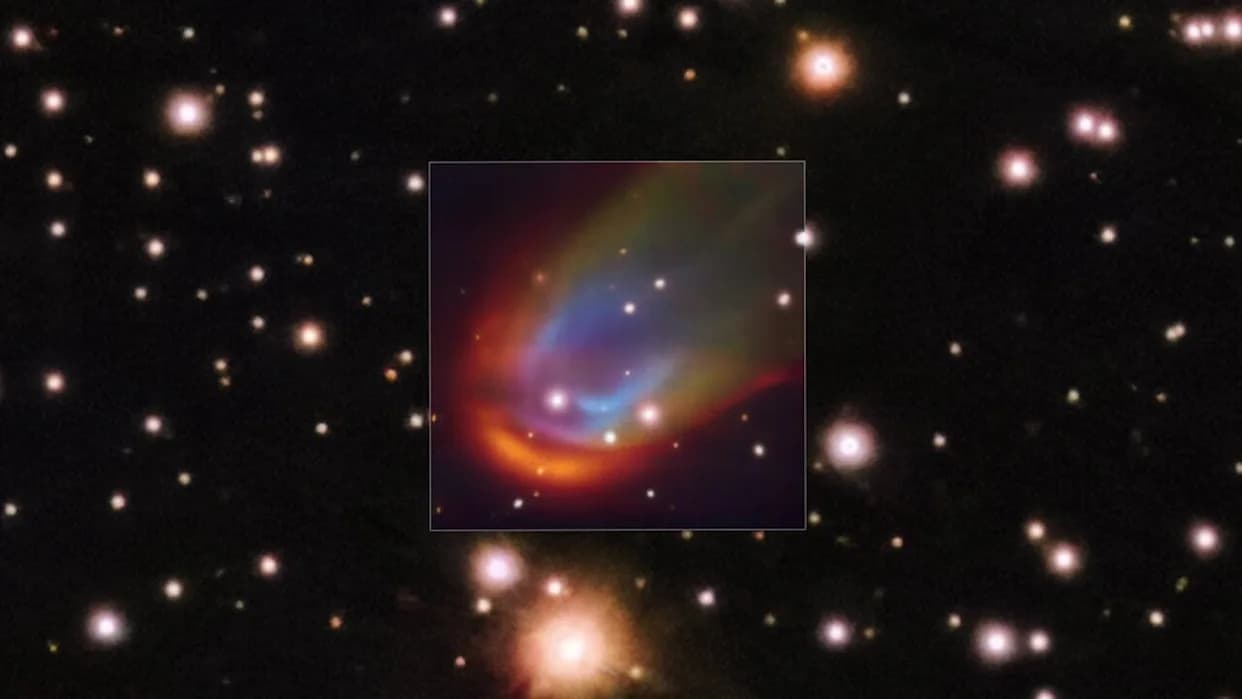
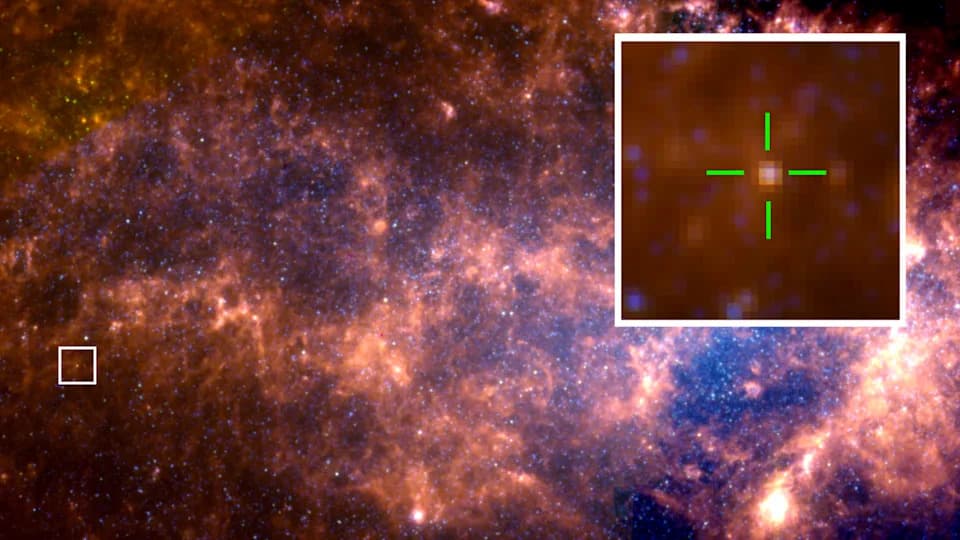
The planetary nebula known as the Ring Nebula with its central iron bar marked in red. | Credit: UCL/WEAVE
Sometimes even the most familiar sights in the night sky still hold surprises. New observations of the famous Ring Nebula (Messier 57, or M57) reveal a previously unseen, rod-like cloud made predominantly of ionized iron stretching through the nebula's inner region.
The Ring Nebula is a planetary nebula — the glowing, expanding shell of gas thrown off by a Sun-like star in its final stages — located roughly 2,000 light-years away in the constellation Lyra. Its exposed core remains as a compact white dwarf. Using the William Herschel Telescope (WHT) at the Observatorio del Roque de los Muchachos on La Palma, Spain, astronomers detected the iron structure with a new multi-object spectrograph called WEAVE (WHT Enhanced Area Velocity Explorer).
What Was Found
The structure appears as a narrow, bar-like concentration of ionized iron embedded within the nebula's inner oval. It extends roughly 1,000 times the distance from the Sun to Pluto (on the order of ~40,000 AU, or about 0.6 light-years) and contains an amount of iron comparable to the mass of Mars.
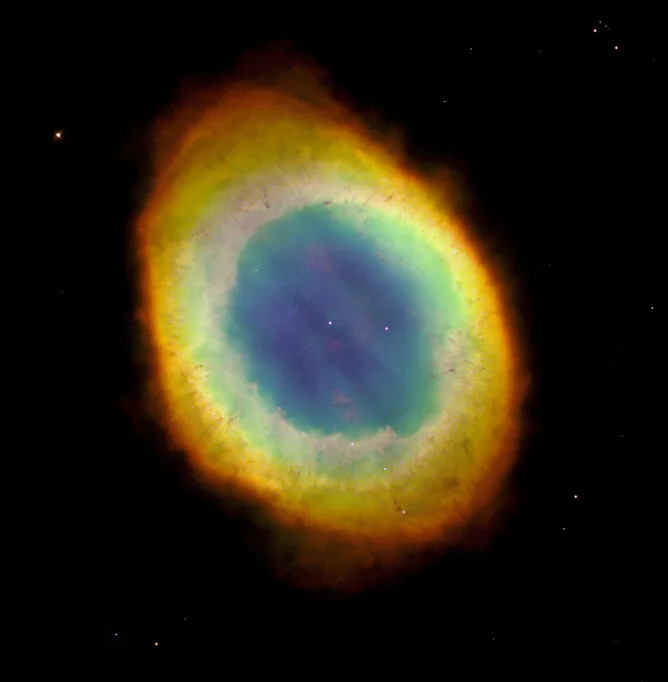
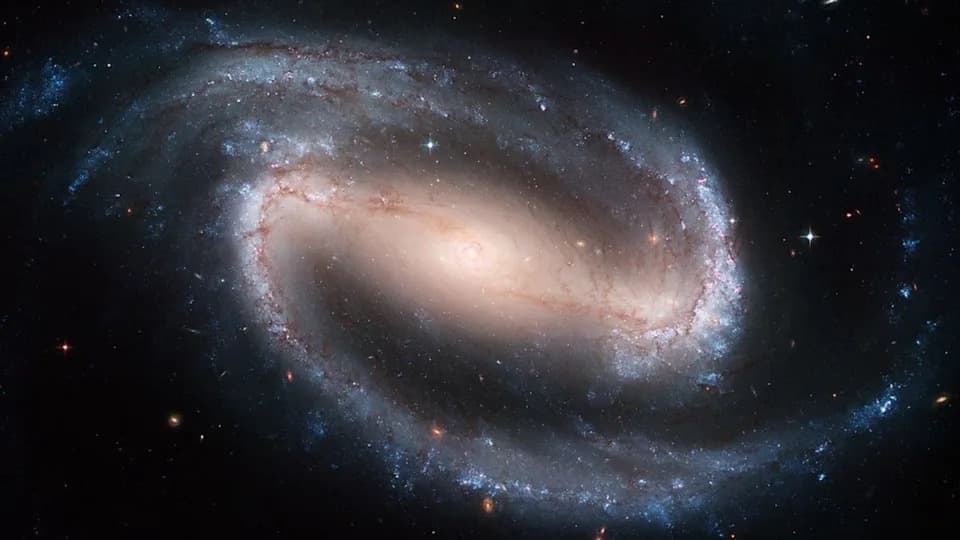
The Ring Nebula as seen by Hubble | Credit: NASA
"Even though the Ring Nebula has been studied with many telescopes, WEAVE has allowed us to observe it in a new way, providing so much more detail than before," said team leader Roger Wesson of University College London (UCL). "By obtaining a spectrum continuously across the whole nebula, we can create images at any wavelength and determine chemical composition at any position."
How It Was Detected
WEAVE's Large Integral Field Unit (LIFU) mode uses a dense bundle of optical fibres to record a continuous spectrum across the entire face of the nebula. This allowed the team to isolate the spectral signature of ionized iron and produce wavelength-specific images — a capability that made the iron bar visible for the first time.
Possible Origins and Next Steps
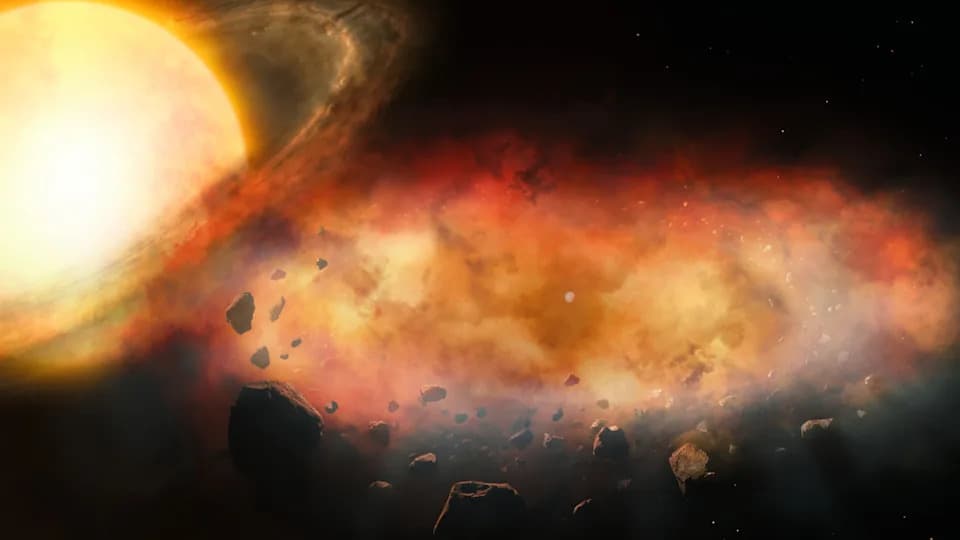
The origin of the iron bar remains uncertain. The team proposes two leading hypotheses: the bar may trace an asymmetric ejection channel from the dying star, or it could be the vaporized remains of an orbiting rocky planet that was engulfed as the star expanded into its red-giant phase. If the latter is correct, the finding offers a dramatic glimpse of processes that could affect planets around Sun-like stars late in their lives.
"We definitely need to know more — particularly whether any other chemical elements co-exist with the newly detected iron, as this would probably tell us the right class of model to pursue," said UCL astronomer Janet Drew, a member of the team. "Right now, we are missing this important information."
To resolve these questions, the researchers are planning follow-up WEAVE observations in LIFU mode at higher spatial and spectral resolution to search for other elements and finer structural details. The team also intends to survey other planetary nebulae to see whether similar iron-rich features are common or rare.
"The discovery highlights the power of WEAVE and suggests more surprises await as we map nebulae in this way," said Scott Trager, WEAVE Project Scientist at the University of Groningen. The study was published on Jan. 15 in the journal Monthly Notices of the Royal Astronomical Society.
Help us improve.