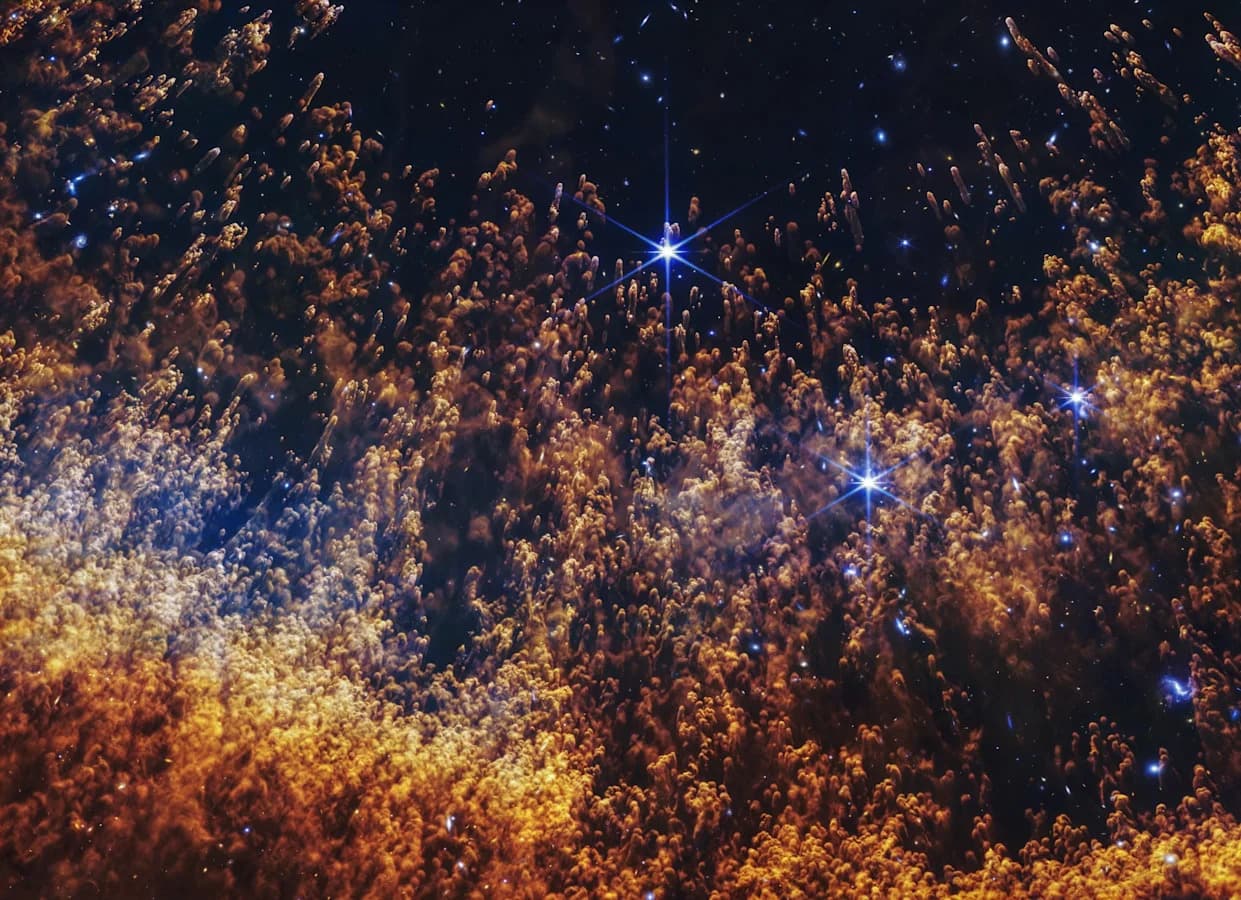
JWST's Near-Infrared Camera captured a striking close-up of the Helix Nebula (NGC 7293), revealing thousands of orange, comet-like pillars around a central white dwarf. The image uses color to map temperature and chemistry—from blue ionized gas near the star to yellow molecular hydrogen and deep-red cold dust. These expelled elements and dust enrich the galaxy with life-essential atoms and provide a preview of the Sun's expected fate in about five billion years.
JWST's 'Eye of God': New Near-Infrared Image Reveals the Helix Nebula's Stunning Final Act
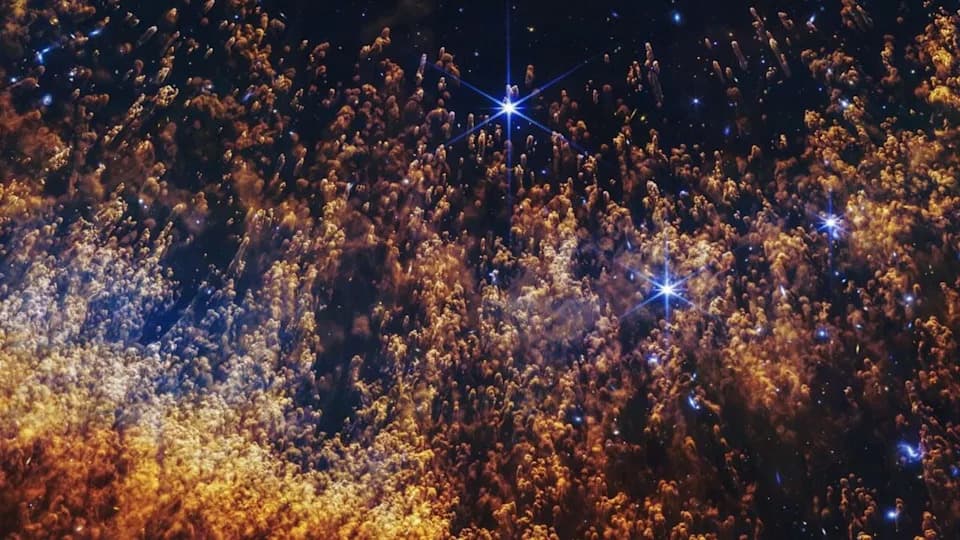
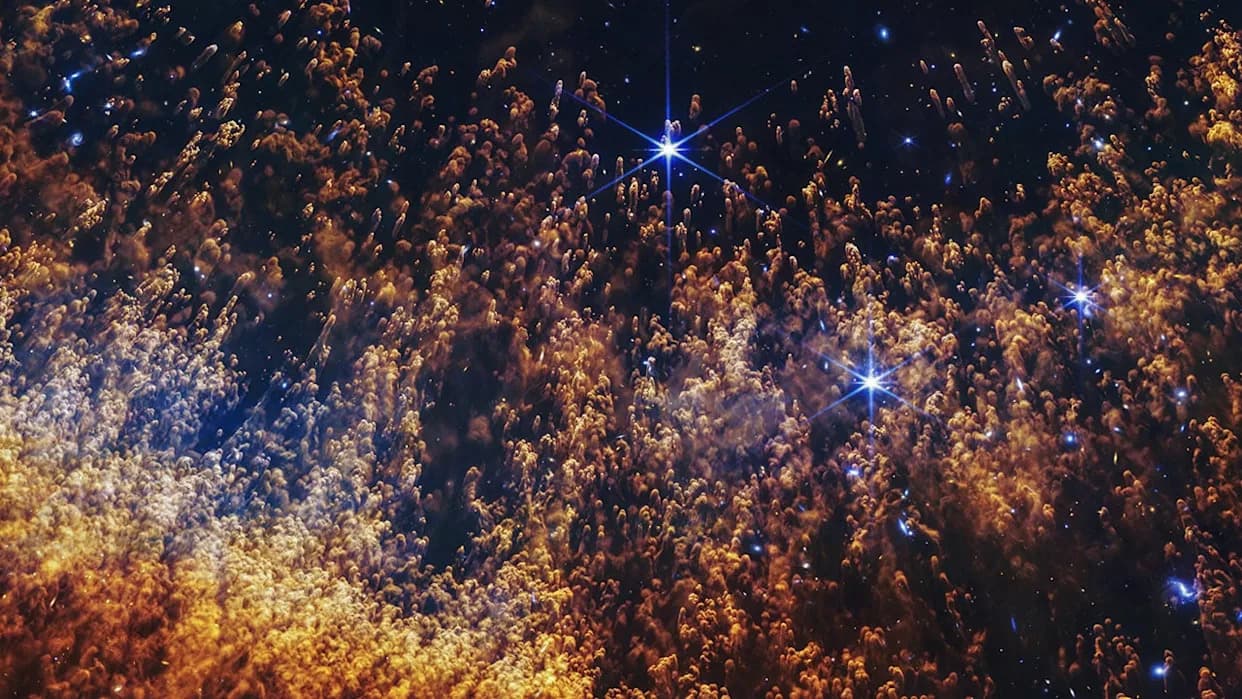
The James Webb Space Telescope's new image of the Helix Nebula reveals comet-like knots, stellar winds and dramatic gas transitions. | Credit: NASA, ESA, CSA, STScI, A. Pagan (STScI)
A breathtaking new near-infrared image from the James Webb Space Telescope (JWST) offers an unprecedented close-up of the Helix Nebula, revealing the dramatic death throes of a sunlike star and a striking preview of our Sun's distant future.
Quick Facts
- Object: Helix Nebula (NGC 7293 / Caldwell 63), a planetary nebula
- Distance: About 655 light-years away
- Constellation: Aquarius
- Instrument: JWST Near-Infrared Camera (NIRCam)
- Date Shared: Jan. 20, 2026
Often nicknamed the "Eye of God" or the "Eye of Sauron," the Helix Nebula is one of the nearest and most studied planetary nebulae. JWST's near-infrared sensitivity peels back layers of dust and gas to show structures that previous telescopes could only hint at.
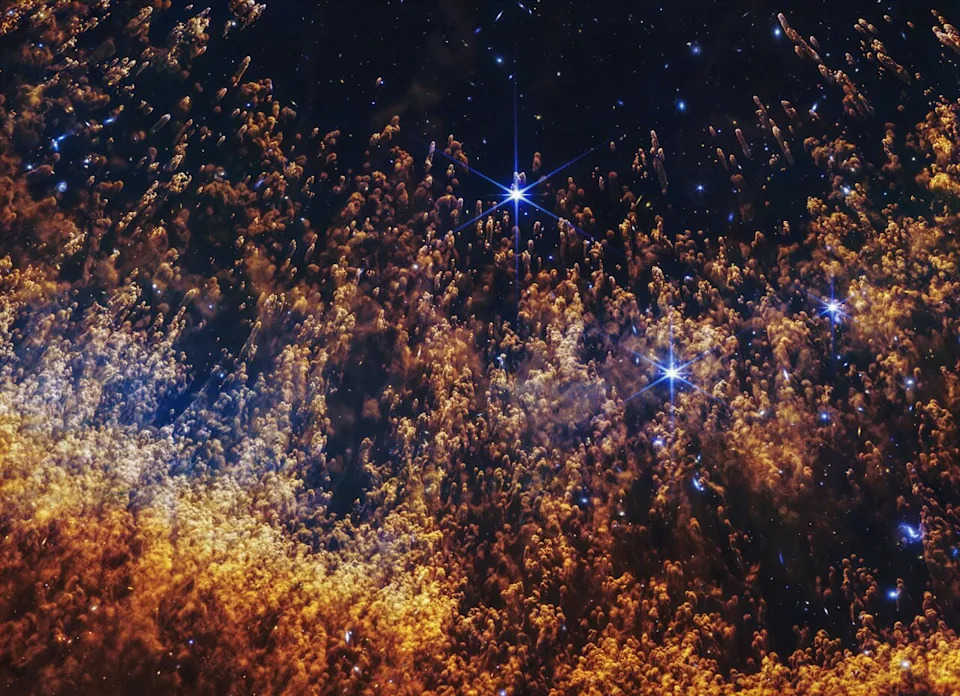
The James Webb Space Telescope's new image of the Helix Nebula reveals comet-like knots, stellar winds and dramatic gas transitions. | Credit: NASA, ESA, CSA, STScI, A. Pagan (STScI)
A planetary nebula is not a planet but the shell of gas and fine dust cast off by a dying, sunlike star. At the center of the Helix sits a hot, dense white dwarf whose intense radiation ionizes the ejected material and makes the nebula glow. From our viewpoint, the emission takes on a helix- or corkscrew-like appearance.
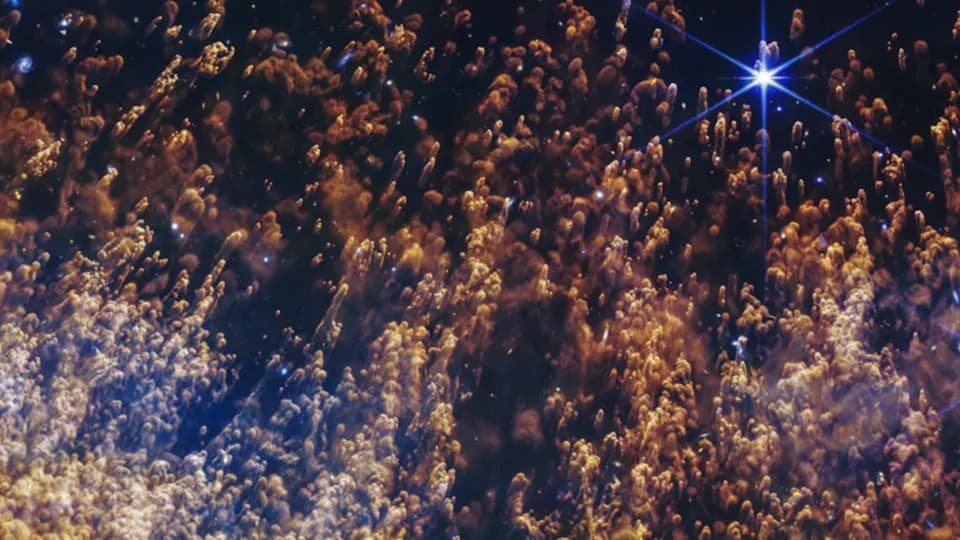
JWST's close-up reveals thousands of orange and gold, comet-shaped pillars known as "cometary knots." These dense knots mark boundaries where fast stellar winds from the white dwarf collide with older, slower shells of gas expelled earlier in the star's life, sculpting the complex, filamentary landscape visible in the image.
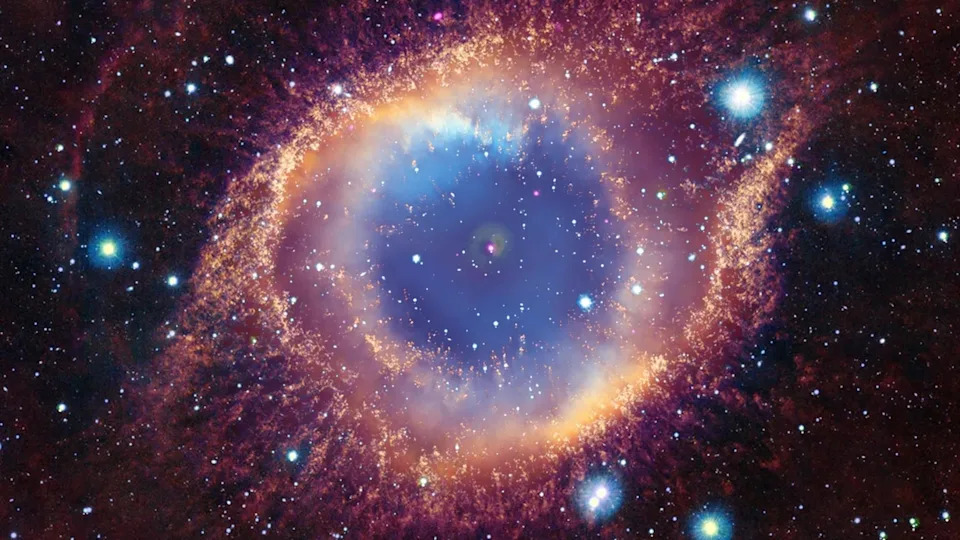
A zoomed-out view of the Helix Nebula taken with multiple telescope observations | Credit: NASA/CXC/SAO/Univ Mexico/S. Estrada-Dorado et al.; Ultraviolet: NASA/JPL; Optical: NASA/ESA/STScI (M. Meixner)/NRAO (T.A. Rector); Infrared: ESO/VISTA/J. Emerson; Image Processing: NASA/CXC/SAO/K. Arcand
Color in the JWST image is used to indicate temperature and chemistry. Near the central white dwarf, ultraviolet and energetic radiation produce blue tones from hot, ionized gas. Farther out, molecular hydrogen glows in yellow hues, while deep-red tones trace cooler dust. These filter-enhanced colors help astronomers map how radiation and density change across the nebula.
Far from merely beautiful, the Helix Nebula is a cosmic recycling center: elements such as carbon, oxygen and nitrogen expelled by the dying star will mix into interstellar space and help seed future stars and planets.
This scene also serves as a plausible blueprint for the Sun's fate. In roughly five billion years our star will expand into a red giant, shed its outer layers and leave behind a white dwarf — a process that will produce structures similar to those captured in the Helix.
For more spectacular space imagery and context, see our Space Photo of the Week archives.
Help us improve.