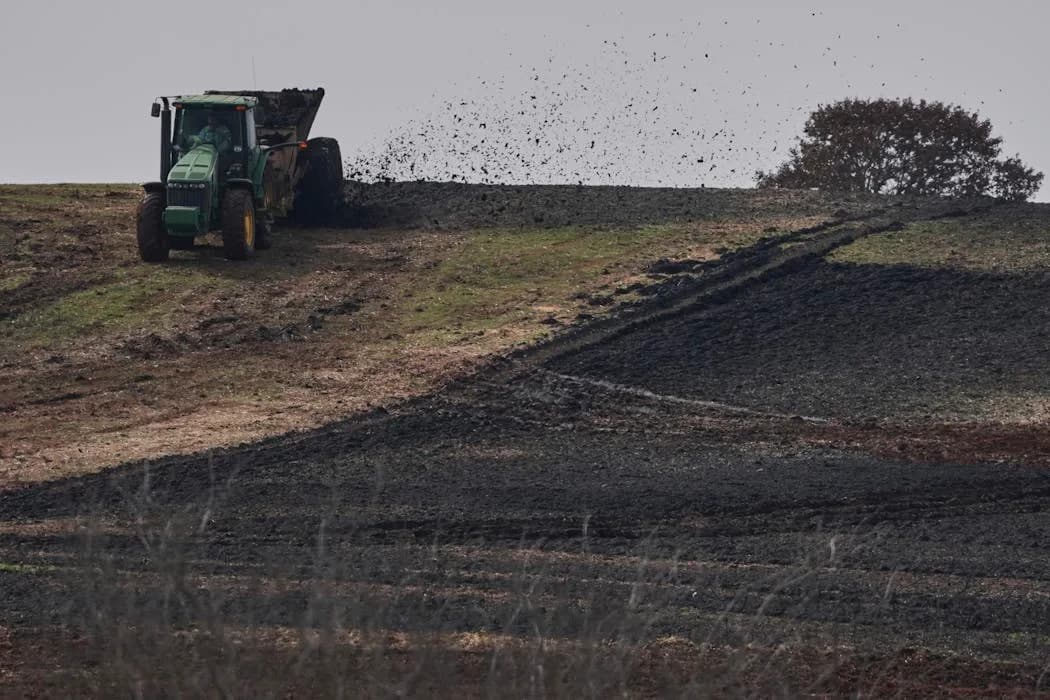
The study found that adding nitrogen to soil increased millet protein and lowered carbohydrate content, making fields less attractive to Senegalese grasshoppers. In trials with 100 farmers in central Senegal, fertilized plots had fewer pests, less damage and higher yields. Researchers are testing compost-based alternatives to commercial fertilizer to improve cost and accessibility. Scientists warn that climate change and land-use practices will continue to influence locust outbreak risk.
Protein-Rich Crops May Deter Locust Swarms — Senegal Field Trials Show Promise
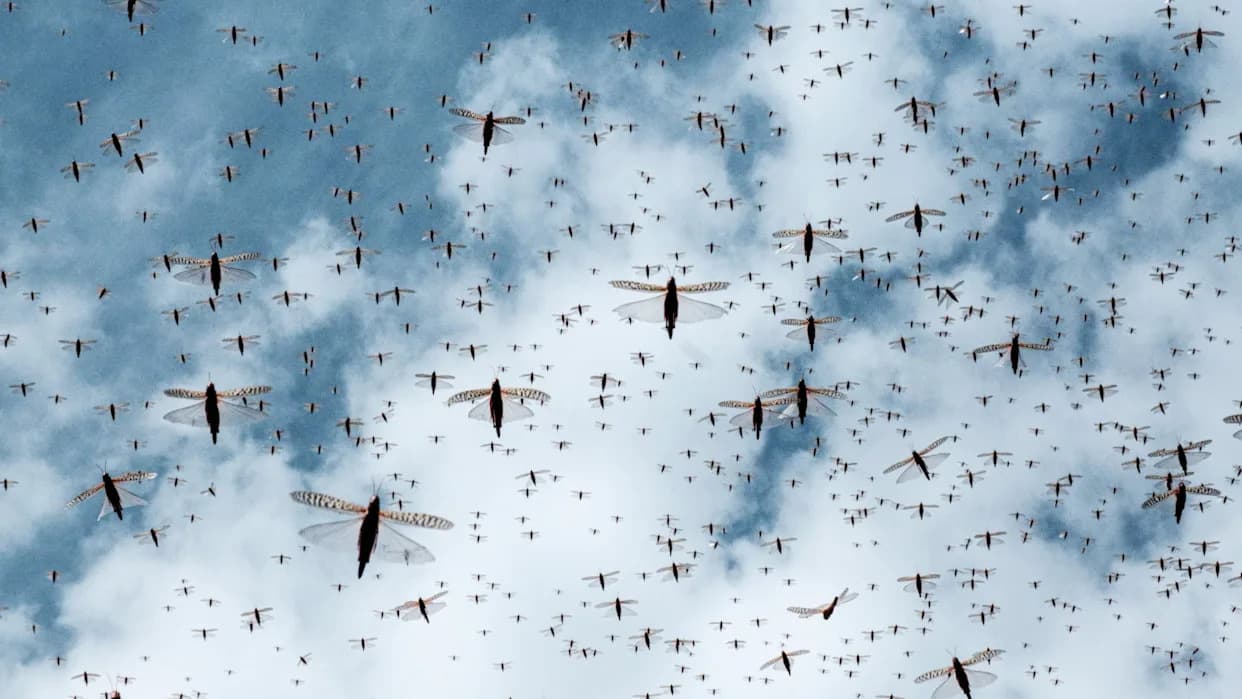
A swarm of desert locusts fly after an aircraft sprayed pesticide in Meru, Kenya in 2021.
Swarms of locusts stripping fields bare may sound apocalyptic, but major infestations are a recurring threat to farming communities worldwide. These dense aggregations of certain grasshopper species can span hundreds of square miles, consume vast amounts of vegetation and threaten food and economic security. In the western United States, for example, grasshopper and cricket outbreaks on rangelands cause an estimated $1.2 billion in annual losses.
A new study published in Scientific Reports by researchers from Gaston Berger University (Senegal), the Global Locust Initiative at Arizona State University (ASU), and local farmers suggests a simple, soil-based strategy to reduce one species' swarming potential: adding nitrogen to fields to raise crop protein and lower carbohydrate content.

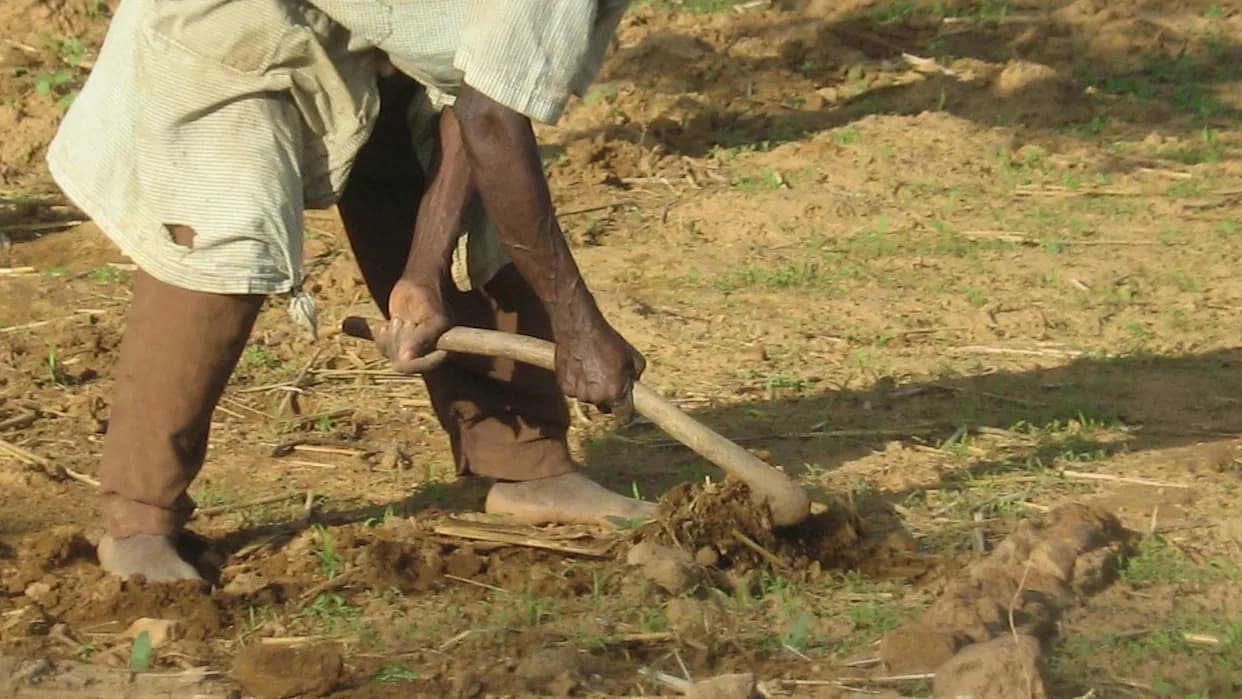
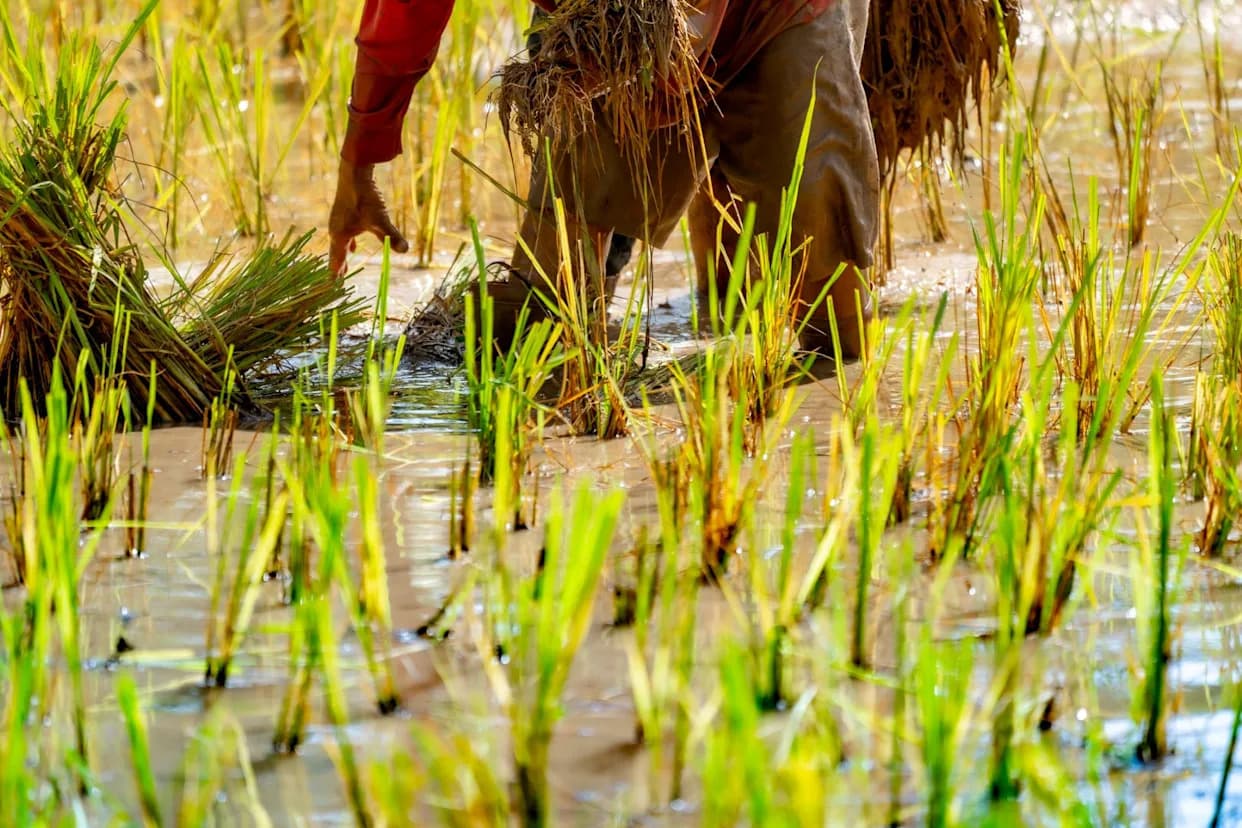
An ASU and international research team partnered with 100 farmers from two villages in Senegal for the study. Farmers grew two plots of millet—one treated with nitrogen fertilizer and one untreated. Here, a Senegalese farmer works in the field during the experiment.Image: courtesy Arianne Cease.
Field Trials and Key Findings
Over several months in central Senegal, the research team worked with 100 farmers across two village areas. Each farmer planted millet in paired plots: one treated with commercial nitrogen fertilizer and one left untreated. Scientists surveyed pest abundance and crop damage three times during the growing season.
The results were clear: fertilized plots produced millet with higher protein and lower carbohydrate levels, experienced significantly lower Senegalese grasshopper (Oedaleus senegalensis) abundance and less damage, and yielded more grain.
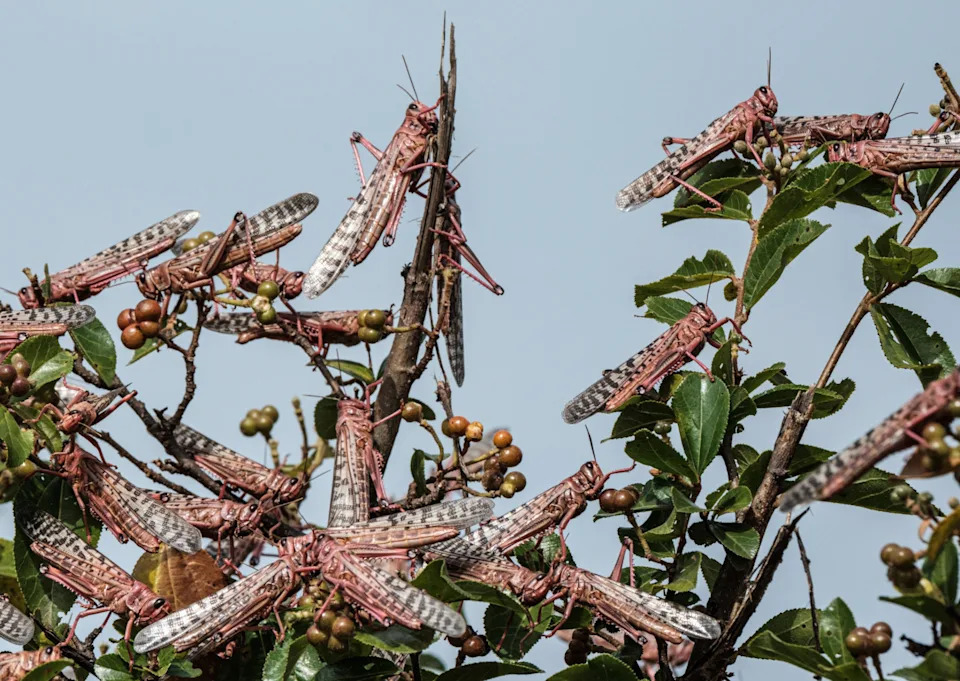
Desert locusts covering the tree branches in Meru, Kenya on February 9, 2021. The United Nations Food and Agricultural Organisation works with a variety of Kenyan security, logistics and charter companies who have expanded their operations to closely track swarms of locusts in East Africa, before dispatching teams to targeted areas to spray the insects with pesticides to prevent damage to crops and grazing areas.Image: Photo by YASUYOSHI CHIBA/AFP via Getty Images.
Why This Works
Senegalese grasshoppers — like many locust-forming grasshoppers — rely on carbohydrate-rich plants to build the fat reserves that drive rapid reproduction and long-distance migration. By shifting crop nutrient profiles toward protein and away from carbs, treated fields become a less suitable food source for fueling population growth and swarming behavior.
Arianne Cease, director of ASU's Global Locust Initiative: "Locust outbreaks are a highly complex, highly impactful global challenge... We need a diverse set of strategies to sustainably manage them."
The study is among the first to demonstrate this nutritional, soil-based outbreak-management approach for the Senegalese grasshopper — a species with locust-forming tendencies. (Not all grasshoppers become migratory locusts; only a small fraction of species form true swarms.)

A Senegalese farmer and study participant inspects ripening millet in a field.Image: Photo courtesy Marion Le Gall.
Broader Context and Challenges
Across the Horn of Africa, the Arabian Peninsula and southwestern Asia, desert locust plagues have caused widespread damage; the 2019–2021 outbreak required an estimated $300 million in control costs. Scientists warn that climate change — warmer temperatures, increased soil moisture and more cyclonic rainfall — is raising the likelihood of outbreaks by creating ideal breeding conditions.
Daniel Gebregiorgis, climate scientist, Georgia State University: "Because of global warming, many regions are receiving above-average rainfall... With increasing cyclonic activity, this fundamental shift in climate acts as the most important trigger for locusts."
Practical scaling is a concern: outbreaks often occur in remote areas where logistics, infrastructure and farm-level resources are limited. To address cost and accessibility, the Senegalese team led by locust biologist Mamor Touré is testing compost and organic amendments as lower-cost alternatives to commercial nitrogen fertilizer.
Implications
This research highlights how simple changes in soil management can alter crop nutrient composition and influence pest behavior, offering a potentially sustainable complement to pesticides and biocontrol. By positioning farmers as active participants in outbreak prevention, the approach may also help shift perceptions of locusts from mysterious punishments to ecological outcomes linked to land use and climate.
Next steps include wider trials using compost-based fertilizers, cost-benefit analyses for smallholder adoption, and testing the approach against other locust- or grasshopper-prone crops and regions.
Help us improve.