Decades of routine fertilizer use have created widespread "legacy phosphorus" in U.S. soils—often far beyond what crops require. Although phosphorus binds to soil, erosion and runoff can carry it into waterways where it fuels algal blooms and creates low-oxygen dead zones like the Gulf of Mexico summer hypoxic area. Outdated soil tests commonly misestimate plant-available phosphorus, leading to unnecessary applications. Improved testing and smarter nutrient-management practices can reduce pollution, save farmers money and protect water and ecosystem health.
Legacy Phosphorus: How Excess Fertilizer on U.S. Farmland Is Polluting Waterways
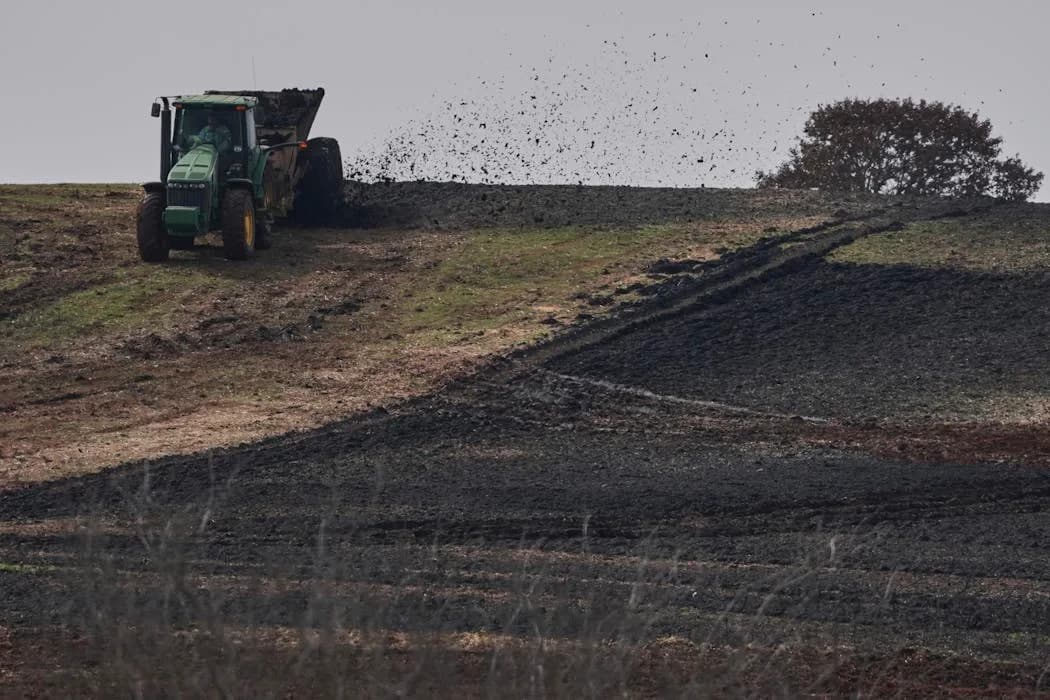
A spreader sprays sewage sludge, which is rich in phosphorus, across a farm in Oklahoma.AP Photo/Joshua A. Bickel
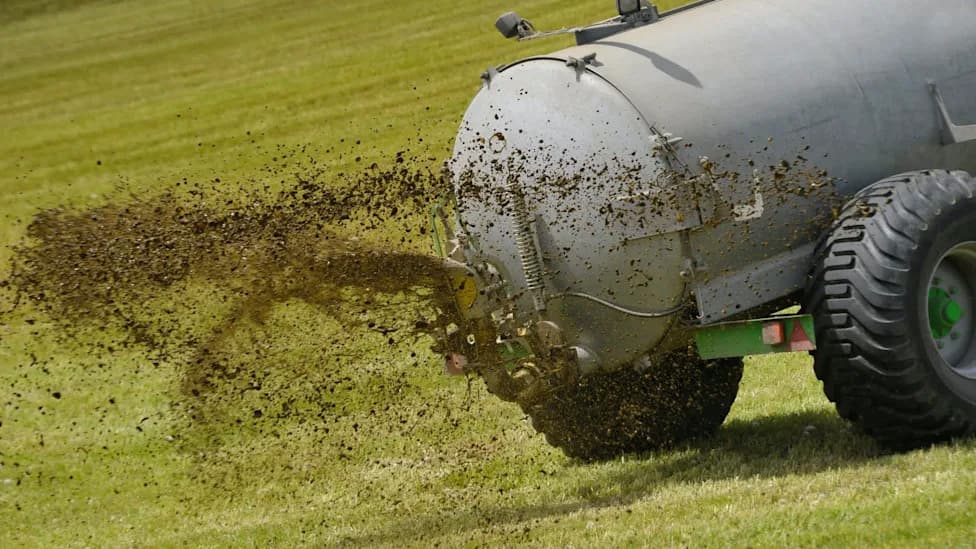
When people picture agricultural pollution, they often imagine visible scenes: fertilizer spreaders rolling across fields or muddy runoff after a storm. Yet a quieter and more consequential problem has been accumulating beneath the surface for decades.
Across some of America’s most productive agricultural regions, soils have built up large reserves of phosphorus—often far beyond what crops actually need. Phosphorus is essential for root development and cellular processes that support plant growth, but when present in excess it becomes an environmental liability.
I am part of a research team working to map how much phosphorus is already stored in soils so we can recommend whether additional fertilizer is necessary for particular fields. Our work highlights a growing imbalance between historical fertilizer practices and the risk those practices pose to water quality.
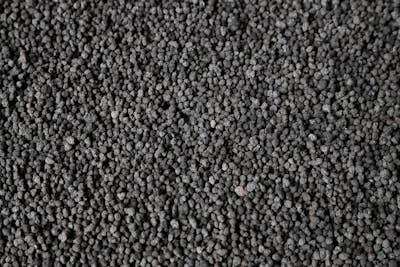
Pellets of monoammonium phosphate fertilizer.AP Photo/Paul Sancya
How Phosphorus Accumulates
Phosphorus is one of the three primary nutrients plants require—along with nitrogen and potassium. For generations, applying phosphorus fertilizer was treated as an insurance policy: if a farmer was unsure about a soil’s reserves, adding a little extra seemed safer than risking a shortfall. Fertilizer was relatively affordable and the long-term consequences were poorly understood.
Unlike nitrogen, which can volatilize into the air or leach readily into groundwater, phosphorus binds tightly to soil particles and tends to remain where it is applied. That property made phosphorus seem less risky. But decades of routine applications have produced an unintended result: soils with a growing stockpile of what scientists call legacy phosphorus.
Scale And Evidence
Since the mid-20th century, U.S. farmers have applied hundreds of millions of tons of phosphate fertilizer. Between 1960 and 2007, annual U.S. phosphate fertilizer consumption rose from about 5.8 million to more than 8.5 million metric tons. In recent decades use has continued to climb—for example, phosphorus applications in corn production increased by nearly 30% from 2000 to 2018. Crops absorb only part of that input, and surplus phosphorus accumulates in soils over time.
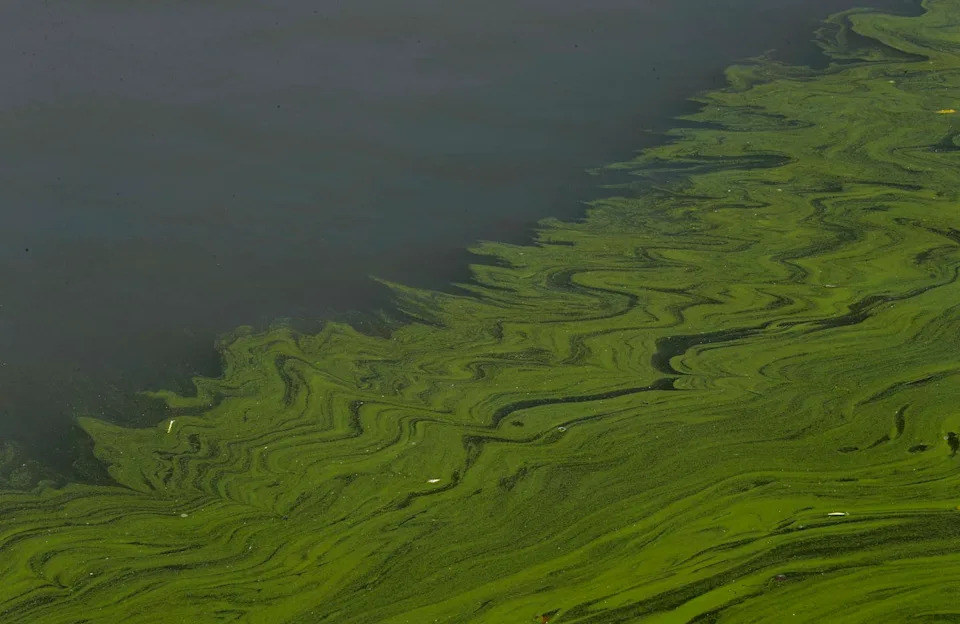
Algae float on the surface of Lake Erie.AP Photo/Paul Sancya, File
In some regions—parts of Florida being a notable example—agricultural soils contain phosphorus concentrations more than ten times higher than levels considered sufficient for healthy plant growth. Legacy phosphorus is therefore not hypothetical; it is a measurable, widespread phenomenon.
Why Excess Phosphorus Threatens Water
If legacy phosphorus remained chemically inaccessible, the consequence would mainly be wasted fertilizer expense. The bigger problem is that phosphorus can move off fields. Rainfall, irrigation and erosion can carry phosphorus—either dissolved in runoff or attached to eroded soil particles—into streams, rivers, canals and lakes. Once in the water, phosphorus fuels algal growth (eutrophication), which can turn clear water green and, when blooms die, deplete oxygen and create low-oxygen "dead zones."
Two high-profile U.S. examples are the Florida Everglades, where phosphorus-driven eutrophication has harmed wetland ecology, and the Gulf of Mexico summer hypoxic zone, which can cover roughly 6,500 square miles (about 16,835 km²). Some algal blooms also produce toxins that threaten drinking-water supplies, prompting boil-water advisories and higher treatment costs for downstream communities.
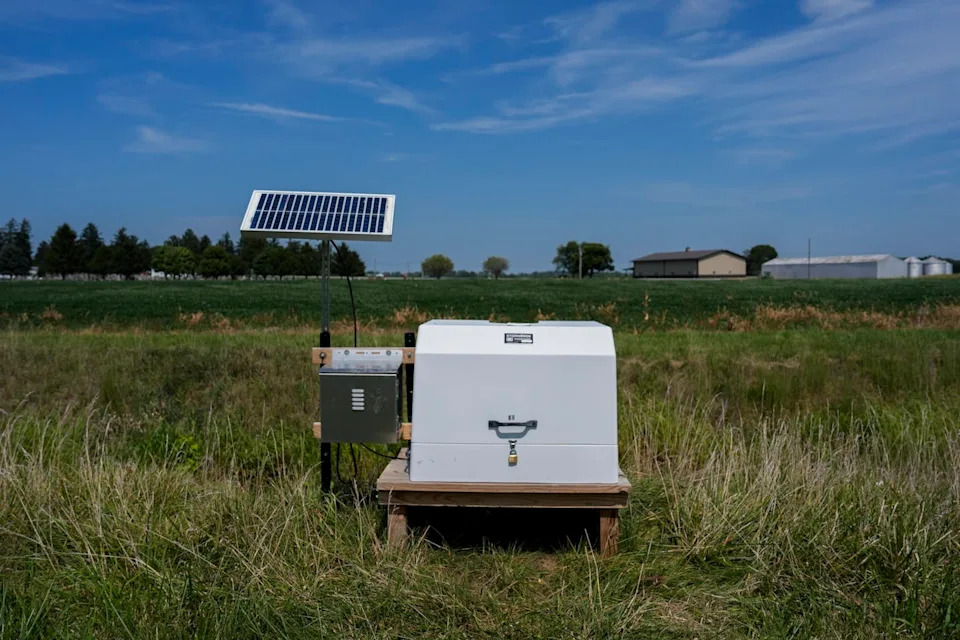
A phosphorus monitor operates next to a small stream near an agricultural field in Ohio.AP Photo/Joshua A. Bickel
Measurement Gaps: Why Farmers Still Add Phosphorus
One major reason unnecessary phosphorus continues to be applied is that conventional soil tests are outdated for many modern soils. Most tests were developed decades ago and use acids to extract phosphorus from soil samples. These chemical extractions were designed to be broadly applicable, but soils vary widely. In soils with high organic matter (for example, >20%), acids used in tests can be partially neutralized, causing the test to underestimate how much total phosphorus is present. Conversely, tests often measure total phosphorus rather than the portion that is plant-available, so test results can mislead recommendations.
The result: farmers may follow test-based recommendations that add fertilizer with little crop benefit but a higher risk of pollution. This mismatch is a problem with the tools, not with growers doing their best under uncertain conditions.
Solutions: Better Measurement and Smarter Management
The goal is not to eliminate phosphorus fertilization—crops still need it—but to apply only what is needed. Researchers are developing improved diagnostic methods that better represent how plants access phosphorus. Some approaches mimic root behavior to estimate plant-available phosphorus more realistically; others measure a soil’s capacity to hold phosphorus before it begins releasing excess to waterways. These methods can identify fields where farmers can reduce or pause phosphorus applications, allowing crops to draw down legacy stores.
Complementary management practices can further reduce losses: targeted fertilizer placement and timing, precision-application technologies, cover crops, buffer strips, and nutrient-management planning (for example, the 4R framework: right source, rate, time and place). Together these approaches can reduce pollution, save farmers money and protect drinking water and aquatic ecosystems without sacrificing productivity.
Looking Ahead
Legacy phosphorus is a slow-moving problem built up over decades and hidden beneath our feet, but its impacts are increasingly visible in algal blooms, fish kills and drinking-water contamination. Improved testing and smarter nutrient management offer practical ways to reverse the trend—field by field—while sustaining agricultural production.
This article is republished from The Conversation. It was written by Dinesh Phuyal, University of Florida. The author reports no conflicts of interest or funding from organizations that would benefit from this analysis.
Help us improve.