
The Electoral Count Reform Act of 2022 tightened procedures for counting presidential elections, but experts say it cannot alone prevent new, subtler attacks on democracy. On Jan. 6’s fifth anniversary, analysts warned of legal, administrative and technical threats ahead of the midterms and 2026 — including federal attempts to centralize election power and collect sensitive voter data, wide-ranging voter restrictions enacted in 2025, politicized local election structures, and litigation over executive actions. The consensus: legal fixes help, but long-term defenses require public engagement, stronger local capacity, clearer communication, and judicial oversight.
The Next Threat To Free, Fair Elections Won’t Look Like Jan. 6 — Experts Warn Of Legal, Bureaucratic, And Technical Attacks

After the Sept. 11 attacks, the Federal Aviation Administration required cockpit doors to be reinforced and kept locked — a technical fix that experts say prevented another hijacking even as broader counterterrorism measures continued. In the same vein, the Electoral Count Reform Act of 2022 strengthened the rules for counting presidential elections, but experts warn it is not a cure-all.
On the fifth anniversary of Jan. 6, voting and election experts shared their top concerns for the 2024–2026 election cycle. Their warnings point to a new kind of assault on democracy: one that relies less on mass violence and more on legal maneuvers, administrative influence, data grabs, and disinformation.
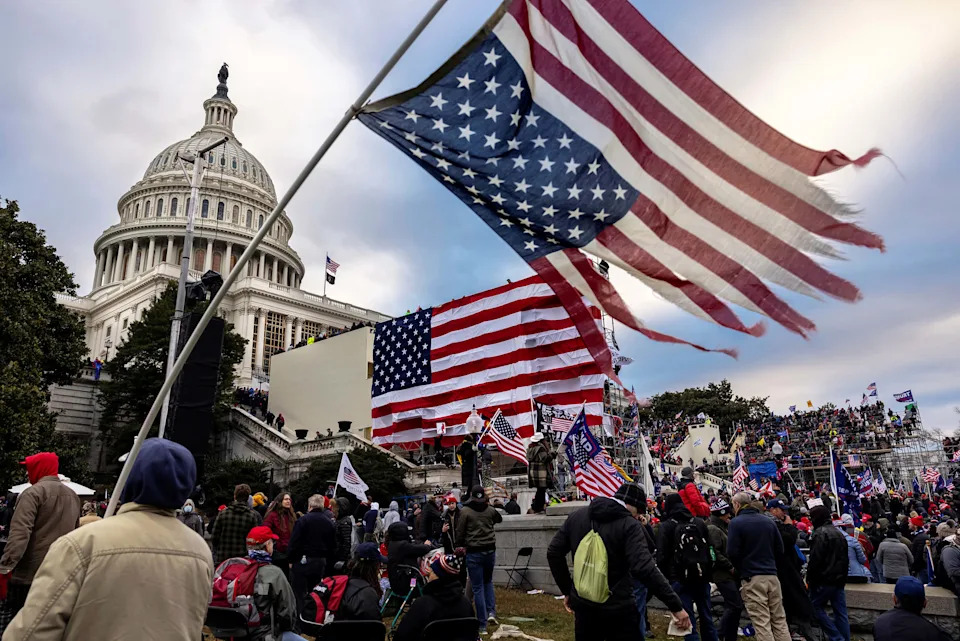
WASHINGTON, DC - JANUARY 6: Pro-Trump protesters gather in front of the U.S. Capitol Building on January 6, 2021 in Washington, DC. Trump supporters gathered in the nation's capital to protest the ratification of President-elect Joe Biden's Electoral College victory over President Trump in the 2020 election. A pro-Trump mob later stormed the Capitol, breaking windows and clashing with police officers. Five people died as a result. (Photo by Brent Stirton/Getty Images)(Brent Stirton / Getty Images)
Major Warning Signs From Experts
“In the five years since January 6, we’ve witnessed a deeply troubling normalization of election subversion — marked by the refusal of some political actors to accept legitimate results and the ensuing disregard for voters treated as collateral damage. When defeat itself is cast as illegitimate, bending the rules, laws, and processes becomes easier to justify. Instead of accountability, we now see systematic efforts to reshape the machinery of democracy: mid-decade redistricting, politicized election boards, weaponized voter data, and campaigns to exclude millions from being counted.”
— Chioma Chukwu, Executive Director, American Oversight
“My main concern is an unprecedented federal push to seize operational control over elections and to obtain sensitive voter data (Social Security numbers, driver’s license numbers, dates of birth). These actions risk undermining states’ traditional election authority and could create financial and privacy harms for voters while sowing confusion and mistrust.”
— David J. Becker, Executive Director and Founder, The Center for Election Innovation & Research
“We will have elections in 2026, but the open question is how free and fair they will be. The Justice Department is pursuing broad requests for sensitive voter information nationwide. States that resist are facing litigation; my firm is defending more than 20 states. The stakes for voter privacy and election integrity are high.”
— Marc Elias, Founder, Democracy Docket; Partner, Elias Law Group
“Nationalized policy shifts, reduced investment, and high turnover among election officials leave outcomes vulnerable to distrust. Trustworthy elections require ongoing support for the local workforce that runs them.”
— Matthew Weil, Vice President of Governance, Bipartisan Policy Center
“In the near term, many congressional races could face challenges over mail ballots received or counted after Election Day. Over the long term, complacency in safely partisan states risks a repeat of a localized, high-stakes dispute like Florida 2000.”
— Charles Stewart III, Director, MIT Election Data and Science Lab
“The wave of voter restriction laws recently enacted is disturbing. Nearly 60 million Americans live in states that adopted new rules in 2025 — many focused on voter ID — which could disenfranchise or intimidate eligible voters.”
— Lauren Kunis, Executive Director, VoteRiders
“There remains a large knowledge gap between how elections are actually secured and what the public believes. Local officials perform extensive cyber, physical, and operational safeguards; we must better communicate that work so voters can have confidence in the process.”
— Jennifer Morrell, CEO & Co-Founder, The Elections Group
“I worry federal law enforcement and executive actors will try to tilt outcomes. The March 2025 Voting Executive Order included provisions that courts have already struck down — and we should expect continued litigation and attempts to change rules by executive fiat.”
— Anna Baldwin, Director of Voting Rights Litigation, Campaign Legal Center
“A glaring weakness is the lack of a unified opposition movement ready to defend results if major actors refuse to accept them.”
— Marisa Kabas, Founder, The Handbasket
“Anti-democracy actors have long sown doubt about elections. Today the risk is amplified by an administration stacked with officials who have promoted false election claims. The antidote remains engaged voters and principled, bipartisan officials who protect the process.”
— Joanna Lydgate, CEO, States United Democracy Center
“The greatest risk is that intentional chaos and intimidation will demoralize the public into thinking they cannot defend democracy. It’s incumbent on all citizens to resist that narrative and act to preserve democratic norms.”
— Skye Perryman, President & CEO, Democracy Forward
Taken together, experts highlight: a federal push for expanded election authority and mass voter data collection; litigation over executive actions; a surge of state-level voting restrictions affecting tens of millions; politicization of local election administration; operational risks around mail ballots and post–Election Day counting; and the ongoing spread of disinformation. Legal reforms like the Electoral Count Reform Act help, but safeguarding elections will require sustained public engagement, better communication about security practices, robust local administration, bipartisan oversight, and continued litigation where rules are abused.
Subscribe: This is a preview of MS NOW’s Project 47 Newsletter. Get expert analysis on the administration’s actions and responses — delivered every Tuesday.
Originally published on MS NOW.
Help us improve.


