Researchers analyzing Juno Microwave Radiometer data from 2022 estimate Europa’s outer, conductive ice layer is roughly 18 miles (28.9 km) thick. An inner convective layer could raise the total thickness, while dissolved salts would lower it by about 3 miles (5 km). A thicker shell would make transfer of oxygen and nutrients from the surface to the subsurface ocean more difficult, complicating prospects for life. The study was published Dec. 17 in Nature Astronomy.
Juno Measures Europa’s Ice Shell at ~18 Miles Thick — A Setback for Habitability Hopes
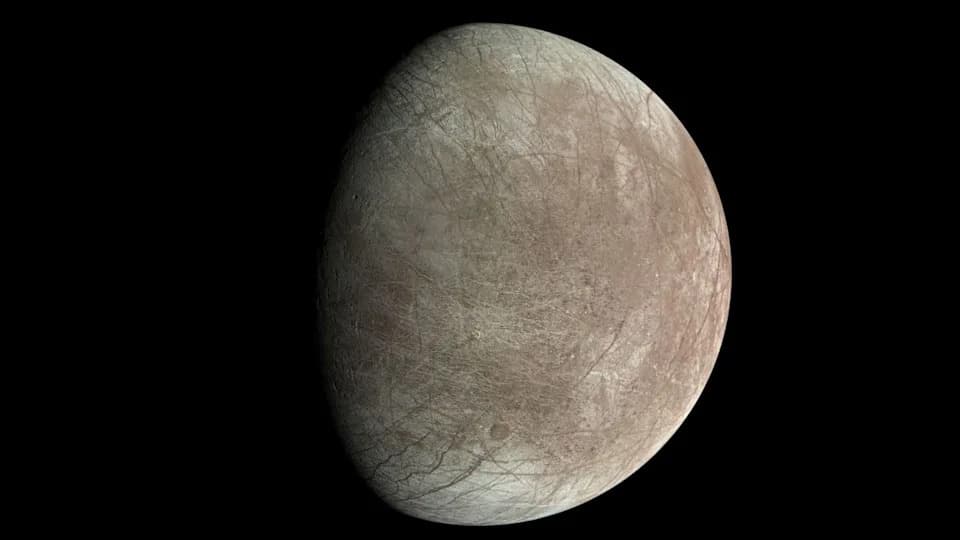
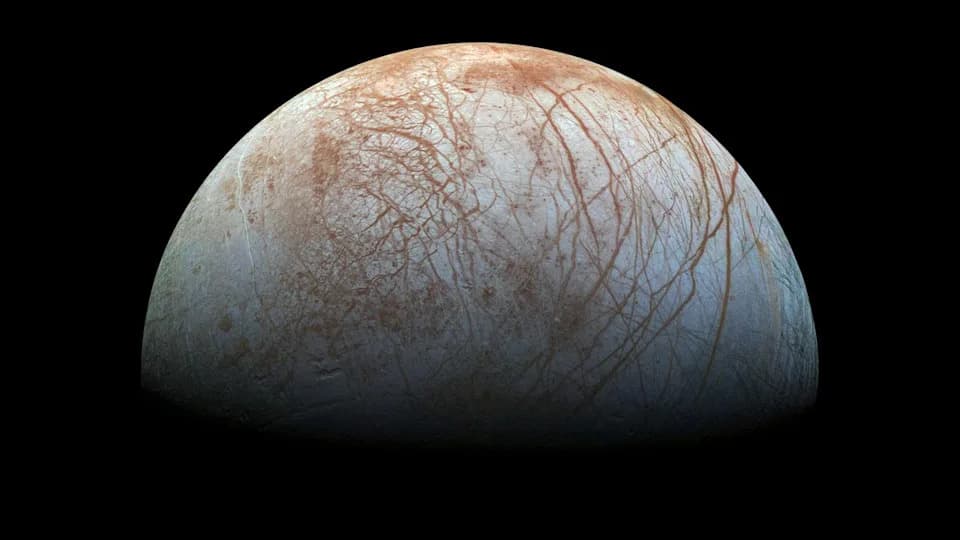
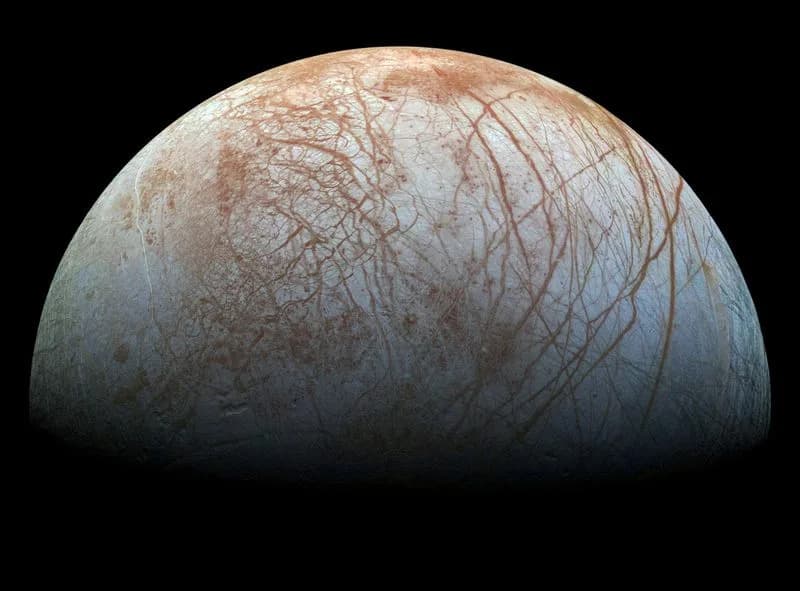
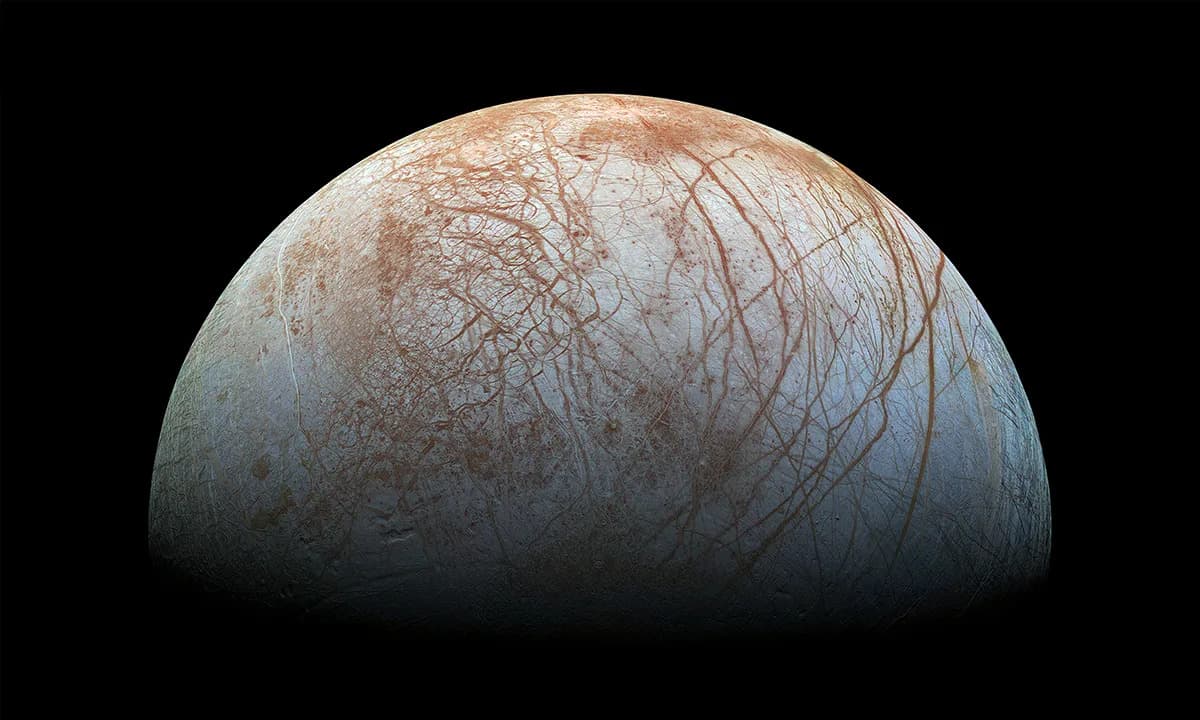
The Jupiter moon Europa was captured by the JunoCam instrument aboard NASA’s Juno spacecraft during the mission’s close flyby on Sept. 29, 2022. The images show the fractures, ridges, and bands that crisscross the moon’s surface. | Credit: NASA/JPL-Caltech/SwRI/MSSS. Image processing: Björn Jónsson (CC BY 3.0)
NASA’s Juno spacecraft has provided new evidence that Jupiter’s icy moon Europa is covered by a much thicker outer ice layer than some researchers hoped — and that may make it harder for the moon to host life.
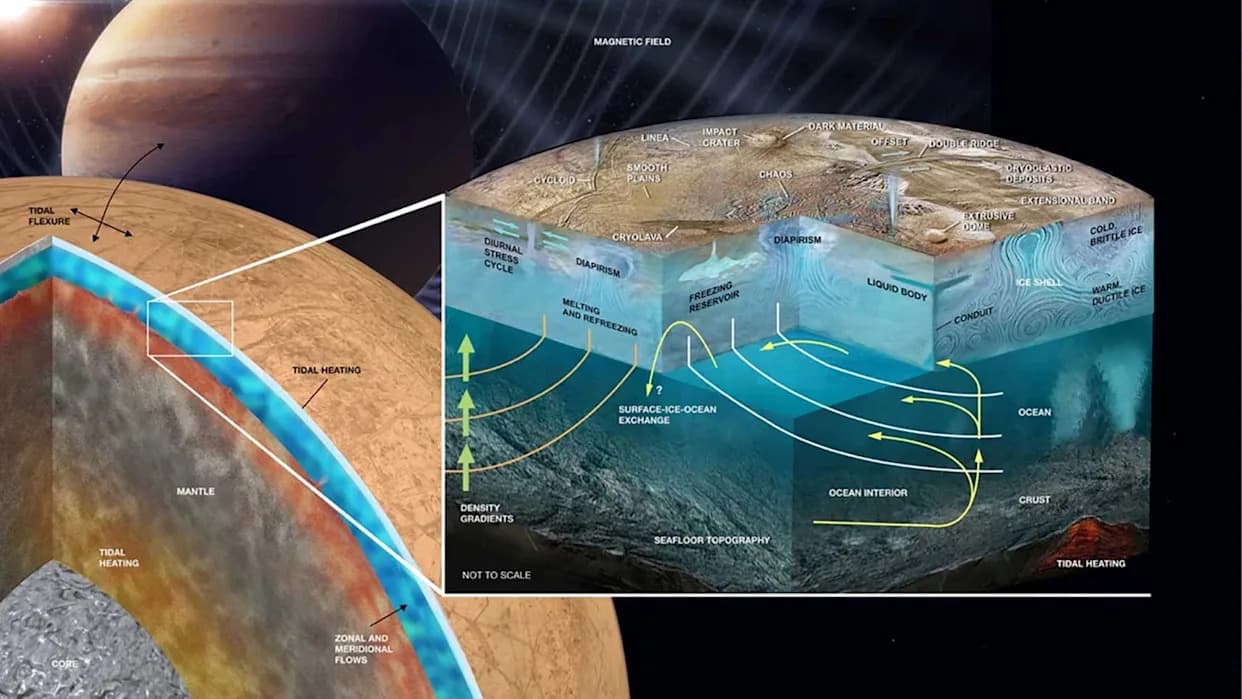
Using measurements from Juno’s Microwave Radiometer collected in 2022, researchers at NASA’s Jet Propulsion Laboratory estimate the cold, rigid, conductive outer layer of Europa’s ice shell is about 18 miles (28.9 km) thick. That estimate applies specifically to the outer conductive layer; if an inner, warmer convective layer exists the total ice thickness could be larger. Conversely, models that include a modest amount of dissolved salt in the ice would reduce the estimate by roughly 3 miles (5 km).
What This Means
The thickness and internal structure of Europa’s ice are key to assessing whether surface-derived oxygen and nutrients can reach the subsurface ocean where the chemical ingredients for life might exist. A thicker ice shell lengthens the pathway and may slow or limit exchange between the surface and ocean.
"The 18-mile estimate relates to the cold, rigid, conductive outer layer of a pure water ice shell," said Steve Levin, Juno project scientist and co-investigator at JPL. He added that a warmer inner layer would increase total thickness, while salts would reduce it.
Scott Bolton, Juno’s principal investigator at the Southwest Research Institute, emphasized that features such as cracks, pores, or convection within the ice remain crucial unknowns for understanding Europa’s potential habitability.
Context And Next Steps
Europa’s icy surface was first identified during Voyager 2’s 1979 flyby and later confirmed by the Galileo orbiter in the 1990s. The new Juno-based results were published Dec. 17 in Nature Astronomy. These findings will help guide observations by upcoming missions: NASA’s Europa Clipper is scheduled to arrive in the Jovian system in 2030 to study Europa’s habitability, followed by the European Space Agency’s JUICE mission in 2031.
Help us improve.