The Washington State University study argues that salt‑enriched, radiation‑altered ice on Europa could become dense enough to sink through the moon’s ice shell and deliver minerals and oxidants to the subsurface ocean. This crustal‑delamination–like process is driven by Jupiter’s tidal forces and could provide the chemical energy and nutrients needed for potential life. Computer models indicate even trace salt levels may enable sinking, and future observations from NASA’s Europa Clipper could test the idea.
Salt‑Rich Ice May Sink and Deliver Nutrients to Europa’s Hidden Ocean
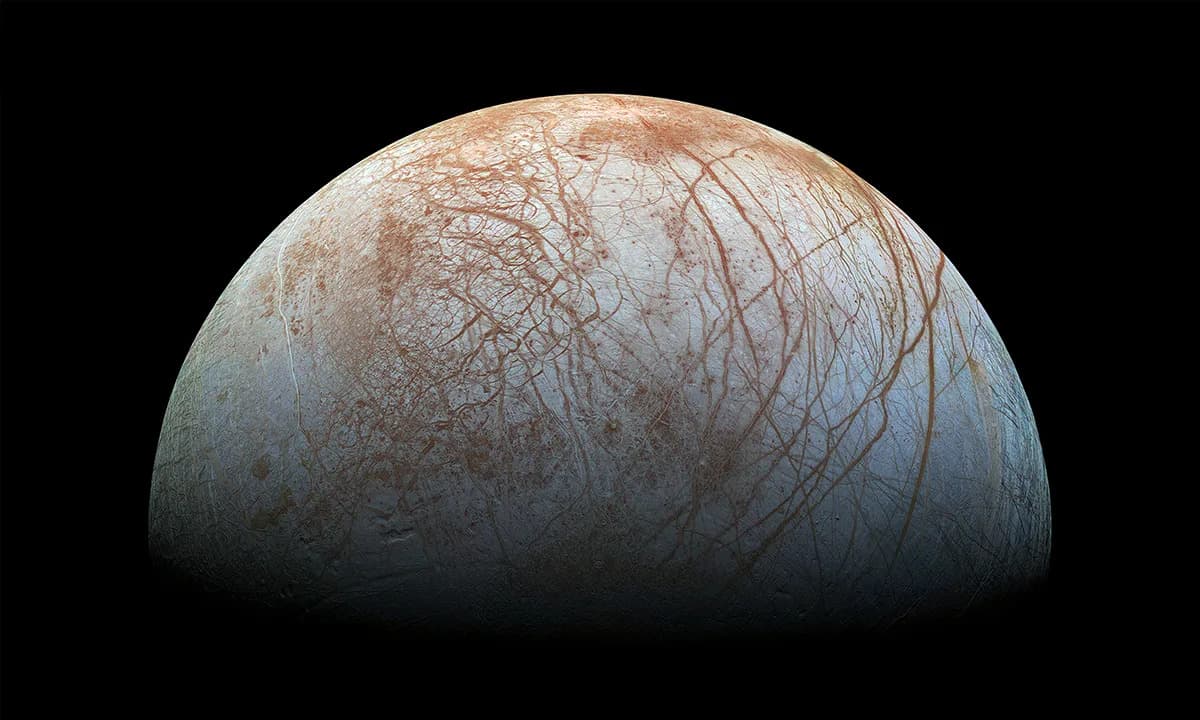
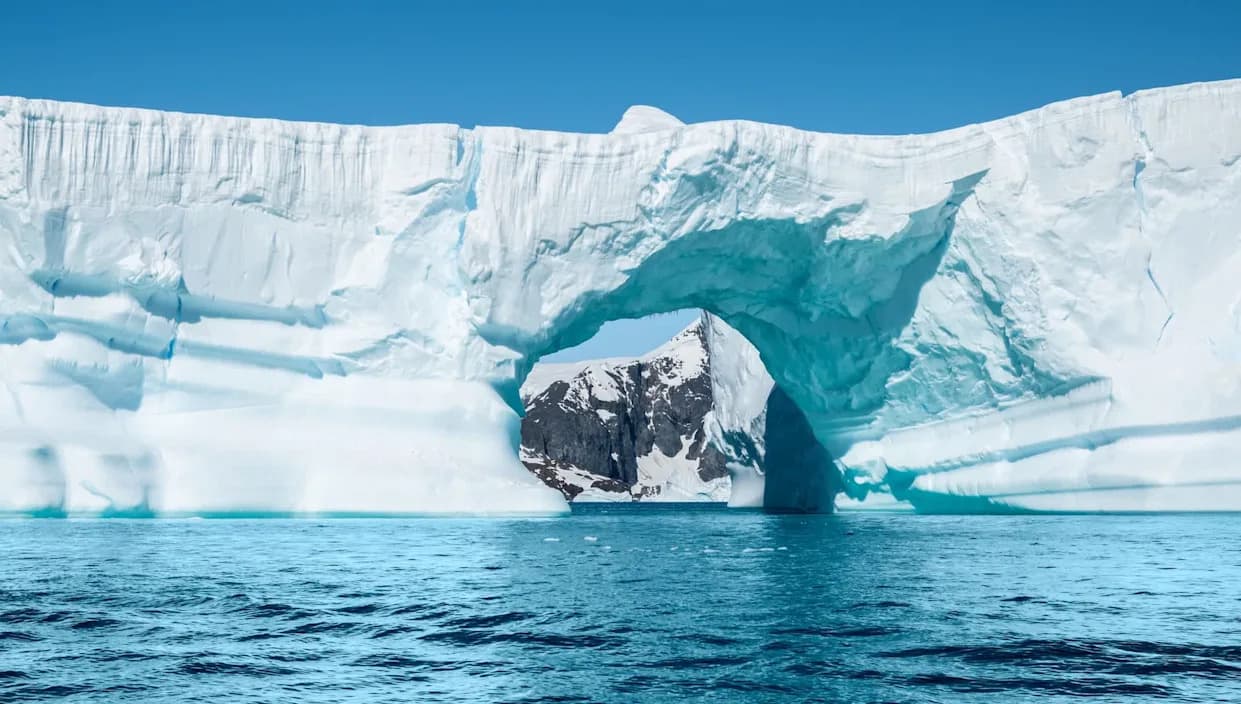
(Credit: David Hinkle/Wikimedia Commons)
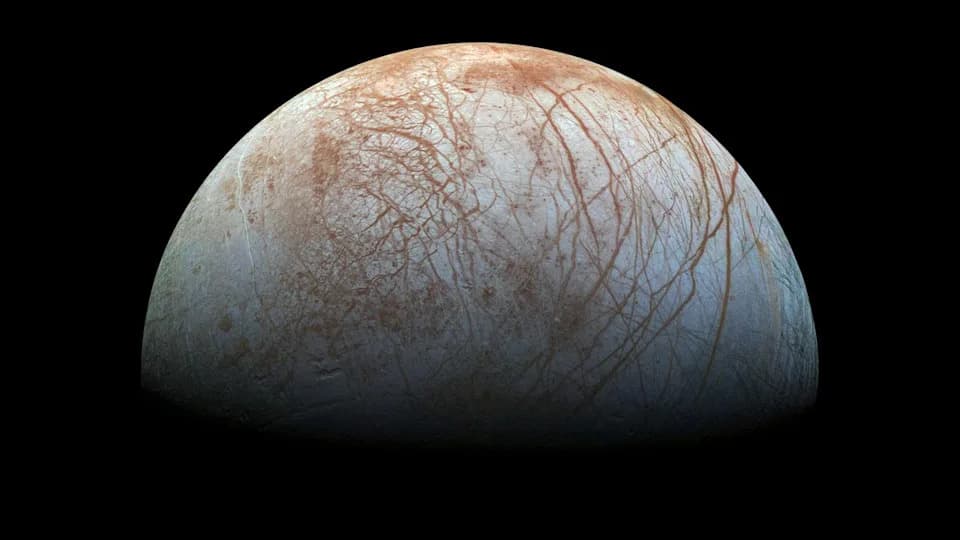
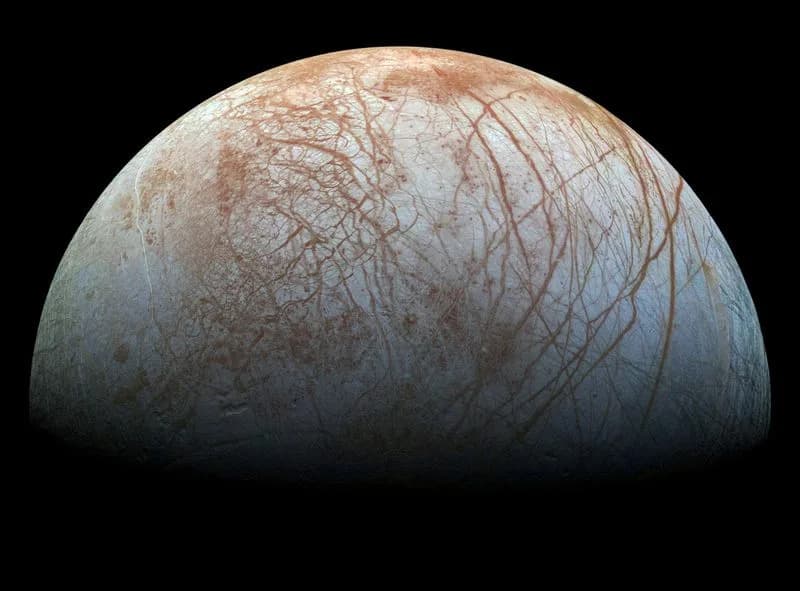
A new study from Washington State University explores how salt‑enriched surface ice on Jupiter’s moon Europa could descend through the moon’s icy shell and deliver minerals and chemicals to the deep subsurface ocean — potentially supplying the ingredients needed to support life.
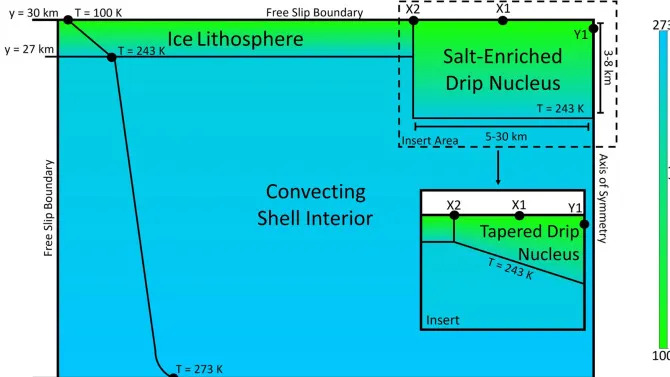
What the researchers propose. The team, led by Catherine Cooper and Austin Green, suggests a process analogous to crustal delamination on Earth: salt‑bearing, radiation‑altered surface ice becomes denser than surrounding purer ice and, under tectonic compression caused by Jupiter’s tidal forces, can detach and sink through the shell into deeper layers or the global ocean below.
Why this matters for habitability
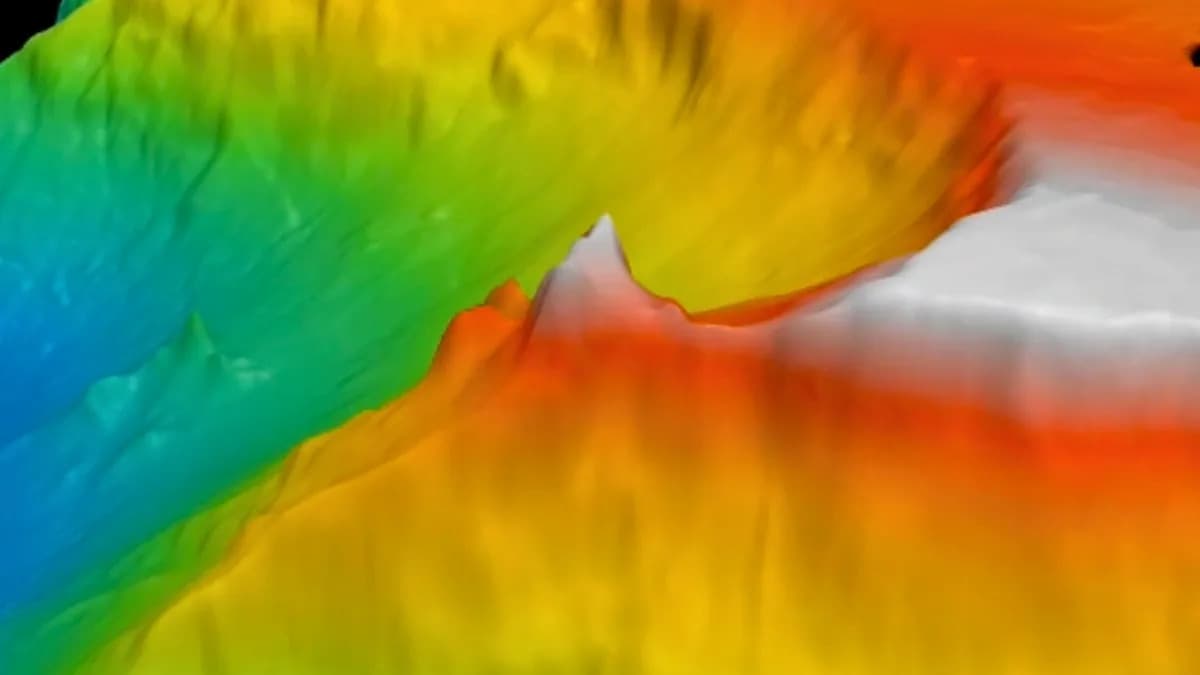
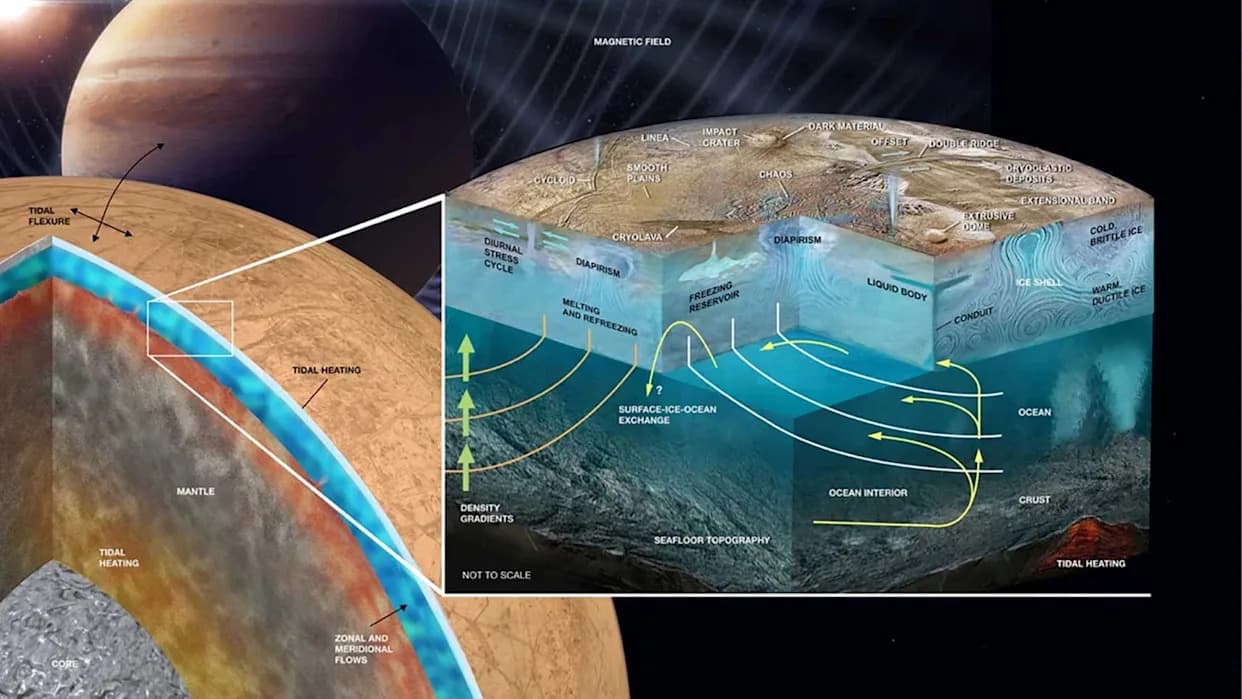
Europa Ice sinking diagram.
Europa’s ocean is isolated beneath a thick, light‑blocking ice shell, so any life there would likely depend on chemical (not photosynthetic) energy. Delivering salts and radiation‑created oxidants from the surface downward could provide essential nutrients and redox chemistry that sustain microbial ecosystems or create chemical energy gradients important for life.
Modeling results. Using computer models, the study finds that even very small amounts of salt are enough to increase ice density and permit downward sinking of compacted slabs or diapirs. Jupiter’s repeated tidal flexing creates regions of compression and extension that could concentrate and compact the altered surface ice, enabling this transport process.
How we might test it. The hypothesis makes testable predictions about surface composition, tectonic patterns, and the distribution of salts within Europa’s shell. NASA’s Europa Clipper mission, scheduled to arrive and begin observations in the early 2030s, could provide data to support or refute signs of downward transport of surface materials.
While the mechanism does not prove life exists on Europa, it identifies a viable pathway for supplying the chemical building blocks and energy sources that a subsurface biosphere would need.
Help us improve.