Protests in Iran have been suppressed, but the underlying economic and social grievances persist. Decades of sanctions, mismanagement and corruption have driven inflation above 42% and collapsed the rial, while shortages of water and power compound public anger. Tehran must weigh making major concessions on its nuclear, missile and proxy policies to win sanctions relief — a costly trade-off that could weaken the regime’s legitimacy. The IRGC’s growing power signals a shift toward military-led governance and an uncertain political future after Khamenei.
'Change Is Inevitable': Iran at a Crossroads After Bloody Protests
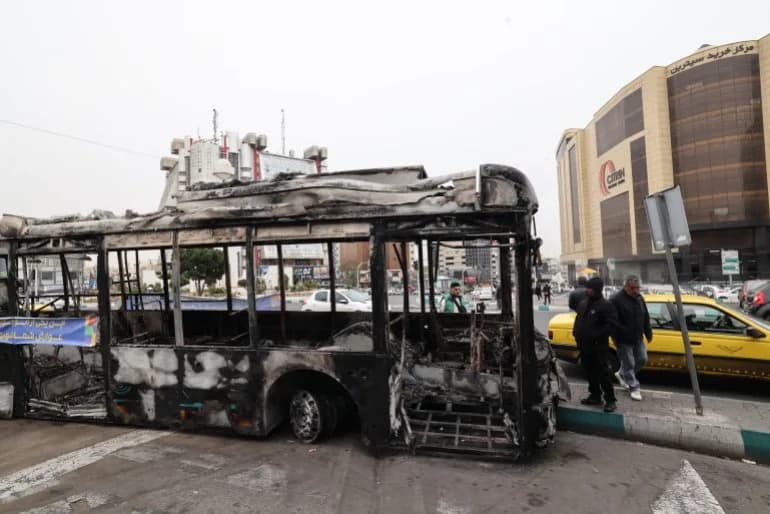
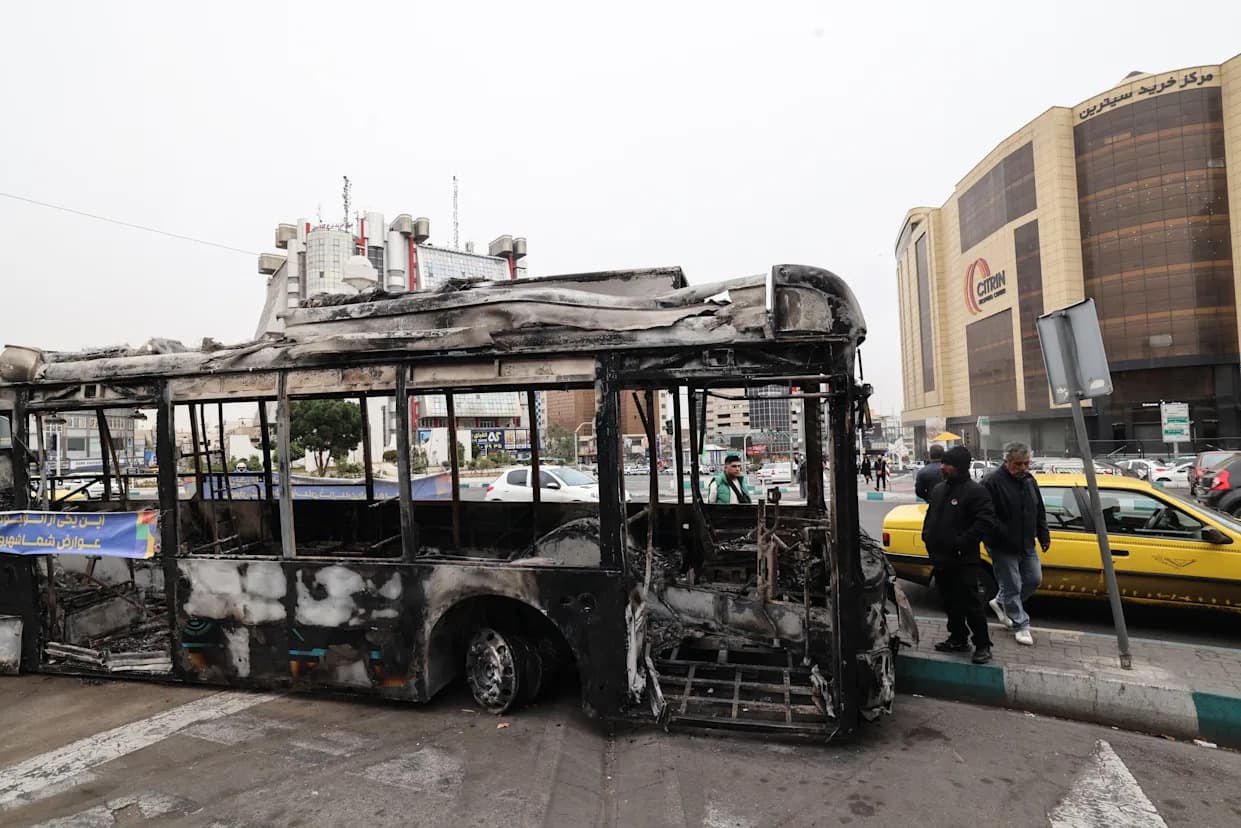
A photograph shows the wreckage of a burned bus bearing a banner that reads ‘This was one of Tehran’s new buses that was paid for with the money of the people’s taxes’, in Tehran [File: Atta Kenare/AFP]
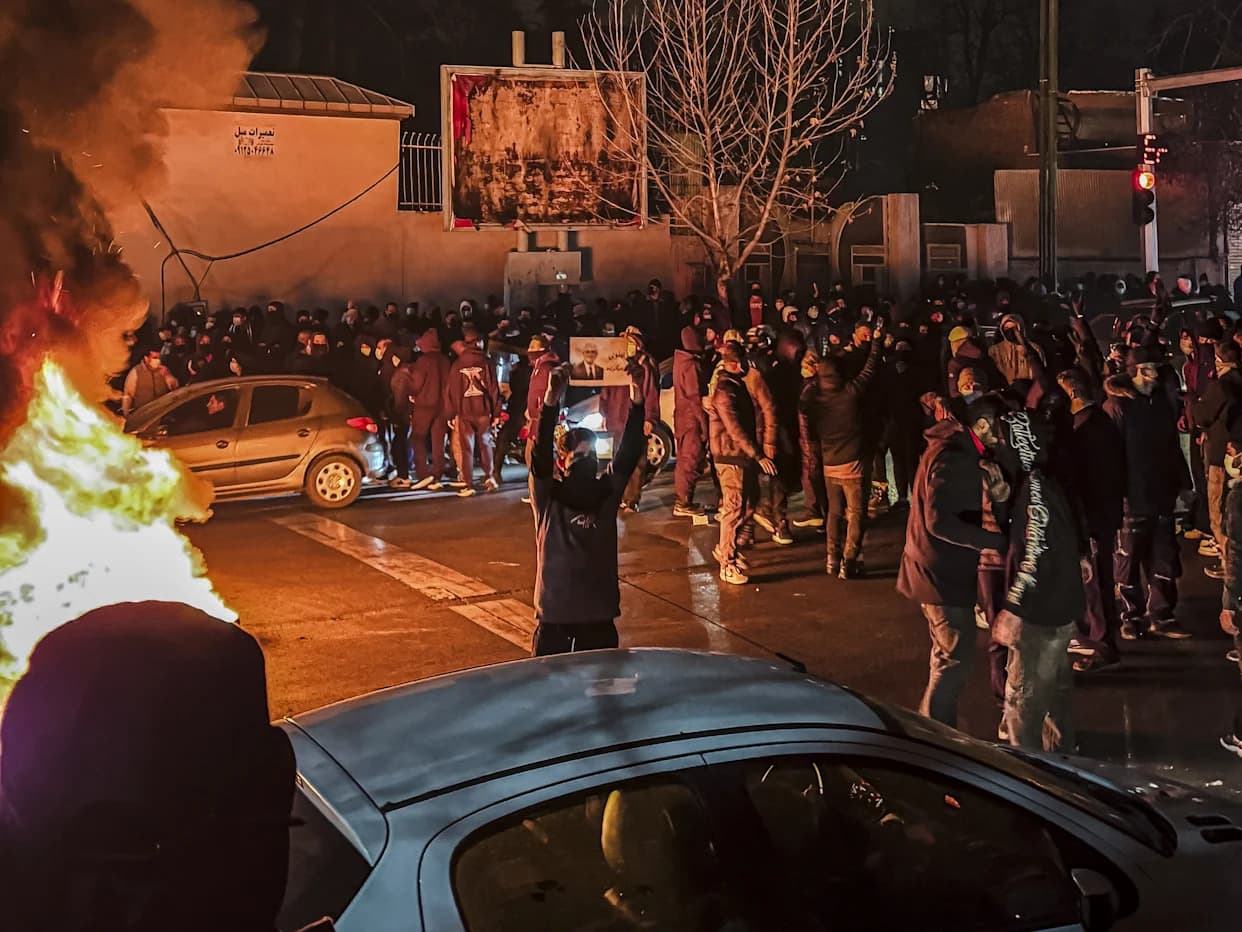
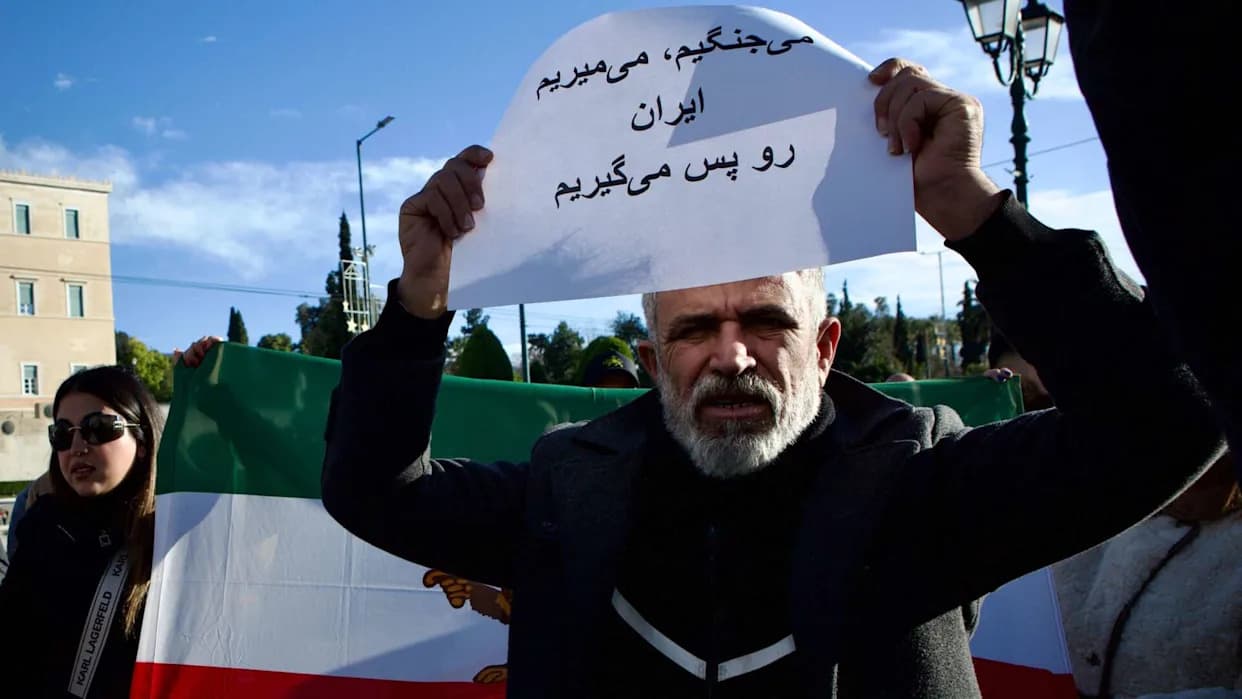
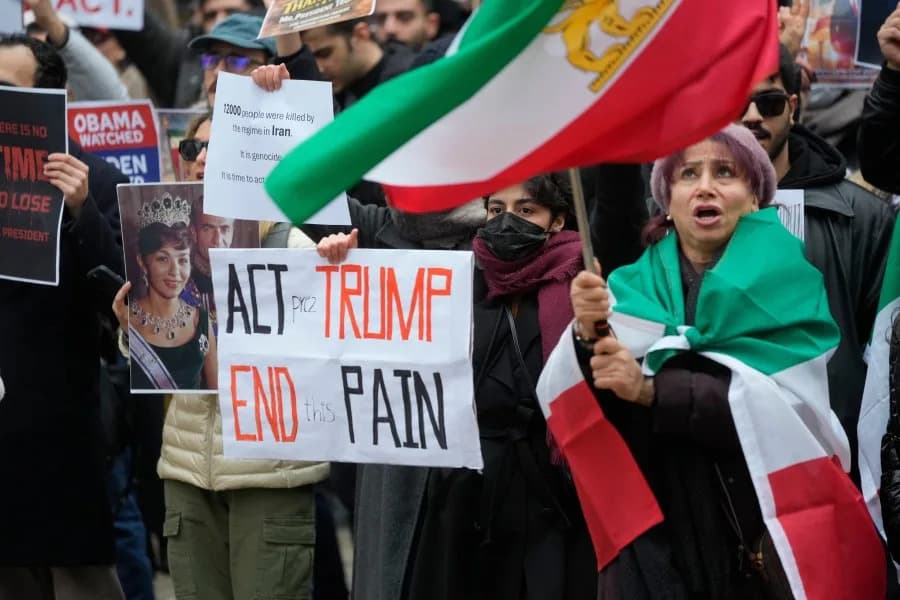
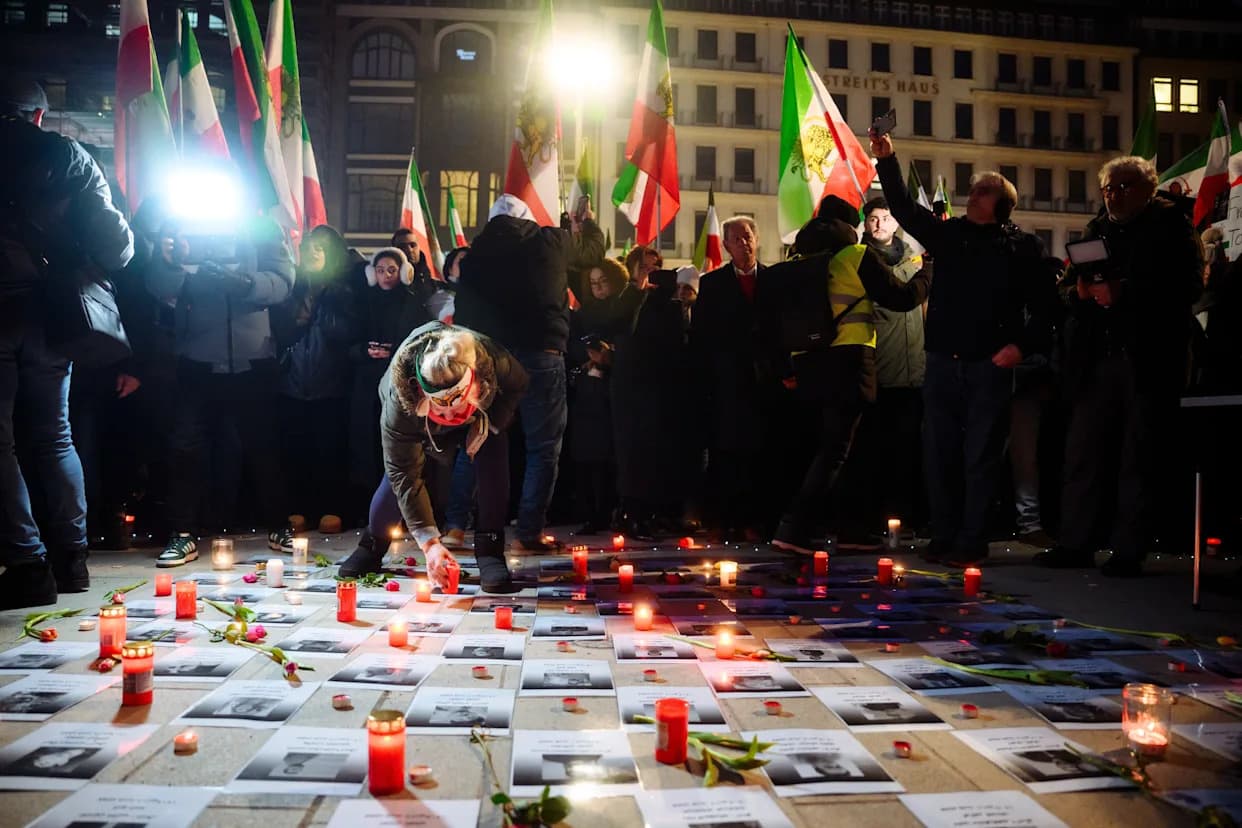
Protests that convulsed Iran in recent months have largely subsided and the authorities have, for now, reasserted control. Tens of thousands have been detained, business assets linked to alleged backers of the unrest have been seized, and many faces legal action on charges including terrorism.
But beneath this fragile calm the grievances that ignited the demonstrations remain: a collapsing currency, runaway inflation, chronic shortages of water and electricity, and the social dislocation that accompanies them. Experts warn Tehran faces a stark choice — pursue painful concessions to win sanctions relief and stabilise the economy, or risk renewed upheaval as domestic strain, regional setbacks and the threat of US military pressure mount.
Economic and Social Pressure
Decades of international sanctions combined with mismanagement and corruption have battered Iran’s economy. The rial has plunged, oil export revenues have declined, and inflation peaked above 42 percent last year, according to IMF data. Ordinary citizens also contend with frequent power outages and severe water shortages, intensifying popular anger.
Security Posture and Regional Strategy
Sanctions relief would likely require negotiations that touch on Iran’s core security pillars: its nuclear programme, ballistic missile capabilities and support for a network of allied non-state actors across the region. These elements underpin Tehran’s so-called "forward defence" strategy, intended to keep conflict away from Iranian territory. While Tehran has previously shown limited openness to nuclear restrictions, its missile programme and regional alliances have been treated as sacrosanct.
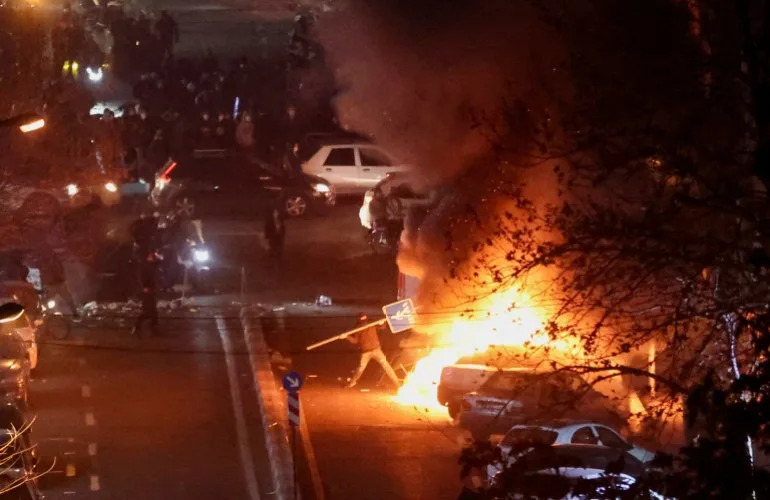
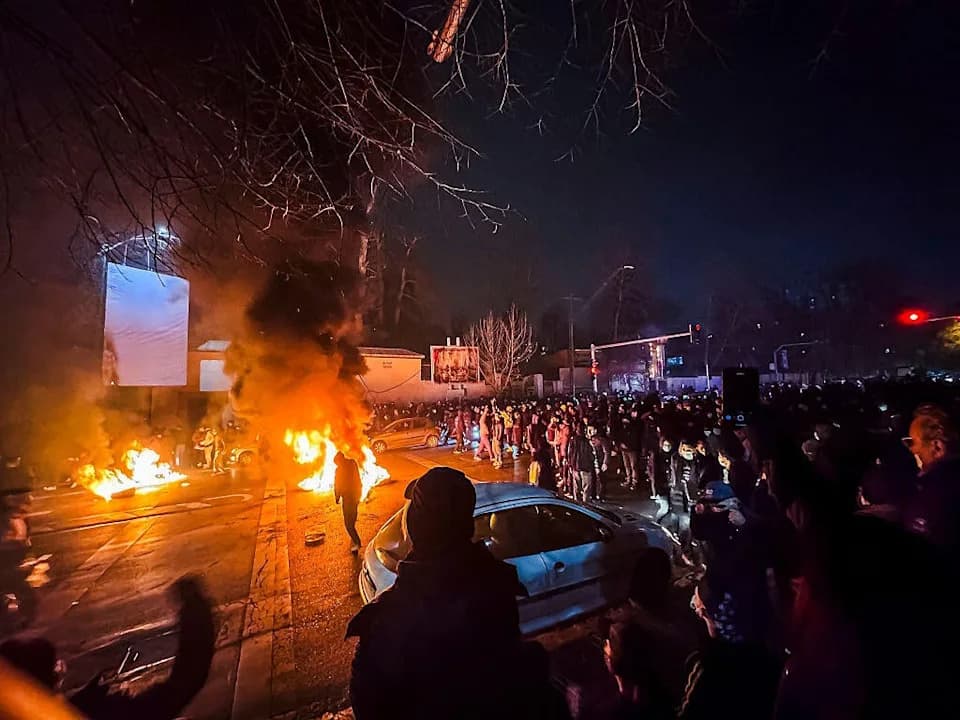
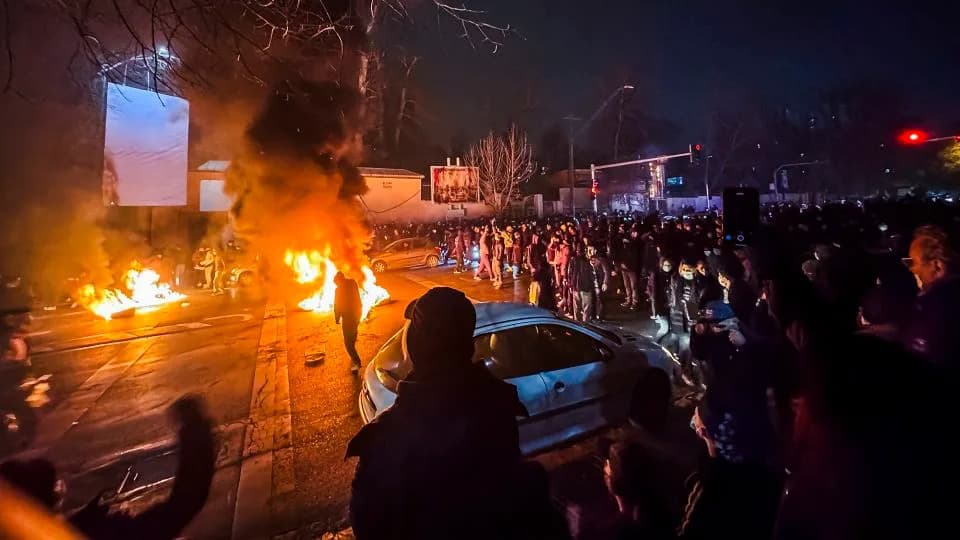
Iranian demonstrators gather in a street during a protest over the collapse of the currency’s value, in Tehran, Iran, January 8, 2026 [File: WANA via Reuters]
“This is not a stable status quo – it’s just not tenable,” said Ali Vaez, director of the Iran Project at the International Crisis Group. “I am not predicting that the system will hit rock bottom tomorrow, but it’s in a spiral and from this point on, it can only go down if it refuses to change.”
Reconfiguring Alliances
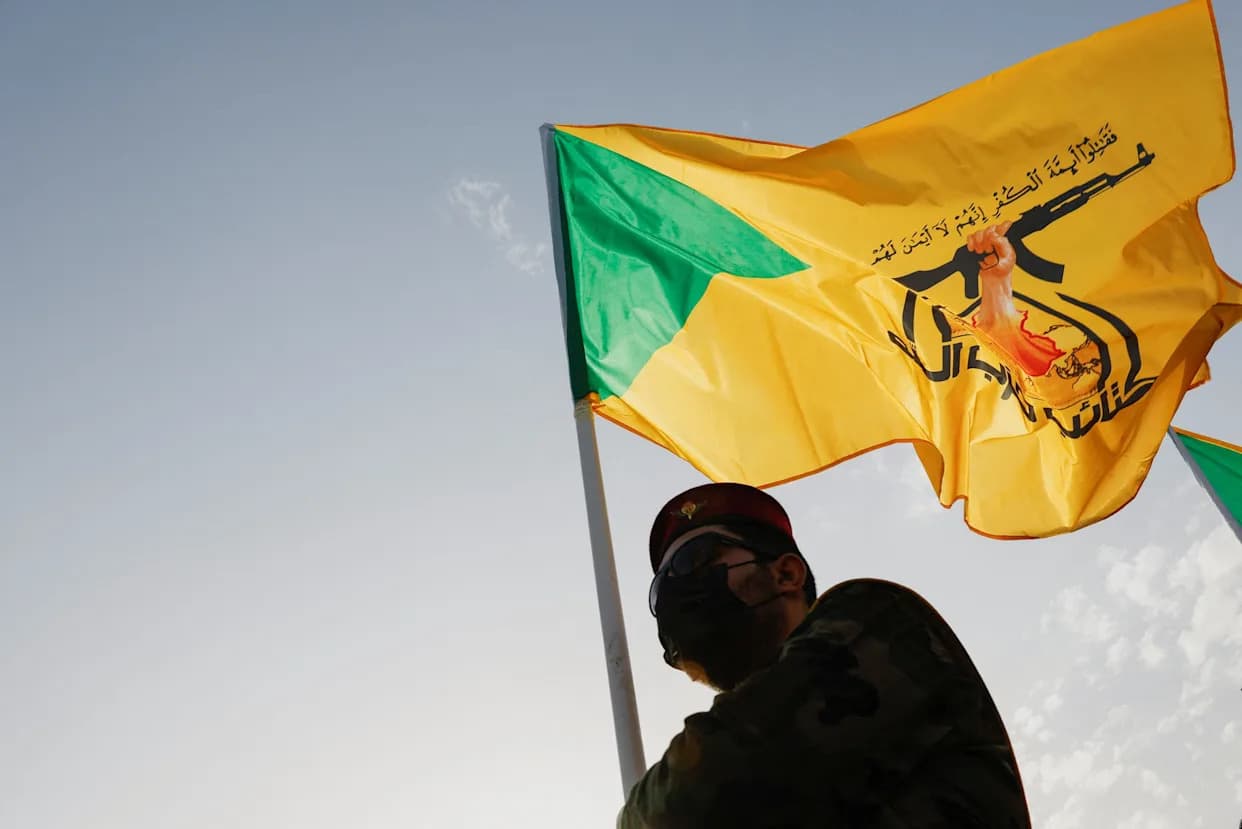
The war with Israel last June and subsequent strikes weakened some of Iran’s most effective regional partners. That triggered an internal debate in Tehran about the value and vulnerability of proxy networks. According to analysts, the regime appears to be trying to rebuild and adapt that network — focusing on smaller Iraqi groups, new resupply channels to Hezbollah and increased reliance on the Houthis in Yemen — while weighing the risks of doing so amid heightened international scrutiny.
Diplomacy, Deterrence and Legitimacy
Diplomatic channels with Washington have not been completely closed: at times US officials signalled willingness to talk while also deploying military assets to the region, a posture experts see as intended to increase leverage. But any major concessions by Tehran could further erode public perceptions of security and the regime’s legitimacy. For decades, the unwritten bargain between the state and many citizens traded restricted social and political freedoms for a promise of security. That bargain has been strained by economic collapse and recent conflict-related casualties.
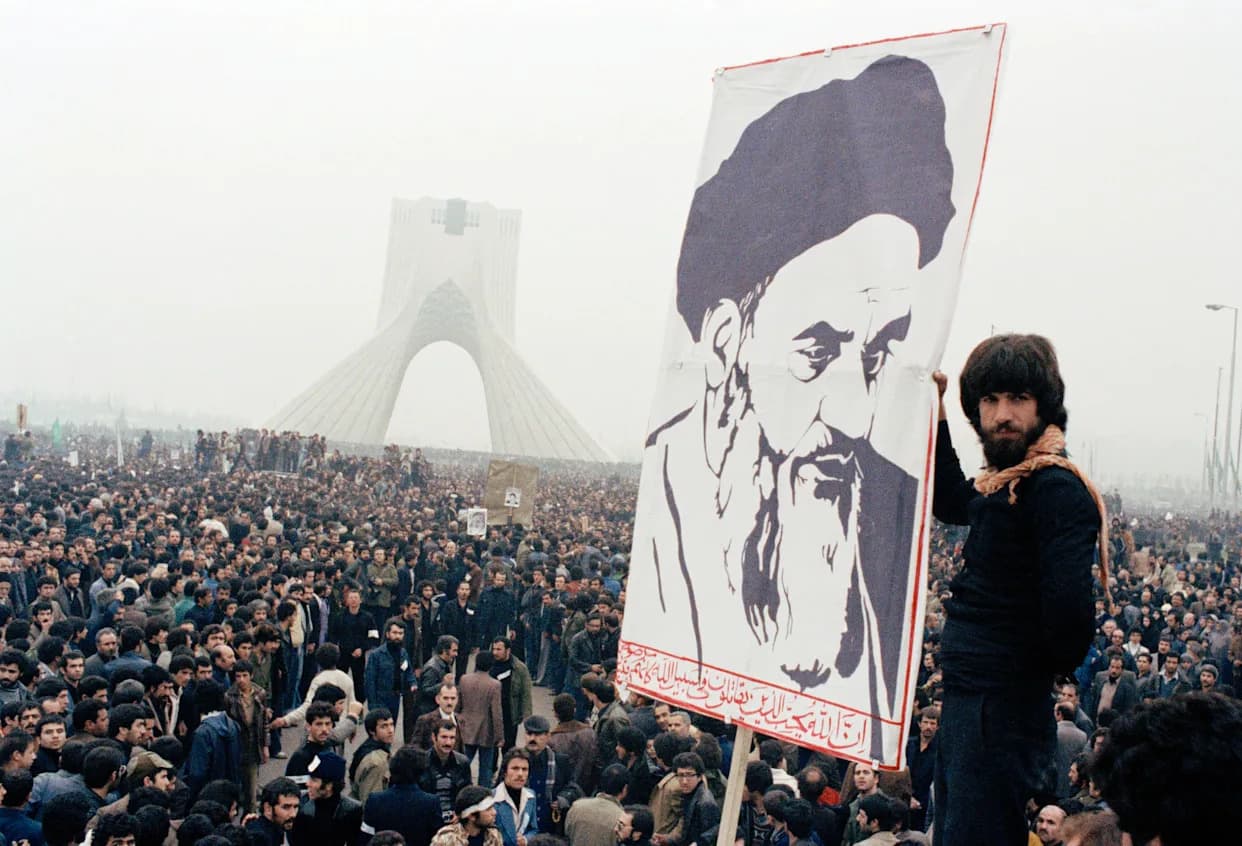
Analysts note another important shift: the growing power of the Islamic Revolutionary Guard Corps (IRGC). The IRGC’s expanding political and economic role — alongside a weakening clerical establishment — suggests the political system is evolving toward a more security-centred leadership. What follows Khamenei’s tenure could therefore produce very different outcomes: accelerated public unrest, or a managed transformation in which the security apparatus retains control in a new form.
In short, Iran faces limited and difficult options. Change — whether incremental reforms, strategic concessions, or deeper political realignment — appears unavoidable.
Help us improve.